

 Language
 English
 中文简体
 日本語
 русский
 Español
 عربى

Sep, 10, 2026
Lightweight Slip-On Buoyancy Aid Vest: Streamlined Design, Practical Storage, and Reliable Neoprene Manufacturing Expertise
Introduction
Water sports equipment must balance comfort, mobility, practicality, and dependable construction. A vest that is too bulky can restrict movement, while a garment with excessive straps, closures, or adjustment components may feel complicated during recreational use. The Lightweight Slip-On Buoyancy Aid Vest is designed around a simpler approach: a minimal one-piece structure, PVC foam material, high-stretch construction, flatlock stitching, zigzag binding, and dual front patch pockets.
This product is intended for recreational water sports users who want a lightweight vest with a streamlined appearance and practical storage. Its slip-on construction eliminates a front closure and external strap system, creating a clean silhouette and a direct wearing experience. Instead of adding multiple components, the design focuses on essential functions: lightweight buoyancy support, body-conforming comfort, durable seam finishing, and convenient access to small personal items.
The vest is supplied in blue and features a minimal construction that can be suitable for a variety of leisure-oriented water activities when used in accordance with the appropriate safety requirements. It is important to distinguish a minimal buoyancy aid from a fully specified rescue or life-saving device. Buyers, distributors, and end users should confirm applicable certification, performance ratings, intended-use conditions, and sizing requirements before placing the product into a regulated market or using it on the water.
Behind this product is Jiangsu Yiheng Sports Products Co., Ltd., a Chinese manufacturer specializing in neoprene materials and finished sports products. Since beginning operations in 2008, the company has developed experience in material sourcing, product development, manufacturing, and retail-oriented market practice. Its product portfolio includes wetsuits, drysuits, fishing waders, rash guards, water sports equipment, and neoprene fabrics.
The combination of a focused product concept and broad manufacturing experience allows this vest to serve buyers looking for a simple private-label or OEM water sports product. Its advantages are not based on unnecessary complexity. Instead, they come from controlled construction, reduced bulk, functional pocket placement, and manufacturing capabilities that can support consistent production and product development.
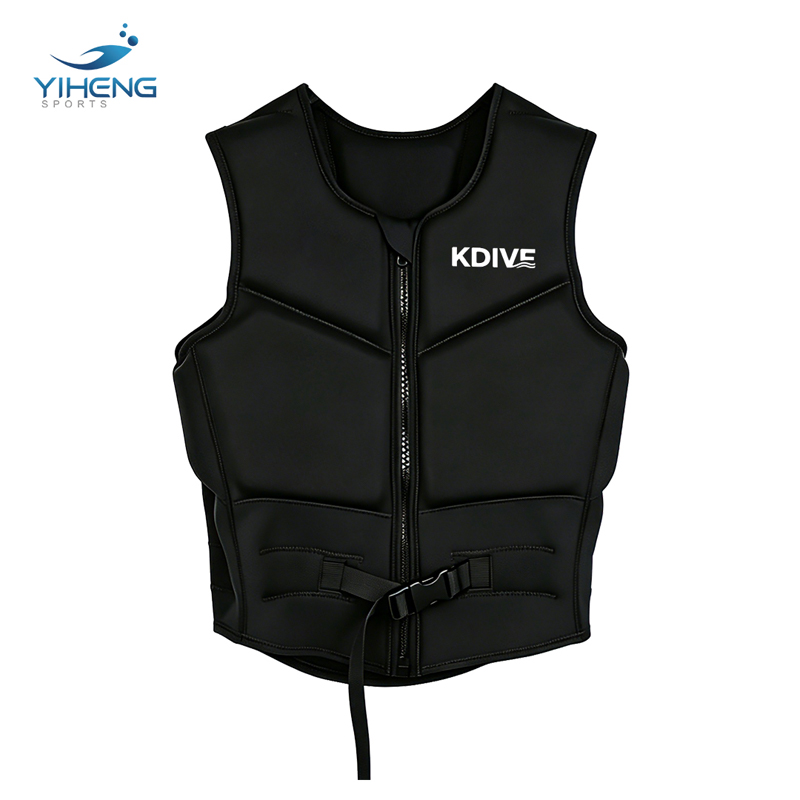
Lightweight Slip-On Buoyancy Aid Vest
Product Overview
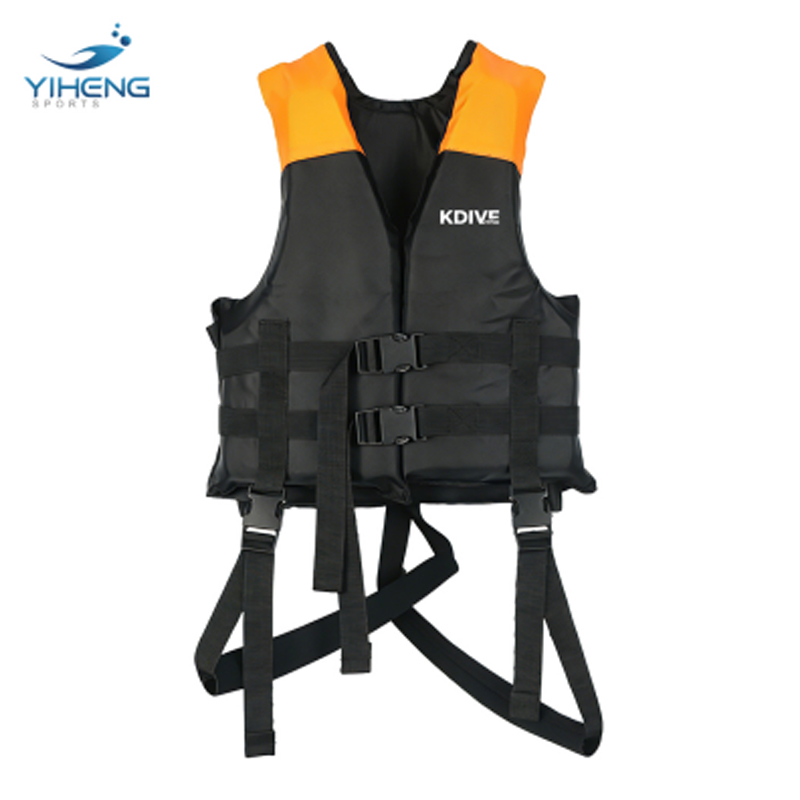
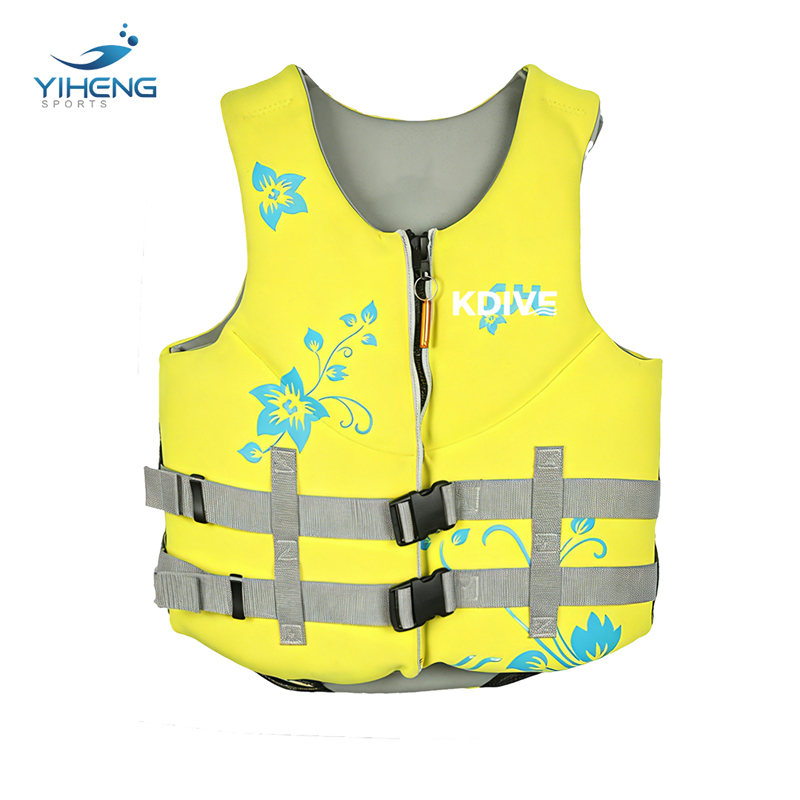
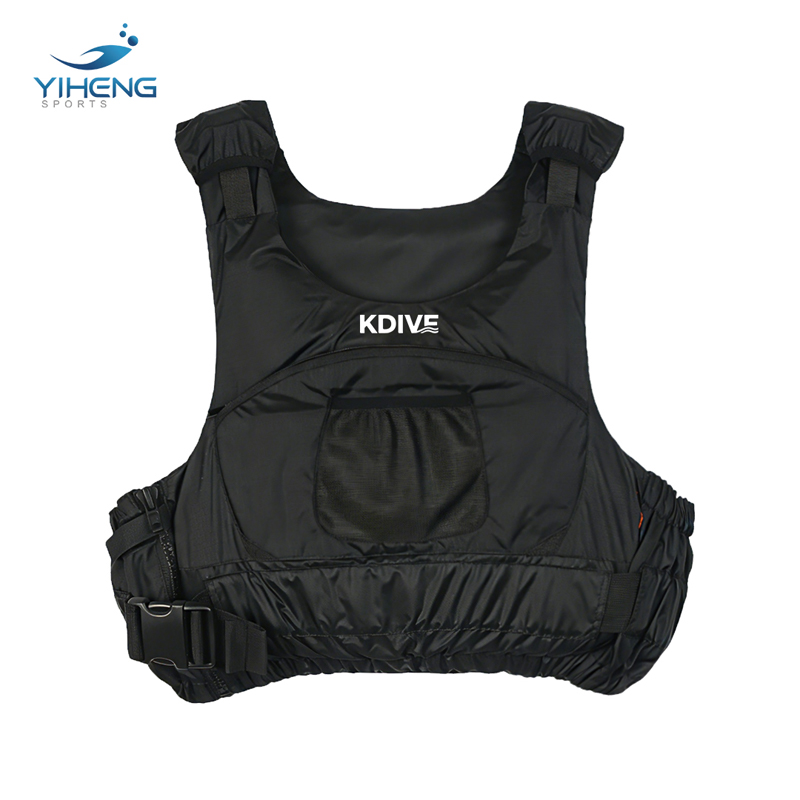
The Lightweight Slip-On Buoyancy Aid Vest is a minimal buoyancy aid vest for recreational water sports. It uses PVC foam as the primary material and has a blue exterior. The garment is built as a one-piece slip-on design without a front zipper, buckle, or strap system. This creates a clean front surface and reduces the number of separate components that can add weight or visual complexity.
The construction uses flatlock stitching with four needles and six threads, together with zigzag binding. Flatlock stitching is commonly used in performance apparel because it can create a relatively flat seam profile. When properly executed, a flat seam may reduce raised seam edges and help improve wearing comfort in areas where fabric panels meet the body. Zigzag binding contributes to edge finishing and helps reinforce selected seam areas while maintaining a flexible appearance.
Two front patch pockets are positioned on the chest area. These pockets provide space for small essentials, such as a key pouch, compact accessories, or other lightweight items appropriate for the activity. The pockets are not intended to replace a dedicated waterproof storage system, and users should consider the risk of water exposure before placing valuables inside them.
The vest also uses a high-stretch construction that allows the garment to conform naturally to the wearer’s body. Because the design does not depend on an external adjustment system, the material’s elasticity and the pattern dimensions are particularly important. Correct sizing remains essential. A stretch garment should feel secure without creating excessive compression or restricting breathing and movement.
| Product Element | Specification or Function | Practical Benefit |
|---|---|---|
| Product category | Life vest and recreational buoyancy aid | Supports leisure-oriented water sports applications |
| Primary material | PVC foam | Provides lightweight buoyancy support within the product design |
| Construction | Slip-on one-piece structure | Reduces unnecessary front components and simplifies wearing |
| Seam method | Flatlock stitching, 4-needle 6-thread | Creates a clean, durable, low-profile seam finish |
| Edge finishing | Zigzag binding | Supports edge durability and maintains a flexible finish |
| Storage | Dual front patch pockets | Offers convenient space for small lightweight essentials |
| Fit characteristic | High-stretch construction | Allows the vest to adapt naturally to the body |
| Color | Blue | Provides a practical and recognizable water sports appearance |
Minimal Construction for Greater Wearing Simplicity
One of the most important product advantages is the decision to remove unnecessary components. Many buoyancy garments use several buckles, straps, adjustment points, or front closures. These features can be useful for certain applications, but they can also make a product feel heavier, more complicated, and less streamlined. The slip-on construction takes a different direction by concentrating on the essential body structure.
With no front closure or strap system, the wearer can put the vest on in a direct manner. This can be particularly attractive to users who prefer a clean garment profile and fewer parts to handle before entering the water. The absence of external hardware may also reduce the chance of buckles catching on other equipment or creating pressure points when the wearer is seated in a recreational boat or similar setting.
The simplified structure can also be valuable to buyers who want a modern-looking water sports product. A minimal appearance is easy to coordinate with rash guards, swimwear, shorts, or other technical apparel. For retailers, the uncluttered design may appeal to customers who want buoyancy support without the visual impression of a highly technical rescue garment.
However, simplicity must be matched with correct product positioning. A slip-on design is not automatically appropriate for every user, activity, or body type. It is most suitable when the product is correctly sized and when its intended application does not require a highly adjustable rescue-style system. Buyers should evaluate the garment against local regulations, target customer needs, and the conditions in which it will be used.
Comparison with More Complicated Vest Designs
Compared with a vest featuring multiple front buckles, adjustable straps, and several external components, this product offers a more direct wearing experience. A complicated vest may provide a wider range of adjustment, which can be helpful for certain users, but the additional components may also increase bulk and assembly requirements. The Lightweight Slip-On Buoyancy Aid Vest is designed for buyers who prioritize simplicity, a close-fitting stretch structure, and an uncluttered appearance.
Compared with a fully inflatable flotation product, this vest provides a different user experience. It does not depend on manual inflation or an activation mechanism. Its buoyancy support comes from the product’s foam-based construction. This makes the product concept straightforward, but users must still follow the specified care, inspection, and application guidance for the final product version.
Compared with a loose-fitting foam vest with extensive adjustment straps, the high-stretch slip-on design can provide a more body-conforming feel. The trade-off is that accurate pattern development and size selection become especially important. This is why manufacturing quality, sample evaluation, and fit testing are central to the product’s commercial success.
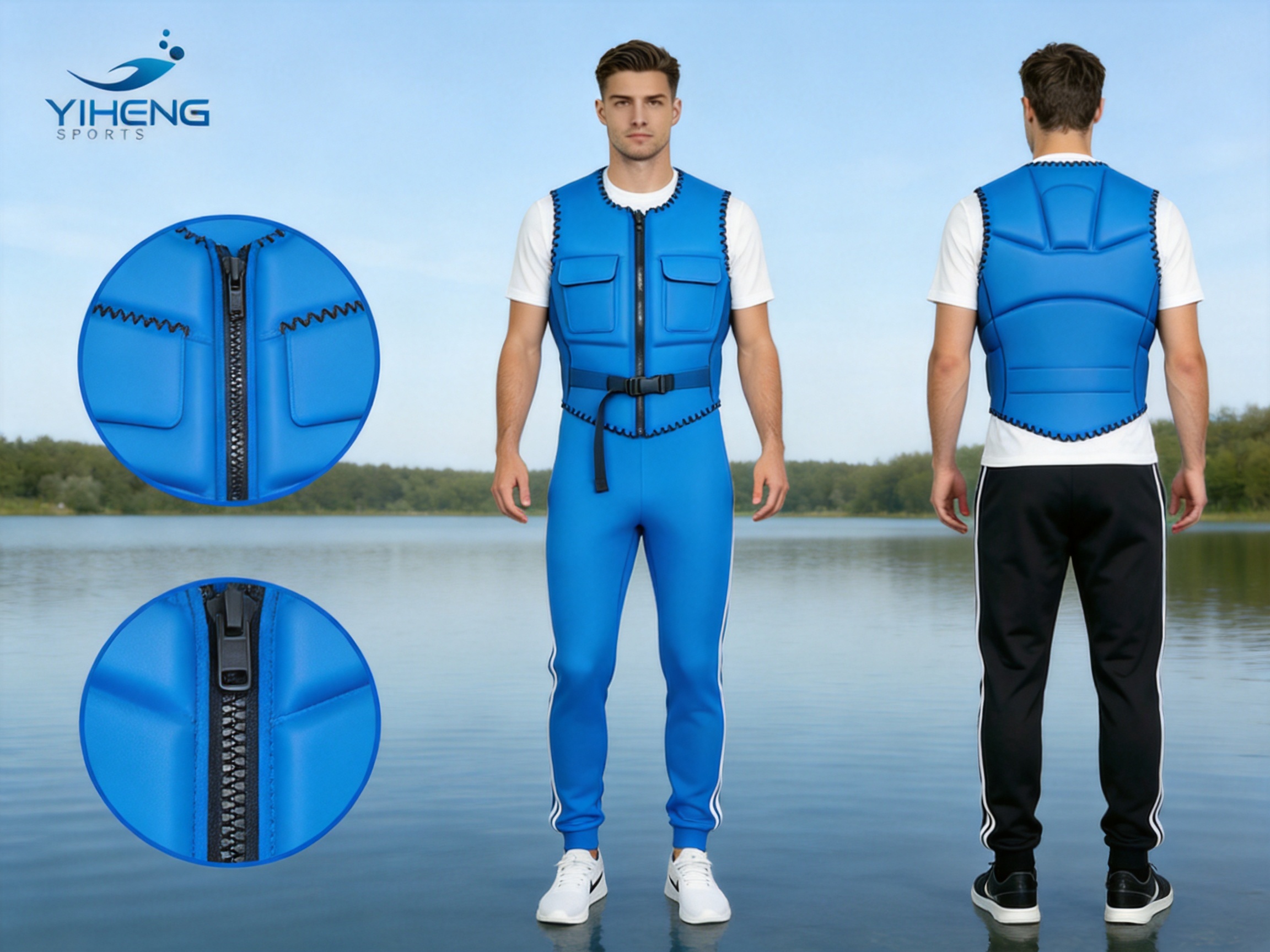
PVC Foam Material and Buoyancy Support
PVC foam is used in the vest to provide a lightweight buoyancy structure. Foam-based buoyancy products are widely used in recreational water equipment because the material can be formed into panels and integrated into a wearable garment. The final performance depends on the density, thickness, distribution, panel design, seam construction, and applicable product standards.
The use of PVC foam supports the product’s lightweight positioning. A garment designed for recreational use should not feel unnecessarily heavy before the wearer even enters the water. Reducing material bulk can improve general comfort during preparation, movement, and storage. The vest’s overall construction works toward this objective by combining foam support with a simplified outer design.
Material selection must be considered together with the intended market. Different regions may have specific requirements for buoyancy aids, personal flotation devices, labeling, testing, color visibility, materials, and user instructions. A manufacturer or importer should confirm which regulations apply before offering the product for sale. Product descriptions should accurately identify the vest’s intended use and should not imply rescue performance or certification that has not been documented.
For private-label and OEM customers, PVC foam selection can be discussed during the development process. Buyers may need to establish target buoyancy, product thickness, size range, cover material, color options, printing requirements, packaging, and testing procedures. A manufacturing partner with experience in foam-based water sports products can help coordinate these requirements from early sample development through bulk production.
High-Stretch Construction and Adaptive Fit
The vest’s high-stretch construction is designed to allow the garment to follow the wearer’s body. This adaptive characteristic is one of the main differences between a stretch slip-on vest and a rigid or loosely structured flotation garment. A body-conforming design can help the vest feel less cumbersome during recreational movement, especially when the wearer is paddling, boarding, boating, or participating in other activities that involve repeated upper-body motion.
Stretch performance depends on more than the material itself. The pattern shape, panel dimensions, seam allowance, binding tension, foam placement, and sewing settings all affect how the completed garment fits. If the construction is too tight, the vest may be uncomfortable. If it is too loose, the vest may shift during use. The manufacturing process therefore needs to control both the material properties and the finished garment dimensions.
The absence of external adjustment straps gives the vest a cleaner appearance, but it also means that customers should select the correct size based on the manufacturer’s sizing information. For wholesale and retail buyers, a clear size chart is an important part of product presentation. Measurements should be verified through samples and, where appropriate, tested on representative users.
The stretch structure may also improve packing efficiency compared with a bulky vest with multiple rigid components. Retailers and distributors can benefit from a product that is easier to fold, organize, and display. Nevertheless, the foam should not be sharply compressed for extended periods, and storage instructions should be followed to help preserve the garment’s shape and material condition.
Comfort-Oriented Seam Construction
Flatlock stitching is especially relevant to a close-fitting garment. The seam is designed to lie relatively flat rather than creating a thick ridge. In a vest worn close to the torso, a lower-profile seam can help reduce the sensation of rubbing or pressure at the arm opening, shoulder, and side areas.
The specified four-needle, six-thread construction indicates a specialized multi-thread sewing configuration. This type of setup can support a consistent, professional appearance when the machine is correctly adjusted for the selected material. Thread tension, stitch density, feeding, needle selection, and operator technique all influence the final result.
Zigzag binding provides an additional finishing method around selected edges and seams. Binding can cover raw edges, improve visual neatness, and contribute to durability in areas that may experience repeated stretching or handling. In combination with flatlock stitching, the finish supports the product’s balance between a minimal appearance and practical wear resistance.
Dual Front Patch Pockets for Small Essentials
The two front patch pockets add a practical feature without changing the product’s lightweight concept. They are positioned on the chest and provide accessible storage for small, lightweight items. This can be useful when a wearer wants to keep a few essentials close at hand rather than storing everything in a separate bag or boat compartment.
Patch pockets also contribute to the garment’s visual identity. Their straightforward shape complements the vest’s clean construction and can provide an opportunity for private-label branding, decorative stitching, color coordination, or other design adjustments during product development. Any modification should be reviewed carefully so that it does not interfere with the vest’s fit, buoyancy structure, or applicable performance requirements.
Because the vest is intended for water sports, pocket use should remain practical and cautious. Items that are sensitive to water should be protected in suitable waterproof packaging. Heavy objects should not be placed in the pockets because they may affect comfort, fit, or the garment’s balance. Retail descriptions should explain that the pockets are intended for small essentials rather than heavy equipment.
Compared with a vest without storage, the dual-pocket design gives users a modest but useful convenience advantage. Compared with a large utility vest, it maintains a lighter and more streamlined profile. This middle position may appeal to recreational users who want simple storage without converting the product into a heavily equipped outdoor garment.
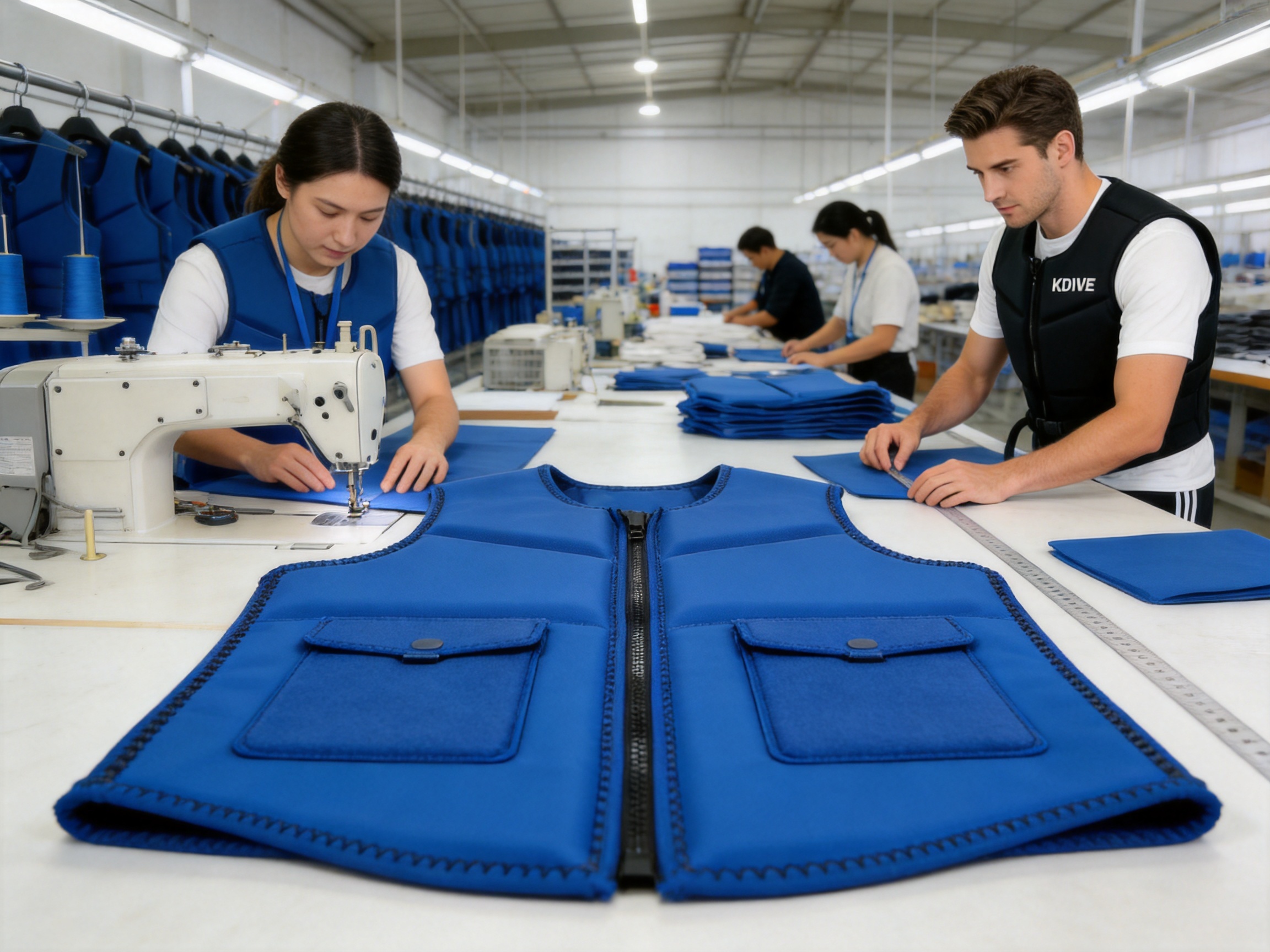
Advanced Manufacturing Capabilities
The quality of a lightweight buoyancy aid depends on the consistency of its manufacturing process. A product can have an attractive design, but inconsistent panel dimensions, uneven seams, poor binding, or uncontrolled material handling may reduce its comfort and commercial reliability. Jiangsu Yiheng Sports Products Co., Ltd. has developed its manufacturing activity around neoprene materials and finished products, providing a broader foundation for producing water sports garments and accessories.
The company’s factory covers more than 15,000 square meters and employs more than 120 professional workers. This scale provides a production environment in which material preparation, cutting, sewing, inspection, development, and order coordination can be organized as connected stages. The company reports more than 18 years of industry experience in neoprene fabrics and finished products, supported by direct involvement in both manufacturing and retail-market practice.
Although this vest uses PVC foam as a key buoyancy material, the company’s wider experience in neoprene products remains relevant. Wetsuits, drysuits, fishing waders, rash guards, and other water sports equipment require knowledge of flexible materials, body-oriented patterning, seam construction, edge finishing, and performance-focused garment assembly. These skills can support the development of related buoyancy products and private-label collections.
Material Preparation and Incoming Control
A reliable production process begins before sewing. Materials should be checked for consistency, visible defects, dimensions, color, elasticity, thickness, and compatibility with the planned construction. For foam-based products, panel uniformity is particularly important because differences in thickness or density may affect the appearance and performance of the completed vest.
Outer materials, binding materials, thread, labels, and packaging components should also be coordinated before bulk production. A controlled incoming process helps reduce the risk of color variation, incorrect components, or material substitutions. For OEM customers, an approved sample and material specification can serve as references for production consistency.
Pattern Development and Cutting
The slip-on structure requires carefully developed front, back, shoulder, side, and pocket panels. The pattern must account for stretch, foam thickness, body movement, seam allowances, and the way the garment is put on. A pattern that looks correct on a flat table may not produce the right fit when assembled, so sample testing is important.
Cutting accuracy is also central to a consistent product. Matching panels should be cut according to approved dimensions, and components should be organized to prevent mixing between sizes or color lots. Proper cutting can help maintain symmetry between the left and right sides and ensure that the pocket placement remains consistent from one garment to another.
Flatlock Sewing and Binding
The specified four-needle, six-thread flatlock process requires suitable machine settings and trained operators. The sewing line must control stitch formation, thread tension, fabric feeding, and seam alignment. Operators should be able to identify skipped stitches, uneven seams, loose threads, puckering, and other defects that may affect comfort or appearance.
Zigzag binding requires equal attention. Binding that is too loose may wrinkle or detach, while binding that is too tight may reduce stretch and distort the edge. Correct handling helps the binding follow curves around openings and seams. The objective is a finish that looks clean, remains flexible, and is appropriate for repeated wear.
Assembly of the One-Piece Structure
During assembly, the front and back sections must be joined in a way that preserves the intended body shape. The garment should remain symmetrical, and the arm openings, shoulder area, and lower edges should be checked for smoothness. Because the vest has no front closure, the neckline and opening dimensions are especially important for ease of entry and comfortable wear.
The dual front pockets should be positioned according to the approved sample. Their height, spacing, opening direction, and attachment quality affect both appearance and usability. Consistent pocket placement is particularly important for private-label products because visual irregularity can be noticeable on a simple, uncluttered design.
Inspection and Finishing
Inspection may include checking measurements, seam quality, binding, pocket attachment, color, labels, surface condition, and overall symmetry. The final product should be reviewed against the approved specification rather than judged only by general appearance. For a buoyancy aid, any required performance tests and compliance checks must be conducted according to the target market and product classification.
Finishing may include thread trimming, cleaning, folding, labeling, and packaging. Careful packing helps prevent unnecessary creasing or deformation. It also gives the buyer a more consistent presentation when the product reaches a warehouse, retail store, or end customer.
Why Manufacturing Experience Matters to Buyers
Buyers selecting a water sports manufacturer are not purchasing only one finished garment. They are also selecting a supply partner capable of turning specifications into repeatable production. A manufacturer with experience across materials and product categories can offer useful support when the buyer needs to adjust sizing, change colors, develop a logo application, revise packaging, or create a related product line.
Jiangsu Yiheng Sports Products Co., Ltd. combines source manufacturing experience with direct exposure to the retail market. The company describes its business approach as including OEM manufacturing, ODM development, and long-term supply support. This combination can help buyers who already have a defined product specification as well as those who need assistance converting a market idea into a production-ready design.
More than 15,000 square meters of factory space and a workforce of over 120 professional employees provide a foundation for coordinating development and manufacturing at commercial scale. The company’s product range also allows buyers to source complementary categories from one manufacturing partner. A customer interested in the buoyancy aid vest may also need wetsuits, rash guards, fishing waders, drysuits, or neoprene accessories for the same collection.
For private-label customers, this broader product capability can reduce the complexity of managing multiple suppliers. It may support a more consistent approach to colors, packaging, size grading, labels, and product photography across a water sports range. Final capabilities, minimum order quantities, lead times, testing, and customization options should be confirmed during commercial discussions.
Advantages for Private-Label and OEM Programs
The vest is well suited to a private-label concept because its design is clear and adaptable. The blue color provides a ready-made starting point, while the simple panel structure may allow discussion of additional colors or branding elements. A buyer may consider a logo label, woven label, packaging card, hangtag, carton marking, or coordinated product presentation.
The clean exterior can make branding visible without requiring a highly complex graphic treatment. For example, a small logo may be placed on the chest or pocket area, subject to sample approval and performance considerations. Branding should never compromise seam quality, stretch, comfort, or buoyancy-related construction.
OEM development may involve more than adding a logo. Buyers can discuss revised pocket dimensions, alternate color combinations, size ranges, binding colors, surface materials, packaging formats, or related garments. The manufacturer’s experience with neoprene fabrics and finished water sports products can support these discussions, while the final design should be evaluated through physical samples.
An effective development process normally includes a product brief, technical specifications, material confirmation, pattern or sample development, fit review, testing, pre-production approval, bulk manufacturing, and final inspection. Clear communication at each stage reduces misunderstandings and helps ensure that the delivered product matches the buyer’s expectations.
Application Scenarios
The Lightweight Slip-On Buoyancy Aid Vest can be positioned for recreational water sports where a minimal, body-conforming garment is preferred. Potential market segments may include leisure boating, paddle-oriented activities, water recreation programs, outdoor retail, resort equipment, and private-label water sports collections.
Its streamlined form may appeal to users who want freedom of movement and a less technical visual appearance. The two front pockets add convenience for short recreational sessions where users may need to carry only a few small items. The blue color can work as a standalone option or as part of a coordinated collection.
For organized activities, buyers should consider whether the design meets the operational needs of instructors, rental programs, clubs, or resorts. High-frequency rental use may require additional durability evaluation, clear size identification, cleaning procedures, and inspection routines. If the product will be used by children, beginners, or non-swimmers, the buyer must pay particular attention to applicable safety regulations and product suitability.
The vest should not be represented as a substitute for a certified rescue device unless it has been tested and certified for that purpose. Product marketing should accurately communicate its intended recreational application, buoyancy characteristics, size limitations, and user responsibilities.
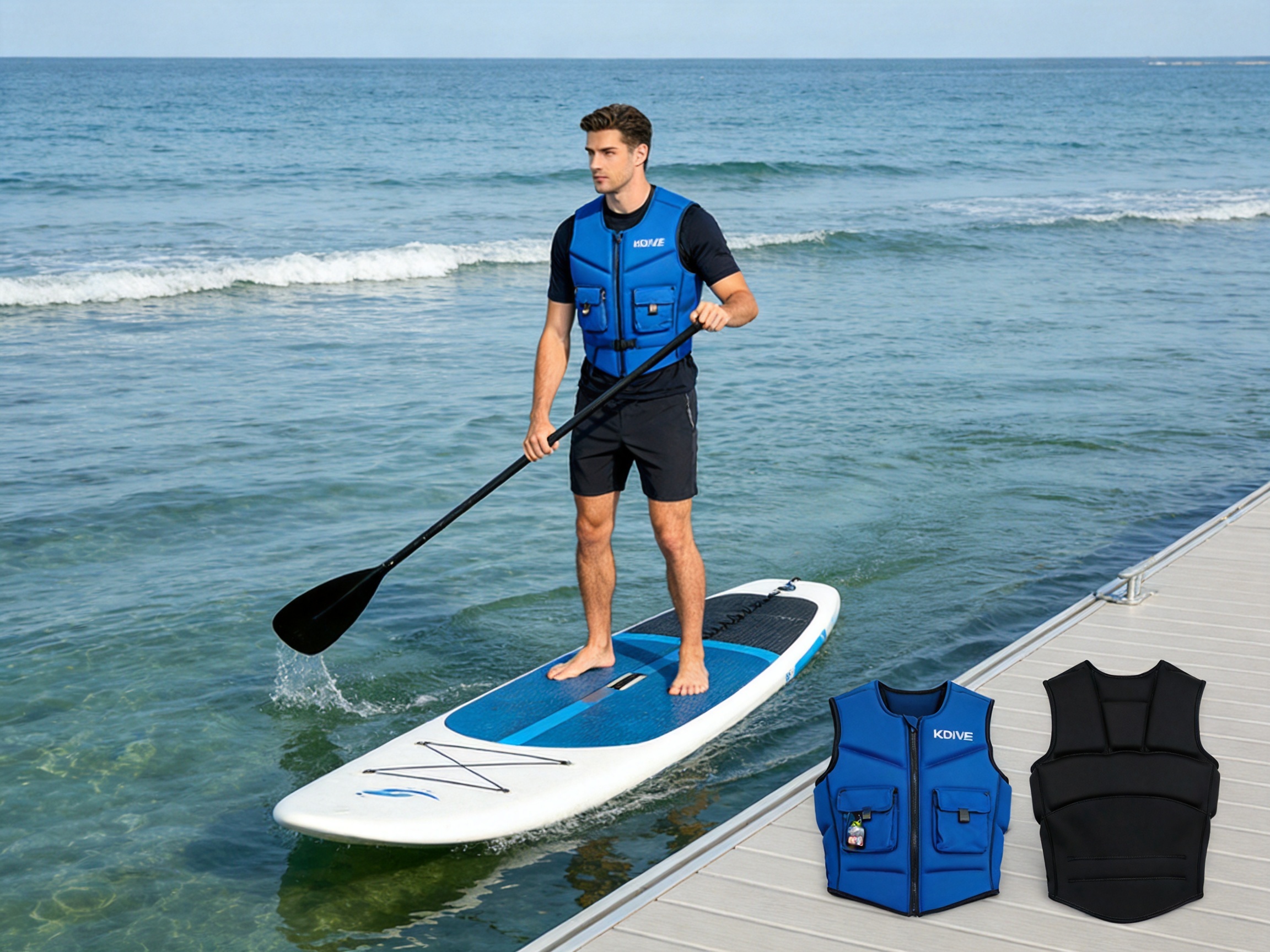
Care, Inspection, and Product Longevity
Proper care helps preserve the material, seams, binding, and shape of the vest. After use, the garment should be rinsed and cleaned according to the manufacturer’s instructions, particularly if it has been exposed to salt water, chlorine, sand, mud, sunscreen, or other contaminants. It should be allowed to dry thoroughly in a suitable ventilated area before storage.
Direct, prolonged exposure to intense heat or ultraviolet radiation may affect some textile and foam materials. The vest should not be stored while wet, tightly compressed, or folded in a way that creates permanent creases. Heavy objects should not be placed on top of it for long periods.
Users and operators should inspect the garment regularly. Inspection points may include seams, binding, pocket attachment, foam condition, fabric damage, openings, labels, and any signs of distortion. A product with serious damage, compromised construction, or uncertain buoyancy performance should be removed from service and evaluated by a qualified party.
For commercial users such as rental operators, an inspection log can help track the product’s condition. Each garment may be checked before issue and after return. The inspection frequency should reflect the intensity of use, the environment, and applicable regulations.
Quality and Safety Considerations
A high-quality appearance is valuable, but water safety requires more than visual inspection. The product’s intended performance should be supported by appropriate testing and documentation. Depending on the destination market, buyers may need information relating to buoyancy, flotation position, sizing, materials, labeling, user instructions, chemical requirements, and certification.
Before placing an order, customers should request the relevant technical information and clarify whether the supplied version has been tested against a particular standard. If a buyer needs certification, that requirement should be included in the product brief before production begins. It is not sufficient to assume that a general “life vest” description automatically indicates compliance with every regional standard.
Manufacturing controls remain important even when formal testing is completed. Correct foam placement, consistent seam construction, secure pocket attachment, accurate sizing, and clean finishing all contribute to product quality. A controlled production process helps reduce variation and supports more reliable repeat orders.
For distributors, accurate marketing is part of quality management. The product should be described as a minimal buoyancy aid for recreational water sports unless the applicable documentation supports a more specific classification. Instructions should explain appropriate use, sizing, inspection, care, and limitations in language that customers can understand.
Competitive Positioning
The vest’s primary competitive advantage is its focused design. Instead of competing through a large number of added features, it offers a carefully limited set of functions: buoyancy support, lightweight construction, stretch fit, flatlock seam finishing, clean binding, and two practical front pockets. This can make the product easier to understand and more attractive to consumers who prefer uncomplicated equipment.
Its slip-on construction differentiates it from conventional buckle-heavy flotation garments. The clean front surface can provide a more modern appearance, while the reduced component count may simplify the wearing experience. Its high-stretch structure differentiates it from rigid foam products that may feel less adaptive to body movement.
The product also occupies a useful middle ground between a plain flotation vest and a fully equipped technical utility vest. It offers storage, but the pockets remain integrated into a relatively light design. It offers a body-conforming fit, but it does not depend on multiple external adjustment systems. This balance may be attractive to lifestyle-oriented water sports brands and recreational equipment retailers.
From a sourcing perspective, the manufacturer’s experience is another competitive strength. A factory capable of working with neoprene fabrics, finished water sports products, flexible materials, and garment construction can be better positioned to support product families rather than isolated items. Buyers may use this vest as an entry product and later develop matching rash guards, wetsuits, waders, or other equipment.
Purchasing Checklist for Importers and Brand Owners
Before purchasing, buyers should confirm the exact product classification and intended market. The term “life vest” can have different commercial and regulatory meanings in different regions. The product brief should clearly identify whether the garment is intended as a recreational buoyancy aid, a personal flotation device, or another category.
Buyers should request the available technical specifications for PVC foam, garment dimensions, size range, weight, buoyancy rating, care instructions, and applicable test reports. If a particular standard is required, it should be named clearly and confirmed before bulk production.
Sample approval is essential. A buyer should examine the fit, slip-on opening, stretch behavior, pocket placement, seam profile, binding, color, labeling, and packaging. Samples should be evaluated by representative users when possible, particularly if the product is intended for a broad size range.
Commercial details should include minimum order quantity, sample fees, customization costs, production lead time, payment terms, packing method, inspection arrangements, shipping marks, and replacement procedures for nonconforming goods. Long-term supply relationships are easier to build when technical and commercial expectations are documented from the beginning.
Q&A
Q1: What type of product is the Lightweight Slip-On Buoyancy Aid Vest?
It is a minimal buoyancy aid vest designed for recreational water sports. It uses PVC foam, a one-piece slip-on construction, flatlock stitching, zigzag binding, and high-stretch material construction. It should be positioned according to its documented performance and applicable market requirements.
Q2: Does the vest have a zipper, buckle, or front strap?
No. The supplied design uses a slip-on structure without a front closure or external strap system. This creates a clean appearance and reduces unnecessary components, but correct sizing is especially important because the wearer cannot rely on external straps for adjustment.
Q3: What are the advantages of flatlock stitching?
Flatlock stitching can create a relatively low-profile seam that is suitable for close-fitting performance garments. In this product, the specified four-needle, six-thread construction supports a clean appearance and durable assembly when produced with suitable machine settings and quality control.
Q4: What are the front pockets used for?
The two front patch pockets provide storage for small, lightweight essentials. They should not be treated as waterproof compartments, and heavy or water-sensitive items should not be placed inside without suitable protection.
Q5: Is the vest suitable for all water activities?
No product should be assumed to be suitable for every activity or user. The vest is described for recreational water sports, but buyers must verify its buoyancy rating, certification, size range, and intended-use limitations. Rescue operations, rough water, professional marine work, and regulated applications may require different equipment.
Q6: How does the high-stretch construction affect fit?
The stretch construction allows the vest to conform naturally to the body and supports a more adaptive wearing experience. At the same time, the garment must be selected in the correct size. A product that is too loose may shift, while one that is too tight may reduce comfort.
Q7: Can the vest be customized for a private-label brand?
Private-label and OEM options can be discussed with the manufacturer. Possible development topics may include labels, packaging, colors, branding placement, size ranges, pocket details, and related product designs. All changes should be reviewed through samples and checked against the required performance specifications.
Q8: What manufacturing experience does the supplier have?
Jiangsu Yiheng Sports Products Co., Ltd. began its business journey in 2008 and specializes in neoprene materials and finished products. The company reports more than 18 years of industry experience, a factory covering more than 15,000 square meters, and more than 120 professional employees. Its product range includes wetsuits, drysuits, fishing waders, rash guards, water sports equipment, and neoprene fabrics.
Q9: What should buyers confirm before placing a bulk order?
Buyers should confirm material specifications, measurements, size grading, buoyancy performance, applicable certifications, labeling, packaging, color, branding, minimum order quantity, lead time, inspection procedures, and shipping requirements. A signed or otherwise approved pre-production sample is recommended.
Q10: How should the vest be maintained?
The vest should be cleaned and rinsed according to the care instructions after use, especially after exposure to salt water or chlorine. It should be dried thoroughly, stored in a ventilated location, protected from unnecessary heat and sunlight, and inspected regularly for damage to seams, binding, foam, fabric, or pocket attachment.
Conclusion
The Lightweight Slip-On Buoyancy Aid Vest presents a focused solution for recreational water sports users who want lightweight construction, a clean appearance, adaptive stretch, practical storage, and a direct wearing experience. Its PVC foam structure supports the buoyancy-aid concept, while the one-piece slip-on design reduces unnecessary front components. Flatlock stitching and zigzag binding provide a durable, cleanly finished construction, and the two front patch pockets add useful storage without turning the vest into a bulky utility garment.
Its strongest advantages over more complicated competitors are simplicity, streamlined appearance, reduced component count, and a body-conforming construction. These advantages are especially relevant to lifestyle water sports brands, recreational retailers, private-label programs, and buyers looking for a product that is easy to understand and easy to integrate into a broader collection.
The manufacturing partner adds value through long-term experience in neoprene materials and finished water sports products. With a factory of more than 15,000 square meters, a workforce of over 120 professionals, and a product portfolio covering wetsuits, drysuits, fishing waders, rash guards, water sports equipment, and neoprene fabrics, the company can support more than basic order fulfillment. Its OEM and ODM capabilities create opportunities for customization, coordinated product development, and long-term supply cooperation.
For responsible commercialization, the vest should always be matched to the correct market classification, testing requirements, user group, and operating conditions. When technical specifications, sampling, inspection, labeling, and safety communication are handled carefully, this streamlined buoyancy aid can become a practical addition to a modern recreational water sports range.
References
1. Product specification supplied for the Lightweight Slip-On Buoyancy Aid Vest, including PVC foam material, slip-on construction, flatlock stitching, zigzag binding, dual front patch pockets, blue color, and high-stretch construction.
2. Jiangsu Yiheng Sports Products Co., Ltd. company information, including manufacturing history, factory scale, employee information, product categories, OEM capabilities, and ODM development services.
3. General technical principles for performance apparel construction, including flatlock seam design, binding methods, stretch-garment pattern development, and quality inspection practices.
4. General product-development guidance for recreational water sports equipment, including material review, sample approval, sizing, labeling, care instructions, and market-specific compliance evaluation.
5. General safety guidance for buoyancy aids and personal flotation equipment, including the importance of intended-use classification, appropriate sizing, inspection, maintenance, and confirmation of applicable regional standards.
Product: Lightweight Slip-On Buoyancy Aid Vest

LET’S DEVELOP YOUR NEXT NEOPRENE PRODUCT LINE
Quick Links
Product Categories
Contact Us
-
 Email: postmaster@yihengsport.com
-
 Mobile: +86-13564100539
-
 No. 480 Jiangping Road, Madian, Binjiang Town, Taixing City, Taizhou City, Jiangsu Province, China.
Copyright © Jiangsu Yiheng Sports Products Co., Ltd. All Rights Reserved
China Wetsuit Manufacturer Neoprene Fabric Manufacturer
