

 Language
 English
 中文简体
 日本語
 русский
 Español
 عربى

Sep, 16, 2026
Entry-Level Neoprene Drysuit for Cold-Water Diving and Underwater Work
Choosing the right drysuit is essential for divers, rescue teams, underwater workers, and water-sports professionals who need dependable protection in cold or wet environments. A suitable drysuit must do more than resist water. It should help maintain body warmth, support unrestricted movement, withstand repeated use, and remain practical to put on and remove. It should also offer reliable seam protection, durable materials, and sizing options that accommodate different body shapes.
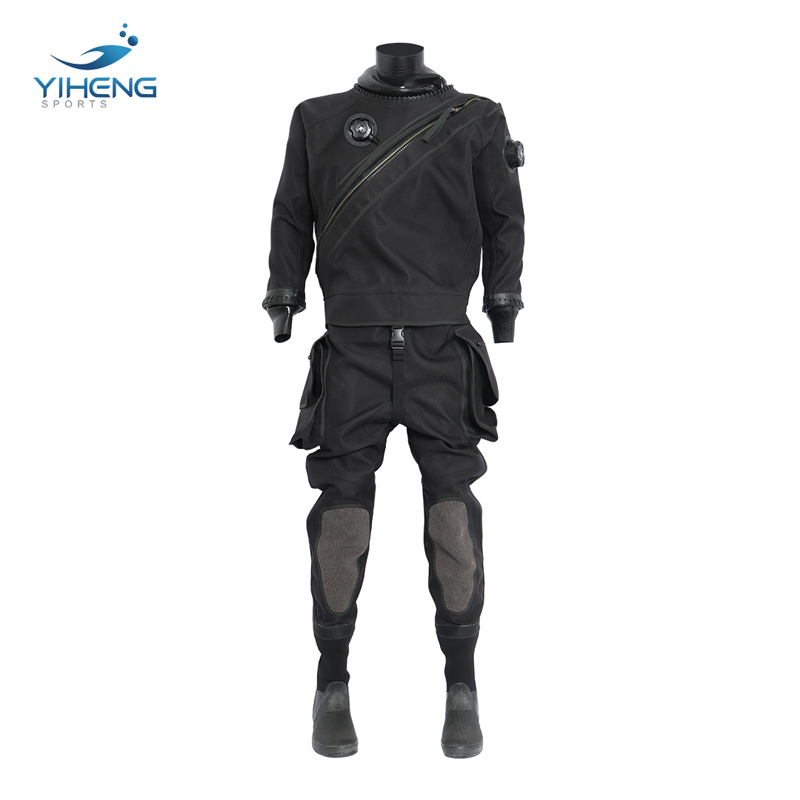
The Entry-Level Drysuit is a one-piece neoprene drysuit designed to provide a balance of waterproof performance, thermal insulation, durability, and value. Made from 6 mm high-density neoprene combined with diamond-texture nylon, the suit is engineered for users who require substantial protection during cold-water diving, underwater rescue, professional underwater work, and extended water exposure.
Although described as an entry-level model, this drysuit incorporates several features commonly associated with more advanced protective suits. Its construction includes blind stitching, inner seam taping, a back-opening metal waterproof zipper, abrasion-resistant outer fabric, and a flexible one-piece cut. These features help the suit compete with basic and mid-range drysuits that may offer only limited thermal protection or less comprehensive seam reinforcement.
The product is manufactured by Jiangsu Yiheng Sports Products Co., Ltd., a specialist producer of neoprene fabrics and finished water-sports products. With a manufacturing history that began in 2008, more than 15 years of production experience, a factory covering over 15,000 square meters, and a workforce of more than 120 professional employees, the company combines material knowledge with finished-product manufacturing capabilities.
This article examines the drysuit’s materials, structure, waterproof performance, thermal benefits, manufacturing strengths, customization potential, practical applications, and advantages over competing entry-level products.
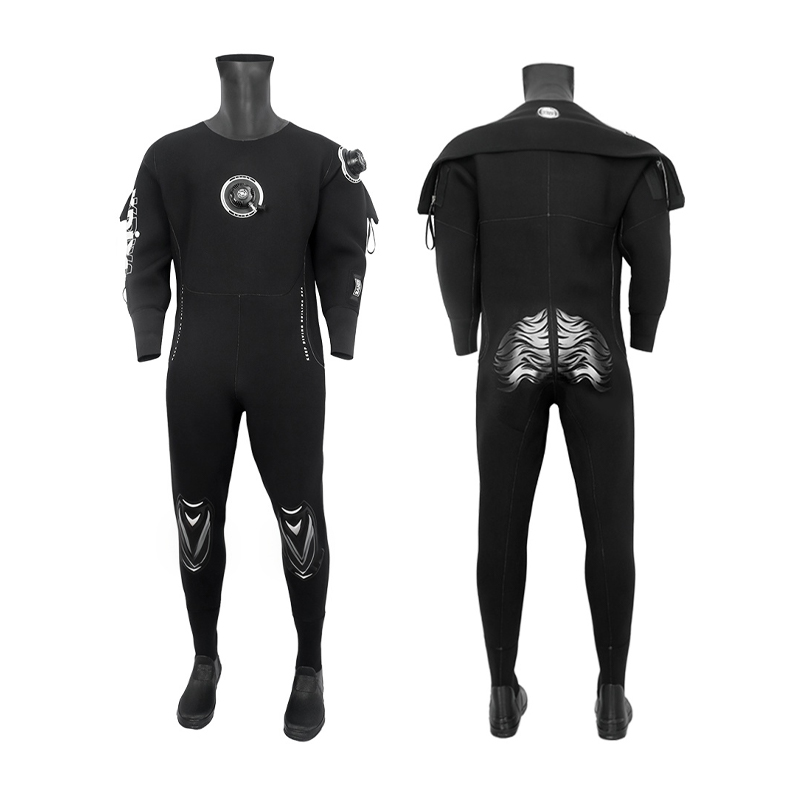
Entry-Level Drysuit
What Is a Neoprene Drysuit?
A drysuit is a protective garment designed to reduce or prevent water from reaching the wearer’s body. Unlike a conventional wetsuit, which allows a thin layer of water to enter and uses body heat to warm that layer, a drysuit is intended to create a more impermeable barrier. This makes it particularly useful in cold water, prolonged immersion, rescue operations, and underwater work where maintaining dryness is a priority.
A neoprene drysuit combines waterproof protection with the inherent insulating properties of neoprene. Neoprene is a synthetic rubber material containing closed-cell structures that help reduce heat transfer. When produced at a greater thickness, it can provide increased thermal resistance and improved cushioning against minor impacts, contact with equipment, and environmental abrasion.
The Entry-Level Drysuit uses 6 mm high-density neoprene. This thickness provides a stronger thermal barrier than many lightweight suits designed primarily for warm water or short-duration use. The material is covered or reinforced with diamond-texture nylon, which adds a durable textile surface and supports resistance to wear, scratching, and deformation.
The suit is designed as a one-piece garment. This configuration reduces the number of openings and overlapping sections through which water could potentially enter. It also simplifies the overall structure, creating a continuous protective layer around the torso, arms, and legs.
Because drysuit performance depends on multiple elements, no single material determines the result. The fabric, seams, zipper, fit, finishing, and quality-control procedures must work together. The product’s design therefore combines a high-density neoprene body with reinforced seam construction and a waterproof back zipper.
Key Product Specifications
The following specifications summarize the main characteristics of the Entry-Level Drysuit.
| Specification | Product Details |
|---|---|
| Product type | One-piece neoprene drysuit |
| Primary material | 6 mm high-density neoprene with diamond-texture nylon |
| Seam construction | Blind stitching with inner seam taping and reinforced bonding |
| Water protection | Waterproof and impermeable construction intended to limit water ingress |
| Fabric properties | High elasticity, tear resistance, deformation resistance, puncture resistance, and scratch resistance |
| Zipper | Back-opening metal waterproof zipper |
| Style | One-piece, unisex cut |
| Color | Black as the standard color |
| Reflective elements | None in the standard configuration |
| Available sizes | S, M, ML, L, MLT, LT, and related size options |
| Customization | Thickness, color, logo, printing, and other private-label requirements |
The specifications demonstrate that the suit is intended for practical performance rather than decorative styling. Its core strengths are material thickness, water resistance, seam security, thermal insulation, and adaptability for different customer requirements.
6 mm High-Density Neoprene Construction
The choice of 6 mm neoprene is one of the most important characteristics of this drysuit. Material thickness affects thermal performance, durability, flexibility, weight, and the overall level of environmental protection. A thicker material generally offers more insulation and cushioning than a thin material, although it may require careful pattern design to preserve comfortable movement.
High-density neoprene provides a firm and stable structure. Compared with lower-density materials, it is designed to resist compression, deformation, and premature loss of shape. This is useful in professional applications where the garment may be repeatedly folded, transported, worn with equipment, or exposed to friction against boats, platforms, rescue tools, and underwater surfaces.
The neoprene’s closed-cell structure contributes to thermal insulation by limiting the movement of heat through the material. In cold-water conditions, this can help slow heat loss and extend the practical time a user can remain in the water. The drysuit is not a replacement for appropriate thermal layers, gloves, hoods, or other protective equipment, but its thick neoprene body creates a strong foundation for a complete cold-water system.
The material also provides a degree of cushioning. During underwater rescue or industrial work, users may come into contact with equipment edges, rocks, submerged structures, or vessel surfaces. While the suit should not be treated as puncture-proof armor, its dense neoprene and nylon outer layer provide a more robust barrier than lightweight garments intended for casual recreational use.
The diamond-texture nylon surface serves several purposes. It helps protect the neoprene from direct abrasion, contributes to the visual texture of the garment, and supports the suit’s resistance to scratches and general handling damage. The texture can also provide a more stable outer surface when the suit is handled during dressing, storage, or equipment preparation.
Balancing Insulation and Flexibility
A common concern with thick neoprene is that increased thickness can restrict movement. The product addresses this issue through a flexible one-piece pattern and high-elasticity fabric characteristics. The design is intended to follow the body’s contours without creating unnecessary restraint around the torso, shoulders, hips, and limbs.
Flexibility is especially important for divers who need to control buoyancy equipment, operate underwater tools, climb ladders, kneel on a platform, or assist another person during a rescue. A suit that is warm but excessively restrictive can increase fatigue and make routine tasks more difficult. The combination of elastic material and a body-oriented cut is therefore a significant practical advantage.
Users should still select the correct size and avoid assuming that a larger suit will always be more comfortable. Excess material can create folds, affect movement, and reduce the efficiency of the protective fit. Conversely, a suit that is too small may place unnecessary tension on the zipper, seams, and shoulders. Accurate measurement and professional sizing support are important parts of achieving the intended performance.
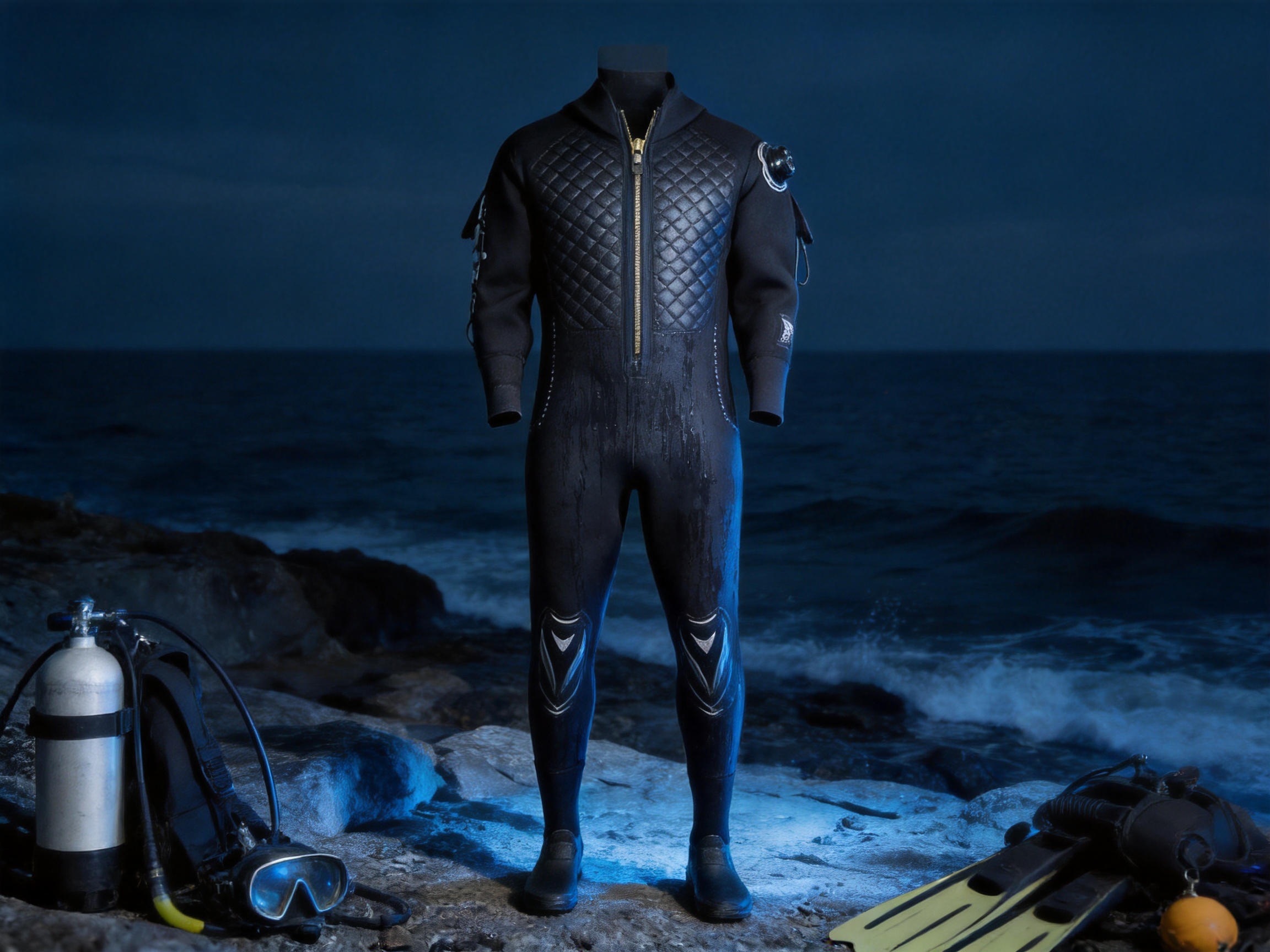
Waterproof Protection and Seam Security
The most basic purpose of a drysuit is to prevent water from entering. Fabric alone cannot achieve this result if the seams, zipper, or openings are not properly constructed. For this reason, the Entry-Level Drysuit uses multiple seam-protection methods rather than relying on a single line of stitching.
The primary seam construction uses blind stitching. Blind stitching is designed to connect material panels while limiting the penetration of the needle through the full thickness of the fabric. This can help reduce the number of direct pathways through which water might migrate, while also producing a cleaner and more controlled seam profile.
Inner seam taping provides an additional layer of reinforcement. Tape applied along the inside of the seam helps cover the joined edges and supports the waterproof barrier. It can also reduce irritation from exposed seam edges and help stabilize the internal construction during repeated movement.
The product information also identifies glued or bonded reinforcement as part of the seam-strength approach. Bonding helps distribute stress across the joined panels and supports resistance to tearing, thread loosening, and cracking. Used together, blind stitching, adhesive reinforcement, and inner seam taping create a more comprehensive construction than simple stitched seams alone.
These techniques are particularly important around high-stress areas. The shoulders, crotch, knees, elbows, seat, and zipper ends may experience repeated tension as the wearer bends, climbs, swims, or handles equipment. Reinforced seam construction is intended to help the garment remain secure when subjected to these forces.
Waterproof Zipper Design
The back-opening metal waterproof zipper is another central component of the drysuit. A zipper must create a secure closure while remaining practical enough for routine dressing and removal. The rear position helps preserve a continuous front area and allows the suit to maintain a clean one-piece profile.
The zipper is designed to glide smoothly and resist snagging. This supports quicker donning and doffing, which can be valuable when users need to prepare for an operation, change equipment, or leave the water without unnecessary delay. Metal construction also provides a firm and durable closure system when properly maintained.
Corrosion resistance is especially relevant to water-sports products. Saltwater, freshwater minerals, moisture, and storage conditions can affect metal components over time. The zipper is specified as having superior corrosion resistance, but routine cleaning, drying, inspection, and lubrication according to the supplier’s care instructions remain important for long-term performance.
Because the zipper is located at the back, some users may require assistance during dressing. This is common for many professional drysuits and should be considered during product training or operational planning. The design prioritizes a secure rear closure and streamlined one-piece construction while retaining practical opening and closing performance.
Durability for Demanding Use
Entry-level products are sometimes associated with basic materials or limited service life. This drysuit takes a different approach by using a high-density neoprene body, a diamond-texture nylon surface, and reinforced seams. These features are intended to provide durability suitable for frequent recreational use and selected professional applications.
The fabric is described as high-elasticity and tear-resistant. Elasticity helps the garment accommodate movement, while tear resistance supports durability when the suit is pulled over base layers, adjusted around equipment, or exposed to contact with rough surfaces. Resistance to deformation is also important because a garment that loses its shape may become less comfortable and less effective over time.
Puncture and scratch resistance are useful during underwater rescue, fishing-related activities, boat operations, and work around submerged infrastructure. The material cannot eliminate every risk of damage, especially from sharp metal, broken glass, hooks, or severe abrasion, but a reinforced textile surface provides an additional layer of protection compared with unprotected rubber or thin fabric.
Durability also depends on manufacturing consistency. Even high-quality neoprene can perform poorly if the panels are cut inaccurately, the adhesive is unevenly applied, or the seams are not properly inspected. A manufacturer with experience in both neoprene fabrics and finished garments is better positioned to control these stages as an integrated process.
Designed for Repeated Handling
Professional users often handle their suits in demanding conditions. A drysuit may be rolled into a vehicle, placed on wet flooring, exposed to sunlight while drying, and repeatedly put on over insulating clothing. It may also be transported with tanks, buoyancy devices, rescue ropes, tools, or other equipment.
The product’s firm neoprene structure and durable outer nylon are intended to withstand this type of routine handling. Nevertheless, correct care remains essential. Users should rinse the suit after exposure to saltwater or contaminated water, dry it completely before storage, avoid folding it sharply for long periods, and inspect the zipper and seams regularly.
Proper maintenance does not merely preserve appearance. It helps reduce the chance that salt deposits, dirt, adhesive damage, or mechanical stress will compromise the waterproof barrier. A durable suit and a disciplined care program work together to extend service life.
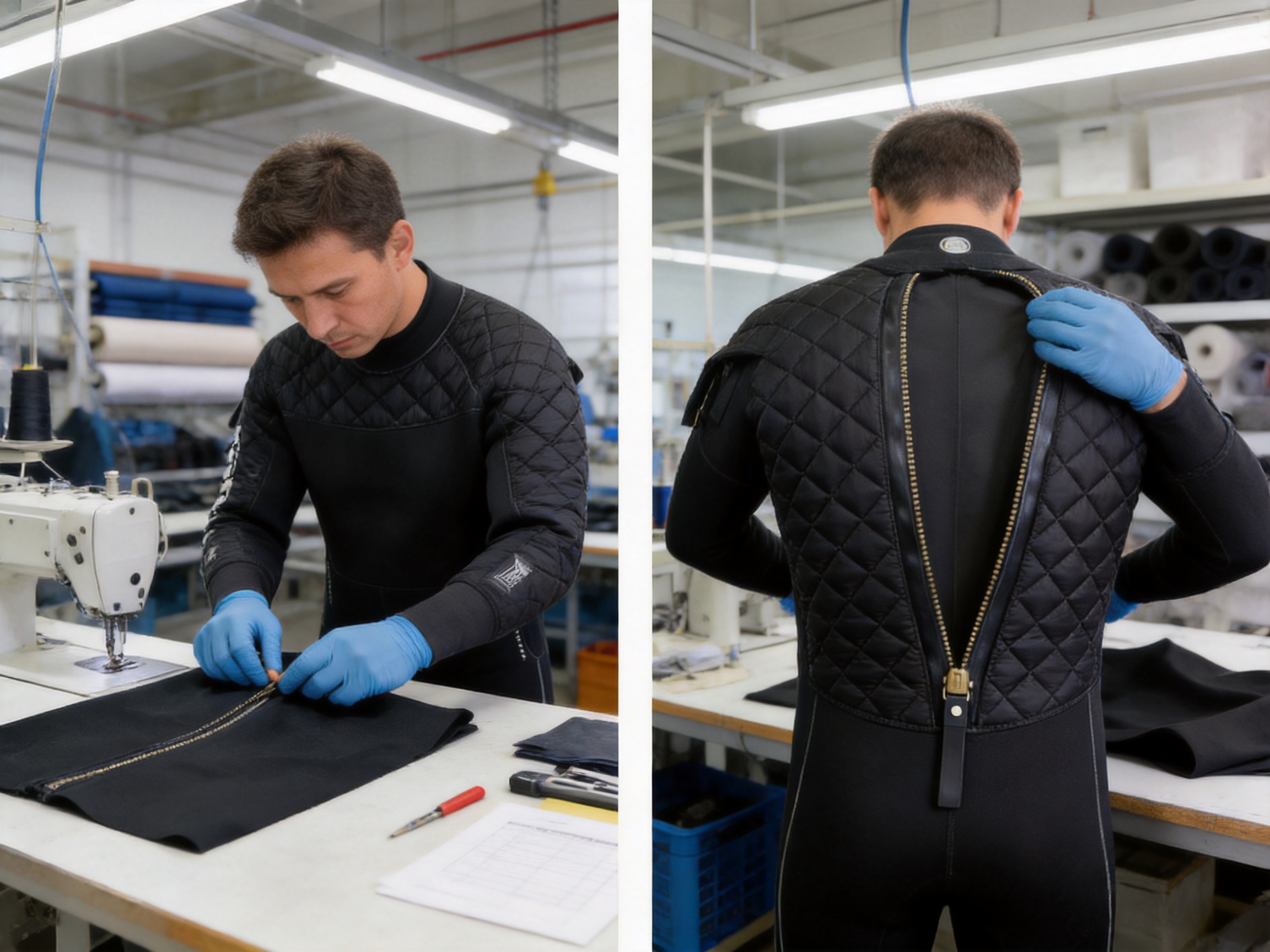
One-Piece Unisex Design
The one-piece configuration provides continuous coverage from the upper body through the legs. It reduces the need to coordinate separate jacket and trouser components and simplifies inventory management for retailers, diving schools, rescue organizations, and equipment distributors.
The unisex cut is designed to fit both male and female users. Rather than relying on a highly gender-specific construction, the suit follows general body contours and provides sizing options for different heights and body types. This approach is practical for organizations that need to equip a mixed group of users without maintaining an unnecessarily complex product range.
Available size options include S, M, ML, L, MLT, and LT, along with related size variations. The inclusion of length-oriented options can be useful for users who fall between standard height and body-width categories. For example, a tall user may require additional leg or torso length without needing a significantly wider overall garment.
Size selection should be based on more than height alone. Chest, waist, hip, inseam, shoulder width, and the thickness of the intended undergarment system should all be considered. When the suit is used in cold water, the wearer may need thermal underwear or a fleece layer beneath it. The selected size should accommodate those layers without creating excessive looseness.
Movement During Diving and Rescue Work
Divers and underwater workers often move in positions that differ from normal walking or standing. They may kick horizontally, turn the torso, reach overhead, crouch, kneel, or use their arms to stabilize themselves. A practical drysuit must allow these movements without placing excessive stress on the seams or zipper.
The elastic neoprene construction supports movement around the shoulders and limbs. The one-piece pattern also reduces the possibility of separate garments shifting apart during activity. This can improve comfort and help users concentrate on navigation, equipment operation, rescue procedures, or underwater tasks.
The suit’s black color gives it a classic and practical appearance. Black is widely used in diving and water-sports equipment because it is easy to coordinate with other gear and generally suitable for repeated professional use. The standard version does not include reflective stripes, so organizations operating in low-light, surface-rescue, or marine-traffic environments may wish to discuss reflective customization or additional visibility equipment.
Applications and Suitable Use Environments
The Entry-Level Drysuit is intended for a broad range of cold-water and water-exposure activities. Its principal applications include deep diving, cold-water diving, underwater rescue, and extended underwater work.
Cold-Water Diving
Cold-water diving places greater demands on thermal protection than warm-water recreational diving. Water conducts heat away from the body much more efficiently than air, and the effect becomes increasingly important during long dives or repeated entries. The 6 mm neoprene construction helps provide a substantial insulating layer, while the waterproof exterior helps keep the wearer dry.
The suit can be paired with appropriate thermal undergarments, gloves, boots, hoods, and buoyancy equipment. Divers should select the complete system according to water temperature, dive duration, depth, activity level, and training. The drysuit should be viewed as one element of a broader cold-water diving configuration.
Deep Diving
Deep diving requires equipment that can withstand demanding environmental conditions and support controlled movement. The suit’s firm neoprene body, reinforced seams, and waterproof zipper provide a foundation for use in deep-water environments. Users should remember that neoprene compression can change buoyancy and thermal behavior with depth, so proper training and equipment configuration are essential.
The product is particularly suitable for users who prioritize warmth and water exclusion over the extremely lightweight construction associated with warm-water suits. Its heavier material may be advantageous in cold environments, although buyers should evaluate transportation, buoyancy, and mobility requirements before selecting the final configuration.
Underwater Rescue
Rescue personnel may work in unpredictable conditions, including cold water, poor visibility, strong currents, and contact with submerged structures. A durable waterproof garment can help reduce exposure to the environment while allowing the wearer to move, reach, and assist other people.
The scratch-resistant and tear-resistant fabric characteristics are relevant in rescue settings where contact with boats, ropes, ladders, docks, rocks, and other surfaces is possible. The black standard color offers a professional appearance, while organizations requiring higher visibility can discuss color changes, printed identification, or additional reflective solutions.
Underwater and Marine Work
Commercial and technical users may need to remain in or around water for extended periods. The drysuit can support activities involving underwater inspection, maintenance, marine operations, training, and water-related fieldwork. Its combination of insulation and waterproofing is useful when a worker’s exposure is longer than a typical recreational session.
Workplace buyers should evaluate the suit against the specific hazards of their operation. If the work involves chemical exposure, high-temperature liquids, severe cutting hazards, or specialized industrial risks, additional protective standards and purpose-built garments may be required. The suit is designed for water protection and thermal support, not for every category of industrial hazard.
Advantages Over Basic Competing Drysuits
The product offers several advantages when compared with basic drysuits that use thinner materials, simpler seams, or less adaptable sizing. These advantages are most apparent in cold-water insulation, construction quality, durability, and customization.
Greater Thermal Support Than Lightweight Models
Many entry-level drysuits are manufactured from thin coated fabrics that focus primarily on water exclusion. These suits may be lightweight and easy to pack, but they often depend heavily on separate thermal clothing. The 6 mm neoprene structure provides built-in insulation and can offer more warmth than an uninsulated shell-style garment in comparable conditions.
This does not mean that the product is appropriate for every climate. In warm water, a thick neoprene drysuit may be warmer than necessary. Its advantage is most relevant to cold-water diving, extended immersion, rescue operations, and applications where thermal comfort is a major priority.
More Comprehensive Seam Reinforcement
Some low-cost suits rely on a single stitched seam or basic adhesive finishing. By combining blind stitching, inner seam taping, and bonded reinforcement, this product is designed to provide a stronger and more water-resistant seam system. The layered approach can help reduce the risk of seam opening, thread loosening, and water migration under repeated stress.
Seam quality is especially important because a small failure can affect the performance of an otherwise high-quality fabric. Reinforcement at the construction stage therefore provides a meaningful advantage over products that treat seams as a secondary detail.
Durable Outer Surface
The diamond-texture nylon layer adds protection against scratching, abrasion, and general wear. Compared with a smooth, minimally protected neoprene surface, this outer construction is better suited to routine handling and contact with equipment. It is a practical feature for users who expect the suit to be used frequently rather than reserved for occasional recreational trips.
Flexible Size and OEM Options
The inclusion of standard and length-oriented sizes gives buyers more flexibility than a limited S-M-L range. This can improve fit across a broader user population and reduce the need for extensive alterations. In addition, the manufacturer can customize thickness, color, logo, printing, and other details, making the product suitable for private-label programs and organizational equipment packages.
Integrated Material and Finished-Product Expertise
A supplier that produces both neoprene fabrics and finished water-sports products can coordinate material selection, lamination, cutting, sewing, seam treatment, and final assembly more effectively than a supplier that only performs final garment assembly. This integrated capability supports better communication between fabric development and product manufacturing.
It also gives buyers access to a broader product range. A customer sourcing drysuits may be able to develop matching wetsuits, fishing waders, rash guards, neoprene accessories, or custom fabric components through the same manufacturing partner.
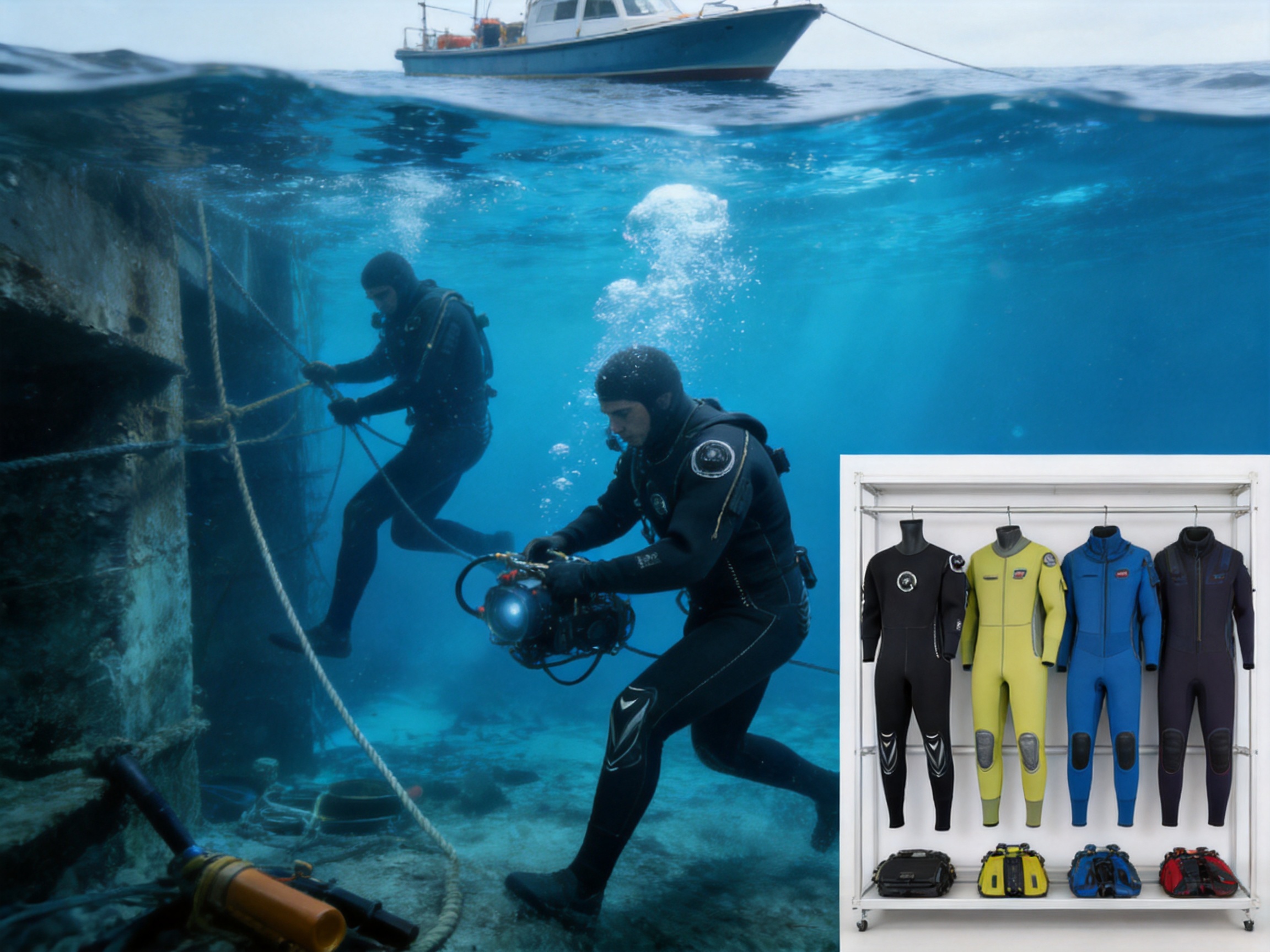
Manufacturing Strengths and Production Process
Jiangsu Yiheng Sports Products Co., Ltd. began its manufacturing journey in 2008. The company’s development started with raw materials and semi-finished products and expanded through sustained experience in neoprene fabrics and finished products. This history has created knowledge across multiple stages of the supply chain.
The factory covers more than 15,000 square meters and employs over 120 professional workers. This scale provides a foundation for organized production, material handling, sampling, quality inspection, and order fulfillment. It also supports the company’s ability to serve both standard product requirements and customized OEM or ODM projects.
Material Selection and Preparation
The first stage of manufacturing is the selection and preparation of suitable neoprene and nylon materials. For this drysuit, the production objective is to combine high density, thermal insulation, elasticity, and resistance to deformation with a durable diamond-texture fabric surface.
Material preparation includes checking thickness, surface condition, elasticity, color consistency, and general physical performance. Stable input materials are important because irregular thickness or inconsistent stretch can affect pattern accuracy, comfort, and seam alignment later in the process.
The company’s experience as a neoprene fabric manufacturer supports control over this stage. Instead of treating fabric as an anonymous external component, the supplier can evaluate how a material will behave during cutting, stitching, bonding, taping, and final use.
Pattern Development and Cutting
After material approval, panels are prepared according to the one-piece drysuit pattern. Accurate cutting is essential for a good fit and for consistent seam margins. Poorly aligned panels can create tension points, uneven leg lengths, restricted shoulder movement, or excessive material around the torso.
Pattern development must account for the properties of 6 mm neoprene. Thick material requires careful management of curves, corners, panel transitions, and seam allowances. The goal is to create a garment that provides sufficient coverage and thermal protection without adding unnecessary bulk or limiting movement.
Panel Joining and Blind Stitching
The cut panels are joined through blind stitching and associated bonding procedures. Operators must control stitch placement, thread tension, panel alignment, and seam pressure. These factors influence both the appearance and the mechanical strength of the finished garment.
Blind stitching requires precision because the seam must be secure while avoiding unnecessary penetration through the full material thickness. Consistent stitching supports a smoother internal finish and helps reduce the likelihood of water pathways developing along the seam line.
Inner Seam Taping
Once the panels are joined, inner seam taping is applied to reinforce the internal side of the construction. The tape must be positioned accurately and bonded firmly along the seam. Inconsistent application can create weak spots, wrinkles, or gaps that may affect waterproof performance.
Quality control at this stage includes checking tape continuity, adhesion, edge coverage, and overall seam appearance. Reinforced internal seams also help the suit tolerate repeated bending and stretching during diving, rescue, and underwater work.
Zipper Installation
The back-opening metal waterproof zipper is installed with particular attention to alignment and closure quality. A zipper that is slightly misaligned may be difficult to operate or may place unnecessary stress on the surrounding neoprene. Correct installation helps the zipper glide smoothly and supports a secure waterproof closure.
The zipper area is inspected for uniform attachment, clean finishing, and freedom from material interference. Because the zipper is one of the most mechanically complex parts of the suit, it requires careful handling during production and routine maintenance after delivery.
Final Assembly and Inspection
After the major components are completed, the suit undergoes final assembly and inspection. This may include checking panel shape, seam integrity, zipper operation, surface appearance, size labeling, and general workmanship. Defects such as loose threads, incomplete bonding, irregular tape, fabric scratches, or uneven finishing can be identified before shipment.
The manufacturer’s combined experience in fabric production and finished-product manufacturing is valuable during final inspection. Inspectors can assess not only whether the garment looks correct, but also whether the material and construction are appropriate for the intended application.
Quality and Test Compliance
The product information identifies several Chinese textile and apparel-related test requirements. These include color fastness to perspiration, color fastness to rubbing, aromatic amine dye testing, and formaldehyde content testing.
Compliance with GB/T5713-2013 is specified for color fastness to perspiration at a level of at least 3. This type of test evaluates the ability of the color to resist change or transfer when exposed to perspiration-related conditions.
Compliance with GB/T3920-2008 is specified for color fastness to rubbing at a level of at least 4. This test relates to resistance against color transfer caused by friction, which is relevant when the suit is handled, worn with equipment, or stored alongside other garments.
The product is also identified as compliant with GB18401-2010 Class B requirements concerning aromatic amine dyes. In addition, formaldehyde content was tested using the water extraction method under GB/T2912.1-2009, with the provided result stated as zero.
These test references support responsible material selection and provide buyers with useful information when evaluating product safety and textile quality. Buyers requiring additional certifications for diving, occupational safety, marine operations, or specific export markets should communicate those requirements before production and request the relevant documentation.
Customization for Private-Label and OEM Programs
The manufacturer supports customization of thickness, color, logo, printing, and related product details. This makes the drysuit suitable for distributors, diving schools, rescue organizations, retailers, equipment brands, and institutional buyers seeking a product that matches their own market identity.
Thickness customization allows buyers to adapt the suit to different water temperatures and use cases. A thinner version may be more appropriate for moderate climates or users prioritizing flexibility, while a thicker version may be selected for colder environments where thermal protection is more important. Any change in thickness should be evaluated alongside pattern design, seam construction, buoyancy behavior, and sizing.
Color customization can support different market preferences or organizational requirements. Black is the standard color, but alternative colors may be used for product differentiation, team identification, or increased visibility. Buyers working in rescue or surface operations should consider whether reflective elements, high-visibility panels, or printed identification are necessary.
Logo and printing services allow customers to develop private-label products. Branding may be placed on the chest, sleeve, thigh, back, or other suitable areas depending on the design. Placement should be selected carefully so that printing does not interfere with seam lines, zipper operation, movement, or material flexibility.
ODM development can include changes to pocket arrangements, reinforcement zones, collar design, closure details, size grading, packaging, labels, and accessories. The manufacturer’s experience across wetsuits, drysuits, fishing waders, rash guards, water-sports equipment, and neoprene fabrics provides a broad base for coordinated product development.
Recommended Customization Discussion
Before placing a customized order, buyers should provide information about the target market, water temperature, user activity, size range, branding requirements, packaging expectations, testing needs, and expected annual volume. Clear technical communication helps reduce revisions and ensures that the final product matches its intended purpose.
A sample approval process is recommended for private-label projects. The sample should be evaluated for fit, zipper operation, seam appearance, material hand feel, logo placement, movement, and compatibility with the intended thermal layers. Any changes should be confirmed before bulk production.
Practical Benefits for Different Buyers
Retailers can position the drysuit as a cold-water protective option for customers who want more insulation than a lightweight shell suit. The black color and classic one-piece design make it straightforward to present in a professional equipment range.
Diving schools can use the product for training programs conducted in cooler water, provided the sizing range and maintenance procedures are suitable for their students. The multiple size options can help schools serve different body types, while the durable construction is useful in an environment where equipment may be used frequently.
Rescue organizations may value the suit’s waterproof protection, thermal performance, and robust fabric. Rescue buyers should assess whether additional visibility, reflective elements, specialized pockets, reinforced knees, or other operational features are required for their specific missions.
Distributors can benefit from the manufacturer’s ability to provide standard products as well as customized versions. A distributor may develop several thicknesses or colorways for different regional markets while maintaining a consistent supply relationship.
Private-label brands can use the product as a foundation for a branded cold-water collection. Logo placement, printing, packaging, size labels, and color selection can be coordinated to create a coherent product identity across drysuits and related neoprene products.
Care, Storage, and Service-Life Recommendations
Proper care is important for maintaining the performance of any drysuit. After use, the suit should be rinsed with clean water to remove salt, mud, sand, and other contaminants. Particular attention should be given to the zipper, seam areas, cuffs, and surfaces that come into contact with equipment.
The suit should be dried thoroughly in a cool, ventilated location away from prolonged direct sunlight and excessive heat. High temperatures can affect neoprene, adhesives, coatings, and zipper components. The suit should not be stored while damp because trapped moisture may contribute to odor, material deterioration, or surface contamination.
Users should inspect the seams and zipper before each important operation. Look for separation, loose thread, damaged tape, cuts, punctures, abnormal stiffness, or difficulty during zipper movement. Small defects should be addressed promptly rather than ignored until they become larger failures.
Sharp objects should be kept away from the suit during transport and storage. When carrying the garment with diving cylinders, tools, hooks, or rescue equipment, protective bags or separate compartments can reduce the chance of accidental puncture or abrasion.
The suit should be stored in a way that avoids severe compression or sharp folds for extended periods. A broad hanger or carefully supported storage position may help preserve its shape. Buyers should follow the manufacturer’s detailed care recommendations for the specific customized version.
Important Selection Considerations
Although the product offers strong thermal and waterproof characteristics, buyers should select it according to actual operating conditions. Water temperature, dive depth, duration, activity level, undergarment thickness, and required mobility all influence suitability.
Users should also consider the complete equipment system. Drysuits may affect buoyancy and require appropriate training. Divers should use compatible buoyancy-control equipment and follow established safety procedures. Rescue and industrial users should confirm that the suit is appropriate for the hazards and operating protocols of their workplace.
The standard model includes no reflective stripes. This is suitable for customers who prefer a simple black appearance, but visibility requirements should be discussed before ordering. Reflective printing, contrasting panels, or other identification features may be considered as part of customization.
The back-opening zipper may be easier to operate with assistance. Organizations should train users in proper donning and doffing procedures and should avoid forcing the zipper when material is caught in the closure.
Why Choose an Experienced Neoprene Manufacturer?
Manufacturing experience matters because performance depends on the interaction of material science, pattern engineering, seam technology, and quality control. A company that has worked with neoprene for many years is more familiar with how different densities, thicknesses, laminations, and fabric surfaces behave during production.
Jiangsu Yiheng Sports Products Co., Ltd. has developed its capabilities over more than 18 years in the neoprene-fabric and finished-product sector. The company’s experience includes direct manufacturing as well as years of retail-market practice. This combination gives the manufacturer insight into both production feasibility and customer expectations in the end market.
The factory’s more than 15,000 square meters of production space and over 120 professional employees provide capacity for organized workflows and multiple product categories. Its portfolio includes wetsuits, drysuits, fishing waders, rash guards, water-sports equipment, and neoprene fabrics.
This broad product knowledge can help when a buyer wants to build a complete water-sports range rather than source one isolated item. Fabric selections, colors, printing methods, labels, packaging, and sizing logic can potentially be coordinated across several product categories.
The company offers OEM manufacturing, ODM development, private-label support, and long-term supply cooperation. These services are useful for businesses that need more than a catalog purchase and want to develop a product adapted to their customers, climate, brand position, or operating requirements.
Summary of Product Strengths
The Entry-Level Drysuit provides a practical combination of thick neoprene insulation, waterproof protection, durability, and flexible sizing. Its 6 mm high-density neoprene body is suitable for users who need more thermal support than many lightweight drysuit alternatives can provide.
The diamond-texture nylon surface helps improve resistance to scratches and general wear. Blind stitching, inner seam taping, and bonded reinforcement provide a multi-layered approach to seam security. The back-opening metal waterproof zipper supports a secure closure while allowing relatively efficient dressing and removal.
The one-piece unisex design is suitable for both male and female users, and size options such as S, M, ML, L, MLT, and LT provide flexibility for different heights and body shapes. The standard black color is practical, while customization options allow customers to request alternative colors, thicknesses, logos, printing, and other details.
Compared with basic drysuits that use thin shell fabrics or simple seams, this model is positioned toward users who value thermal insulation and durable construction. It is especially appropriate for cold-water diving, deep diving, underwater rescue, and extended water-related work.
Its performance is supported by a manufacturer with integrated experience in neoprene fabric production and finished water-sports products. The combination of factory scale, professional personnel, product development experience, and private-label capabilities makes the drysuit a suitable option for distributors, retailers, diving organizations, rescue teams, and OEM customers.
Questions and Answers
What type of product is the Entry-Level Drysuit?
It is a one-piece neoprene drysuit made from 6 mm high-density neoprene with diamond-texture nylon. It is designed to provide waterproof protection, thermal insulation, flexibility, and durability in cold-water and underwater applications.
Is the suit suitable for cold-water diving?
Yes. The 6 mm neoprene construction is intended to provide substantial insulation for cold-water diving and extended exposure. Users should select appropriate thermal layers and accessories according to the water temperature, dive duration, depth, and personal requirements.
Does the drysuit use stitched seams?
Yes. The seams use blind stitching with inner seam taping and bonded reinforcement. This layered construction is designed to improve strength, reduce water ingress, and resist thread loosening or seam cracking.
Where is the zipper located?
The suit uses a back-opening metal waterproof zipper. It is designed to glide smoothly, resist snagging, and support practical donning and doffing. Some users may require assistance when operating a rear-entry zipper.
Is the product unisex?
Yes. The one-piece cut is designed for both male and female users. Correct size selection remains important because body proportions and the thickness of thermal undergarments can vary significantly.
What sizes are available?
Available options include S, M, ML, L, MLT, and LT, along with related size variations. Buyers should confirm the final size chart and measurement requirements with the supplier before ordering.
What color is the standard version?
The standard color is black. Alternative colors can be discussed as part of a customization or private-label project.
Does the standard drysuit include reflective stripes?
No. Reflective stripes are not included in the standard configuration. Buyers who need enhanced visibility can discuss reflective elements, printing, contrasting panels, or other identification features with the manufacturer.
Can the thickness be customized?
Yes. The manufacturer states that thickness can be customized. Any change should be reviewed in relation to thermal performance, flexibility, buoyancy, pattern design, and seam construction.
Can logos and printing be added?
Yes. Logo application, printing, color changes, and other private-label details are available for discussion. A sample approval is recommended before bulk production.
What industries can use this product?
The drysuit is suitable for cold-water diving, deep diving, underwater rescue, underwater work, marine operations, diving schools, equipment retailers, distributors, and private-label water-sports brands.
Is the suit suitable for every industrial environment?
No. It is designed primarily for waterproofing, thermal insulation, and general durability. Buyers working with chemicals, extreme cutting hazards, high temperatures, or specialized industrial risks should request a technical evaluation and confirm whether additional protective standards are required.
How should the drysuit be maintained?
Rinse it with clean water after use, allow it to dry fully in a cool ventilated area, inspect the seams and zipper regularly, avoid sharp objects, and store it without excessive compression or prolonged exposure to heat and sunlight.
What testing information is provided?
The product information identifies testing related to perspiration color fastness, rubbing color fastness, aromatic amine dyes, and formaldehyde content. The specified results include perspiration fastness of at least 3, rubbing fastness of at least 4, compliance with the stated aromatic amine dye requirement, and a formaldehyde result of zero using the water extraction method.
Why work with a neoprene fabric and finished-product manufacturer?
An integrated manufacturer can coordinate material selection, fabric handling, pattern cutting, garment assembly, seam reinforcement, and final inspection. This may improve communication and make it easier to develop related products such as wetsuits, fishing waders, rash guards, and custom neoprene fabrics.
Conclusion
The Entry-Level Drysuit is designed for users who need reliable protection in cold and wet environments without moving immediately to a highly specialized premium system. Its 6 mm high-density neoprene provides thermal support, while the diamond-texture nylon surface contributes to durability and resistance to everyday abrasion.
Its blind-stitched, taped, and bonded seams create a stronger construction than simple stitched alternatives. The waterproof back-entry metal zipper provides a secure closure and practical operation. The one-piece unisex pattern, extended size range, and customization options make the product suitable for individual users, retailers, diving schools, rescue organizations, distributors, and private-label brands.
Manufactured by an experienced neoprene specialist with a large production facility, professional workforce, and capabilities covering both fabrics and finished products, the drysuit offers a strong foundation for standard purchasing and customized development. For buyers seeking a durable, insulated, and adaptable drysuit for cold-water diving, underwater rescue, or extended marine work, it represents a practical and versatile solution.
References
1. Product specification and technical information supplied for the Entry-Level Drysuit.
2. Jiangsu Yiheng Sports Products Co., Ltd. company profile and manufacturing history.
3. GB/T5713-2013, textile color fastness to perspiration testing requirements.
4. GB/T3920-2008, textile color fastness to rubbing testing requirements.
5. GB18401-2010, national general safety technical code for textile products.
6. GB/T2912.1-2009, textiles testing method for formaldehyde determination using water extraction.
7. General technical principles for neoprene protective garments, seam reinforcement, zipper maintenance, and cold-water diving equipment selection.
Product: Entry-Level Drysuit

LET’S DEVELOP YOUR NEXT NEOPRENE PRODUCT LINE
Quick Links
Product Categories
Contact Us
-
 Email: postmaster@yihengsport.com
-
 Mobile: +86-13564100539
-
 No. 480 Jiangping Road, Madian, Binjiang Town, Taixing City, Taizhou City, Jiangsu Province, China.
Copyright © Jiangsu Yiheng Sports Products Co., Ltd. All Rights Reserved
China Wetsuit Manufacturer Neoprene Fabric Manufacturer
