

 Language
 English
 中文简体
 日本語
 русский
 Español
 عربى

Oct, 20, 2026
Women’s 2–3mm Lightweight Shorty Neoprene Wetsuit for Warm-Water Sports
Choosing the right wetsuit for warm-water and shoulder-season activities requires more than selecting a thickness number. A well-designed shorty wetsuit must balance thermal protection, flexibility, comfort, water resistance, durability, and ease of use. It should provide enough insulation to reduce chilling without creating the weight, stiffness, or overheating often associated with thicker full-length suits. It must also support a wide range of movement, whether the wearer is paddling on a stand-up paddleboard, swimming in open water, snorkeling along a reef, surfing a small wave, or beginning a recreational diving session.
The Women’s 2–3mm Lightweight Shorty Neoprene Wetsuit is designed around this balance. It combines premium neoprene, double-sided nylon fabric, ergonomic women’s tailoring, short sleeves, long legs, a rear zipper, collar Velcro closure, and reinforced flatlock stitching. The result is a practical one-piece suit for spring, summer, and other mild-water conditions where mobility and moderate warmth are equally important.
Unlike a basic rental-style wetsuit, this shorty model is developed with attention to body contours, seam comfort, donning convenience, surface durability, and customization requirements. Its construction is suitable for individual water-sports users as well as retailers, clubs, distributors, and private-label buyers seeking a dependable product platform.
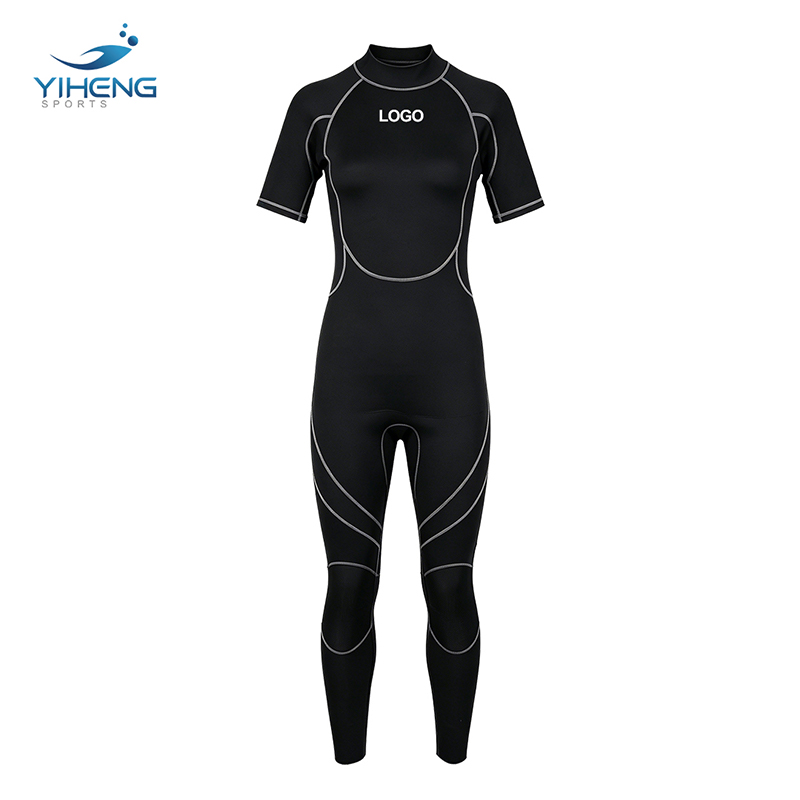
Women's 2-3mm Lightweight Shorty Neoprene Wetsuit
Product Overview and Intended Use
This shorty wetsuit uses a 2mm or 3mm neoprene construction, allowing buyers to select a thickness that better matches their climate, activity level, and target market. The 2mm version emphasizes lightness, breathability, and freedom of movement. The 3mm version provides additional thermal retention for cooler spring water, early-morning sessions, or users who become cold more easily.
The garment is a one-piece design with short sleeves and full-length legs. This configuration leaves the lower arms exposed for improved ventilation and upper-body mobility while protecting the torso, hips, thighs, and knees. It is especially practical for active users who need a compromise between a sleeveless spring suit and a full-length wetsuit.
Typical applications include surfing, snorkeling, stand-up paddleboarding, recreational diving, open-water swimming, kayaking, sailing, and general water fitness. The shorty format also works well as a layering garment under a thicker wetsuit or as an additional thermal layer for users who want adaptable equipment throughout changing seasons.
Because the suit is designed for moderate thermal conditions rather than extreme cold, it should be selected according to water temperature, wind exposure, activity intensity, personal cold sensitivity, and the duration of use. Wetsuits do not replace proper cold-water safety planning. They are designed to reduce heat loss and improve comfort, not to eliminate the risks associated with cold exposure.
Why a 2–3mm Shorty Wetsuit Is a Practical Choice
Wetsuit thickness directly affects insulation, flexibility, weight, and drying time. A thicker suit generally offers greater thermal protection, but it can also restrict movement and feel unnecessarily warm in summer conditions. A thinner suit is lighter and more flexible, yet may not provide enough warmth in cooler water. The 2–3mm range addresses the middle ground for many recreational and warm-water applications.
For spring and summer activities, the shorty structure helps regulate body temperature without the bulk of a full-length winter wetsuit. The exposed lower arms make paddling, swimming, and board handling feel more natural, while the long legs retain warmth around large muscle groups and shield the skin from board surfaces, equipment straps, minor abrasions, and sunlight.
The design is also convenient for travelers. It occupies less luggage space than a full wetsuit, dries relatively quickly when properly rinsed and hung, and can be used across several activities. Retailers can position it as an accessible entry-level or mid-range product for customers who need one versatile garment rather than separate suits for each warm-weather sport.
Compared with a rash guard alone, the shorty provides meaningful insulation and a closer protective barrier against cool water. Compared with a full wetsuit, it provides more ventilation and less material around the arms. Compared with a low-cost thin suit, a carefully constructed 2–3mm model can provide better seam integrity, more stable fit, and greater resistance to repeated use.
Premium Neoprene Construction
The core material is premium neoprene, a closed-cell synthetic rubber commonly used for thermal water-sports garments. Its structure contains small gas-filled cells that help slow heat transfer between the body and surrounding water. Neoprene also offers stretch, cushioning, buoyancy, and a smooth surface that can be adapted to different fabric laminations.
Material quality affects how a wetsuit feels during movement and how well it maintains its shape over time. A more consistent neoprene sheet can provide predictable thickness, stable elasticity, and uniform compression. These qualities are important because uneven material behavior may create tight spots, sagging areas, or premature creasing.
The double-sided nylon fabric adds a protective textile layer to the neoprene. Nylon supports handling strength, improves surface durability, and contributes to a smoother finish. It can also make the suit easier to put on than exposed rubber while helping protect the neoprene from minor contact damage. The fabric surface is suitable for printing, labeling, color coordination, and private-label development, subject to the selected production specification.
For the wearer, the combination of neoprene and nylon creates a more balanced product than a single-layer construction. Neoprene supplies thermal and elastic properties, while nylon helps improve toughness and user comfort. The material combination is appropriate for repeated recreational use where the suit may encounter salt water, boards, equipment, sand, sunlight, and frequent dressing.
Thermal Retention Without Excessive Bulk
The suit is designed to reduce heat loss while remaining lightweight. Its 2–3mm thickness gives users moderate thermal protection without the heavy feeling associated with thicker cold-water suits. This is particularly valuable during active sports, when excessive insulation can lead to overheating and discomfort.
Thermal performance depends on more than thickness. A close-fitting garment reduces the amount of water circulating between the suit and the skin. Proper fit, smooth interior contact, intact seams, and correct closure adjustment all contribute to comfort. For this reason, the women’s tailored shape and rear closure are important parts of the product system rather than merely visual details.
Elasticity for Active Movement
Water sports place repeated demands on the shoulders, chest, waist, hips, knees, and arms. A wetsuit that is too stiff can make paddling tiring and swimming inefficient. The elastic neoprene construction helps the wearer bend, rotate, reach, kick, and balance with less resistance.
The short-sleeve design gives the arms a greater sense of freedom than a full-sleeve suit. This benefits surfers who need to paddle, swimmers who use a full stroke cycle, and paddleboard users who repeatedly lift and lower the arms. The long legs continue to provide coverage while allowing unrestricted knee and ankle movement.
Low Water Drag
A well-fitted smooth-surface wetsuit can reduce loose fabric movement and minimize unnecessary water resistance. The close-fitting one-piece format helps create a continuous outer profile, while the nylon surface offers a clean appearance suitable for active movement. Lower drag can make the suit feel more efficient during swimming, paddling, and board sports.
Water resistance is influenced by fit, body position, surface condition, and activity technique. The garment does not eliminate drag, but its streamlined design is intended to avoid the loose, floating material that can occur with poorly fitted layered clothing.
Women’s Ergonomic Fit and 3D Cutting
Women’s wetsuit fit should account for differences in torso length, bust shaping, waist placement, hip width, and leg proportions. A generic unisex pattern may create excessive pressure in one area and looseness in another. The product uses ergonomic 3D cutting intended to follow women’s body curves more naturally.
A closer fit supports thermal performance because it reduces gaps where water can repeatedly enter. It also helps the suit remain stable during swimming, paddling, and surfing. When the garment moves with the body rather than shifting independently, the wearer can focus on technique and balance instead of repeatedly adjusting the clothing.
Fit is still dependent on accurate body measurements. Customers should compare chest, waist, hip, torso, and height measurements with the supplier’s size chart. The suit should feel close to the body without causing numbness, restricted breathing, painful pressure, or excessive wrinkling. Neoprene should lie smoothly against the body, particularly around the shoulders, lower back, hips, and upper legs.
For private-label buyers, the pattern can serve as a foundation for additional development. Possible options may include size-range expansion, revised color blocking, logo placement, custom labels, packaging, and other OEM or ODM details. Any changes should be evaluated through sampling because modifications to panels, seams, and materials can affect fit and production performance.
Rear Zipper and Collar Velcro Closure
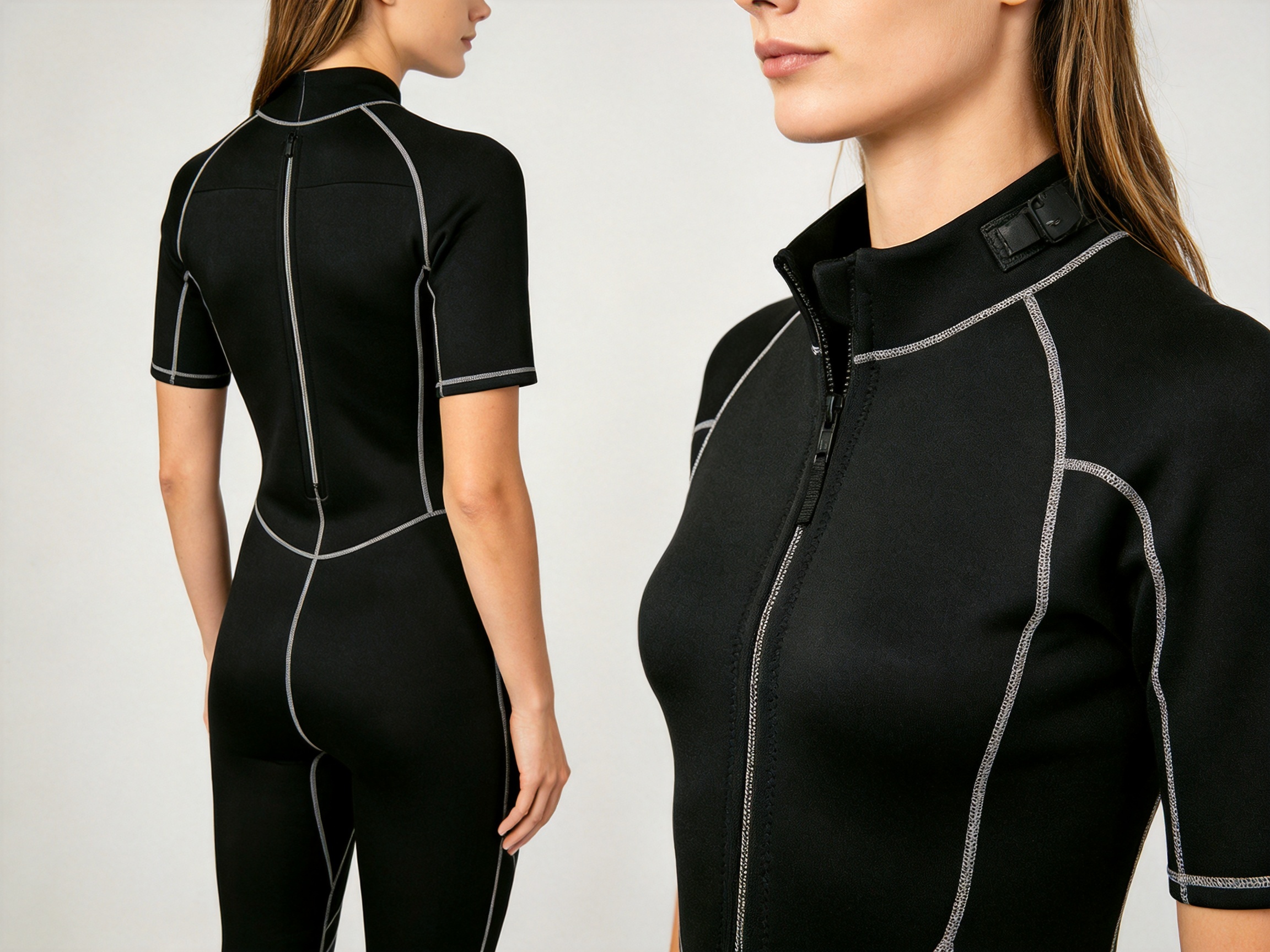
The rear zipper provides a familiar and practical entry system. Compared with some highly restrictive front-entry designs, a back zipper can make the suit easier to put on and remove, especially for users who are new to wetsuits. It also supports a clean front panel that can be used for color design, visual branding, or decorative detailing.
The collar Velcro closure works with the zipper to create a double-seal arrangement. When adjusted correctly, it helps reduce water entry around the neckline while allowing the wearer to control the level of snugness. A collar that is too loose may allow flushing, while one that is too tight can feel uncomfortable. The adjustable closure provides a useful balance between sealing performance and personal comfort.
The zipper should be operated carefully and should not be forced if fabric or lining becomes caught in the teeth. Users should avoid pulling the suit aggressively by the zipper tab. Retailers and end users can extend zipper life by rinsing the garment after salt-water use, removing sand, and storing it without excessive compression or sharp folds around the zipper area.
Flatlock Seam Technology
The product uses four-needle, six-thread flatlock stitching. Flatlock seams are formed so that the joined fabric edges create a relatively low-profile surface. This is valuable in a wetsuit because bulky internal seams may rub against the skin during repeated movement.
The four-needle, six-thread construction is designed to provide an organized, reinforced seam structure. It supports a balance of strength, flexibility, and comfort when joining panels. The exact performance of any seam depends on thread selection, stitch density, operator control, panel accuracy, material condition, and quality inspection.
For the wearer, low-profile seams can reduce chafing around the torso, underarms, hips, and legs. For the manufacturer, consistent seam construction helps support repeatability across production batches. A stable sewing process is particularly important for private-label orders because customers expect samples and bulk goods to maintain similar appearance and performance.
Comfort and Abrasion Reduction
Chafing is a common problem when a garment repeatedly moves against wet skin. It can become more noticeable during long sessions, high-frequency paddling, or swimming. The flatlock structure is intended to keep seam ridges less intrusive, supporting greater comfort during extended wear.
Comfort is also influenced by the nylon lining, correct sizing, seam placement, and the absence of rough finishing. A quality-control process should examine seam consistency, loose threads, skipped stitches, panel alignment, and areas where the garment may experience concentrated tension.
Leak-Resistant Construction
No shorty wetsuit is completely waterproof in the manner of a drysuit. Some water may enter through the neckline, zipper, cuffs, or seams. However, close fit and careful seam construction can help reduce uncontrolled water exchange. The product’s reinforced flatlock stitching, rear zipper, and collar closure are intended to support a more stable thermal environment than loose-fitting water clothing.
Buyers should understand the difference between water resistance and waterproofing. This product is a thermal wetsuit for active water sports, not a sealed dry garment. Its performance depends on fit, movement, closure adjustment, and the conditions in which it is used.
Performance Advantages Compared with Basic Competitor Models
The shorty wetsuit market includes very low-cost products, fashion-oriented swim garments, rental-grade suits, and technical sportswear. The main advantage of this model is its combination of practical features rather than reliance on one isolated specification.
| Evaluation Area | Typical Basic Water Garment | Women’s 2–3mm Shorty Wetsuit | Practical Benefit |
|---|---|---|---|
| Thermal material | Thin fabric or unspecified rubber blend | 2mm or 3mm premium neoprene | More dependable warmth for cool and mild water |
| Outer construction | Single-layer or lightly protected surface | Double-sided nylon fabric | Improved durability, handling comfort, and surface protection |
| Body pattern | Generic or unisex cut | Women’s ergonomic 3D cutting | Closer fit around curves and reduced garment movement |
| Arm coverage | Full sleeves or sleeveless design | Short sleeves with long legs | Balanced ventilation, mobility, and lower-body coverage |
| Closure system | Basic pull-on entry | Rear zipper and collar Velcro | Easier dressing and improved neck adjustment |
| Seam construction | Bulky or inconsistent stitching | Four-needle, six-thread flatlock seams | Lower-profile comfort and reinforced joining |
| Customization | Limited stock colors and sizes | Custom logo, color, size, and OEM options | Suitable for private-label and organized retail programs |
This comparison does not mean every competing product has the same limitations. Many brands offer highly technical alternatives, including glued-and-blind-stitched cold-water suits and premium stretch neoprene systems. However, those garments may be more expensive, warmer than necessary, or less convenient for casual warm-water users. The 2–3mm shorty model is positioned as a functional and commercially accessible option for customers who value versatility.
Its competitive strength is therefore its balance. It provides more thermal structure and body protection than a rash guard, more arm freedom than a full wetsuit, and more product development potential than an unbranded basic garment.
Applications Across Water Sports
Surfing
For surfing in warm or moderately cool water, the suit protects the torso and legs while allowing the shoulders and arms to move during paddling. The close fit helps prevent the garment from shifting when the surfer lies on the board, sits up, or stands. The nylon surface may also help reduce minor irritation caused by repeated contact with a board.
Surfers should pair the suit with appropriate board equipment and consider additional protection for colder wind, longer sessions, or exposed coastal conditions. The 3mm option may be preferable for early-season surfing, while the 2mm version may be more comfortable during hot-weather sessions.
Snorkeling
Snorkeling often involves long periods of floating or slow movement, during which the body may lose heat even in water that initially feels comfortable. The shorty wetsuit provides additional insulation around the torso and legs while keeping the arms relatively free for swimming and equipment handling.
Its protective coverage can also reduce contact with rough surfaces, fins, straps, and incidental environmental obstacles. Snorkelers should still use suitable flotation and follow local water-safety guidance.
Stand-Up Paddleboarding
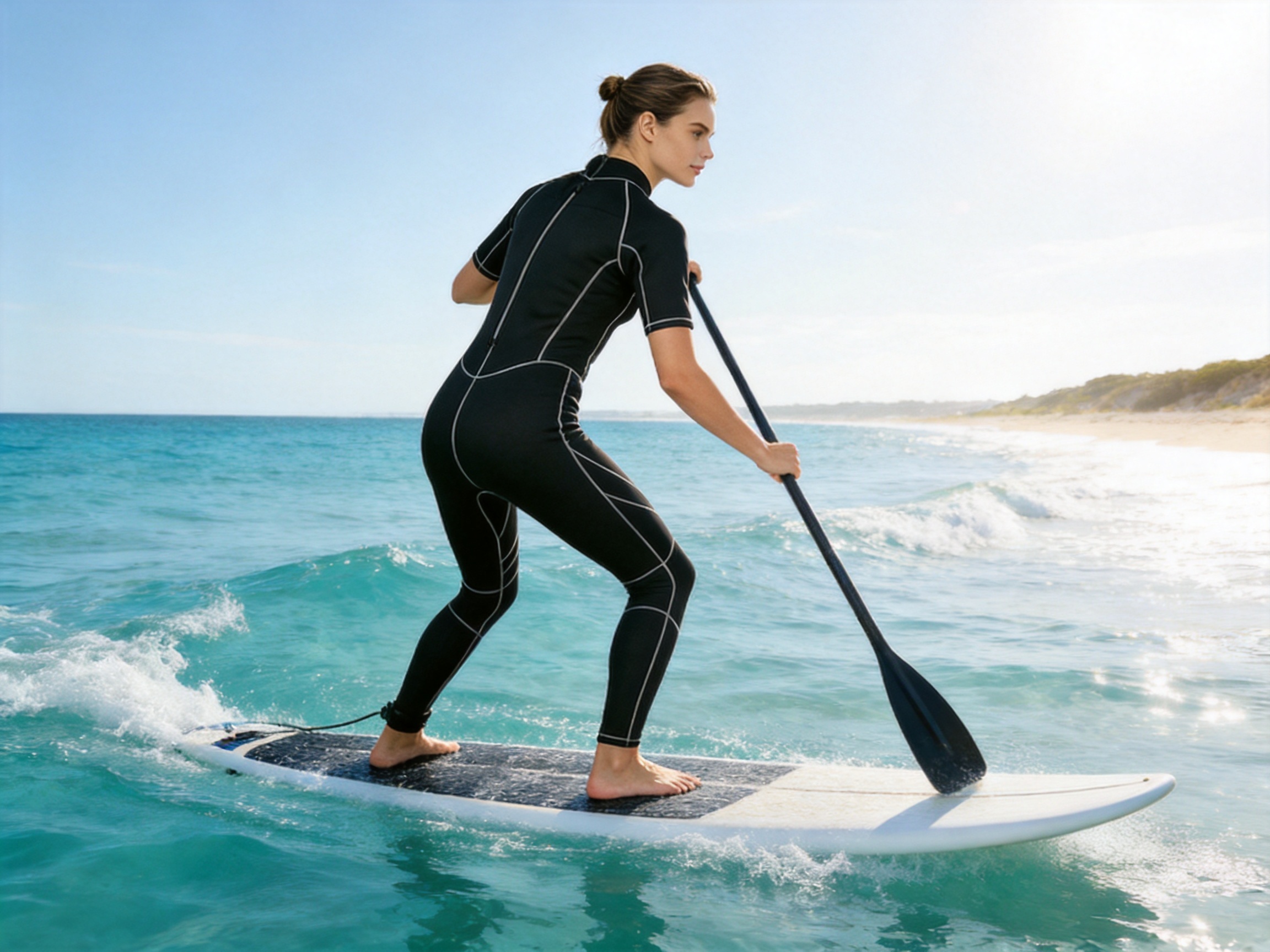
Stand-up paddleboarding combines balance, repeated upper-body movement, and exposure to wind. Falls into the water may cause a noticeable temperature change, even during a warm day. The suit helps provide thermal support without the excessive heat of a full-length wetsuit during active paddling.
The short sleeves are particularly useful when the paddler performs repeated strokes. The long legs provide coverage when kneeling or sitting on the board and may help reduce discomfort from cooler water during accidental immersion.
Open-Water Swimming
Open-water swimmers often need to manage changing temperature, wind, and distance. A shorty wetsuit can help swimmers who want extra warmth without using a full-sleeve design. The flexible material supports a natural stroke while the one-piece structure avoids loose garments that could create additional drag.
Swimmers should practice in controlled conditions before attempting long distances. A wetsuit can improve comfort and buoyancy, but it does not replace visibility equipment, a safety companion, or knowledge of local currents and weather.
Recreational Diving
For warm-water recreational diving, the suit provides a layer of thermal protection and helps reduce minor abrasion from equipment or underwater surfaces. It can be used for suitable shallow or warm-water activities, depending on the diver’s exposure needs and professional guidance.
Divers should select thickness according to depth, water temperature, duration, and personal tolerance. Compression at depth can reduce the insulating effect of neoprene, so a shorty wetsuit should not be treated as a universal cold-water diving solution.
Manufacturing Strengths and Production Experience
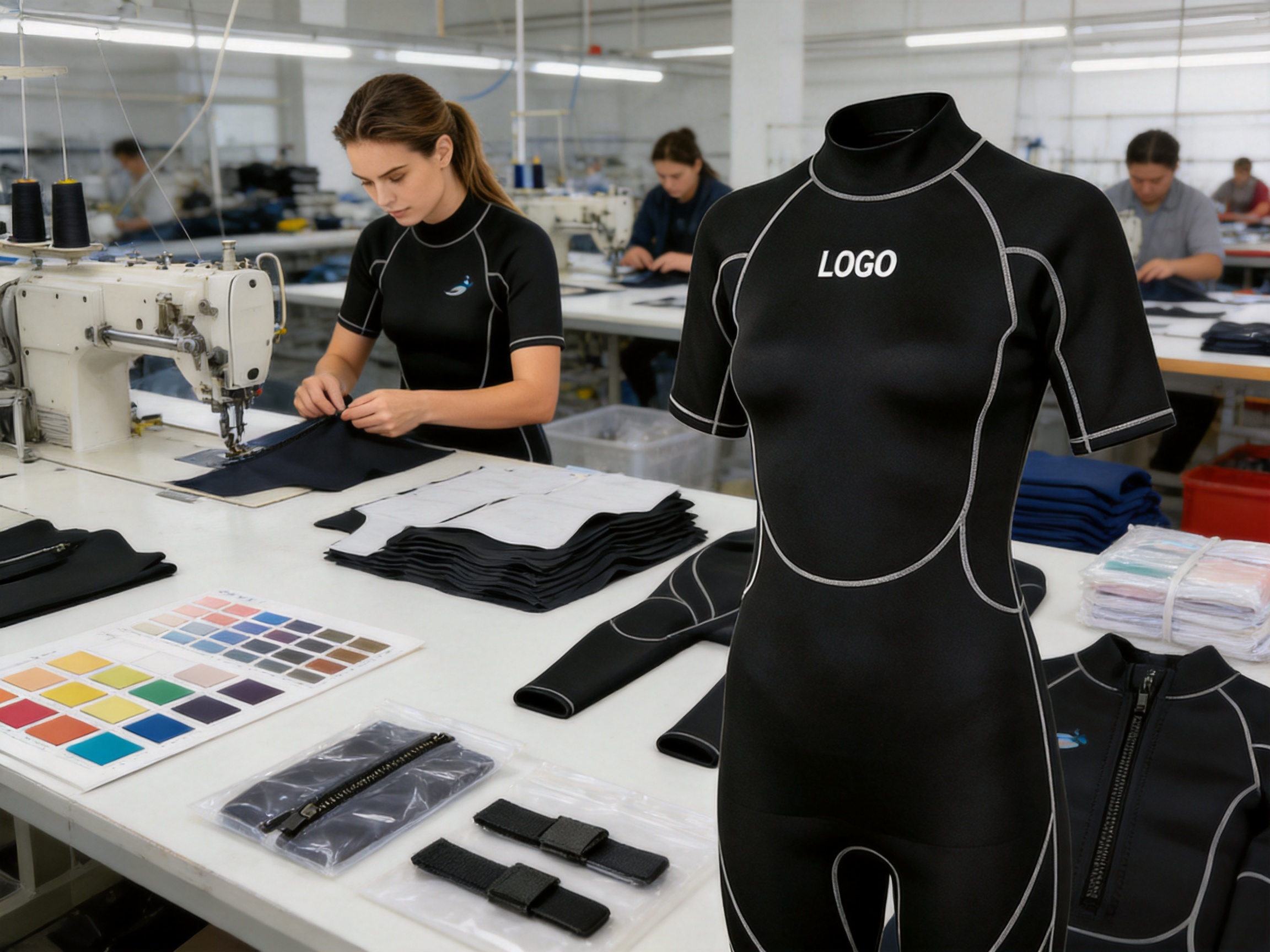
The manufacturer behind this product began operations in 2008 and has developed more than 18 years of industry experience in neoprene fabrics and finished products. Its experience covers both source manufacturing and end-market operations. This combination can be valuable because it connects material knowledge with practical understanding of how finished goods are used, sold, sized, packaged, and evaluated by customers.
The company operates a factory covering more than 15,000 square meters and employs over 120 professional workers. Its product scope includes wetsuits, drysuits, fishing waders, rash guards, water-sports equipment, and neoprene fabrics. A broad product range can support cross-category development, material coordination, and manufacturing knowledge transfer.
Experience in neoprene products involves more than sewing. It includes material selection, lamination awareness, pattern development, cutting accuracy, panel organization, seam construction, closure installation, finishing, inspection, packing, and order coordination. Each stage can influence the final fit and performance of a wetsuit.
Material and Panel Preparation
Consistent production begins with suitable raw materials. Neoprene sheets and nylon fabrics should be evaluated for thickness, elasticity, surface condition, color consistency, and compatibility with the intended construction. Panel marking and cutting should follow approved patterns to help maintain symmetry and sizing accuracy.
Accurate panel preparation is especially important in women’s garments because small changes around the bust, waist, hip, and torso can alter comfort significantly. Consistent cutting also helps reduce unnecessary tension during sewing and supports repeatable assembly across different sizes.
Pattern Development and Fit Control
A shorty wetsuit may appear simple because it contains fewer panels than a full-length suit, but its reduced coverage makes fit highly visible. The transition between short sleeves, long legs, torso, collar, and zipper must be carefully considered. Pattern development should account for movement, seam placement, stretch direction, and the way neoprene behaves when worn wet.
Sampling and wear testing can help identify pressure points, excess fabric, zipper discomfort, collar gaps, and mobility limitations. For OEM and ODM customers, the sample approval stage is an important opportunity to confirm measurements, materials, colors, logos, labels, and packaging before bulk production.
Specialized Stitching Operations
The four-needle, six-thread flatlock process requires appropriate machine settings, thread control, panel alignment, and operator skill. Seam quality can be affected by material thickness, stretch, feed tension, needle condition, and the accuracy of the cut edge. A disciplined production process helps minimize skipped stitches, waviness, puckering, and uneven seam widths.
Stitching personnel should also monitor high-stress areas such as the shoulders, underarms, crotch, seat, zipper ends, and leg openings. These areas experience repeated movement and may require careful reinforcement or inspection even when the main body seams appear satisfactory.
Finishing and Inspection
Finished wetsuits should be checked for visual defects, loose threads, seam irregularities, zipper operation, collar attachment, size labeling, color accuracy, and general symmetry. Inspection may be performed during production and again before packing. This helps identify issues before goods reach distributors or end users.
Quality control is most effective when it is supported by approved specifications. These may include material thickness, fabric composition, color references, measurement tolerances, stitch appearance, logo position, label content, and packaging requirements. A documented specification gives both the manufacturer and buyer a common basis for evaluation.
OEM, ODM, and Private-Label Development
The product is available for customized logo, color, size, and OEM service. This makes it suitable for companies developing a private-label warm-water wetsuit collection. A retailer may use the existing shorty pattern with its own branding, while a distributor may request specific colors, size ranges, packaging formats, or regional adjustments.
Private-label development generally begins with a product brief. The brief should identify the target user, water-sports applications, intended market position, thickness, color palette, logo treatment, size range, label requirements, packaging, and expected order volume. Clear information at the start reduces misunderstandings during sampling.
Color selection should consider fabric availability, production quantities, colorfastness expectations, and brand consistency. Logo placement should be selected according to the garment’s panel structure and stretch behavior. Large printed areas, high-contrast graphics, reflective elements, and heat-transfer labels may require separate testing to confirm adhesion and appearance after use.
Size customization should be based on a complete measurement chart rather than isolated dimensions. Changes to chest, waist, hip, sleeve opening, leg opening, torso length, or rise can affect the balance of the entire pattern. Any revised size should be reviewed through a sample or graded pattern evaluation before bulk manufacturing.
Packaging can also be customized. Buyers may request hangtags, polybags, carton marks, care labels, instruction cards, or retail-ready packaging. Regardless of branding, care information should clearly explain rinsing, drying, storage, and safe use.
Care, Maintenance, and Service Life
Proper care helps maintain neoprene elasticity, fabric appearance, seam condition, and zipper function. After use, the wetsuit should be rinsed with clean fresh water to remove salt, chlorine, sand, and other residues. Particular attention should be given to the zipper, collar, seams, and leg openings.
The suit should be dried in a shaded, well-ventilated area. Strong direct sunlight and excessive heat may accelerate aging of rubber, fabric, thread, and printed details. A broad hanger or suitable wetsuit hanger can help distribute weight and reduce stress on the shoulders. The garment should not be stored tightly folded for long periods, especially while damp.
Users should avoid contact with sharp rocks, rough concrete, abrasive equipment, oils, solvents, and unnecessary Velcro exposure. Fingernails and jewelry can damage nylon surfaces while dressing. The safest method is to work gradually, using the fabric-covered areas rather than pulling forcefully on seams or zipper components.
Cleaning products should be compatible with neoprene. Harsh detergents, bleach, strong solvents, and high-temperature washing may weaken materials or alter color. If a specialized wetsuit cleaner is used, the instructions should be followed carefully.
Before storage, the suit should be completely dry. It should be kept in a cool, dry location away from sharp objects and prolonged compression. Regular inspection can identify loose threads, damaged zipper teeth, seam separation, or excessive material aging before the problem becomes more serious.
How to Choose Between the 2mm and 3mm Versions
The 2mm option is generally appropriate for warmer water, high-intensity activities, summer travel, and users who prioritize lightness and ventilation. It may be favored by surfers, paddleboarders, and swimmers who generate considerable body heat through continuous movement.
The 3mm option provides additional insulation for cooler spring water, early-morning sessions, longer exposure, and individuals who feel cold more easily. It may also be useful in windy conditions, where evaporative cooling and wind chill can make the air feel significantly colder after exiting the water.
Activity type should influence the decision. A highly active surfer may prefer a thinner suit in conditions where a slower-moving snorkeler might benefit from greater thickness. Water temperature is important, but so are wind, sun, current, session duration, body composition, personal preference, and whether the user will spend time in or out of the water.
For retailers, stocking both thicknesses can create a clearer seasonal offering. The 2mm model can be positioned as a lightweight summer option, while the 3mm model can serve customers who need extra warmth during transitional seasons or in cooler regions.
Buying Guidance for Retailers and Distributors
Retail buyers should evaluate the product from both user and commercial perspectives. Important considerations include material consistency, sample approval, available sizes, color options, logo methods, packaging, lead-time planning, quality-control procedures, and after-sales communication.
The product’s broad application range can help retailers reach several customer groups with one core style. Surf shops can offer it as a warm-water surf suit. Outdoor retailers can position it for paddleboarding and snorkeling. Dive retailers can present it as a warm-water exposure option. Travel and resort businesses can use it for rental, instruction, or branded activity programs, subject to their own durability and hygiene requirements.
Retail descriptions should accurately explain the intended temperature range and limitations. Avoid presenting a 2–3mm shorty wetsuit as a cold-water survival garment or a completely waterproof suit. Clear product education helps reduce returns and improves customer satisfaction.
Because fit is central to performance, retailers should provide a measurement guide and explain how a wetsuit should feel when worn. Customers may need assistance selecting the correct size, especially if they are unfamiliar with close-fitting neoprene garments.
Why Factory Collaboration Matters
Working directly with an experienced manufacturer can give buyers greater control over materials, construction, customization, and production communication. Instead of choosing only from fixed stock products, a customer may be able to develop a more suitable combination of thickness, color, logo, size range, and packaging.
Direct manufacturing collaboration can also improve feedback cycles. Questions about neoprene, stitching, pattern adjustments, and care instructions can be addressed at the production source. This is useful when a buyer needs to adapt a product for a particular market, climate, sport, or customer profile.
The manufacturer’s experience across neoprene fabrics and finished products supports a vertically informed approach. Knowledge of fabric behavior can influence the design of wetsuits and other water-sports garments, while experience with finished products can guide material decisions toward practical end use.
For long-term supply, buyers should establish clear expectations about sampling, quality standards, production quantities, inspection, packaging, and reorder procedures. A stable relationship can help maintain consistency across seasons and support future product development.
Product Specifications at a Glance
| Specification | Details |
|---|---|
| Product type | Women’s one-piece shorty neoprene wetsuit |
| Thickness | 2mm or 3mm optional |
| Main material | Premium neoprene with double-sided nylon fabric |
| Sleeve and leg design | Short sleeves and long legs |
| Closure | Back zipper with collar Velcro adjustment |
| Seam construction | Four-needle, six-thread flatlock stitching |
| Key functions | Thermal retention, elasticity, seawater resistance, low water drag, durability |
| Primary applications | Surfing, snorkeling, SUP, open-water swimming, and diving |
| Customization | Custom logo, color, size, and OEM service |
| Recommended season | Spring, summer, and mild-water conditions |
Frequently Asked Questions
1. What water conditions is this shorty wetsuit designed for?
It is designed for warm, mild, and moderately cool water activities, especially during spring and summer. The correct thickness depends on water temperature, wind, activity intensity, session duration, and individual cold sensitivity. It is not intended to replace a thicker full wetsuit or a drysuit in severe cold.
2. What is the difference between the 2mm and 3mm versions?
The 2mm version is lighter and generally offers greater ventilation and flexibility. The 3mm version provides additional warmth and may be better for cooler water, longer sessions, or users who become cold easily. Buyers should consider both temperature and activity level when choosing.
3. Is the wetsuit suitable for surfing?
Yes. The short sleeves support paddling mobility, while the long legs provide lower-body coverage and moderate warmth. The close fit, elastic neoprene, and low-profile flatlock seams are intended to support active surfing movements.
4. Can it be used for snorkeling and paddleboarding?
Yes. The product is suitable for snorkeling, stand-up paddleboarding, and similar recreational activities. It provides more thermal protection than a rash guard while remaining lighter and more ventilated than a full-length wetsuit.
5. Is the wetsuit completely waterproof?
No. It is a thermal wetsuit, not a sealed drysuit. Some water may enter through the collar, zipper, cuffs, and seams. Its close fit, rear zipper, Velcro collar, and flatlock construction are intended to reduce water exchange and heat loss during active use.
6. How should the garment fit?
The wetsuit should fit closely and smoothly against the body without causing painful pressure, restricted breathing, numbness, or severe wrinkles. Customers should use chest, waist, hip, torso, and height measurements when selecting a size.
7. What does double-sided nylon fabric provide?
Double-sided nylon helps protect the neoprene surface, improves handling comfort, supports durability, and provides a suitable textile finish for colors, labels, and selected logo applications. It complements the thermal and elastic properties of the neoprene.
8. What is the benefit of flatlock stitching?
Flatlock stitching creates a relatively low-profile seam that can reduce rubbing against the skin. The four-needle, six-thread construction also supports organized joining and durability when produced with suitable materials, machine settings, and quality controls.
9. Can the product carry a private label?
Yes. Custom logo, color, size, and OEM services are available. Buyers should provide clear specifications and approve samples before bulk production to confirm fit, branding, materials, and packaging.
10. Can the suit be used for diving?
It can be used for suitable warm-water recreational diving, depending on depth, water temperature, exposure duration, and personal thermal requirements. Divers should select appropriate equipment for the specific environment and should not treat this shorty as a cold-water diving suit.
11. How should the wetsuit be cleaned?
Rinse it thoroughly with fresh water after use, especially after exposure to seawater or chlorine. Allow it to dry completely in a shaded, ventilated area. Avoid bleach, harsh detergents, high heat, sharp objects, and prolonged direct sunlight.
12. What makes this product suitable for wholesale development?
It combines a versatile warm-water design with optional thicknesses, women’s ergonomic shaping, practical closure details, durable fabric construction, and customization options. These features allow retailers and distributors to adapt the product to different markets and customer groups.
Conclusion
The Women’s 2–3mm Lightweight Shorty Neoprene Wetsuit is designed for users who need moderate warmth, reliable flexibility, comfortable coverage, and practical convenience in warm-water sports. Its premium neoprene and double-sided nylon construction provide a useful combination of thermal retention, elasticity, surface durability, and comfort. The short sleeves and long legs create a balanced profile for active movement, while the women’s ergonomic cut supports a closer and more stable fit.
The rear zipper and collar Velcro closure simplify dressing and help reduce unwanted water entry. Four-needle, six-thread flatlock stitching supports low-profile comfort and reinforced construction. Together, these details give the product advantages over basic water garments that may offer limited insulation, generic shaping, minimal seam development, or little opportunity for customization.
For businesses, the product also offers a practical foundation for private-label and OEM programs. The manufacturer brings more than 18 years of experience in neoprene fabrics and finished products, a factory exceeding 15,000 square meters, more than 120 professional employees, and a product portfolio spanning wetsuits, drysuits, fishing waders, rash guards, water-sports equipment, and neoprene fabrics.
Whether used for surfing, snorkeling, paddleboarding, open-water swimming, or suitable warm-water diving, this shorty wetsuit delivers a versatile balance between protection and freedom of movement. With proper sizing, careful maintenance, and clear application guidance, it can serve both recreational users and commercial buyers seeking a dependable, adaptable water-sports garment.
References
1. Product specification materials for the Women’s 2–3mm Lightweight Shorty Neoprene Wetsuit, including construction, applications, features, and customization options.
2. Manufacturer-provided company information concerning production experience, factory scale, workforce, product categories, OEM services, and development history.
3. General textile and wetsuit construction principles relating to neoprene thermal insulation, nylon lamination, elastic movement, flatlock seams, and garment fit.
4. General water-sports equipment care guidance concerning freshwater rinsing, shaded drying, zipper maintenance, storage, and protection from heat and abrasion.
5. General recreational water-sports safety principles concerning temperature selection, activity suitability, personal thermal tolerance, and the limitations of wetsuit garments.
Product: Women's 2-3mm Lightweight Shorty Neoprene Wetsuit

LET’S DEVELOP YOUR NEXT NEOPRENE PRODUCT LINE
Quick Links
Product Categories
Contact Us
-
 Email: postmaster@yihengsport.com
-
 Mobile: +86-13564100539
-
 No. 480 Jiangping Road, Madian, Binjiang Town, Taixing City, Taizhou City, Jiangsu Province, China.
Copyright © Jiangsu Yiheng Sports Products Co., Ltd. All Rights Reserved
China Wetsuit Manufacturer Neoprene Fabric Manufacturer
