

 Language
 English
 中文简体
 日本語
 русский
 Español
 عربى

Oct, 28, 2026
Waterproof Deep-Diving Butyl Dry Suit: Performance, Construction, and Professional Applications
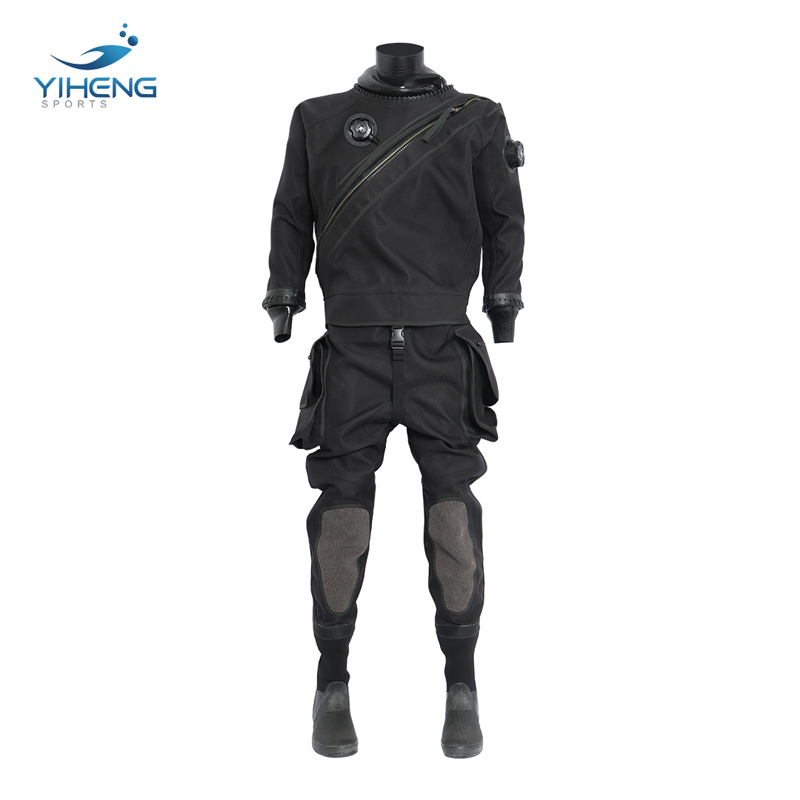
Professional underwater work demands more than basic protection from cold water. Divers, inspection teams, maintenance crews, rescue personnel, and industrial users need a dry suit that can help maintain dryness, withstand repeated abrasion, support unrestricted movement, and remain dependable in difficult environments. The Black Butyl Rubber Coated Fabric Waterproof Deep Diving Dry Suit is designed around these practical requirements. Its one-piece structure, waterproof butyl construction, reinforced wear zones, front metal waterproof zipper, and carefully developed seam system make it suitable for demanding underwater operations.
Unlike a conventional wetsuit, which allows a controlled amount of water to enter and relies on body heat and insulating neoprene to maintain warmth, a dry suit is intended to create a waterproof barrier between the wearer and the surrounding environment. This design gives users more flexibility in choosing thermal undergarments and can be especially valuable during extended work in cold, polluted, muddy, or otherwise challenging water.
The suit is manufactured by Jiangsu Yiheng Sports Products Co., Ltd., a specialist manufacturer with extensive experience in neoprene materials and finished water-sports products. Since beginning operations in 2008, the company has developed capabilities covering material preparation, garment manufacturing, product development, OEM production, ODM support, and long-term supply. Its factory covers more than 15,000 square meters and employs more than 120 professional workers.
This article examines the construction, performance advantages, manufacturing strengths, professional applications, customization possibilities, and selection considerations associated with this butyl dry suit.
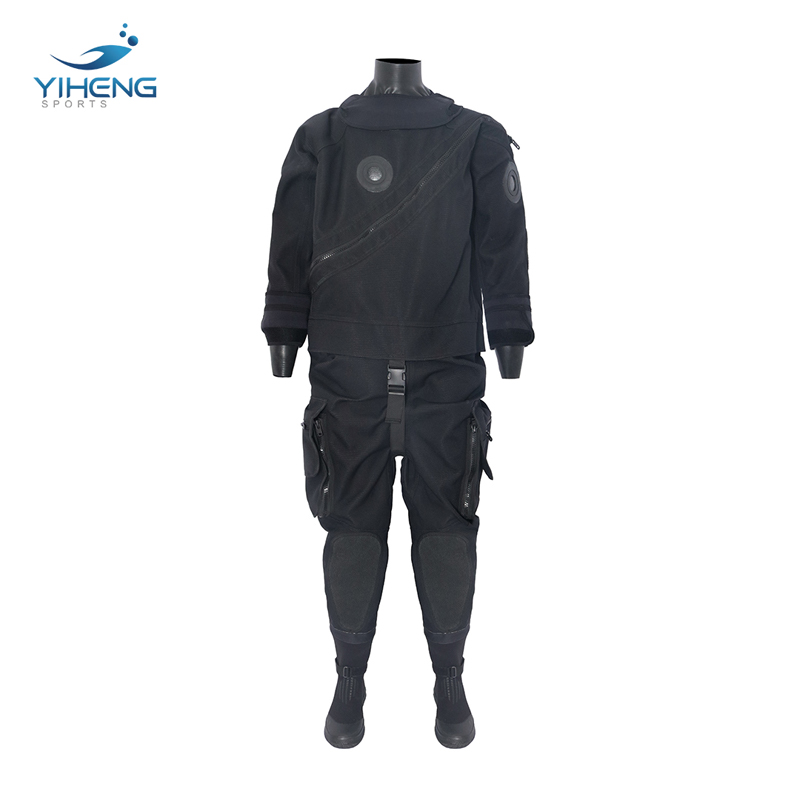
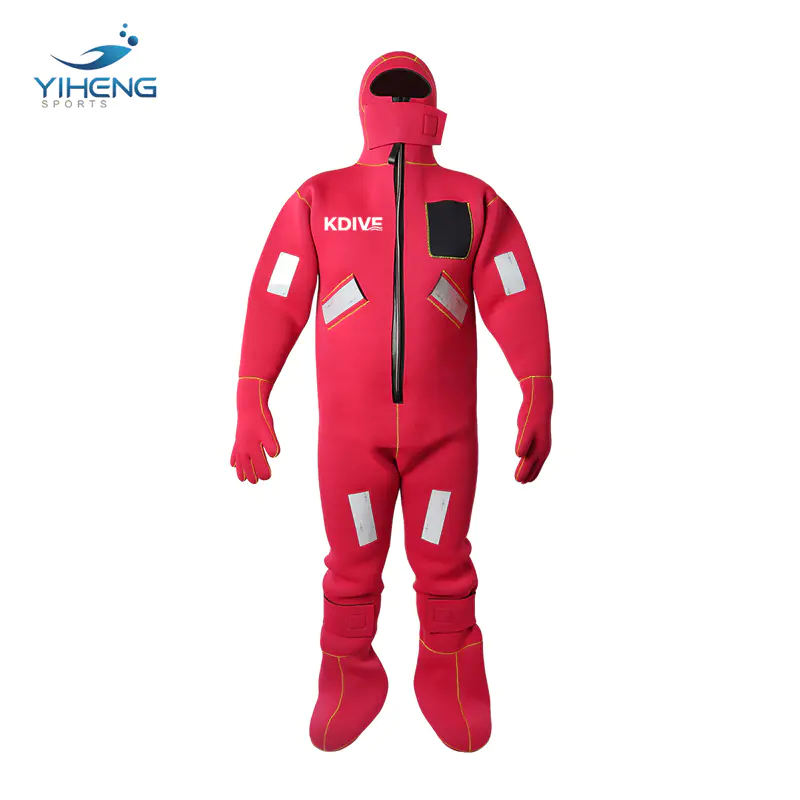
Black Butyl Rubber Coated Fabric Waterproof Deep Diving Dry Suit
1. Understanding the Role of a Butyl Dry Suit
A dry suit is designed to minimize water penetration and keep the wearer’s body and base layers dry. This is particularly important when a diver must work for a long period, operate in cold water, or enter environments where contact with water may involve contamination, sediment, chemicals, or biological hazards. While no garment should be treated as a substitute for proper risk assessment and personal protective equipment, a waterproof dry suit can form an important part of a complete professional diving system.
Butyl rubber is used in this product as a waterproof coating and barrier material. It is valued for its resistance to water penetration and its ability to maintain a flexible protective surface. In this suit, the butyl-coated fabric is combined with construction methods intended to reinforce the areas most exposed to stress during movement and underwater work.
The product has a one-piece configuration. This reduces the number of openings and connection points that must be managed during use. The ergonomic cut follows the general contours of the body while preserving enough room for practical movement and for suitable undergarments. The design is intended to accommodate different body shapes through a range of available sizes: S, M, ML, L, and LT.
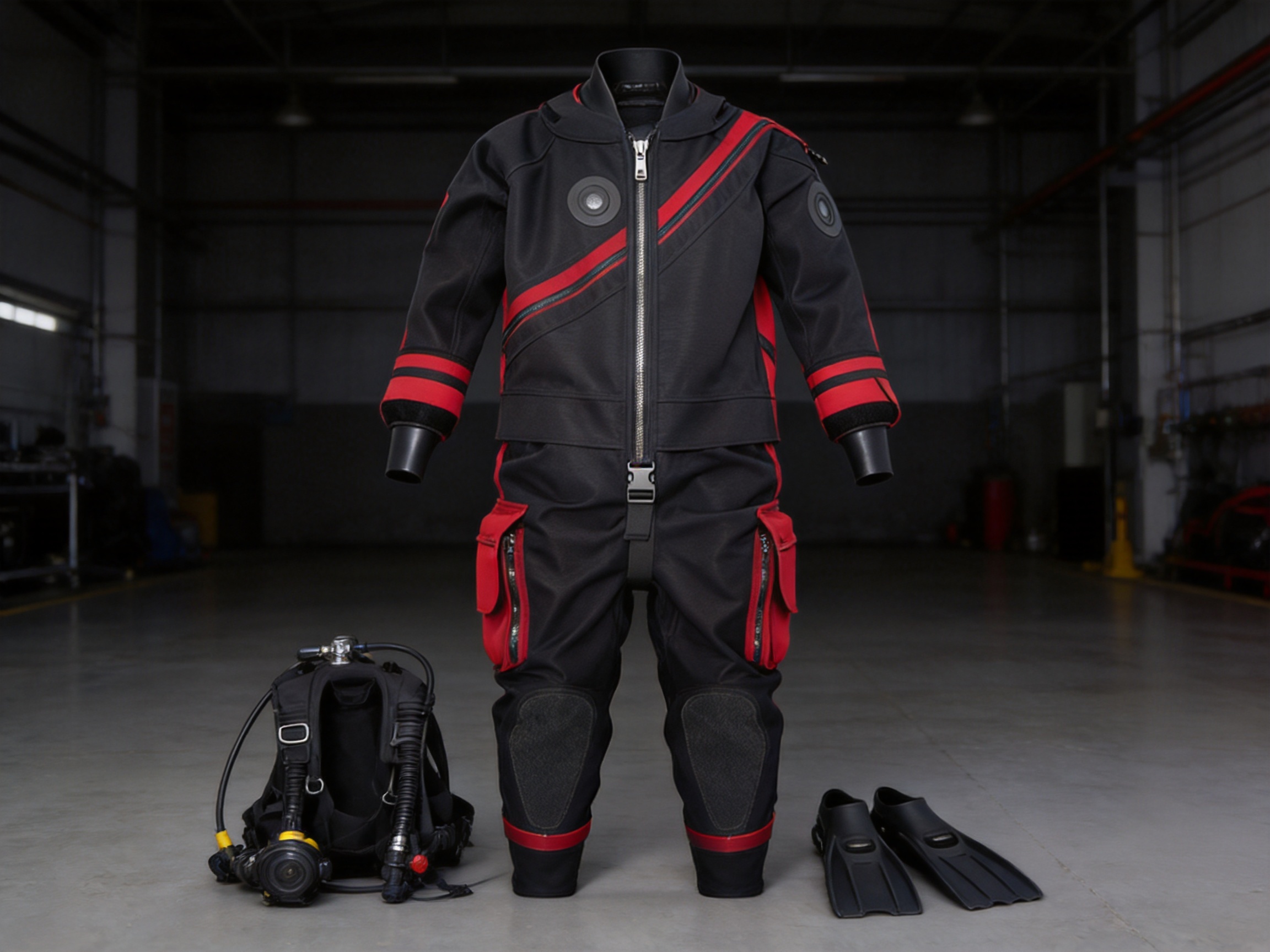
The suit is available in a red-and-black color combination. This contrast can make the wearer more visually identifiable during surface support operations, equipment checks, and group activities, although the product specification does not include reflective strips. Buyers who require high-visibility features should discuss additional color, printing, or visibility requirements during customization.
2. Main Product Specifications
| Specification | Product Detail |
|---|---|
| Product type | Waterproof butyl dry suit |
| Structure | One-piece construction |
| Primary material | Butyl-coated fabric |
| Seam construction | Flat stitching with an inner rubber strip attached |
| Seam finishing | Seamless glued construction for additional water resistance and strength |
| Closure system | Front metal waterproof zipper |
| Reinforcement zones | Elbows, hips, and knees |
| Reinforcement material | Kevlar reinforcement |
| Color | Red and black |
| Available sizes | S, M, ML, L, and LT |
| Reflective strips | None in the standard specification |
| Customization | Thickness, color, logo, printing, and related requirements |
These specifications show that the product has been developed around several connected performance objectives: waterproofing, abrasion resistance, structural durability, ease of donning, and underwater mobility. The suit is not based on a single material feature. Its performance depends on how the coated fabric, seam system, zipper, reinforcement panels, and overall pattern work together.
3. Waterproof and Impermeable Construction
The primary function of a dry suit is to create a reliable barrier against water. The butyl-coated fabric is selected for its waterproof characteristics and its ability to resist water passage through the main body panels. This makes the product different from garments that are merely water-resistant or designed for short exposure to spray.
The construction also pays close attention to the seams. A garment can have a waterproof base material and still allow water to enter if its seams are poorly designed or inadequately sealed. For this reason, the product uses flat stitching with an inner rubber strip attached, followed by seamless glued construction. This combination is intended to strengthen the joining areas and reduce the possibility of leakage through needle holes, stress points, or unfinished edges.
Seam strength is particularly important in a diving garment because the fabric is repeatedly folded, stretched, compressed, and exposed to movement. Divers may kneel on the bottom, climb ladders, handle tools, swim against current, or work around equipment. Every one of these movements places stress on the garment’s joints. A reinforced and bonded seam system helps the suit maintain its protective function during these activities.
The term “waterproof” should always be understood within the context of correct use and maintenance. The zipper must be fully closed, the suit must be correctly sized, and all accessories and interfaces must be properly managed. Users should also follow appropriate inspection and care procedures. Even a well-designed waterproof garment can be compromised by a damaged zipper, puncture, improper storage, or contamination of the sealing surfaces.
4. Seam Technology and Structural Reliability
Seams are among the most technically sensitive parts of a dry suit. They must join multiple panels while preserving flexibility and creating a continuous barrier. The product’s flat-stitching approach helps reduce excessive bulk at the joining areas. The inner rubber strip adds an additional layer of support and helps protect the seam from direct exposure to water and repeated bending.
The glued finishing process contributes to the overall integrity of the garment. Rather than relying only on thread, the construction uses adhesive bonding to create a more continuous connection across the seam area. This approach is useful for waterproof clothing because it can limit the paths through which water might travel and can distribute stress over a wider area.
Strong seams also support service life. If stitching separates or a seam begins to peel, repairs become more frequent and operational confidence declines. By combining stitching, internal rubber reinforcement, and seamless gluing, the manufacturer creates a layered construction rather than depending on one method alone.
Quality control during seam production is essential. Operators must control alignment, pressure, adhesive application, curing conditions, and visual inspection. A professional factory environment helps standardize these processes across production batches. Jiangsu Yiheng Sports Products Co., Ltd. combines experienced production personnel with a factory-scale manufacturing system intended to support consistent product quality and repeat orders.
5. Kevlar Reinforcement in High-Wear Zones
Underwater work often involves contact with hard or sharp surfaces. Divers may brush against concrete structures, metal frames, rocks, submerged pipes, ship components, or damaged equipment. The elbows, hips, and knees are particularly vulnerable because these areas frequently contact surfaces or experience repeated folding.
To address this issue, the dry suit includes Kevlar reinforcement on the elbows, hips, and knees. These panels are designed to improve resistance to abrasion and help protect the underlying butyl-coated fabric from scratches and punctures. Reinforcement in these locations is more efficient than making the entire suit unnecessarily heavy or rigid.
Knee reinforcement is valuable for underwater inspection and maintenance work, where users may kneel or brace themselves against a structure. Elbow reinforcement supports tasks that require crawling, reaching, or leaning against a surface. Hip reinforcement can help protect the garment when the diver is seated, climbing, carrying equipment, or working against a rough edge.
The reinforcement strategy also offers an advantage over a lightweight suit with no protective overlays. A very light garment may feel comfortable when new, but repeated contact with abrasive surfaces can reduce its useful life. By placing durable reinforcement in predictable wear zones, this product seeks to balance flexibility with protection.
Reinforcement does not make the suit indestructible. Users should still avoid unnecessary contact with sharp objects and inspect the garment after each demanding operation. However, targeted Kevlar panels provide an additional level of durability that is useful for professional users who cannot always work in perfectly controlled surroundings.
6. Mobility, Fit, and Ease of Use
A dry suit must be protective without preventing the wearer from carrying out essential movements. A garment that is too tight may restrict breathing, bending, reaching, or swimming. A garment that is excessively loose may create drag, snag on equipment, or become difficult to control. The product therefore uses an ergonomic one-piece cut intended to follow body contours while maintaining practical freedom of movement.
The fabric itself is described as non-elastic. This means the pattern and sizing must provide the movement allowance rather than relying on the material to stretch substantially. The loose cut makes it easier to put on and remove the suit and leaves room for suitable thermal clothing. It also reduces the restrictive feeling that can occur when a rigid waterproof layer fits too closely.
Although the product is designed for professional activity, its practical usability is also important. Divers may need to prepare equipment quickly, work in poor weather, or change garments without assistance. The front metal waterproof zipper is intended to support independent donning and doffing. Its front position makes the closure easier for the wearer to reach than a rear zipper arrangement.
The zipper must be operated carefully. Users should avoid forcing it through dirt, sand, folds, or misalignment. Regular inspection of the zipper track and sealing surfaces can help preserve performance. When the zipper is clean and correctly closed, it contributes to the suit’s waterproof barrier while making the garment more convenient in daily use.
The available sizing range includes S, M, ML, L, and LT. The inclusion of a medium-long option can help accommodate users who need additional length without selecting an excessively wide size. For professional procurement, buyers should provide body measurements and intended undergarment information before placing a bulk order. A dry suit should allow movement but should not have excessive unused material.
7. Lightweight Alternative to Neoprene Dry Suits
Neoprene dry suits are widely used because neoprene can provide insulation as well as water protection. However, the thickness and structure that provide warmth can also increase bulk. A user may feel more restricted when bending, walking, climbing, or handling equipment. For applications where mobility and lower garment weight are priorities, a butyl-coated fabric dry suit can offer a useful alternative.
This product is described as lighter and more agile than a neoprene dry suit. Its fabric is intended to avoid a bulky feeling, allowing users to move more freely underwater and during preparation on land. The reduced bulk can be beneficial when the diver must carry tools, wear a buoyancy system, move through confined access points, or perform repeated transitions between water and land.
Because the material is not primarily intended to provide the same insulation as a thick neoprene suit, thermal protection must be planned according to water temperature, exposure time, activity level, and diving system. Users may choose appropriate base layers or insulating garments underneath. This separation between waterproofing and insulation can provide greater flexibility because the undergarment system can be changed for different environments.
Compared with a standard wetsuit, the dry suit also helps keep the wearer’s clothing dry. This can make a significant difference in cold conditions, during long work periods, or when the diver must remain comfortable after leaving the water. The appropriate choice depends on the user’s operational requirements, but the butyl design is well suited to situations in which waterproof separation and mobility are more important than built-in thermal insulation.
8. Durability in Humid and Cold Conditions
Professional diving garments are often stored and used in challenging conditions. They may be exposed to cold water, humid air, repeated drying cycles, equipment friction, and long periods of transportation. The product is designed to maintain its original form without deformation and to resist hardening, aging, and glue peeling during long-term exposure to humid and cold conditions.
Material durability is important for more than appearance. If the fabric hardens, the garment can become uncomfortable and more difficult to fold or wear. If adhesive layers peel, the seams may lose their protective function. If the material deforms, the fit can change and stress may become concentrated in particular areas. Resistance to these problems supports more predictable operation over the useful life of the suit.
The product’s durability comes from the combined design of the coated fabric, reinforced seams, glued construction, and protective panels. No single element can replace proper care. After use, the suit should be rinsed and dried according to the manufacturer’s instructions, kept away from unnecessary heat, and stored in a way that avoids sharp folds or prolonged compression.
Professional users should create an inspection routine. Before use, examine the body panels, seam lines, zipper, reinforcement areas, and interfaces. After use, check for punctures, scratches, loose bonding, unusual stiffness, or changes in the zipper’s operation. Early detection can prevent minor damage from becoming a serious failure during a subsequent operation.
9. Suitability for Professional Water Operations
The product is suitable for reservoir inspection, river surveys, underwater maintenance, professional diving, and related water-based work. These applications share several requirements: reliable waterproofing, resistance to abrasion, freedom of movement, and the ability to operate for extended periods in variable surroundings.
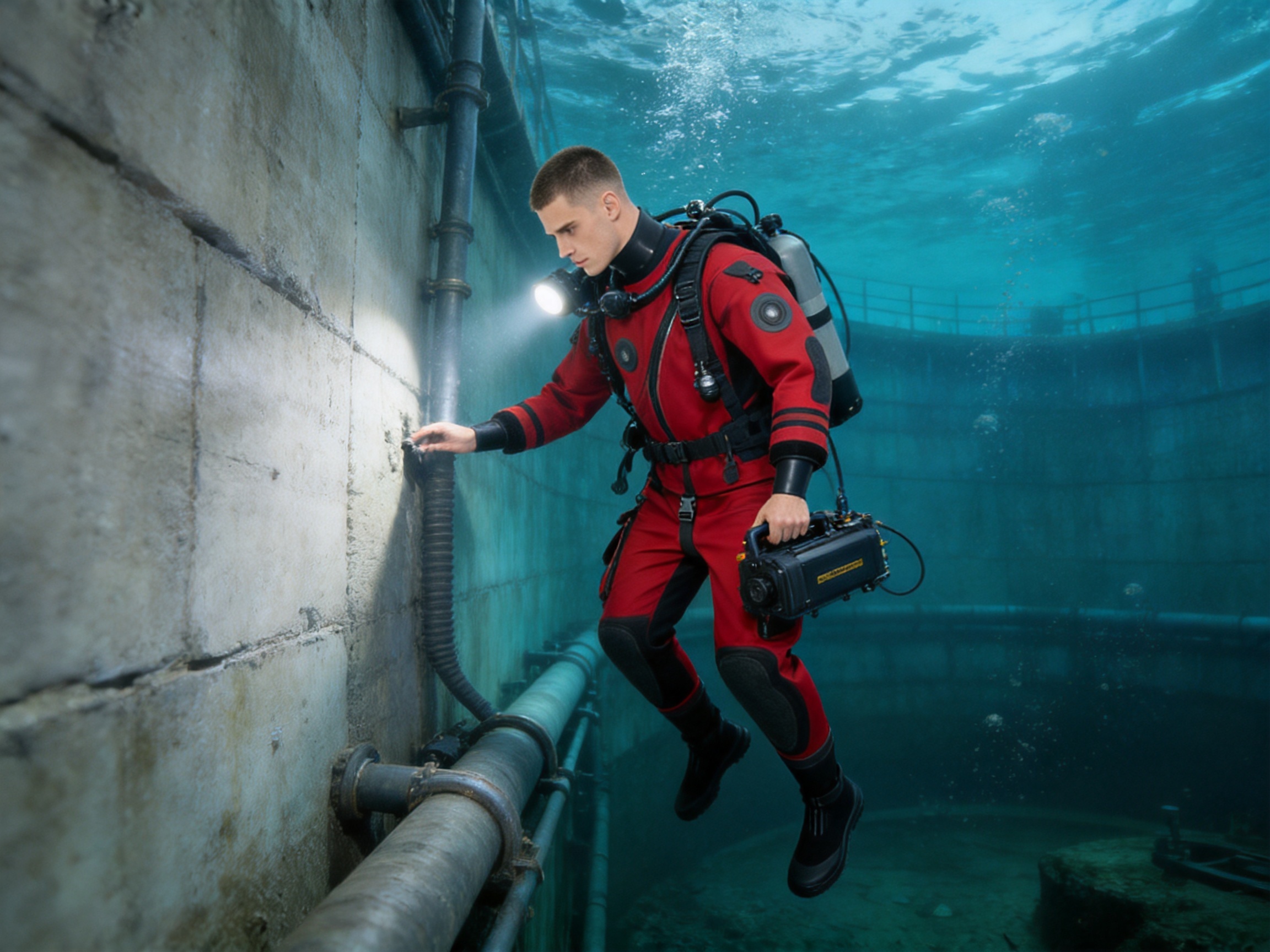
During reservoir inspection, a diver may examine intake structures, walls, gates, pipes, or submerged foundations. Such work can involve contact with concrete, metal, sediment, and algae-covered surfaces. The dry suit’s waterproof body and reinforced elbows, hips, and knees are relevant to this environment.
River survey work may involve current, changing depths, uneven bottoms, vegetation, rocks, and limited visibility. A lightweight, flexible suit can support movement while the abrasion-resistant areas provide additional protection when the diver must stabilize against the riverbed or nearby structures.
Underwater maintenance can be physically demanding. Workers may use hand tools, inspect machinery, manipulate cables, or position themselves in confined areas. The front zipper and loose ergonomic cut make the suit practical to put on, while its reinforcement system is intended to withstand contact with work surfaces.
Professional diving operations may also require consistent supply, repeatable specifications, and the ability to adapt products to organizational requirements. In this area, the manufacturer’s OEM and ODM capabilities can be important. A diving contractor, distributor, equipment brand, or industrial buyer may need specific colors, logos, thicknesses, packaging, or sizing arrangements.
10. Manufacturing Experience and Technical Capability
Jiangsu Yiheng Sports Products Co., Ltd. began its development in 2008. The company’s manufacturing history grew from a small operation with raw materials and semi-finished products into a specialized producer focused on neoprene materials and finished water-sports goods. This long-term development has created experience across both upstream material handling and finished garment production.
The company has more than 15 years of production experience and more than 18 years of industry experience in neoprene fabrics and finished products. It also has eight years of direct practice in the retail market. This combination is valuable because manufacturing knowledge and market knowledge address different needs. Factory experience supports production consistency, while retail-market experience helps the manufacturer understand fit, appearance, usability, customer expectations, and product positioning.
The factory covers more than 15,000 square meters and has more than 120 professional employees. A facility of this scale can support organized production stages, dedicated work areas, material management, quality inspection, sample development, and order coordination. It also provides a foundation for serving both standard product orders and customized projects.
The company’s product range includes wetsuits, drysuits, fishing waders, rash guards, water-sports equipment, and neoprene fabrics. This broader product portfolio allows the manufacturer to draw on experience from related categories. Knowledge of coated fabrics, seam construction, pattern development, and water-sports ergonomics can be applied across different product types.
For international buyers, manufacturing strength also includes communication and supply reliability. A professional supplier should be able to clarify specifications, confirm samples, coordinate production requirements, and maintain consistent standards from one order to the next. Yiheng positions itself as a manufacturing partner offering OEM manufacturing, market-oriented ODM development, and long-term supply support.
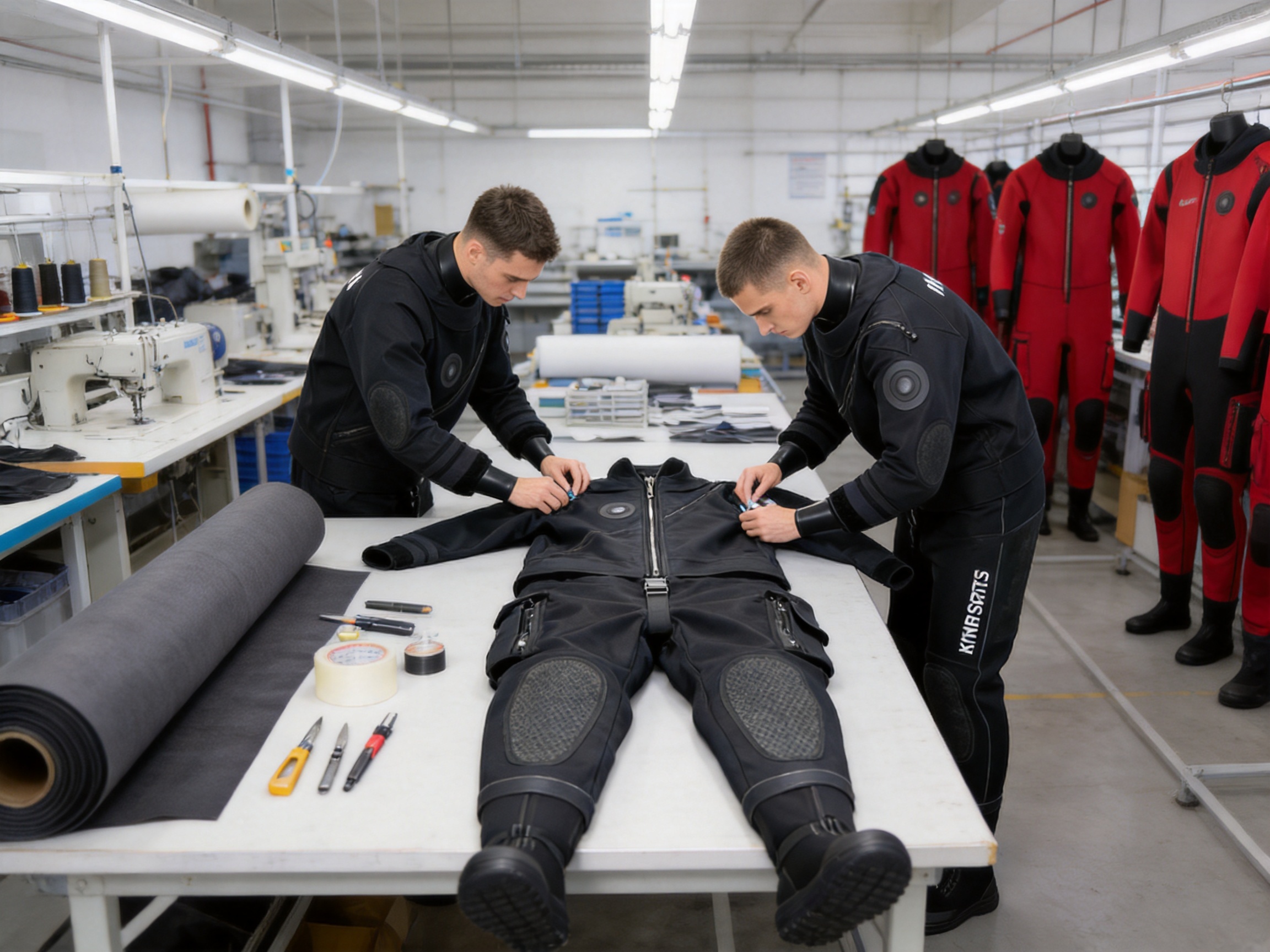
11. Production Process for a Professional Dry Suit
11.1 Material Preparation
Production begins with the preparation and inspection of the butyl-coated fabric and reinforcement materials. The material should be checked for surface consistency, coating integrity, color accuracy, thickness, and visible defects. Proper storage before cutting is also important because excessive folding, contamination, or unsuitable environmental conditions can affect later processing.
11.2 Pattern Development and Cutting
The one-piece pattern is developed to balance body coverage, movement allowance, and ease of assembly. Panels must be cut accurately so that seams align correctly and the finished suit maintains the intended ergonomic shape. Different sizes require controlled grading to preserve the same design logic across S, M, ML, L, and LT options.
11.3 Reinforcement Application
Kevlar reinforcement is applied to the elbows, hips, and knees. Placement accuracy is important because the panels must cover the intended wear zones without interfering with movement. The reinforcement should be securely integrated with the main material and finished in a way that avoids sharp edges or unnecessary bulk.
11.4 Stitching and Inner Rubber Strip Attachment
The cut panels are joined using flat stitching. An inner rubber strip is attached to strengthen and support the seam area. This stage requires control over alignment, stitch consistency, thread tension, and handling of the coated fabric. Poor alignment can create stress concentrations, while excessive tension may damage the material.
11.5 Glued Seam Finishing
After stitching, the seams receive seamless glued finishing. Adhesive application must be even and complete, with attention to edges, transitions, and areas that experience repeated bending. The bonding process must be allowed to stabilize properly before the suit proceeds to later assembly and inspection.
11.6 Waterproof Zipper Installation
The front metal waterproof zipper is installed with careful attention to alignment and sealing. The zipper is a high-value functional component because it must combine ease of operation with water resistance. Incorrect installation can lead to leakage, stiffness, or premature wear, so the zipper area requires detailed inspection.
11.7 Final Assembly and Inspection
At the final stage, the manufacturer checks the finished suit for appearance, dimensions, seam quality, reinforcement placement, zipper operation, and overall construction. Depending on the order specification, additional checks may include waterproof performance, pressure-related testing, or inspection of customized printing and logos.
This multi-stage process demonstrates why dry-suit manufacturing requires more than ordinary garment sewing. Material properties, bonding techniques, waterproof closures, reinforced construction, and functional pattern design must all be coordinated.
12. Advantages Over Ordinary Waterproof Garments
The Black Butyl Rubber Coated Fabric Waterproof Deep Diving Dry Suit offers several advantages over ordinary rainwear, water-resistant workwear, or basic surface-use clothing.
First, it is designed specifically for immersion-related use rather than occasional exposure to rain or splashing. Its waterproof body, sealed seam approach, and waterproof zipper provide a more complete barrier than a simple water-repellent garment.
Second, it addresses underwater abrasion through Kevlar reinforcement at the elbows, hips, and knees. Many lightweight waterproof garments are not designed for repeated contact with submerged structures, rough ground, or industrial surfaces.
Third, its one-piece construction reduces the number of separate garment interfaces that must be managed. This can simplify preparation and help create continuous coverage around the torso and limbs.
Fourth, the front zipper supports independent dressing. This is an operational advantage when users are working under time pressure or do not have a partner available to close a rear-entry garment.
Fifth, the lightweight butyl-coated design can provide greater agility than a thick neoprene dry suit. This makes it attractive for users who prioritize movement, lower bulk, and flexible layering.
Finally, the manufacturer can customize thickness, color, logo, and printing. Buyers can therefore adapt the product for private-label programs, company uniforms, rental fleets, professional diving teams, or specialized commercial applications.
13. Customization and OEM Opportunities
Different markets have different requirements. A recreational diving retailer may prioritize color and branding, while an industrial contractor may focus on reinforcement, sizing, labeling, and durability. A distributor may need a private-label product with consistent packaging and a defined size range. The ability to customize helps the manufacturer address these distinct needs.
Available customization includes thickness, color, logo, printing, and related design requirements. Thickness adjustments may be considered when buyers need a different balance between flexibility, durability, and application-specific protection. Color changes can support corporate identity, product segmentation, or visibility preferences.
Logo and printing options are useful for private-label programs and professional teams. Branded garments can help identify workers, support equipment fleet management, and create a consistent visual presentation. Buyers should provide artwork in an appropriate format and confirm the desired position, size, color, and durability requirements before production.
OEM and ODM cooperation may also include packaging, labels, size charts, inspection criteria, and order documentation. For larger projects, buyers should discuss sample approval, minimum order quantities, lead times, quality standards, and replacement procedures in advance.
Customization should never compromise essential protective functions. Any changes to seams, zipper placement, reinforcement, or material thickness should be reviewed for their effect on waterproofing, mobility, and durability. A capable manufacturer can help assess these interactions before mass production.
14. Buyer Considerations Before Ordering
Buyers should begin by identifying the intended operating environment. Important factors include water temperature, expected immersion duration, current, visibility, contact with abrasive structures, required undergarments, and whether the suit will be used for commercial or recreational purposes.
Accurate sizing is essential. The buyer should provide height, chest, waist, hip, inseam, and other requested measurements. The intended thermal layers should also be considered. A suit that fits correctly over a thin base layer may feel restrictive when used with heavier cold-water insulation.
The required reinforcement level should be evaluated. The standard product includes Kevlar reinforcement on elbows, hips, and knees. If the garment will be used in especially abrasive environments, the buyer should discuss whether additional panels or alternate reinforcement specifications are appropriate.
Color and visibility requirements should also be clarified. The standard color is red and black, and reflective strips are not included. If a project requires reflective elements, high-visibility panels, special identification markings, or custom printing, these features should be specified before sampling.
Buyers should request clear information about care, storage, repair, inspection, and warranty policies. A durable product performs best when users understand how to clean, dry, fold, transport, and inspect it. Professional procurement teams may benefit from receiving a care guide and inspection checklist with the order.
15. Maintenance and Service-Life Practices
Maintenance begins immediately after use. The suit should be cleaned in accordance with the manufacturer’s recommendations, particularly after exposure to salt water, muddy water, sediment, chemicals, or biological material. Residues can affect the fabric, zipper, adhesive, or reinforcement if they are allowed to remain on the garment.
The suit should be dried thoroughly before storage. Drying should take place in a suitable ventilated area away from unnecessary heat and direct conditions that could accelerate material aging. Folding should be controlled to avoid sharp creases, especially at the zipper and repeatedly stressed seam areas.
Users should inspect the garment before every operation. Look for punctures, cuts, abrasion, loose bonding, separation around the inner rubber strip, damage to Kevlar panels, and irregularities in the zipper. The suit should not be used for a critical operation if its waterproof integrity is uncertain.
Repairs should be performed using appropriate materials and methods. Improvised repairs may create new stress points or fail during immersion. Organizations that operate multiple suits should maintain records of inspections, repairs, and usage history. This makes it easier to identify recurring issues and schedule preventive maintenance.
Proper maintenance can extend service life, reduce unexpected downtime, and protect the investment made by professional users. It also supports safer operational planning by ensuring that equipment condition is known before a diver enters the water.
16. Frequently Asked Questions
Q1: What is the main purpose of this dry suit?
The main purpose is to provide a waterproof barrier for professional and demanding water operations. It is intended to help keep the user dry during reservoir inspection, river surveys, underwater maintenance, professional diving, and related applications.
Q2: What material is used in the suit?
The suit uses butyl-coated fabric. Butyl provides the waterproof barrier, while the fabric construction supports flexibility and practical handling. The product also uses Kevlar reinforcement in selected high-wear areas.
Q3: How are the seams constructed?
The seams use flat stitching with an inner rubber strip attached. They are then finished with seamless gluing to improve water resistance and structural strength.
Q4: Where is the suit reinforced?
Kevlar reinforcement is included on the elbows, hips, and knees. These areas are frequently exposed to abrasion, contact with rough surfaces, and repeated bending during underwater work.
Q5: Does the suit include thermal insulation?
The butyl dry suit is primarily designed for waterproofing rather than built-in thermal insulation. Users can select suitable undergarments according to water temperature, exposure time, and operating conditions.
Q6: Is the suit easy to put on without assistance?
The front metal waterproof zipper is intended to make donning and doffing more convenient and supports independent operation. Users should still follow correct zipper handling procedures and avoid forcing the closure.
Q7: What sizes are available?
The listed sizes are S, M, ML, L, and LT. Buyers should confirm body measurements and undergarment requirements before ordering to select the most suitable size.
Q8: Does the standard version include reflective strips?
No. The standard specification lists reflective strips as none. Buyers requiring reflective features or special visibility markings should discuss customization with the manufacturer.
Q9: Can the product be customized?
Yes. Customization is available for thickness, color, logo, printing, and other agreed requirements. OEM and ODM cooperation can be discussed for private-label, professional, and distribution programs.
Q10: What makes this suit different from a neoprene dry suit?
The butyl-coated fabric design is intended to be lighter and more agile than a neoprene dry suit. It may reduce bulk and make movement easier, while thermal insulation can be selected separately through appropriate undergarments.
Q11: Is the suit suitable for industrial underwater work?
It is designed for applications such as reservoir inspection, river survey, underwater maintenance, and professional diving. The suitability of the suit should always be evaluated against the specific hazards, temperature, depth, duration, and equipment requirements of the job.
Q12: Who manufactures the product?
The product is manufactured by Jiangsu Yiheng Sports Products Co., Ltd., a Chinese manufacturer specializing in neoprene materials and finished products, including wetsuits, drysuits, fishing waders, rash guards, water-sports equipment, and neoprene fabrics.
17. Why Work with an Experienced Manufacturer?
Choosing a dry suit is not only a matter of comparing product photographs or material names. The quality of a finished suit depends on pattern accuracy, seam execution, adhesive control, zipper installation, reinforcement placement, inspection standards, and the manufacturer’s ability to repeat these results across orders.
An experienced manufacturer can support the full product-development cycle. This may include reviewing technical drawings, developing samples, recommending materials, confirming size specifications, testing design revisions, arranging private labeling, and coordinating production. Experience also helps identify potential problems before they become costly mass-production issues.
Jiangsu Yiheng Sports Products Co., Ltd. combines a long operating history with a broad product portfolio and direct market experience. Its production base, professional workforce, and focus on both materials and finished goods provide a useful foundation for customers seeking more than a standard catalog item.
The company’s OEM and ODM services are particularly relevant to buyers that need product differentiation. Instead of purchasing a generic garment and applying limited changes, customers can discuss requirements related to thickness, color, logo, printing, reinforcement, and market positioning. This creates opportunities for distributors, diving service providers, retailers, and professional organizations to develop a product aligned with their own users.
18. Conclusion
The Black Butyl Rubber Coated Fabric Waterproof Deep Diving Dry Suit is designed for users who need dependable waterproof protection, targeted abrasion resistance, and practical underwater mobility. Its butyl-coated fabric forms the main waterproof barrier, while flat-stitched and glued seams provide additional structural support. The front metal waterproof zipper improves ease of use, and Kevlar reinforcement on the elbows, hips, and knees helps protect high-wear areas.
Its one-piece ergonomic design, loose cut, available size range, and lightweight construction make it a practical alternative for users who find neoprene dry suits too bulky. Because the product is primarily a waterproof shell, users can select thermal undergarments appropriate to the operating environment. This approach provides flexibility across different water temperatures and work conditions.
The suit is suitable for reservoir inspection, river survey, underwater maintenance, professional diving, and other demanding water operations. Its performance is supported by the manufacturing capabilities of Jiangsu Yiheng Sports Products Co., Ltd., which has developed extensive experience in neoprene materials and finished water-sports products since 2008. The company’s factory, workforce, OEM services, ODM development capabilities, and customization options make it suitable for both standard procurement and private-label projects.
For the best results, buyers should define their application, confirm measurements, evaluate reinforcement needs, specify visibility and branding requirements, and establish appropriate inspection and care procedures. When correctly selected and maintained, this butyl dry suit can provide a strong combination of waterproof protection, durability, flexibility, and professional manufacturing support.
References
1. Product specification sheet for the Black Butyl Rubber Coated Fabric Waterproof Deep Diving Dry Suit.
2. Manufacturer information for Jiangsu Yiheng Sports Products Co., Ltd., including company history, factory scale, product categories, and manufacturing capabilities.
3. General principles of dry-suit construction, waterproof seam design, protective garment fit, and underwater workwear maintenance.
4. General technical guidance concerning coated fabrics, glued seams, zipper care, abrasion-resistant reinforcement, and professional diving garment inspection.
Product: Black Butyl Rubber Coated Fabric Waterproof Deep Diving Dry Suit
LET’S DEVELOP YOUR NEXT NEOPRENE PRODUCT LINE
Quick Links
Product Categories
Contact Us
-
 Email: postmaster@yihengsport.com
-
 Mobile: +86-13564100539
-
 No. 480 Jiangping Road, Madian, Binjiang Town, Taixing City, Taizhou City, Jiangsu Province, China.
Copyright © Jiangsu Yiheng Sports Products Co., Ltd. All Rights Reserved
China Wetsuit Manufacturer Neoprene Fabric Manufacturer
