

 Language
 English
 中文简体
 日本語
 русский
 Español
 عربى

Nov, 07, 2026
Women’s Sleeveless Smooth Skin One-Piece Wetsuit for Freediving, Spearfishing, and Snorkeling
Women’s Sleeveless Smooth Skin One-Piece Wetsuit for Freediving, Spearfishing, and Snorkeling
Water sports demand equipment that combines freedom of movement, hydrodynamic efficiency, comfort, and dependable protection. For women who participate in freediving, spearfishing, snorkeling, or open water swimming, the right wetsuit can make a significant difference in mobility, endurance, and confidence in the water. The Women’s Sleeveless One-Piece Smooth Skin Wetsuit Racerback Bikini is designed around these essential performance requirements.
This one-piece women’s wetsuit uses smooth skin neoprene, a racerback tank construction, an ergonomic slim contour cut, side stripe decoration, and flat lock stitching. Its sleeveless structure allows the shoulders and arms to move naturally, while the close-fitting silhouette helps reduce unnecessary drag. The smooth outer surface supports quick water shedding and contributes to a streamlined underwater profile.
Although the product has a minimalist appearance, its construction reflects practical knowledge of water sports apparel manufacturing. Every design decision serves a specific purpose: the smooth neoprene surface helps improve hydrodynamic performance, the racerback opening supports unrestricted shoulder movement, and the body-contouring cut helps the garment remain close to the skin during active use.
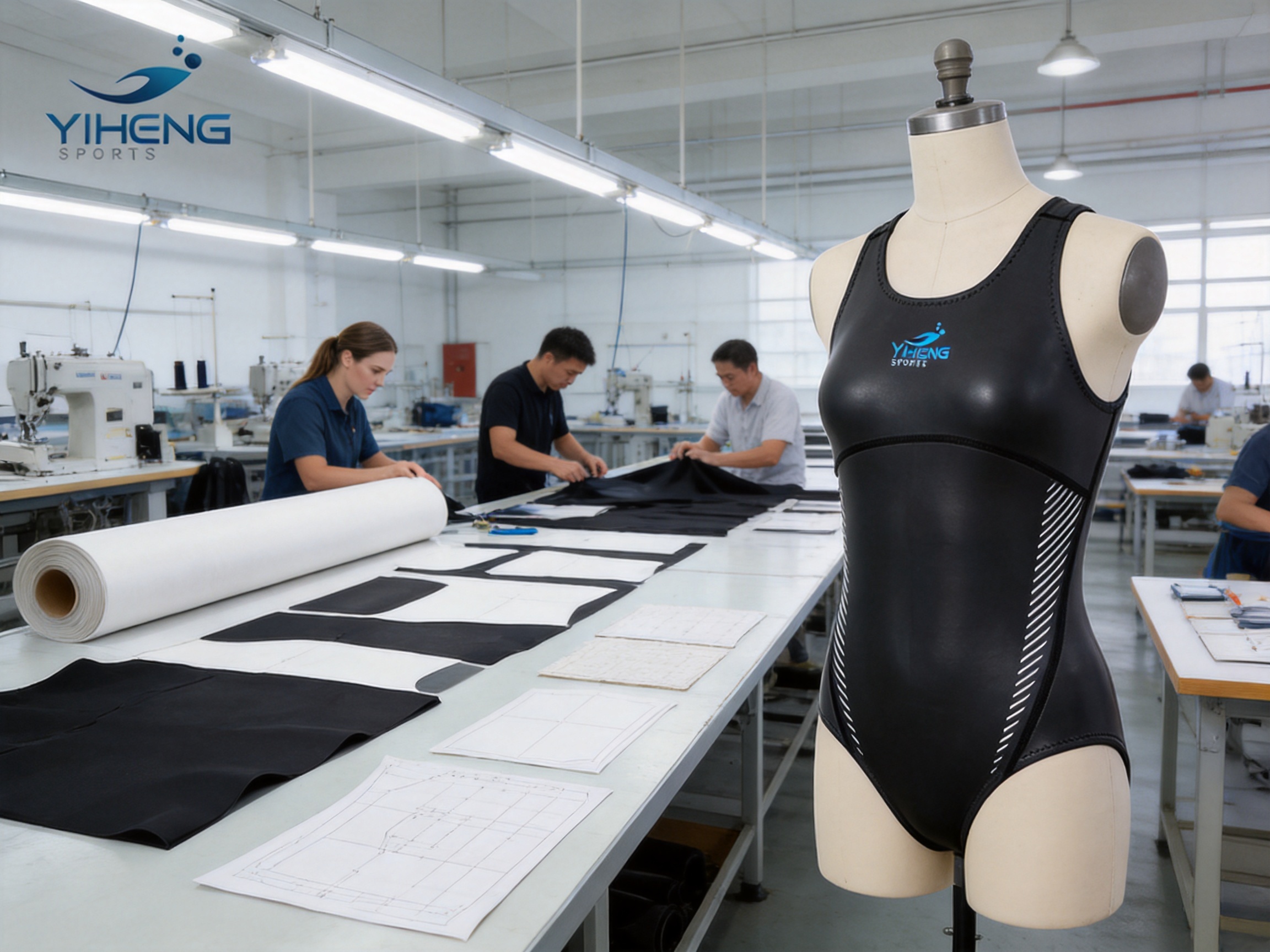
Manufactured by Jiangsu Yiheng Sports Products Co., Ltd., this wetsuit is supported by more than 18 years of experience in neoprene fabrics and finished water sports products. The company operates a factory covering more than 15,000 square meters and employs more than 120 professional workers. Its capabilities include neoprene material production, wetsuit manufacturing, OEM services, ODM development, private label production, and product customization.
The result is a versatile women’s water sports garment suitable for brands, distributors, retailers, professional users, and recreational athletes seeking a practical sleeveless wetsuit with a clean appearance and flexible customization options.
1. Product Overview
The Women’s Sleeveless One-Piece Smooth Skin Wetsuit is a close-fitting water sports garment developed for active use in aquatic environments. It is shaped as a one-piece design with a racerback tank-style upper section and a bikini-inspired lower silhouette. The design provides coverage across the torso while leaving the shoulders and upper arms open for improved mobility.
The primary material is smooth skin neoprene. Unlike conventional fabric-covered neoprene, smooth skin neoprene presents a more uniform outer surface. This smooth finish can reduce the amount of water retained on the garment and allows water to run off more quickly. For users who frequently move through the water, reduced surface resistance can contribute to a more efficient swimming or diving experience.
The product is mainly black, with white stripe decoration along the side. This visual detail creates a clear, athletic appearance without adding excessive panels, accessories, or complicated graphics. The result is a garment that can be used as a standalone water sports piece or integrated into a broader equipment system with fins, masks, gloves, buoyancy accessories, or protective outer layers.
The wetsuit is intended for freediving, spearfishing, snorkeling, and open water swimming. It is also suitable for brands developing women’s aquatic apparel collections that require an attractive core product with opportunities for private labeling and design adaptation.
| Product Element | Specification or Benefit |
|---|---|
| Product type | Women’s sleeveless one-piece wetsuit |
| Material | Smooth skin neoprene |
| Upper construction | Racerback tank design |
| Visual styling | Black body with white side stripe decoration |
| Seam construction | Flat lock stitching |
| Primary applications | Freediving, spearfishing, snorkeling, and open water swimming |
| Customization | Custom logo, patterns, neoprene thickness, and multiple sizes |
| Business model | OEM, ODM, private label, and long-term supply support |
2. Smooth Skin Neoprene and Its Performance Value
The outer material is one of the most important factors in the performance of a wetsuit. Smooth skin neoprene is selected for this product because it offers a combination of water repellency, low surface drag, visual appeal, and flexible thermal support.
When a swimmer or diver enters the water, the outer surface of the suit interacts continuously with the surrounding water. A rough or highly absorbent surface may retain more water and create additional resistance. A smooth skin finish is designed to shed water more quickly. This does not eliminate water resistance entirely, because all bodies and garments moving through water experience drag, but it can help create a cleaner surface profile.
The smooth surface is also useful for users who value a streamlined appearance. The material gives the wetsuit a sleek, technical look that is associated with performance water sports. Compared with bulky garments or heavily textured fabric constructions, the smooth finish presents a more refined and athletic visual identity.
Neoprene also provides gentle thermal insulation. The material helps reduce the rate at which body heat is transferred to the surrounding water. The precise level of insulation depends on the selected material thickness, water temperature, personal tolerance, activity level, and fit. Because thickness can be customized, brands can develop different versions for warmer water, cooler open water environments, or specific regional markets.
The combination of smooth skin neoprene and a close fit is particularly relevant to freediving and snorkeling. These activities require frequent changes in body position, controlled movement, and efficient use of energy. A streamlined garment can help users move through the water without unnecessary bulk.
2.1 Low Water Retention
The smooth outer layer is designed to allow water to slide away from the surface more readily. This quick water-shedding behavior can support comfort when entering and leaving the water and can help prevent the suit from feeling excessively saturated.
2.2 Hydrodynamic Surface
A smooth surface supports a streamlined underwater profile. This is valuable for swimmers, divers, and spearfishers who want to reduce avoidable drag during horizontal movement, descents, ascents, or changes in direction.
2.3 Gentle Thermal Support
Neoprene provides insulation by helping slow heat transfer. The garment is not intended to replace all cold-water protection, and users should select thickness and accessories according to conditions. However, the material offers useful thermal support for a wide range of recreational water activities.
2.4 Premium Visual Appearance
Smooth skin neoprene creates a clean, modern appearance that is suitable for performance-oriented brands. It also provides a strong foundation for minimalist designs, contrast stripes, logos, and selected printed details.
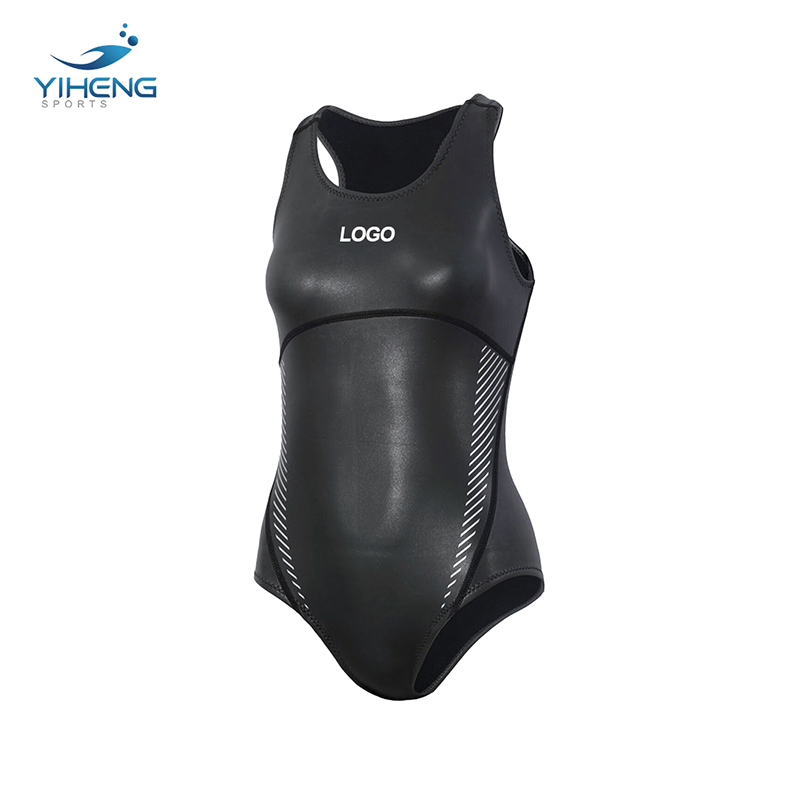
Women Sleeveless One Piece Smooth Skin Wetsuit Racerback Bikini
3. Racerback Sleeveless Construction
The racerback structure is one of the defining features of this women’s wetsuit. Traditional sleeved wetsuits can provide additional coverage, but sleeves may also feel restrictive around the shoulders, underarms, and upper arms. For activities that involve repeated arm movement, this restriction can affect comfort and technique.
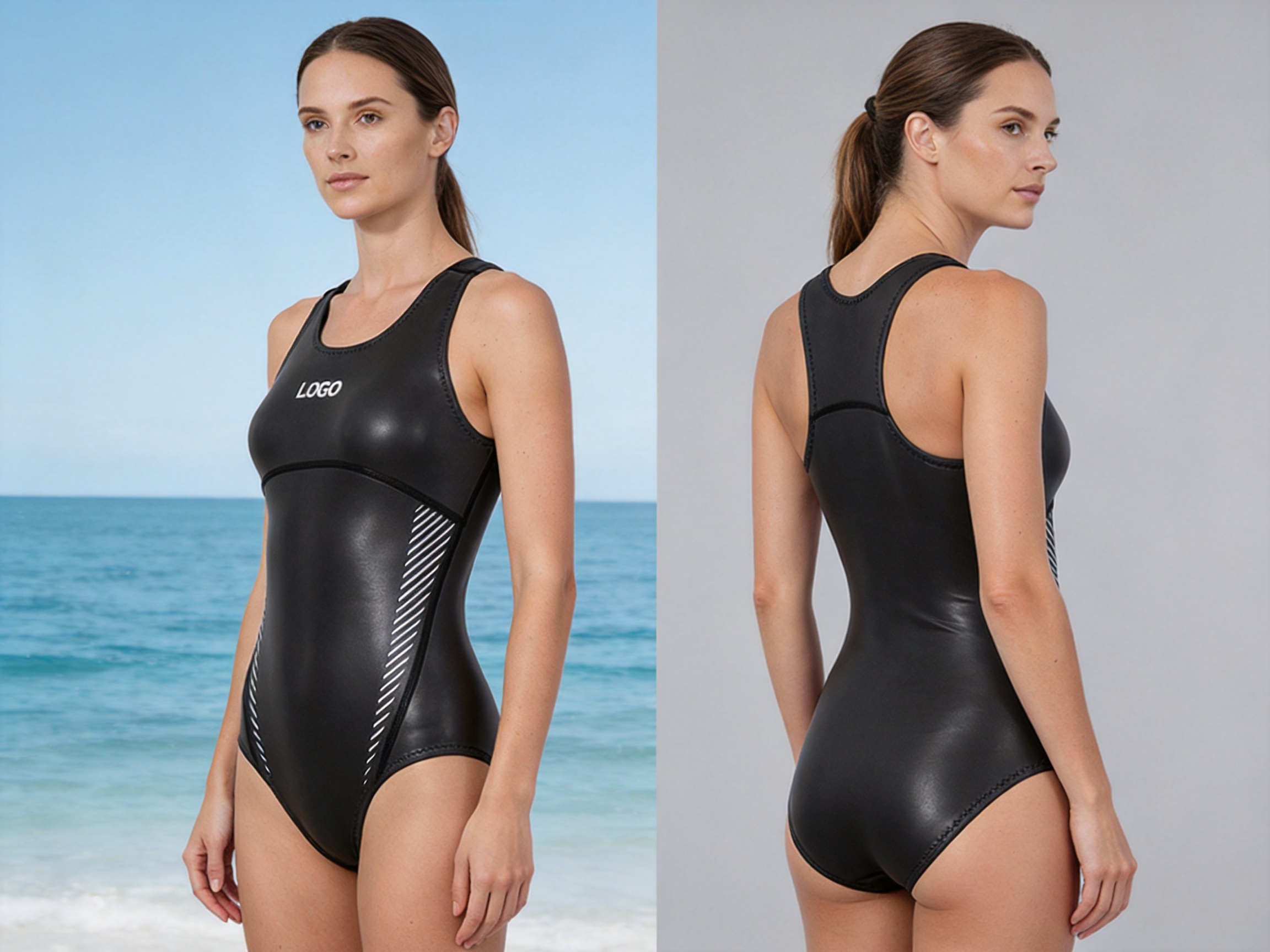
The sleeveless racerback design leaves the shoulders open and allows the arms to swing naturally. This is particularly useful during swimming strokes, surface paddling, equipment handling, and underwater positioning. The back opening concentrates material around the torso while giving the shoulder blades more room to move.
For freedivers and snorkelers, unrestricted shoulder mobility is important because movement often needs to remain controlled and efficient. The user may need to adjust body position, reach toward equipment, stabilize against gentle currents, or transition between surface swimming and underwater movement. A sleeveless construction supports these actions without the added bulk of long sleeves.
Spearfishers may also benefit from the racerback profile. Spearfishing combines swimming, observation, equipment management, and repeated changes in direction. The upper body must remain flexible while the garment stays close to the body. The racerback style provides an athletic solution for users who prefer open shoulder movement.
The sleeveless design can also be layered with other equipment. Depending on water temperature and local conditions, users may combine it with a jacket, rash guard, thermal top, gloves, socks, or other protective accessories. This makes the garment adaptable to different environments and personal preferences.
4. Ergonomic Slim Contour Fit
A wetsuit performs best when it fits close to the body without creating excessive pressure or uncomfortable restriction. The Women’s Sleeveless One-Piece Wetsuit uses an ergonomic slim contour cut to follow the natural shape of the torso and hips.
The close-fitting structure helps minimize loose fabric that could flap, fold, or create resistance underwater. It also helps the garment remain in position during active movement. A well-shaped suit should move with the user rather than shift independently during swimming, snorkeling, or diving.
The body-contouring cut creates a streamlined silhouette and supports a modern athletic appearance. The side stripe decoration reinforces the visual direction of the design by adding contrast and emphasizing the shape of the garment.
Fit is also important for comfort. Excessive looseness may allow water to circulate unnecessarily between the body and the suit, while excessive tightness can make movement and breathing feel uncomfortable. For this reason, accurate sizing and appropriate material thickness are essential. The product can be developed in multiple sizes, and brands may request size adjustments for specific market requirements.
4.1 Benefits During Swimming
During open water swimming, the body repeatedly rotates and extends through the stroke cycle. The contour cut helps the wetsuit remain aligned with the body while the racerback structure supports shoulder rotation.
4.2 Benefits During Diving
Freediving requires a stable and streamlined body position. A close-fitting one-piece design helps avoid unnecessary garment movement and supports a smooth profile during descent and ascent.
4.3 Benefits During Snorkeling
Snorkeling often involves long periods of surface swimming, floating, and occasional diving below the surface. The slim cut offers practical coverage without the bulk of a full-sleeve suit.
4.4 Benefits During Spearfishing
Spearfishing requires mobility, concentration, and efficient energy use. The racerback design helps keep the shoulders and arms free while the neoprene body provides coverage and thermal support.
5. Flat Lock Stitching and Seam Comfort
Flat lock stitching is used in the construction of this wetsuit. In a flat lock seam, the connected material edges are designed to lie relatively flat rather than forming a prominent raised ridge. This construction can help reduce friction and improve comfort where seams contact the skin.
Seam placement and stitching quality influence how a wetsuit feels during long periods of use. Water sports participants often repeat the same movements for extended periods, and a bulky seam may create localized irritation. Flat lock stitching is therefore a practical choice for a sleeveless suit intended for active swimming and diving.
Flat lock construction also contributes to the clean appearance of the garment. The minimalist visual style depends on smooth transitions between panels and a controlled seam layout. This supports the product’s premium, athletic identity.
As with all neoprene products, seam performance depends on material selection, cutting accuracy, stitching control, seam alignment, and final inspection. A professional manufacturing process must manage these details consistently across different sizes and production batches.
6. Product Advantages Compared with Conventional Alternatives
The product offers several advantages when compared with basic sleeveless swimwear, loose-fitting aquatic garments, or conventional full-sleeve wetsuits. These advantages are not based on a single feature but on the way the materials, pattern, construction, and intended applications work together.
6.1 Compared with Standard Swimwear
Standard swimwear is often designed primarily for comfort, appearance, and general recreational use. It may not provide the same level of thermal support, close body coverage, or water-shedding surface as smooth skin neoprene. The one-piece wetsuit is more suitable for users who spend extended periods in the water or need additional protection during open water activities.
6.2 Compared with Loose-Fitting Water Garments
Loose garments may be comfortable on land but can move independently in the water. The slim contour cut of this wetsuit helps reduce unnecessary material movement and supports a cleaner underwater profile. This is useful for swimmers and divers who value efficiency.
6.3 Compared with Full-Sleeve Wetsuits
Full-sleeve wetsuits provide greater arm coverage, but some users prefer a more open design for warm-water activities, shoulder mobility, or layering flexibility. The sleeveless racerback construction offers a lighter and less restrictive alternative while maintaining neoprene coverage across the main body.
6.4 Compared with Fabric-Covered Neoprene
Fabric-covered neoprene can provide a different balance of softness, durability, and handling characteristics. Smooth skin neoprene, however, is particularly attractive to users who prioritize low water retention, a sleek finish, and a streamlined surface.
6.5 Compared with Generic Imported Designs
Generic products may offer limited size selection, fixed graphics, and little opportunity for adaptation. This product is supported by OEM and ODM services, allowing businesses to specify logos, patterns, material thicknesses, and size requirements. This creates more opportunities for market differentiation.
| Comparison Point | This Wetsuit | Basic Swimwear | Full-Sleeve Wetsuit |
|---|---|---|---|
| Shoulder mobility | High due to sleeveless racerback design | Generally high | May feel more restrictive |
| Thermal support | Provided by neoprene | Limited | Provided by neoprene |
| Outer surface | Smooth skin finish | Usually textile-based | May be smooth or fabric-covered |
| Water shedding | Designed for quick surface shedding | May retain more water | Depends on construction |
| Layering flexibility | High for warm-water and mixed systems | High but with less thermal protection | Lower in the arms |
| Customization potential | Logo, pattern, thickness, and sizes | Varies by supplier | Varies by supplier |
7. Applications Across Water Sports
7.1 Freediving
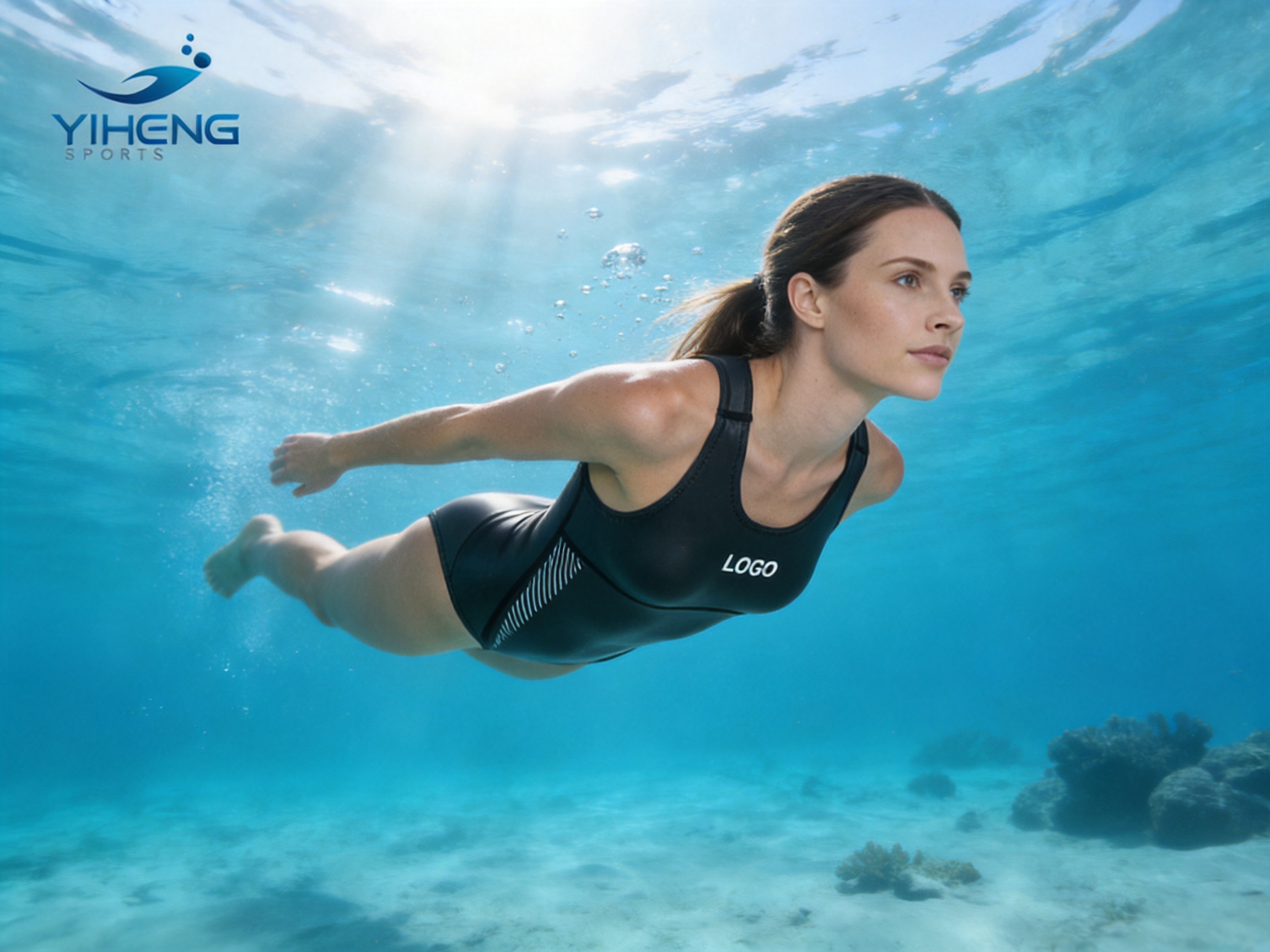
Freediving requires controlled breathing, efficient movement, and a streamlined body position. The slim contour cut supports a close fit, while the smooth skin surface can help reduce drag during underwater travel. The sleeveless design allows the arms and shoulders to move freely during surface preparation and underwater positioning.
The suitable neoprene thickness depends on the water temperature and the diver’s needs. Brands serving different regions can request thickness variations to create product versions for warm, temperate, or cooler conditions.
7.2 Spearfishing
Spearfishing involves swimming, observation, equipment handling, and frequent changes in direction. A garment must support mobility while providing useful body coverage. The racerback style leaves the shoulders open, making it easier to handle equipment and maintain natural arm movement.
The black base color also offers a subdued, technical appearance that may appeal to spearfishing users. Businesses can further adapt the visual design through custom prints, logos, and color details.
7.3 Snorkeling
Snorkeling is often performed in warm or moderate water, where a sleeveless wetsuit can provide an appropriate balance between coverage and ventilation. The product can help protect the torso from cool water while avoiding the bulk associated with a full-body suit.
The one-piece format is practical for recreational users because it is easy to understand, simple to coordinate with snorkeling equipment, and suitable for both surface swimming and short underwater exploration.
7.4 Open Water Swimming
Open water swimming may expose users to lower temperatures and changing conditions compared with a controlled pool environment. The neoprene construction provides thermal support, while the smooth outer surface and close cut are aligned with the need for efficient movement.
Swimmers should select garment thickness and accessories based on local conditions, personal tolerance, and planned duration. The sleeveless design can also be used as part of a layered system for athletes who require additional protection in changing weather.
8. Manufacturing Strengths and Production Capabilities
The performance of a wetsuit depends not only on its design but also on the manufacturer’s ability to control materials, patterns, assembly, quality inspection, and customization. Jiangsu Yiheng Sports Products Co., Ltd. has focused on neoprene materials and finished water sports products since beginning operations in 2008.
With more than 18 years of industry experience, the company has developed knowledge across the supply chain, from source manufacturing to finished product production and market-oriented development. This experience supports more informed decisions when selecting neoprene materials, planning product structures, and adapting designs for different applications.
The company’s factory covers more than 15,000 square meters and includes a workforce of more than 120 professional employees. A dedicated manufacturing base of this scale can support coordinated production activities, including material handling, cutting, sewing, inspection, packaging, and order management.
Yiheng’s product scope includes wetsuits, drysuits, fishing waders, rash guards, water sports equipment, and neoprene fabrics. This broad range is important because it provides experience across multiple types of aquatic products. Knowledge gained from neoprene fabric production can inform finished wetsuit development, while experience with finished products can provide practical feedback for material selection and construction.
8.1 Material Management
Material management begins with selecting neoprene suitable for the intended application. Different thicknesses, surface finishes, elasticity levels, and color options can affect comfort and performance. For this product, smooth skin neoprene is central to the design concept, so the surface finish and material consistency require careful attention.
Material rolls must be handled and stored in a way that helps preserve their condition before cutting. Production planning also needs to account for panel orientation, size grading, color matching, and efficient material utilization.
8.2 Pattern Development
Pattern development determines how the wetsuit follows the body. The racerback opening, side stripe placement, torso contour, leg shape, and seam locations all need to work together. Pattern adjustments may be required for different sizes, body proportions, market preferences, and neoprene thicknesses.
For OEM and ODM projects, the manufacturer can work from existing specifications or help develop an adapted version. This flexibility is valuable for brands that have a concept but require technical assistance to turn it into a production-ready garment.
8.3 Cutting Accuracy
Accurate cutting helps ensure that panels align correctly during sewing and that finished garments maintain consistent proportions. It also contributes to repeatable sizing across production batches. The side stripe and other decorative elements require particular attention because misalignment can affect the visual quality of the final product.
8.4 Sewing and Flat Lock Assembly
Assembly involves joining the neoprene panels while preserving the intended shape and stretch characteristics. Flat lock stitching supports a flatter internal seam profile and is suited to a garment that will remain close to the skin during active use.
Operators must manage seam tension, panel alignment, stitch consistency, and handling of the smooth surface. These factors influence both appearance and wearing comfort.
8.5 Quality Inspection
Quality control should cover material condition, panel dimensions, seam appearance, logo or print placement, size labeling, and overall garment integrity. Inspection at multiple production stages can help identify issues before the product reaches final packing.
For customized orders, inspection should also verify that the approved logo, pattern, color, thickness, and size specifications have been followed. Clear communication between the customer and manufacturing team is essential for maintaining consistency.
8.6 Packaging and Supply Support
Finished products must be folded, protected, labeled, and packed appropriately for shipment. A manufacturer with experience in long-term supply support can help coordinate production schedules, repeat orders, private label requirements, and product updates.
9. OEM, ODM, and Private Label Opportunities
The product is suitable for businesses that want to launch or expand a women’s water sports collection. OEM services allow a buyer to supply specifications and request production under its own brand. ODM services allow the manufacturer to contribute product development knowledge and adapt an existing concept for a particular market.
Available customization options include custom logos, patterns, neoprene thickness, and multiple sizes. These options allow a brand to position the product for recreational users, serious athletes, diving schools, snorkeling operators, outdoor retailers, or specialty water sports distributors.
Logo customization can be used to create a private label identity. Pattern customization can support seasonal collections, team apparel, coordinated equipment lines, or region-specific color preferences. Thickness customization allows a product range to address different water temperatures and customer expectations.
Size development is equally important. A manufacturer may need to provide a standard size range or adapt measurements for a particular market. Consistent grading and clear measurement references help reduce uncertainty during product development.
Businesses should confirm all specifications before mass production, including material thickness, surface finish, color references, logo dimensions, artwork format, label requirements, packaging details, and expected order quantities. A structured approval process helps ensure that the final product reflects the intended design.
10. Product Selection and Fit Guidance
Choosing the correct wetsuit size is essential for comfort and performance. Customers should consult the manufacturer’s measurement chart and compare it with their own body measurements. Important measurements may include height, chest, waist, hip, torso length, and weight, depending on the supplier’s sizing system.
The garment should fit close to the body without creating painful compression. Wrinkles, large gaps, or excessive looseness may indicate that the size or cut is unsuitable. At the same time, users should not force themselves into a size that makes breathing, movement, or normal posture uncomfortable.
Because neoprene has stretch, the fit should be evaluated according to both body measurements and the intended thickness. A thicker material may feel different from a thinner material even when the pattern is similar. Brands ordering customized versions should conduct fit testing across representative body types before finalizing the production size range.
The sleeveless structure is especially useful for users who prefer freedom around the shoulders. However, individual preferences vary. Some users may want to combine the product with an additional thermal or protective layer, while others may use it as a lightweight standalone suit in warmer water.
11. Care and Maintenance Recommendations
Proper care helps preserve the appearance and function of a neoprene wetsuit. After each use, the garment should be rinsed with clean fresh water to remove salt, chlorine, sand, and other residues. These substances may affect the surface and seams if allowed to remain on the material for extended periods.
The suit should be dried in a well-ventilated shaded location. Direct, intense sunlight and excessive heat may accelerate material aging or affect color. It is also advisable to avoid sharp surfaces, rough concrete, or contact with equipment that could scratch the smooth skin surface.
When putting on or removing the wetsuit, users should handle the neoprene carefully rather than pulling aggressively from a single small area. Fingernails, jewelry, and sharp accessories can damage the material. A patient, even-handed approach helps reduce the risk of tearing or puncturing.
The wetsuit should be stored clean and fully dry. Long-term storage is best carried out in a cool, dry location away from chemicals, oils, and direct sunlight. Heavy folding or compression for extended periods should be avoided where possible, especially if it creates permanent creases in the smooth surface.
Care instructions may be adapted for private label products, allowing brands to include their own washing, drying, and storage guidance in packaging materials.
12. Why Manufacturing Experience Matters to Buyers
For buyers, selecting a manufacturer is not only a question of product appearance. It also involves evaluating production experience, communication, customization ability, material knowledge, and supply reliability. A visually attractive sample is valuable, but repeatable quality across larger quantities is equally important.
Yiheng’s history since 2008 provides a foundation for handling products that require specialized neoprene knowledge. Its experience includes both raw material-related operations and finished product manufacturing. This combination can support faster communication between design requirements and production realities.
The company’s involvement in the retail market for eight years has also provided experience with end-user expectations. Understanding how products are presented, worn, and evaluated in the marketplace can help guide practical product development decisions.
A factory with capabilities across wetsuits, drysuits, fishing waders, rash guards, water sports equipment, and neoprene fabrics can serve customers with broader product plans. Instead of sourcing every product from a different supplier, a brand may be able to coordinate multiple related categories through one experienced manufacturing partner.
Long-term supply support is especially important for brands that need repeat orders, replacement stock, seasonal launches, or gradual product expansion. Clear technical documentation and consistent production procedures help maintain continuity between orders.
13. Target Customers and Market Positioning
The product is positioned for women who want a streamlined, flexible, and visually refined wetsuit for warm-water and moderate-water activities. Its appearance can appeal to users who prefer minimalist athletic clothing rather than heavily decorated or bulky equipment.
Retailers may present it as a versatile suit for snorkeling, open water swimming, and recreational diving. Freediving and spearfishing brands may position it as a mobility-focused option for users who prioritize shoulder freedom. Water sports schools and tour operators may consider it for female customers who need practical neoprene coverage during lessons or guided activities.
Private label brands can use the core design as a foundation for their own identity. A custom logo on the chest, back, or selected panel can create a recognizable product. Alternative stripe colors, pattern elements, and thickness options can help create distinct versions for different customer segments.
The product can also be included in coordinated collections with matching rash guards, gloves, socks, dry bags, or other water sports accessories. Because the base design is simple and versatile, it can serve as a foundational item within a larger aquatic apparel range.
14. Frequently Asked Questions
Q1: What activities is this wetsuit designed for?
The wetsuit is designed for freediving, spearfishing, snorkeling, and open water swimming. Its sleeveless racerback design is especially suitable for activities requiring unrestricted shoulder movement.
Q2: What is smooth skin neoprene?
Smooth skin neoprene is neoprene with a smooth outer surface rather than a traditional textile covering. It is designed to shed water quickly, reduce surface roughness, support a streamlined profile, and provide a sleek technical appearance.
Q3: Does the wetsuit provide thermal protection?
Yes. Neoprene provides gentle thermal insulation by helping slow heat transfer from the body to the surrounding water. The appropriate material thickness depends on water temperature, activity level, and personal comfort.
Q4: Why is the product sleeveless?
The sleeveless construction is intended to maximize freedom around the shoulders and upper arms. It supports natural arm movement during swimming, diving, snorkeling, and equipment handling.
Q5: What is the purpose of the racerback design?
The racerback design helps keep the garment secure around the torso while leaving the shoulder area open. This supports mobility and creates an athletic appearance.
Q6: Is the product suitable for cold water?
Suitability depends on the selected neoprene thickness, water temperature, exposure time, and the user’s personal tolerance. For colder conditions, customers may require a thicker customized version or additional thermal layers and accessories.
Q7: Can the wetsuit be customized?
Yes. Customization options include logos, patterns, neoprene thickness, and multiple sizes. OEM and ODM services are available for brands with specific design or market requirements.
Q8: Can a company order the product under its own brand?
Yes. The product can support private label development. Buyers can discuss branding, labels, packaging, artwork, color details, and other production requirements with the manufacturer.
Q9: How should the wetsuit be cleaned?
Rinse it with fresh water after use, especially after exposure to salt water or chlorinated water. Allow it to dry naturally in a shaded, well-ventilated place and keep it away from excessive heat and sharp objects.
Q10: How should customers choose the correct size?
Customers should compare their body measurements with the manufacturer’s size chart. The suit should fit close to the body without painful compression, restricted breathing, or excessive looseness.
Q11: What stitching method is used?
The wetsuit uses flat lock stitching. This seam construction is designed to create a flatter internal profile and help improve comfort during active use.
Q12: What makes this product different from a regular swimsuit?
The product is made from neoprene rather than ordinary swimwear fabric. It provides greater body coverage, thermal support, a close contour fit, and a smooth outer surface designed for water sports performance.
Q13: Can the design be developed in different thicknesses?
Yes. Neoprene thickness can be customized according to the intended market, water conditions, and customer requirements.
Q14: What types of companies may benefit from this product?
Water sports brands, diving equipment distributors, outdoor retailers, snorkeling operators, sports schools, private label businesses, and specialty aquatic apparel companies may all find the product suitable for their collections.
Q15: Where is the manufacturer located?
The manufacturer is located in Taixing City, Taizhou City, Jiangsu Province, China. Its facility supports neoprene material and finished water sports product manufacturing.
15. Conclusion
The Women’s Sleeveless One-Piece Smooth Skin Wetsuit Racerback Bikini combines a performance-oriented material, an athletic silhouette, and practical water sports functionality. Smooth skin neoprene supports quick water shedding, low surface resistance, gentle thermal insulation, and a premium appearance. The racerback sleeveless design promotes shoulder mobility, while the ergonomic contour cut helps the suit remain close to the body during movement.
Flat lock stitching contributes to seam comfort and a clean finish. The black body and white side stripe create a minimalist visual identity that can appeal to both individual users and commercial brands. With applications ranging from freediving and spearfishing to snorkeling and open water swimming, the product offers broad market potential.
Its value is strengthened by the manufacturer’s capabilities. Jiangsu Yiheng Sports Products Co., Ltd. has operated since 2008 and has more than 18 years of experience in neoprene fabrics and finished products. With a factory covering more than 15,000 square meters, more than 120 professional employees, and product expertise across wetsuits, drysuits, fishing waders, rash guards, water sports equipment, and neoprene fabrics, the company is equipped to support both standard orders and customized development.
OEM, ODM, and private label services allow buyers to adapt the logo, pattern, thickness, and sizing to suit specific markets. This combination of product flexibility, material expertise, and manufacturing experience makes the wetsuit a practical choice for brands seeking a distinctive women’s water sports product with reliable development and supply support.
References
1. Product specification materials for the Women’s Sleeveless One-Piece Smooth Skin Wetsuit Racerback Bikini.
2. Technical information concerning smooth skin neoprene, flat lock stitching, and water sports garment construction.
3. Manufacturer company information for Jiangsu Yiheng Sports Products Co., Ltd., including factory capacity, product categories, and production experience.
4. General apparel manufacturing principles concerning pattern development, seam construction, size grading, and quality inspection.
5. General water sports equipment guidance concerning wetsuit fit, neoprene thickness, garment care, and aquatic activity applications.
Product: Women Sleeveless One Piece Smooth Skin Wetsuit Racerback Bikini

LET’S DEVELOP YOUR NEXT NEOPRENE PRODUCT LINE
Quick Links
Product Categories
Contact Us
-
 Email: postmaster@yihengsport.com
-
 Mobile: +86-13564100539
-
 No. 480 Jiangping Road, Madian, Binjiang Town, Taixing City, Taizhou City, Jiangsu Province, China.
Copyright © Jiangsu Yiheng Sports Products Co., Ltd. All Rights Reserved
China Wetsuit Manufacturer Neoprene Fabric Manufacturer
