

 Language
 English
 中文简体
 日本語
 русский
 Español
 عربى

Nov, 05, 2026
Women’s Smooth Skin Neoprene Wetsuit Set with Bikini Top and Over-Knee Socks
For women who spend time freediving, spearfishing, snorkeling, open-water swimming, or other demanding water activities, clothing must do more than provide basic coverage. A suitable wetsuit needs to balance thermal protection, flexibility, hydrodynamic performance, comfort, durability, and ease of use. It must move naturally with the body while limiting water flushing and reducing unnecessary drag. At the same time, it should be practical enough for repeated use and adaptable enough to suit different water temperatures and activity conditions.
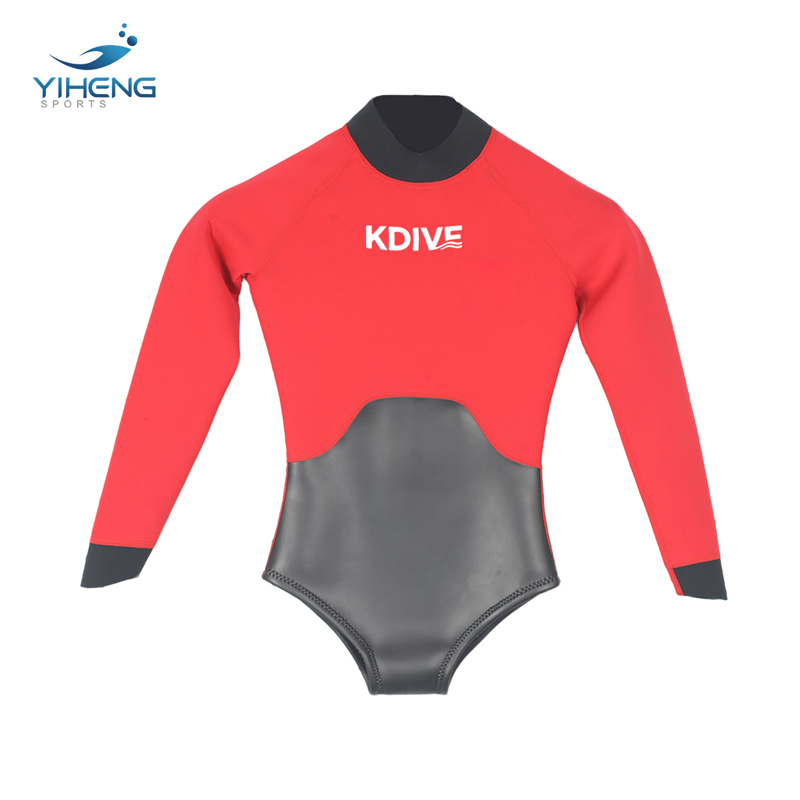
The Women’s Smooth Skin Neoprene Wetsuit Set combines a long-sleeve bikini-style neoprene top with matching over-knee neoprene socks. This two-piece design provides a distinctive alternative to conventional full-body wetsuits. Instead of enclosing the entire body in one continuous garment, it gives the wearer greater freedom to combine coverage, mobility, and personal comfort. The bikini-cut top allows unrestricted leg movement, while the over-knee socks add targeted warmth and protection to the lower legs.
Made from smooth skin neoprene and finished with a front YKK zipper, the set is designed for active use in the water. Its streamlined surface helps reduce resistance, and its body-hugging construction is intended to limit water entry during movement. Reinforced 4-needle 6-thread cover stitching supports seam strength and flexibility, which are essential for a garment that must stretch repeatedly during swimming, diving, and equipment handling.
Beyond its product features, this wetsuit set reflects the manufacturing capabilities of a specialized neoprene supplier. Jiangsu Yiheng Sports Products Co., Ltd. develops and produces neoprene fabrics, wetsuits, drysuits, fishing waders, rash guards, and other water sports products. With a factory covering more than 15,000 square meters, a workforce of over 120 professional employees, and more than 18 years of industry experience, the company provides OEM, ODM, private label, and long-term supply services for customers seeking consistent production support.
Designed for Active Women in the Water
Water sports place unique demands on apparel. A garment that feels acceptable on land may become uncomfortable once exposed to cold water, constant movement, pressure changes, and repeated stretching. Freedivers and spearfishers often move through the water in streamlined positions, requiring their clothing to remain close to the body without restricting breathing or leg movement. Snorkelers need thermal protection and durability, while open-water swimmers value freedom of movement and a smooth surface that does not create unnecessary drag.
This wetsuit set addresses those needs through a two-piece structure. The long-sleeve top covers the upper body and arms, helping protect areas that are frequently exposed to cool water and sunlight. The bikini cut leaves the legs relatively open, supporting a wide range of kicking movements. The over-knee socks then provide additional insulation and coverage where it is needed, without the bulk of a full-length lower-body garment.
The result is a flexible system rather than a one-purpose suit. Depending on water temperature, activity type, and personal preference, the top and socks can be used together or considered as separate components within a wider water sports wardrobe. This versatility is one of the most important advantages of the set over traditional one-piece alternatives.
The design also responds to the practical realities of changing in and out of wetsuit clothing. A front zipper is generally easier to access than a rear zipper, especially for users who are dressing independently. The smooth skin outer surface can make the garment easier to handle when putting it on carefully, while the flexible neoprene construction allows the fabric to conform to the wearer’s body after fitting.
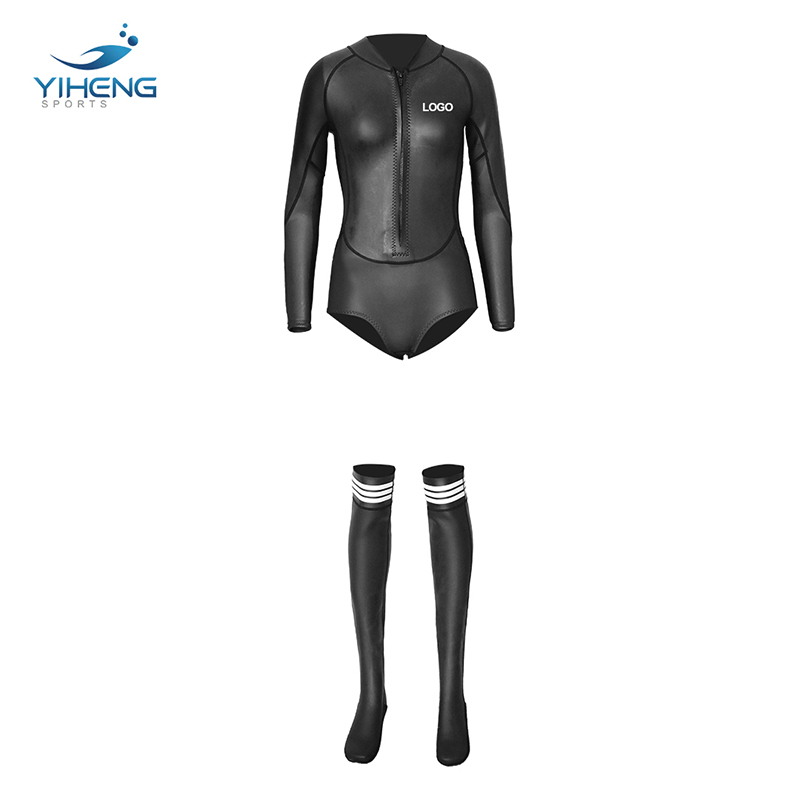
Women Smooth Skin Neoprene Wetsuit Set Bikini Top with Over Knee Neoprene Socks
Key Product Specifications
| Feature | Product Details | User Benefit |
|---|---|---|
| Product type | Women’s two-piece neoprene wetsuit set | Combines upper-body coverage with flexible lower-body protection |
| Set contents | Long-sleeve bikini wetsuit top and over-knee neoprene socks | Allows adaptable use in different water conditions |
| Material | Smooth skin neoprene | Supports thermal retention and reduced water resistance |
| Closure | Front YKK zipper | Enables convenient putting on and removal |
| Seam construction | 4-needle 6-thread cover stitch | Improves seam strength, stretch, and resistance to tearing |
| Color | Solid black with three white stripes at the sock tops | Creates a clean, recognizable, and sporty appearance |
| Primary applications | Freediving, spearfishing, snorkeling, and open-water swimming | Suitable for multiple aquatic activities |
| Customization | OEM and ODM support, custom logo, fabric thickness, color, and sizing | Suitable for private label and specialized product programs |
Smooth Skin Neoprene for Streamlined Water Performance
The defining material feature of this set is smooth skin neoprene. Unlike heavily textured or fabric-covered surfaces, smooth skin neoprene has a relatively sleek exterior. When the garment is correctly fitted, this smooth surface can help water pass more efficiently across the body. For activities such as freediving, spearfishing, and open-water swimming, where the user may spend extended periods moving horizontally through the water, surface efficiency can contribute to a more streamlined experience.
Smooth skin neoprene also provides an important balance between flexibility and thermal protection. Neoprene works by retaining a thin layer of water close to the body, which the body then warms. The material’s cellular structure helps slow heat transfer, supporting comfort in cool water. Although the actual level of warmth depends on thickness, fit, water temperature, activity intensity, and individual tolerance, a properly selected neoprene garment can be more thermally effective than ordinary swimwear.
The smooth outer surface is especially relevant for users who care about reducing water resistance. A bulky or loose garment can create turbulence and allow water to circulate unnecessarily. In contrast, a close-fitting smooth skin construction is intended to remain closer to the body and reduce the opportunities for water to flush through the garment. This is particularly valuable during long descents, repeated dives, and steady open-water swimming.
Compared with basic fabric swimwear, smooth skin neoprene offers greater coverage and insulation. Compared with some thick, rigid wetsuit designs, this two-piece configuration can feel less restrictive around the hips and legs. It is therefore positioned between lightweight swim apparel and full-body technical diving suits, giving users a practical option for activities that require both warmth and mobility.
Thermal Retention and Water Comfort
Cold water can reduce comfort quickly and may affect a swimmer’s ability to maintain efficient movement. The long sleeves cover the arms, shoulders, and upper torso, areas that can lose heat during prolonged exposure. The over-knee socks extend protection down the legs, helping create a more balanced level of coverage than a top alone.
The bikini-cut lower edge is designed to leave the legs free for kicking and body positioning. This feature can be useful for freedivers and spearfishers, who depend on hip flexibility and leg drive. It also gives the wearer the option to add other lower-body equipment according to the conditions, such as separate bottoms, additional thermal layers, or specialized diving accessories.
As with all neoprene products, the most appropriate thickness depends on the intended environment. The manufacturer supports customization of fabric thickness, allowing buyers to develop versions for different climate zones, seasons, and market requirements. A thinner construction may be preferred for warm-water snorkeling or active swimming, while a thicker specification can be considered for cooler conditions.
Two-Piece Construction for Greater Flexibility
The two-piece structure is a major point of difference from conventional full wetsuits. A standard full-body suit can provide broad coverage, but it may also feel restrictive, warm, or inconvenient in conditions where complete coverage is not necessary. The bikini top and over-knee socks offer a more modular approach.
The top is designed with long sleeves to protect the upper body and arms. Its bikini-style lower section leaves the upper legs open, which can help reduce material bunching around the hips and thighs. This is beneficial for users who perform repeated fin kicks, breaststroke movements, duck dives, or other actions that require a broad range of leg motion.
The socks extend above the knees and are intended to protect the lower legs. They can help reduce contact with cold water, fins, boards, rocks, or other equipment. The white stripe decoration at the top adds a visual detail to the otherwise solid black design, while also helping distinguish the socks as a coordinated part of the set.
This configuration can be particularly appealing to consumers who already own other water sports garments. For example, a user may pair the top with separate neoprene bottoms or use the socks with another upper-body layer. Retailers can also present the set as a flexible product for customers who want targeted insulation rather than a full-body suit.
Mobility for Freediving and Spearfishing
Freediving and spearfishing require controlled, efficient movement. Divers may need to bend at the waist, rotate the torso, extend the arms, and maintain a streamlined posture during descent and ascent. Clothing that pulls at the shoulders, hips, or knees can interfere with technique and increase fatigue.
The close-fitting cut is intended to follow the contours of the body rather than hang loosely. This reduces the chance of excess material catching water or shifting during movement. The bikini cut also avoids placing a large continuous panel across the thighs, allowing the legs to move independently during finning and positioning.
The smooth skin material can further support a streamlined profile. While equipment, body position, and technique remain decisive factors in diving performance, a sleek wetsuit surface is generally preferred by users who want to limit avoidable resistance. This makes the set suitable for brands and retailers targeting performance-oriented recreational divers.
For spearfishing, the garment’s design also offers practical coverage. Long sleeves can help protect the arms from cool water and minor contact with equipment, while the socks help cover the lower legs. The black color is visually understated and aligns with the appearance commonly preferred for diving-related activities.
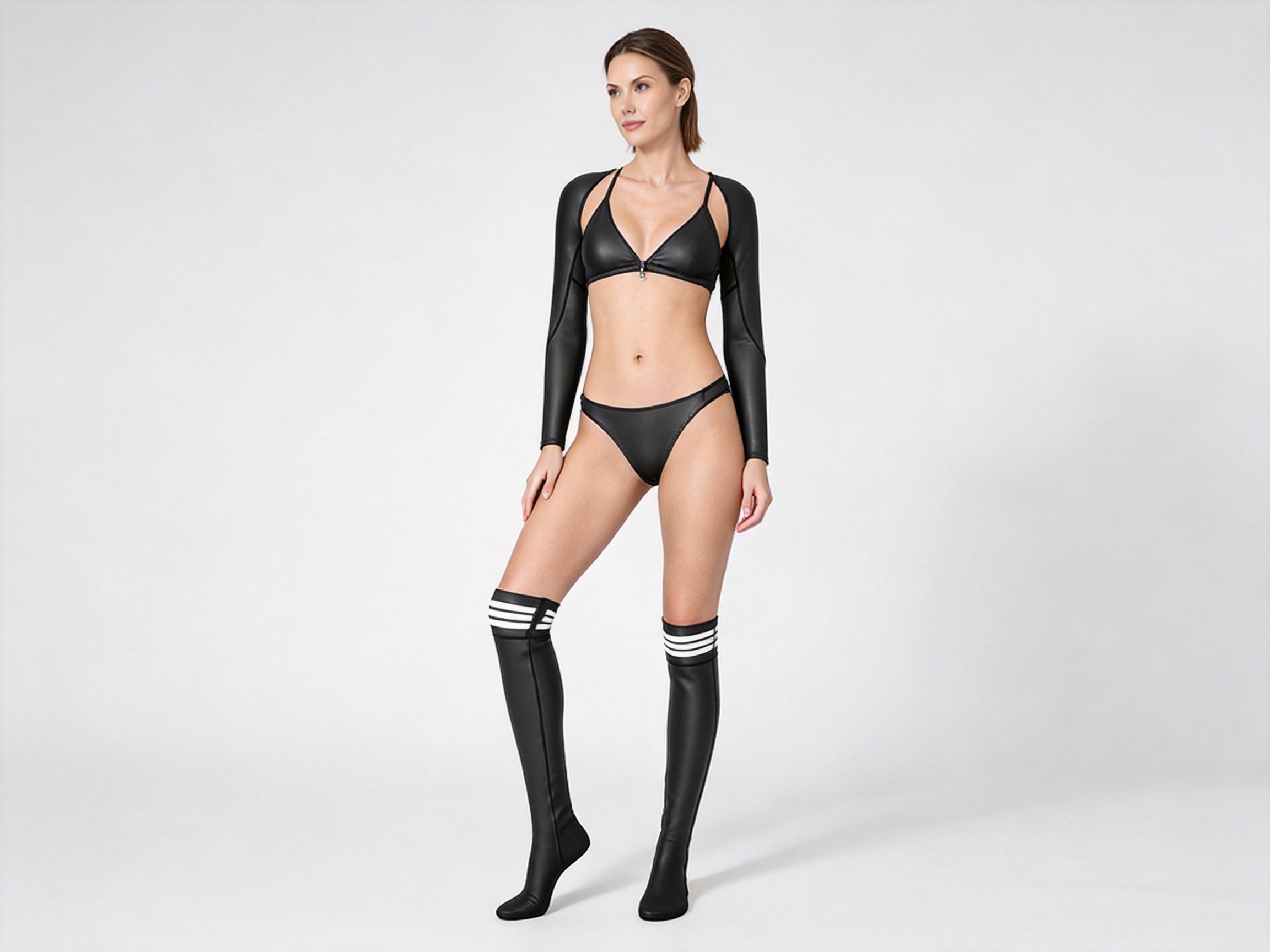
Front YKK Zipper for Practical Use
The front YKK zipper is an important usability feature. Wetsuits are intentionally close-fitting, and putting on a tight garment can require careful handling. A front closure gives the wearer a visible and accessible entry point, making it easier to open the top fully before dressing and to adjust the garment after it is in position.
Front access can be especially useful for independent users who do not have assistance on the beach, at a dive center, or beside a swimming venue. It can also simplify removal after activity, when the wearer may be tired, cold, or working with wet hands. A recognized zipper supplier adds confidence in closure quality, provided that the zipper is used correctly and maintained according to normal wetsuit care practices.
The zipper is integrated into a garment that must repeatedly flex across the torso. For this reason, zipper placement and surrounding seam construction are important. The cover-stitched seams help support the fabric around the closure and other high-movement areas. A durable zipper alone cannot compensate for weak surrounding construction, so the combination of a quality closure and reinforced stitching is a meaningful product advantage.
Easy Dressing Without Sacrificing Fit
Convenience should not come at the expense of a secure fit. The front zipper helps with dressing, while the body-hugging tailored cut keeps the top close to the wearer once closed. This balance is essential because a loose fit can allow excessive water circulation, while an overly tight fit may restrict breathing and movement.
Buyers should select the size carefully and follow the manufacturer’s sizing guidance when available. Neoprene should lie smoothly against the body without large folds or open gaps. Users should avoid pulling aggressively on the zipper or gripping delicate smooth skin surfaces with sharp fingernails, as careful handling can extend the life of the garment.
4-Needle 6-Thread Cover Stitch Construction
Seam construction is one of the most important indicators of wetsuit quality. Neoprene garments are repeatedly stretched as the wearer bends, swims, dives, and changes position. Conventional weak seams may separate, fray, or lose elasticity under this stress. The Women’s Smooth Skin Neoprene Wetsuit Set uses a 4-needle 6-thread cover stitch, a construction selected for a combination of strength, flexibility, and appearance.
Cover stitching distributes tension across the seam rather than concentrating it at a single narrow line. The multi-thread structure helps the seam follow the stretch of the neoprene. This is particularly important at the shoulders, underarms, side panels, sleeve openings, leg openings, and other areas exposed to repeated movement.
The 4-needle 6-thread specification also reflects a production process designed for technical sportswear rather than casual apparel. It requires appropriate sewing equipment, controlled handling, and operators who understand how to work with elastic neoprene materials. Proper thread tension and stitch consistency are essential. If the tension is too high, the seam may become rigid; if it is too low, the seam may appear loose or fail to hold the panels together securely.
For private label customers, reliable seam construction is important because it affects customer satisfaction, return rates, and brand reputation. A product may look attractive in product photography, but its real value is revealed after repeated use. Reinforced stitching gives buyers greater confidence that the set is intended for active water use rather than occasional fashion wear.
Strength, Stretch, and Anti-Tear Performance
The stated cover-stitch construction is designed to support strong and flexible seams. This helps the garment tolerate the tension created when the wearer pulls the top over the shoulders, extends the arms, bends the torso, or adjusts the socks. The goal is not to make the garment rigid, but to ensure that the seams move with the neoprene while remaining securely joined.
Anti-tear performance depends on more than stitching. Material quality, panel design, seam allowance, cutting accuracy, thread selection, zipper installation, and user care all contribute to long-term durability. A specialized manufacturer can manage these factors together, creating a more consistent product than a supplier focused only on final assembly.
The company’s experience in both neoprene fabrics and finished products supports this integrated approach. Understanding the behavior of raw neoprene helps the production team select suitable materials, control cutting, and develop appropriate sewing methods. This source-to-product knowledge is valuable when customers request changes in thickness, color, logo placement, or sizing.
Advantages Compared with Conventional Alternatives
The market includes many types of aquatic apparel, including ordinary swimwear, rash guards, shorty wetsuits, full wetsuits, and generic neoprene tops. Each category has its own purpose. The Women’s Smooth Skin Neoprene Wetsuit Set stands out because it combines features from performance wetsuits with the flexibility of a modular two-piece design.
| Alternative | Typical Limitation | Advantage of This Two-Piece Set |
|---|---|---|
| Ordinary swimsuit | Limited thermal protection and minimal resistance to abrasion | Provides neoprene insulation, long sleeves, and over-knee coverage |
| Basic rash guard | Protects against sunlight and minor irritation but offers less warmth | Uses neoprene for greater thermal retention and water-sport protection |
| Full-body wetsuit | May feel restrictive or excessive in moderate conditions | Offers targeted coverage with greater lower-body freedom |
| One-piece shorty suit | May not provide sufficient arm or leg coverage | Combines long sleeves with over-knee socks for adaptable protection |
| Low-quality neoprene set | May use weak seams, inconsistent sizing, or unreliable closures | Uses YKK zipper technology and 4-needle 6-thread cover stitching |
| Loose-fitting water apparel | Can allow water flushing and create additional drag | Uses a streamlined, body-hugging tailored cut |
Compared with ordinary swimwear, the set offers a meaningful increase in insulation and coverage. Compared with a basic rash guard, the neoprene construction is more suitable for cool-water exposure. Compared with a full wetsuit, it provides a lighter and more open lower-body configuration that may be preferred by users who prioritize movement.
Compared with inexpensive generic neoprene garments, the product’s construction details are important differentiators. A recognizable zipper, reinforced multi-thread cover stitching, smooth skin material, and the ability to customize thickness and sizing create a stronger foundation for professional retail and private label programs.
Manufacturing Strengths Behind the Product
A technically designed wetsuit is only as reliable as the manufacturing system that produces it. Consistent quality requires appropriate raw materials, experienced personnel, controlled cutting, accurate sewing, careful inspection, and dependable communication with customers. A factory must also be able to transform product concepts into repeatable production specifications.
Jiangsu Yiheng Sports Products Co., Ltd. began its business journey in 2008. From its early experience with raw materials and semi-finished products, the company developed into a professional manufacturer focused on neoprene materials and finished water sports products. This history gives the company an understanding of both upstream material requirements and downstream market expectations.
The factory covers more than 15,000 square meters and employs over 120 professional workers. These resources support production across a broad product portfolio, including wetsuits, drysuits, fishing waders, rash guards, water sports equipment, and neoprene fabrics. A diversified product range can strengthen technical learning because manufacturing teams encounter different construction methods, performance requirements, and customer applications.
The company also reports more than 18 years of industry experience in neoprene fabrics and finished products. In addition, it has gained direct retail-market experience, helping it understand how products are presented, used, evaluated, and purchased. This combination of manufacturing knowledge and market awareness is useful for customers who need more than basic contract production.
From Neoprene Fabric to Finished Garment
Producing a wetsuit set begins with material selection. Neoprene thickness, surface finish, elasticity, density, color, and lamination options all influence the final garment. Smooth skin neoprene must be handled with care because the exterior surface is central to the product’s appearance and performance. Scratches, creases, and incorrect cutting can affect the finished result.
After the material is selected, panels are developed and cut according to the design. Accurate cutting is important because the top must follow the body without creating excessive tension or loose areas. The socks must also maintain a comfortable fit around the lower legs and above the knees. Inconsistent panel dimensions can lead to uneven seams, discomfort, or a poor appearance.
The assembly stage requires specialized sewing techniques. Neoprene does not behave like ordinary woven fabric. It has thickness, stretch, and resilience, so the operator must control how panels are aligned and fed through the machine. The 4-needle 6-thread cover stitch requires precision to achieve a neat, elastic, and durable result.
Installation of the front YKK zipper is another important operation. The zipper must be aligned accurately so it opens and closes smoothly without placing unnecessary stress on the surrounding neoprene. The zipper area should be checked for straightness, stitch security, and clean finishing before the product moves to final inspection.
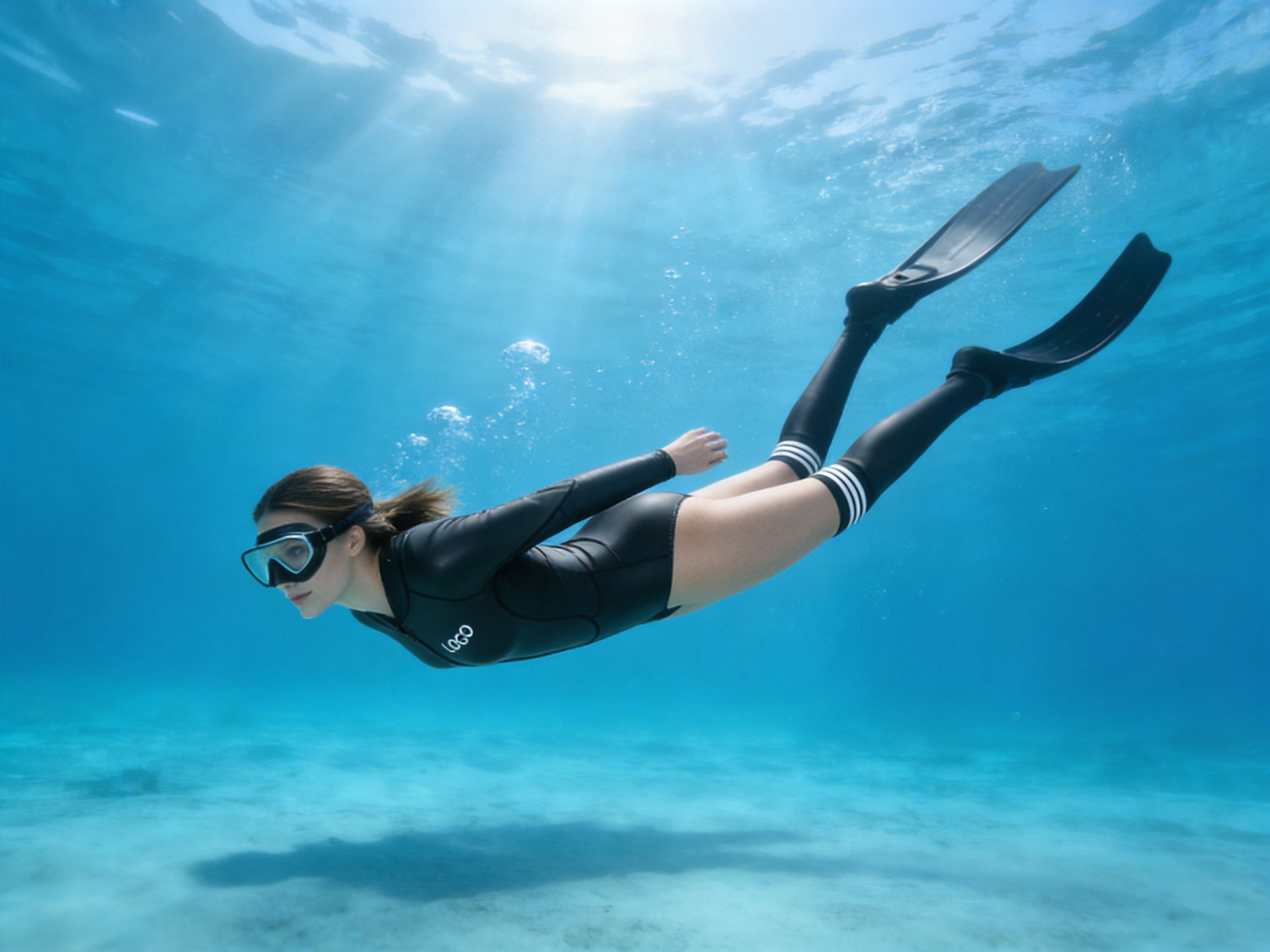
OEM, ODM, and Private Label Development
The product is suitable not only as a ready-to-sell item but also as a foundation for customized water sports collections. The manufacturer supports OEM and ODM services, allowing customers to choose the level of involvement they prefer. An OEM customer may provide a defined design and branding specification, while an ODM customer may work with the factory to adapt an existing product or develop a new configuration.
Customization options include custom logos, fabric thickness, colors, and multiple sizes. These options are valuable for sporting goods distributors, diving equipment brands, surf retailers, online sellers, professional clubs, and emerging private label companies. A customer can maintain the basic performance structure of the set while adjusting its visual identity or technical specification for a particular market.
Custom Logo Applications
Brand identity is important in a competitive water sports market. A custom logo can be applied to suitable areas of the top or socks, subject to design review and production requirements. Logo placement should remain visible without interfering with stretch zones, zipper operation, or the smooth surface’s appearance.
For private label buyers, consistent logo application is part of overall product quality. Artwork should be supplied in an appropriate format, and the customer should confirm the intended size, position, color, and application method before bulk production. Sampling is recommended so the brand owner can evaluate the appearance on the actual neoprene material.
Fabric Thickness and Climate Adaptation
Different markets have different water temperatures and consumer expectations. A warm-water snorkeling market may favor a lighter configuration that emphasizes flexibility and breathability during active use. A cooler open-water market may prefer a thicker version with greater thermal retention. The ability to customize fabric thickness allows the product to serve more than one regional application.
Thickness should be selected together with fit and intended activity. A thicker material may offer additional warmth but can also change flexibility and weight. A thinner material may provide greater freedom of movement but less insulation. Professional product development considers the complete use case rather than treating thickness as an isolated specification.
Color and Size Programs
The standard version uses solid black, with three white stripes decorating the top of the socks. Black provides a clean, versatile appearance and is widely accepted across diving and water sports categories. Customers seeking a different market position can explore alternative colors or combinations through the customization process.
Multiple sizes are available, which is essential because wetsuit performance depends heavily on fit. A broad size program helps retailers serve more consumers and reduces the likelihood that buyers will select an unsuitable garment. For private label projects, the size range can be planned according to the target market, customer demographics, and sales channel.
Quality Control Considerations
Quality control for a neoprene wetsuit set should cover both visible appearance and functional performance. A garment can appear attractive while still having problems with seam tension, zipper operation, sizing, or material consistency. A professional manufacturing process therefore uses multiple inspection points rather than relying only on a final visual check.
Material inspection should consider surface smoothness, color uniformity, thickness, elasticity, and visible defects. Smooth skin neoprene requires particular attention because marks may be noticeable and can reduce the product’s visual quality. Panels should be checked before cutting to reduce the chance of incorporating damaged areas into finished garments.
During sewing, operators should monitor alignment, stitch consistency, thread tension, and seam appearance. The 4-needle 6-thread cover stitch should remain even along curved and straight sections. Areas around the armholes, zipper, sleeve openings, bikini edge, and sock tops deserve special attention because they may experience higher stress.
Finished products should be reviewed for measurements, symmetry, zipper operation, logo placement when applicable, loose threads, surface marks, and overall appearance. The socks should be checked as a pair to confirm that their dimensions and stripe positions are consistent. Packaging and labeling should also match the customer’s order requirements.
For customized programs, quality control should include approval of pre-production samples. A sample allows the buyer to confirm the fabric thickness, color, fit, zipper, stitching, branding, and overall design before a larger order begins. This step is especially important when the product is intended for a new brand or a market with specific sizing expectations.
Applications Across Water Sports
Freediving
Freedivers need clothing that supports streamlined movement and thermal comfort without unnecessary bulk. The smooth skin exterior is suited to users who value a sleek profile, while the long sleeves and over-knee socks add protection for cool-water sessions. The two-piece construction leaves the legs more open than a full suit, which may appeal to divers who prioritize hip and leg mobility.
Spearfishing
Spearfishing often involves long periods in the water, repeated diving, and contact with equipment. A close-fitting neoprene garment can help maintain warmth and reduce distractions caused by loose fabric. The black appearance is appropriate for customers seeking a subdued, technical look. The reinforced seams are also valuable in an activity where garments may be exposed to repeated stretching and movement.
Snorkeling
Snorkelers may remain near the surface for extended periods, where sun exposure and gradual heat loss can affect comfort. The long-sleeve top provides additional coverage compared with ordinary swimwear, and the socks protect the lower legs while adding warmth. Because the set is modular, users can adapt their clothing to local conditions rather than committing to a full-body wetsuit.
Open-Water Swimming
Open-water swimmers need freedom of movement across the shoulders and arms. A well-fitted long-sleeve top can provide warmth while maintaining a close profile. The smooth skin surface is also attractive to swimmers who want to reduce unnecessary drag. The over-knee socks can be used when additional lower-leg protection is desired, subject to the swimmer’s preferred technique and equipment.
Comfort, Fit, and Care Recommendations
A wetsuit performs best when it fits closely but does not cause harmful pressure. The top should lie flat across the torso, shoulders, and arms. The sleeves should remain secure without cutting into the wrists. The bikini section should stay in position during movement, and the socks should fit smoothly around the legs without excessive looseness or uncomfortable compression.
Users should put on the garment gradually and avoid pulling forcefully on a single seam or edge. Smooth skin neoprene can be vulnerable to damage from sharp fingernails, rings, rough surfaces, or careless contact with equipment. Using clean hands and taking time during dressing can help protect the material.
After use, the set should be rinsed with fresh water to remove salt, chlorine, sand, and other residues. It should be dried away from direct high heat and strong sunlight when possible. Excessive heat can affect neoprene, adhesives, elastic components, and surface finishes. The garment should be stored in a cool, dry location without sharp folds or heavy objects placed on top of it.
The zipper should be operated smoothly rather than forced. If sand or salt accumulates around the zipper, rinsing and gentle cleaning can help maintain operation. Users should follow the care instructions supplied with the specific product, especially if a customized material or thickness is selected.
Why Manufacturing Experience Matters to Buyers
For a consumer, the product’s visible features are important. For a distributor or private label buyer, the manufacturing system behind those features may be even more important. A reliable supplier must be able to reproduce the same material, measurements, colors, seams, and branding across multiple production batches.
Experience in neoprene manufacturing helps reduce common risks. These risks include inconsistent material thickness, uneven color, poor panel alignment, zipper problems, weak seams, inaccurate sizing, and delayed responses to technical questions. A manufacturer that works with both raw materials and finished products can often identify the source of a problem more efficiently.
Jiangsu Yiheng Sports Products Co., Ltd. positions itself as a long-term manufacturing partner rather than only a supplier of individual finished garments. Its capabilities cover source manufacturing, OEM production, ODM development, private label support, and ongoing supply. This structure can be useful for businesses that intend to expand from one wetsuit style into a wider water sports collection.
The company’s product categories include wetsuits, drysuits, fishing waders, rash guards, water sports equipment, and neoprene fabrics. This broad range gives customers opportunities to coordinate products across a complete aquatic apparel line. A brand could potentially develop complementary items using related materials, colors, logos, and construction standards.
Commercial Value for Private Label Brands
The women’s wetsuit market includes customers with diverse needs, from recreational swimmers to serious divers. A private label brand can use this set as a specialized product aimed at customers who want warmth and performance without a traditional full-body design. The distinctive two-piece structure creates a clear point of differentiation for online listings, specialty retail, and professional water sports catalogs.
The product also offers useful content opportunities for retailers. Marketing materials can explain the benefits of smooth skin neoprene, the convenience of a front zipper, the flexibility of a two-piece system, and the durability of reinforced cover stitching. These details help transform a generic wetsuit listing into an informative product story.
Customization further supports market segmentation. A brand serving warm-water travelers may choose a lighter fabric thickness and bright color accents. A brand focused on freediving may emphasize the smooth surface and streamlined silhouette. A retailer serving open-water swimmers may select a different size range and highlight thermal comfort. The same basic platform can be adapted to multiple sales strategies.
OEM and ODM cooperation can also shorten the path from concept to market. Instead of building a complete technical supply chain independently, a buyer can work with an established neoprene manufacturer that already understands fabric handling, wetsuit construction, and aquatic product requirements. This can lower development complexity and support more consistent commercialization.
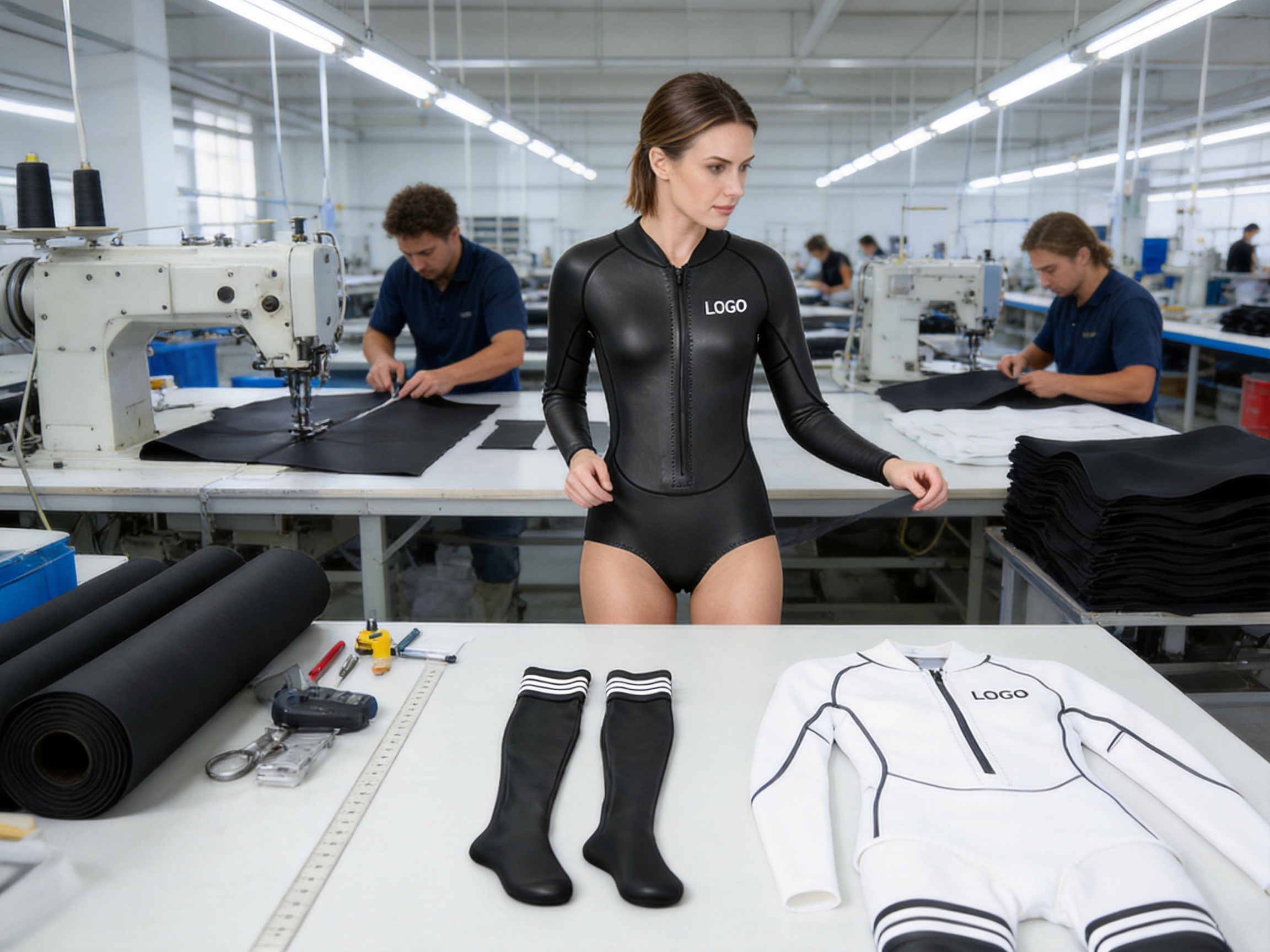
Q&A
What is included in the wetsuit set?
The set includes a women’s long-sleeve bikini-style neoprene wetsuit top and a pair of matching over-knee neoprene socks. The pieces are designed to be worn together but can provide flexibility for different clothing combinations and water conditions.
What activities is the set designed for?
The main applications are freediving, spearfishing, snorkeling, and open-water swimming. It can also be considered for other recreational water activities where thermal protection, flexibility, and a close-fitting design are desirable.
What is smooth skin neoprene?
Smooth skin neoprene is neoprene with a sleek outer surface rather than a heavily textured fabric exterior. Its smooth finish is intended to reduce water resistance and support a streamlined profile while retaining the thermal benefits associated with neoprene.
Does the set provide full-body coverage?
No. It is a two-piece configuration consisting of a long-sleeve bikini top and over-knee socks. This design provides targeted coverage while leaving more of the legs open than a conventional full-body wetsuit.
Why does the product use a front zipper?
The front YKK zipper is intended to make the top easier to put on and remove. It provides convenient access for users dressing independently and is integrated into a garment designed for active movement.
What is the purpose of the 4-needle 6-thread cover stitch?
The cover stitch is used to create seams that are strong, flexible, and more resistant to tearing. It helps the garment tolerate repeated stretching during swimming, diving, dressing, and removal.
Can the fabric thickness be customized?
Yes. The manufacturer supports customization of fabric thickness. Buyers can discuss a suitable specification according to water temperature, climate, activity, target market, and desired balance between warmth and flexibility.
Are custom colors and logos available?
Yes. OEM and ODM services include custom logos and colors. Customers should confirm artwork, placement, color requirements, and sample approval procedures before bulk production.
Are multiple sizes available?
Yes. Multiple sizes are available, and a size program can be discussed for private label projects. Buyers should evaluate the intended market and request appropriate size information before placing an order.
How should the smooth skin surface be handled?
The surface should be protected from fingernails, rings, sharp objects, rough concrete, and abrasive equipment. The garment should be put on carefully, rinsed after use, dried away from excessive heat, and stored in a clean, dry place.
Is the set suitable for cold water?
Suitability depends on the selected neoprene thickness, fit, activity level, personal tolerance, and actual water temperature. The manufacturer supports thickness customization, so buyers should select a specification appropriate for their intended conditions.
What makes this product different from a full wetsuit?
The main difference is its modular two-piece design. The bikini top and over-knee socks provide thermal and protective coverage while allowing greater openness and leg mobility than many full-body styles. This may be preferable when complete coverage is unnecessary.
Who can purchase this product for private label use?
Potential customers include water sports brands, diving equipment distributors, specialty retailers, online sellers, sporting goods companies, clubs, and other businesses seeking customized neoprene apparel.
Why work with an experienced neoprene manufacturer?
An experienced manufacturer can support material selection, cutting, sewing, zipper installation, quality control, customization, and repeat production. This integrated capability helps buyers develop a more consistent product and reduce the technical challenges of managing several suppliers.
Conclusion
The Women’s Smooth Skin Neoprene Wetsuit Set offers a focused combination of performance, flexibility, and practical design. Its smooth skin neoprene surface supports a streamlined profile and thermal retention, while the long-sleeve bikini top provides upper-body coverage without enclosing the legs in a full-length garment. The over-knee socks add targeted lower-leg protection and complete the coordinated two-piece system.
The front YKK zipper improves convenience during dressing and removal. The 4-needle 6-thread cover stitch supports the strength and stretch required for active water use. The body-hugging tailored cut helps reduce water flushing and keeps the garment close to the wearer during diving, swimming, and other aquatic movements.
Compared with ordinary swimwear, the set provides more warmth and protection. Compared with a basic rash guard, it offers a more technical neoprene construction. Compared with a full wetsuit, it provides a more open and modular approach to coverage. These advantages make it suitable for women who want a versatile garment for freediving, spearfishing, snorkeling, and open-water swimming.
The product is also supported by a manufacturing organization with extensive experience in neoprene materials and finished water sports products. Since beginning operations in 2008, Jiangsu Yiheng Sports Products Co., Ltd. has developed production capabilities covering neoprene fabrics, wetsuits, drysuits, fishing waders, rash guards, and related equipment. Its more than 15,000-square-meter factory, workforce of over 120 professionals, and long-term industry experience provide a foundation for OEM, ODM, and private label cooperation.
For buyers seeking a distinctive women’s water sports product, this wetsuit set provides a practical platform that can be customized by thickness, color, logo, and size. For brands seeking a dependable manufacturing partner, the combination of material expertise, finished-garment production, flexible customization, and market-oriented development offers a strong basis for long-term supply.
References
1. General principles of neoprene material selection and thermal insulation in aquatic sports apparel.
2. Technical considerations for smooth skin wetsuit surfaces, hydrodynamic movement, and water resistance.
3. Apparel engineering practices for elastic materials, cover stitching, and reinforced seam construction.
4. Product information supplied for the Women’s Smooth Skin Neoprene Wetsuit Set with Bikini Top and Over-Knee Neoprene Socks.
5. Manufacturing and company information supplied for Jiangsu Yiheng Sports Products Co., Ltd.
6. General care recommendations for neoprene garments, zippers, smooth surfaces, and water sports equipment.
Product: Women Smooth Skin Neoprene Wetsuit Set Bikini Top with Over Knee Neoprene Socks

LET’S DEVELOP YOUR NEXT NEOPRENE PRODUCT LINE
Quick Links
Product Categories
Contact Us
-
 Email: postmaster@yihengsport.com
-
 Mobile: +86-13564100539
-
 No. 480 Jiangping Road, Madian, Binjiang Town, Taixing City, Taizhou City, Jiangsu Province, China.
Copyright © Jiangsu Yiheng Sports Products Co., Ltd. All Rights Reserved
China Wetsuit Manufacturer Neoprene Fabric Manufacturer
