

 Language
 English
 中文简体
 日本語
 русский
 Español
 عربى

Oct, 24, 2026
Women’s 2-Piece Freediving Wetsuit Set: Comfort, Mobility, and OEM Performance
Freediving demands more from a wetsuit than simple thermal coverage. A diver must be able to move efficiently, control body position, conserve energy, and remain comfortable during repeated descents and ascents. Every seam, zipper, panel, and opening can influence the experience in the water. For women who participate in freediving, spearfishing, snorkeling, and coastal diving, a well-designed suit must combine flexible construction with dependable protection and an ergonomic fit.
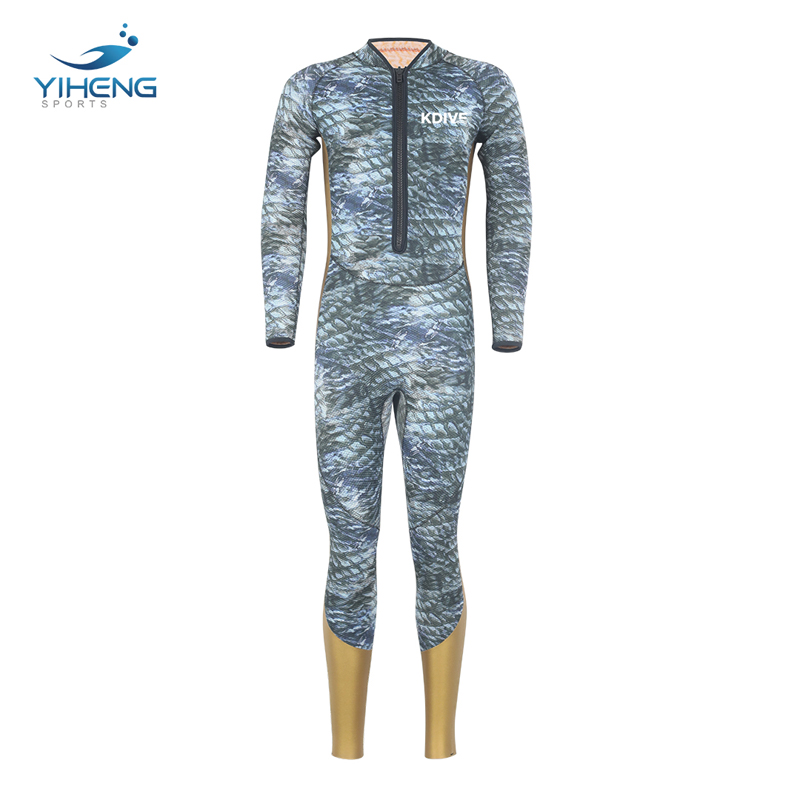
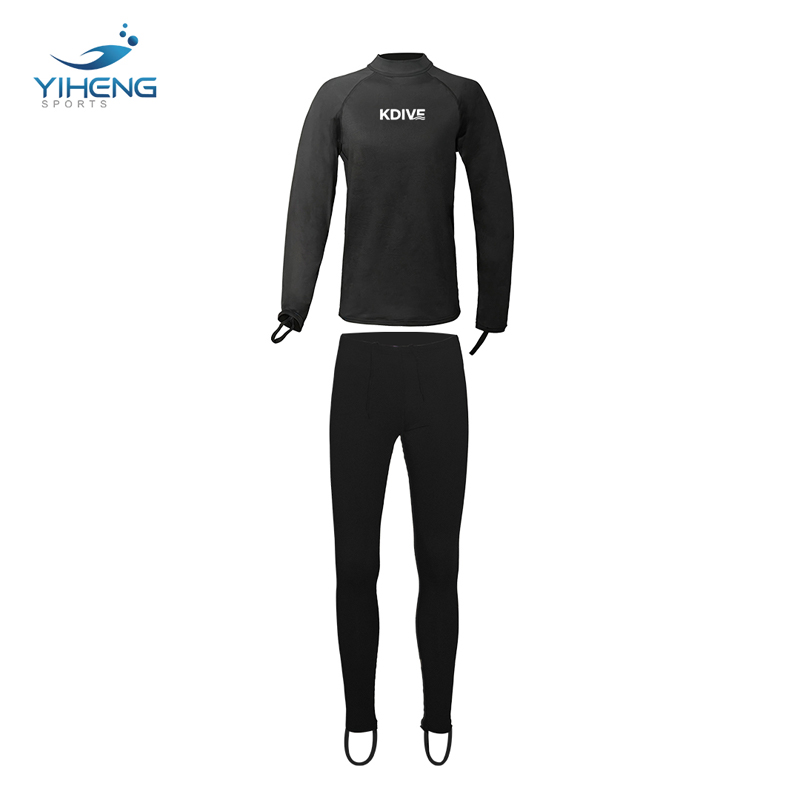
The Women’s 2-Piece Freediving Wetsuit Set Long Sleeve Neoprene is designed around these practical requirements. It combines a long-sleeve, high-cut bodysuit with matching over-knee neoprene socks in a two-piece format. This configuration provides versatile coverage while making the garment easier to put on, adjust, and customize. The result is a women-specific freediving wetsuit solution suitable for water sports retailers, private-label brands, diving schools, outdoor distributors, and professional buyers seeking reliable OEM or ODM production.
Constructed from neoprene and assembled with 4-needle, 6-thread flatlock stitching, the set is engineered to balance stretch, durability, and wearing comfort. A front chest YKK zipper supports convenient entry, while YKK zippers at both wrists make sleeve installation easier. The high-cut bodysuit supports unrestricted leg movement, and the footed over-knee socks add warmth and coverage around the calves and feet.
For wholesale customers, the product offers more than a finished garment. It represents a flexible platform for customized thicknesses, colors, logos, size ranges, and private-label development. Backed by a manufacturer with extensive experience in neoprene fabrics and finished water sports products, the set can be adapted to different markets and brand positioning strategies.
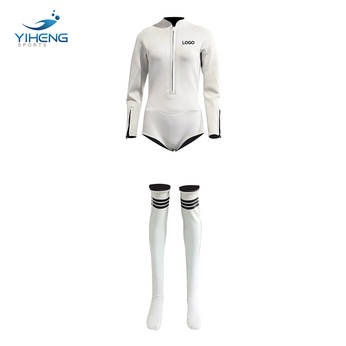
Women’s 2-Piece Freediving Wetsuit Set Long Sleeve Neoprene
Designed for the Demands of Freediving
Freediving is a movement-intensive activity. Unlike casual swimming, it requires repeated body extension, streamlined positioning, controlled kicking, and efficient transitions between surface preparation and underwater descent. A wetsuit that is too rigid can restrict movement, while one that is poorly fitted may create discomfort, cold spots, or unnecessary drag.
This two-piece women’s wetsuit set addresses these concerns through a combination of flexible neoprene construction, a streamlined silhouette, and a split-body design. The long-sleeve bodysuit protects the torso and arms while leaving the lower garment separate from the socks. This arrangement allows the wearer to handle each piece independently, which is useful when changing before or after a dive, adjusting the fit, or combining the top with other neoprene accessories.
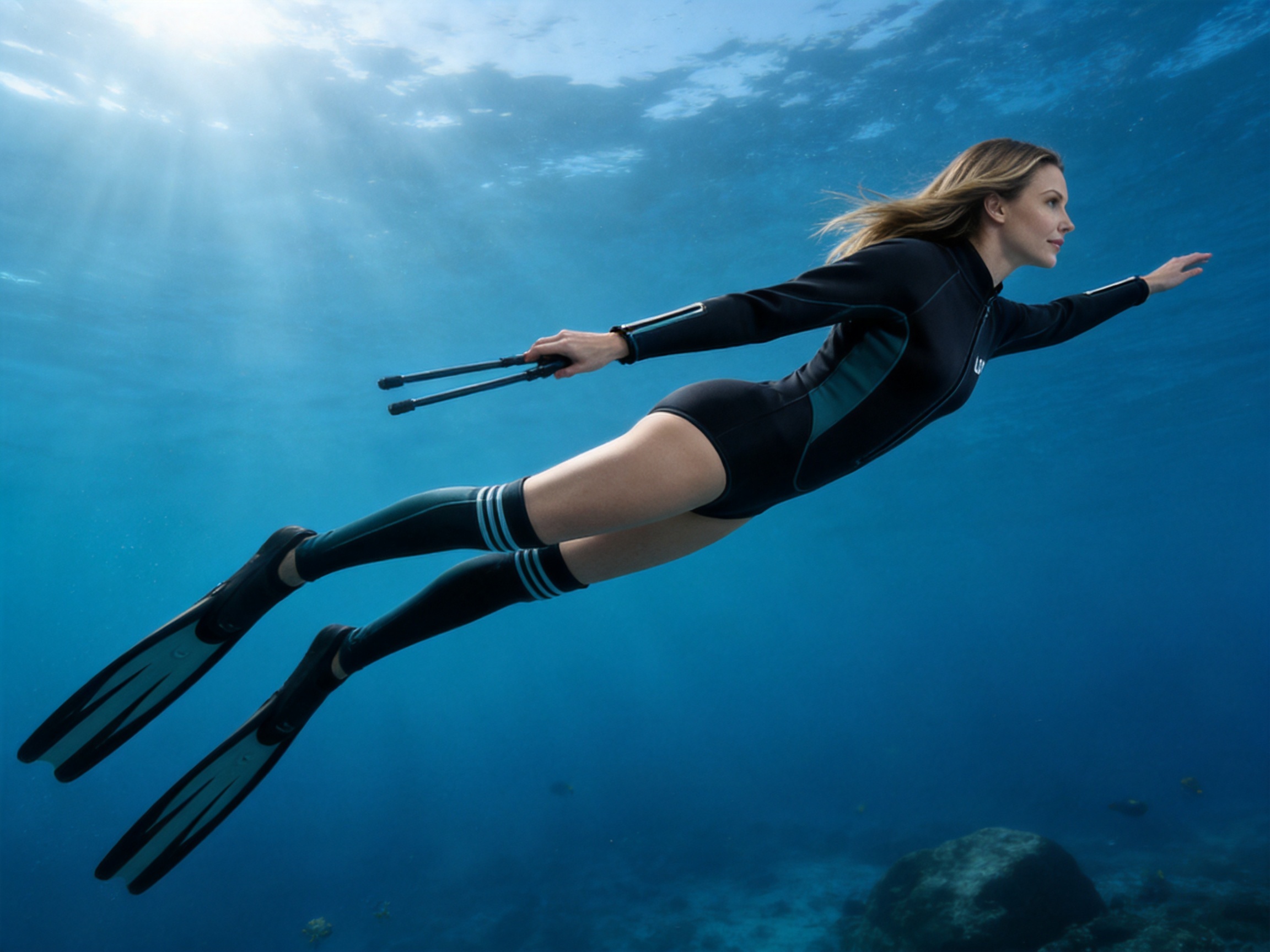
The high-cut bottom is especially relevant to freediving. It gives the upper leg and hip area greater freedom of movement than a lower-cut design that may press across the thighs. When a diver uses a monofin, bifins, or a streamlined flutter kick, unrestricted hip and leg motion can contribute to a more natural body position. The design is also suitable for snorkeling and spearfishing, where the wearer may need to swim, kneel, climb onto a boat, or move along rocky shorelines.
The long sleeves provide additional coverage for the arms and upper body. In cooler water, this coverage helps reduce direct exposure to the surrounding environment. In warm-water conditions, the suit can still provide useful protection from minor abrasions, contact with equipment, and environmental exposure during extended time in the water.
A Practical Two-Piece Configuration
The two-piece structure is one of the product’s key advantages. A one-piece suit can offer continuous coverage, but it may be more difficult to put on, especially when the material is thick or the wearer is changing without assistance. A split design allows the user to put on the bodysuit and socks separately, making the preparation process more manageable.
The separate socks also provide sizing flexibility. The wearer can select or adjust the sock fit independently from the upper-body garment, which is helpful because body proportions vary from person to person. For retailers and brands, this format can also support a broader product range, including different combinations of bodysuit and sock sizes where manufacturing specifications permit.
Another advantage is versatility after purchase. The bodysuit may be worn with other neoprene footwear or accessories, while the over-knee socks may be used with compatible water sports garments. This can increase the perceived value of the set and make it attractive to users who want adaptable equipment rather than a single-purpose garment.
Key Product Features and Benefits
The following table summarizes the principal specifications and the practical value of each feature.
| Product Feature | Construction | Practical Benefit |
|---|---|---|
| Product type | Women’s two-piece freediving wetsuit set | Flexible wearing and easier garment management |
| Main garment | Long-sleeve, high-cut neoprene bodysuit | Upper-body coverage with enhanced leg mobility |
| Accessory garment | Over-knee neoprene socks | Additional calf, ankle, and foot coverage |
| Neck design | Stand collar | Comfortable coverage around the neck area |
| Front closure | Front chest YKK zipper | Convenient donning and doffing |
| Sleeve closures | YKK zippers at both wrists | Easier sleeve installation and removal |
| Seam construction | 4-needle, 6-thread flatlock stitching | Flat, flexible seams with reduced irritation |
| Sock design | Footed over-knee socks with three black stripe bands | Integrated coverage with a distinctive appearance |
| Applications | Freediving, spearfishing, snorkeling, and coastal diving | Suitable for multiple water sports scenarios |
| Customization | Logo, color, thickness, and size options | Adaptable to private-label and wholesale programs |
Neoprene Material for Flexible Water Sports Performance
Neoprene is widely used in water sports apparel because it combines elasticity, insulation, and resilience. Its stretch characteristics allow a wetsuit to follow the body during swimming, kicking, reaching, and bending. Properly selected neoprene can also create a close-fitting layer that helps limit the circulation of water between the garment and the skin.
For freediving, material selection must be considered together with pattern design and seam construction. A flexible material cannot perform effectively if the garment is cut too narrowly at the shoulders, hips, or knees. Conversely, a generous pattern may reduce restriction but create excess material and a less streamlined profile. The product’s long-sleeve high-cut silhouette is intended to create a balance between body coverage and movement.
Neoprene thickness can be adjusted according to water temperature, market requirements, and customer preferences. A thinner specification may be suitable for warm-water snorkeling or tropical diving, while a thicker option may be preferred for cooler conditions. Because thickness affects stretch, warmth, weight, and fit, customization should be confirmed during product development and sampling.
Flatlock Stitching for Comfort and Durability
The product uses 4-needle, 6-thread flatlock stitching. Flatlock seams are designed to lie flatter against the body than bulky conventional seams. This is particularly important in a close-fitting wetsuit, where raised or rough seam structures may create pressure points during long periods of wear.
The multi-needle, multi-thread construction supports a strong and flexible connection between neoprene panels. It is intended to withstand the repeated stretching associated with dressing, swimming, kicking, and removal. The flat seam profile can also help reduce skin friction, making the garment more comfortable for users who spend extended periods in the water.
In competitive product categories, seam quality is a major differentiator. A wetsuit may have attractive colors and useful features, but inconsistent stitching can reduce service life and increase returns. Careful seam alignment, consistent thread tension, and suitable production controls are therefore essential to the final product’s reliability.
Zipper Engineering for Easier Donning and Doffing
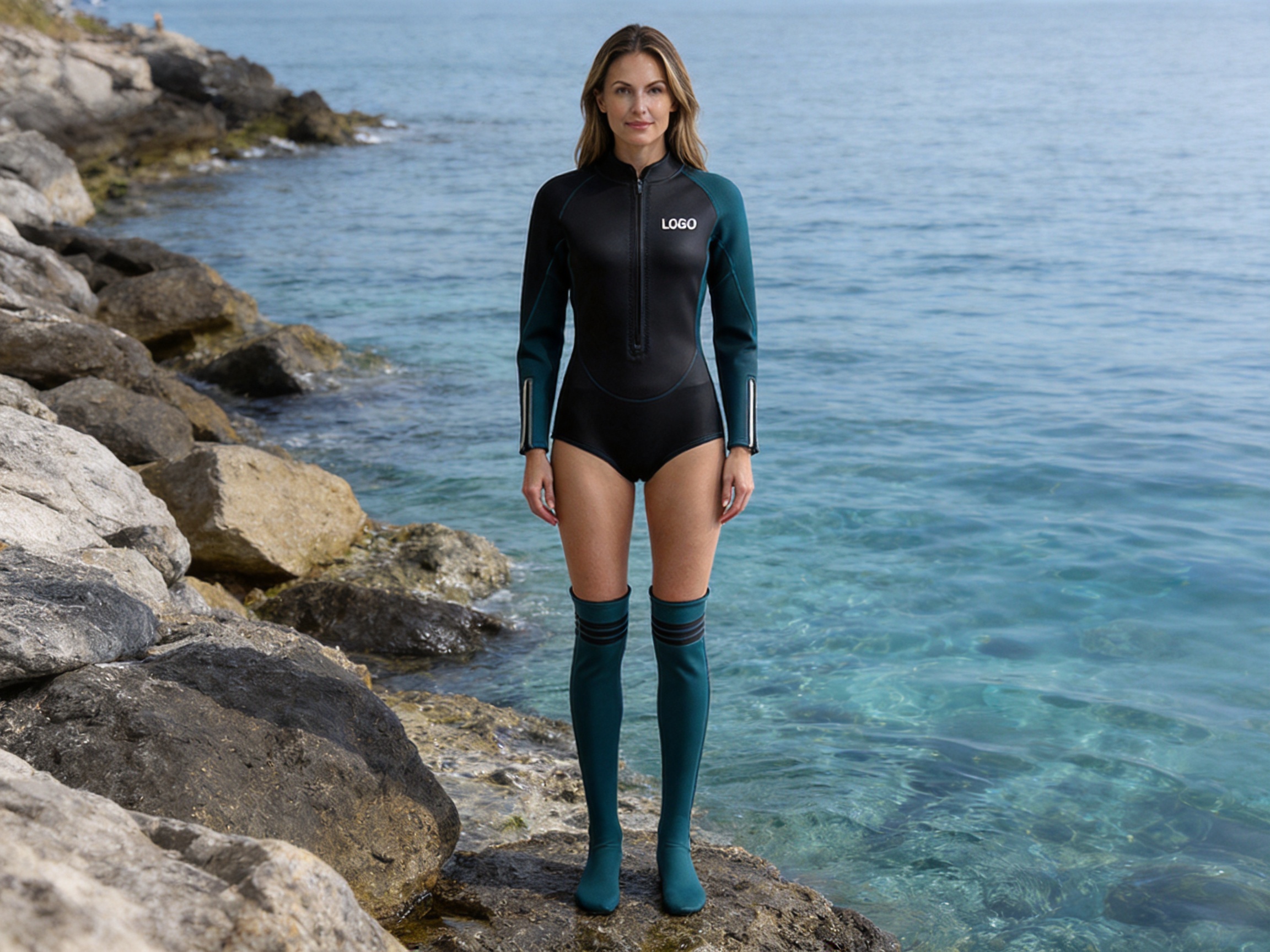
Putting on a close-fitting wetsuit can be challenging, especially when the garment is made from stretch neoprene and the wearer is working alone. The front chest YKK zipper helps simplify entry by opening the upper garment from the front. This is more convenient than relying solely on a rear closure that may be difficult to reach without assistance.
The front zipper is positioned to support practical use without unnecessarily interfering with neck movement. When properly selected and installed, the zipper should operate smoothly while maintaining the structural integrity of the garment. The chest location also makes the opening easy to access before entering the water and after completing a dive.
Each sleeve includes a wrist YKK zipper. This feature is particularly valuable because sleeve cuffs can otherwise be difficult to pull over the hands and wrists. Opening the cuff provides additional room during dressing and reduces the amount of force needed to stretch the material over the hand. It can also reduce friction against the skin and help protect the neoprene from excessive pulling during use.
For manufacturers, zipper integration requires accurate panel preparation and careful sewing. The zipper must be aligned with the surrounding neoprene, and the seam area must remain flexible enough for repeated opening and closing. High-quality zipper components are only part of the solution; the surrounding construction and inspection process are equally important.
Stand Collar and Body Coverage
The stand collar provides a higher neckline than a low-cut water sports top. This design contributes to a more complete upper-body silhouette and offers additional coverage around the neck. The collar should remain comfortable without pressing excessively against the throat, particularly during active swimming and controlled breathing exercises.
The long sleeves extend the suit’s protective coverage to the wrists, while the high-cut bottom leaves the upper legs more available for movement. This combination is well suited to activities where the user changes position frequently and needs the garment to move with the body rather than resist it.
Over-Knee Neoprene Socks with Footed Construction
The matching over-knee socks are an important part of the set rather than a simple decorative accessory. Their extended length provides coverage from the feet up over the calves and toward the knees. This can help maintain a consistent layer around the lower legs and reduce direct contact with cold water, equipment, or rough surfaces.
The footed design integrates the foot section into the sock, creating a continuous neoprene component. This may be more convenient than combining separate leg warmers and water shoes, especially for users who prefer a streamlined setup. Depending on the selected thickness and intended use, the socks may be worn with compatible fins, diving footwear, or other water sports equipment.
Three black stripe bands add visual contrast to the sock design. The stripes give the product a distinctive appearance and create a recognizable style element for private-label brands. Color blocking can also help a product stand out in online product listings and retail displays without requiring complex panel construction.
For wholesale customers, the sock design provides opportunities for coordinated branding. Stripe colors, body colors, logo placement, and overall styling may be reviewed during customization, subject to production requirements and order quantities.
Advantages Compared with Basic Competitive Wetsuits
Many entry-level wetsuits focus on basic neoprene coverage but provide limited attention to dressing convenience, modularity, and women-specific movement requirements. This two-piece set offers several advantages that can help it compete in a crowded market.
1. More Flexible Than a Conventional One-Piece Format
The separate bodysuit and socks provide greater flexibility during preparation and use. Users can handle each component independently, which is helpful when changing in confined spaces, preparing on a boat, or organizing equipment at a beach. A split design can also make it easier to replace or reorder one component when necessary.
2. Designed Around Women’s Mobility
The high-cut bodysuit supports movement through the hips and legs. This is relevant to women who use a monofin, bifins, or a conventional swimming kick. Instead of allowing the lower section to restrict the upper legs, the pattern is intended to support a more open range of motion.
3. Easier Sleeve Handling
Wrist zippers are not always included in basic wetsuits. Their inclusion makes a meaningful difference during dressing because the wearer does not need to force the hand through a narrow, fully closed cuff. This can reduce inconvenience and help preserve the material during repeated use.
4. Flat Seams for Reduced Irritation
The 4-needle, 6-thread flatlock construction is designed to create smooth seams that feel less intrusive against the skin. In contrast, bulky or poorly finished seams may rub during swimming or cause discomfort under prolonged wear.
5. Coordinated Sock Design
The over-knee socks are developed as part of the set, creating a unified look and functional coverage from the torso to the feet. Buyers do not need to source a separate lower-leg garment to complete the outfit.
6. Broad Application Range
Although positioned as a freediving wetsuit set, the product is also suitable for spearfishing, snorkeling, coastal diving, and related recreational activities. This wider application range can help retailers serve multiple customer groups with one product platform.
7. Private-Label Development Potential
Custom logo, color, neoprene thickness, and size options allow brands to distinguish their products from generic stock garments. Customization is particularly valuable for distributors and online retailers that want a consistent visual identity across their water sports collection.
Performance in Different Water Sports Applications
Freediving
Freedivers need a suit that supports streamlined movement and repeated leg action. The high-cut bottom and flexible neoprene construction help preserve mobility around the hips and thighs. The long sleeves provide body coverage without requiring a separate upper-body rash guard, while the socks extend protection to the lower legs and feet.
Freediving conditions vary widely. Some users dive in warm coastal waters, while others train in cooler environments. The ability to customize neoprene thickness makes the platform adaptable. However, buyers should select thickness based on water temperature, exposure time, activity level, personal tolerance, and any additional equipment used during the dive.
Spearfishing
Spearfishing involves swimming, surface preparation, movement near rocks or reefs, and interaction with equipment. The full upper-body coverage and over-knee socks can help provide a protective layer between the wearer and the surrounding environment. The flexible design is useful when adjusting body position, handling a speargun, or moving through the water.
The product’s customization options can also support spearfishing-oriented color choices. Depending on the intended market, brands may choose darker, muted, or patterned color schemes. Manufacturing specifications should be agreed upon before production to ensure that selected colors and artwork are suitable for the neoprene material and printing or finishing method.
Snorkeling
Snorkelers often spend long periods at the surface, where comfort and protection are important. The long sleeves can help reduce exposure to sun and minor surface abrasion, while the socks provide additional coverage around the legs and feet. The two-piece format allows recreational users to dress more conveniently than with a tightly fitted full-length suit.
Coastal Diving
Coastal diving may involve entering the water from beaches, rocks, docks, or small boats. In these settings, a protective neoprene layer can be useful during entry and exit. The set’s footed socks may also provide an additional barrier between the feet and compatible diving equipment or uneven surfaces, although users should select footwear and accessories appropriate to the location.
Manufacturing Expertise Behind the Product
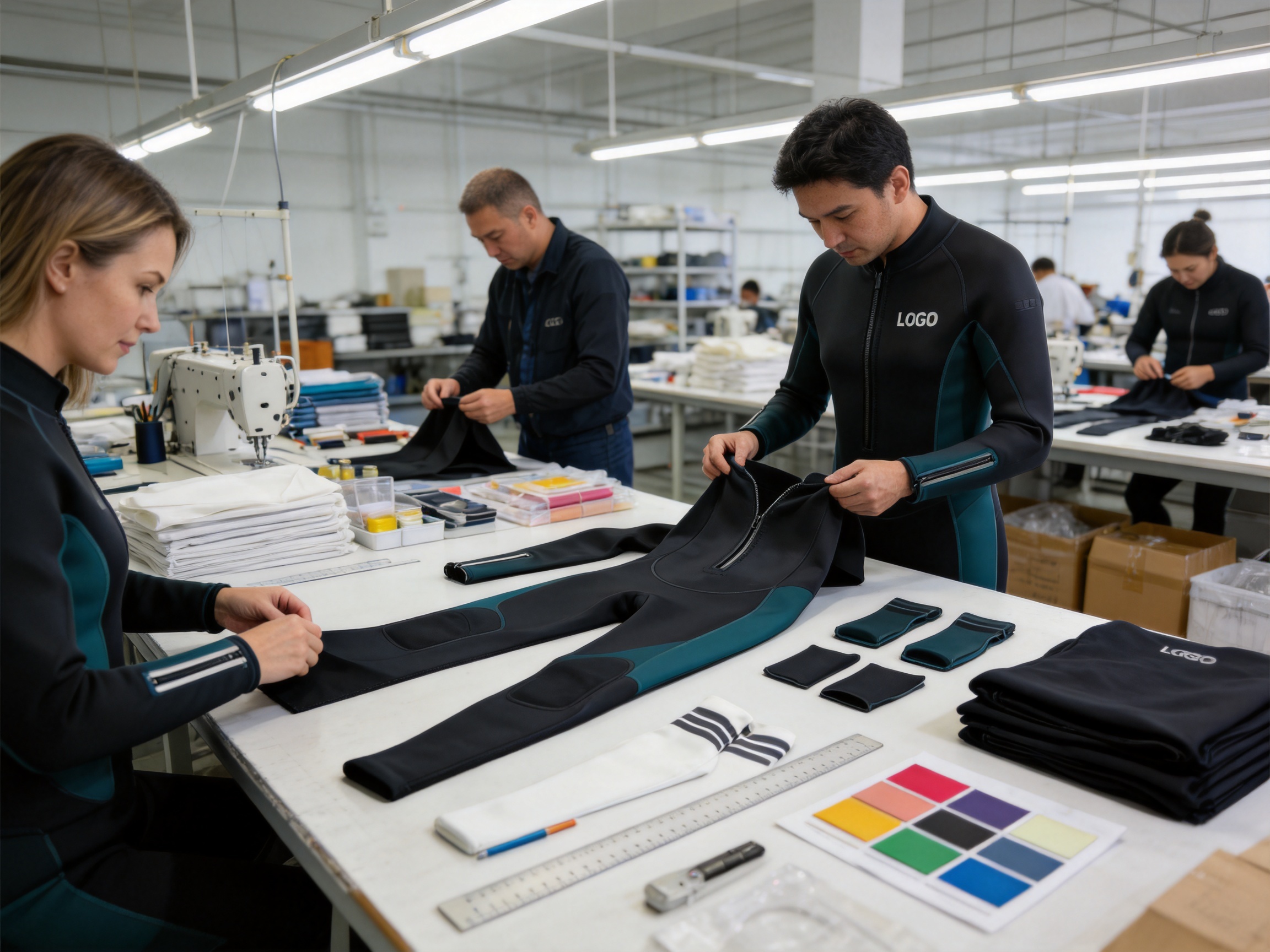
The quality of a wetsuit depends on more than the raw material. It is influenced by pattern development, neoprene selection, cutting accuracy, sewing technique, zipper installation, inspection, and the manufacturer’s ability to manage customization. Jiangsu Yiheng Sports Products Co., Ltd. focuses on neoprene materials and finished products, giving it experience across both upstream material preparation and downstream garment production.
The company began its business journey in 2008 and has developed more than 18 years of industry experience in neoprene fabrics and finished water sports products. Its background includes direct manufacturing knowledge as well as practical experience in the retail market. This combination can help the company understand not only how to make a product but also how product details affect customer expectations, merchandising, and long-term market acceptance.
The factory covers more than 15,000 square meters and employs over 120 professional workers. This scale supports organized production, specialized operations, and the ability to handle product categories ranging from neoprene fabric to finished wetsuits and related water sports equipment.
Integrated Knowledge of Materials and Finished Products
A manufacturer that works with both neoprene fabrics and completed products can evaluate material decisions from a broader perspective. Fabric characteristics such as stretch, thickness, surface finish, color, and resilience must be considered alongside the requirements of cutting and sewing. A material that looks attractive in isolation may not deliver the desired performance after it is shaped into a close-fitting garment.
Integrated manufacturing knowledge can also support more practical customization. When a customer requests a particular thickness, color, or hand feel, the manufacturer can assess the effect on patterning, seam construction, zipper installation, packaging, and final use. This reduces the risk of treating each specification as an isolated decision.
Pattern and Cutting Considerations
Wetsuit panels must be cut accurately to maintain consistent sizing and balanced tension. Minor deviations may affect fit around the shoulders, chest, waist, hips, wrists, or legs. For a women’s product, proportion and curve placement are especially important because the garment must follow the body without creating excessive pressure or loose areas.
The high-cut bodysuit requires careful control of the lower-body pattern. The opening must support freedom of movement while maintaining a secure fit. Sleeve cuffs and wrist zipper areas also require accurate cutting because the neoprene must stretch around the arm while remaining compatible with the zipper assembly.
For the over-knee socks, the transition from the leg section to the foot section must be considered carefully. A well-coordinated pattern helps the socks remain comfortable during movement and compatible with intended diving accessories. Stripe placement also requires consistency so that the three black bands appear even from one unit to another.
Stitching and Assembly Control
Flatlock stitching requires consistent alignment and thread management. The machine operator must maintain appropriate seam width, tension, and panel positioning throughout the production run. The goal is to create a seam that is secure yet flexible, with a smooth profile against the wearer’s skin.
Assembly control is also important around zipper sections. The front chest zipper and wrist zippers must be sewn without distortion. Uneven attachment can affect operation, appearance, and long-term durability. Quality checks should include zipper movement, seam appearance, panel alignment, and the absence of loose or skipped stitches.
Customization and OEM/ODM Support
OEM and ODM services enable customers to develop products under their own brand identity. OEM production generally begins with customer-approved specifications, artwork, labels, packaging, and size requirements. ODM support may involve adapting an existing product platform or developing details for a specific market segment.
For this two-piece set, customization may include:
• Custom logos for the bodysuit, socks, labels, or packaging.
• Alternative neoprene thicknesses for different water temperatures.
• Customized body colors and stripe combinations.
• Multiple size options for different target markets.
• Brand-specific labeling and presentation requirements.
• Adjustments to selected design details subject to technical review.
Customization should be managed through a clear development process. Buyers should provide artwork in an appropriate format, confirm color references, review size charts, approve samples, and establish packaging requirements before mass production. A manufacturer with experience in both materials and finished garments can assist in evaluating whether the requested specifications are practical for production.
Quality, Consistency, and Wholesale Reliability
For wholesale customers, product consistency is as important as the design itself. Retailers need every unit in a shipment to match the approved sample in terms of color, size, zipper operation, seam quality, and overall appearance. Inconsistent products can create customer complaints, returns, and additional inventory costs.
A structured manufacturing process helps control these risks. Material inspection should verify the agreed neoprene type, thickness, color, and surface condition. During cutting, panel dimensions and orientation should be monitored. During sewing, operators should check stitch formation and alignment. Final inspection should review the completed garment from both functional and visual perspectives.
Important inspection points for this product include:
• Correct pairing of the bodysuit and over-knee socks.
• Accurate size labeling and garment measurements.
• Smooth operation of the front chest zipper.
• Smooth operation of both wrist zippers.
• Consistent 4-needle, 6-thread flatlock seams.
• Secure attachment of all panels and cuffs.
• Correct placement and appearance of the three black stripe bands.
• Absence of visible stains, holes, major scratches, or loose threads.
• Correct logo, label, packaging, and carton information for customized orders.
Quality expectations should be agreed during the quotation and sampling stages. Buyers may also request pre-production samples, size-set samples, production approval samples, or inspection documentation depending on their sourcing program.
Choosing the Appropriate Neoprene Thickness
Neoprene thickness is one of the most important decisions for a wetsuit program. It affects warmth, flexibility, weight, drying time, and the amount of force required to put on the garment. There is no single thickness suitable for every user or location.
Thinner neoprene may be appropriate for warm-water snorkeling, tropical freediving, and high-mobility use. It generally offers greater flexibility and may feel easier to wear. Thicker neoprene may be preferred for cooler water because it can provide a stronger insulating layer, although it may also feel more substantial and require more effort during dressing.
Buyers should consider the intended market’s climate, typical water temperatures, customer skill level, activity duration, and local purchasing habits. If a brand sells to multiple regions, it may develop several thickness options using the same basic design platform. This approach can create a coordinated collection while addressing different environmental conditions.
Thickness selection should be evaluated through samples rather than specification sheets alone. The final experience depends on the combination of material stretch, pattern dimensions, seam construction, zipper placement, and user body shape. A technical sample allows the buyer to check mobility, comfort, appearance, and ease of dressing before committing to production.
Fit and Sizing Considerations for Women
Fit is central to wetsuit performance. A suit that is too loose may allow excessive water exchange and create folds, while a suit that is too tight may restrict movement or cause uncomfortable pressure. Women’s sizing should take into account bust, waist, hip, torso length, arm length, thigh circumference, and foot dimensions.
Because the product uses a two-piece structure, the bodysuit and socks can be evaluated independently. This may help accommodate customers whose upper-body and lower-leg measurements do not fit a standard proportion. Brands should provide a clear size chart and explain how customers should measure themselves.
When developing a private-label size range, buyers should review measurements on a physical sample. It is useful to assess shoulder movement, sleeve length, wrist opening, collar comfort, high-cut placement, leg mobility, sock length, and foot fit. The garment should feel close to the body without creating excessive compression or visible stress around the seams.
Retail product information should also explain that neoprene garments are designed to fit closely. Customers may initially perceive a close fit as tighter than ordinary sportswear. Clear measurement instructions and fitting guidance can reduce incorrect purchases and improve customer satisfaction.
Branding and Retail Presentation Opportunities
The product’s clean silhouette and coordinated two-piece format create several opportunities for brand presentation. A custom logo can be placed on suitable garment areas, labels, packaging, or promotional materials. Color combinations can be selected to match a brand’s visual identity, seasonal collection, or target customer profile.
The three black stripe bands on the socks provide an established visual detail that can remain as a contrast feature or be reviewed as part of a broader color concept. A brand may choose a minimalist palette for technical positioning, vibrant colors for recreational snorkeling, or darker tones for spearfishing-oriented collections.
For online retail, product photography should show the complete set, front and rear views, zipper details, seam construction, sock length, and close-up material texture. Product descriptions should clearly state that the set includes one long-sleeve bodysuit and one pair of over-knee neoprene socks. They should also communicate the intended activities, available thicknesses, and care instructions.
For physical retail, the two-piece configuration can be presented on a hanger or mannequin to show the coordinated appearance. Packaging may include size information, material specifications, application recommendations, and brand messaging. As an OEM product, the presentation can be adapted to the customer’s distribution channels.
Care and Maintenance Recommendations
Proper care can help preserve neoprene flexibility, color, and seam condition. After use, the wetsuit should be rinsed with clean, cool water to remove salt, sand, chlorine, and other residues. Zippers should be operated gently and kept free from grit. The garment should be dried in a ventilated shaded area rather than exposed to prolonged direct heat.
Users should avoid twisting, sharply folding, or pulling the garment by the zipper or cuff. When putting on the suit, they should use the pads of their fingers to position the neoprene gradually instead of gripping it with fingernails. This is particularly important around the wrist zippers, seams, and high-stretch areas.
The bodysuit and socks should be stored clean and completely dry. Heavy objects should not be placed on top of the neoprene, as prolonged compression can affect its shape. Care labels and brand-specific instructions should be confirmed during product development so that the final consumer guidance matches the selected materials and construction.
Why This Product Is Suitable for Private-Label Programs
Private-label buyers often need a product that is recognizable enough to reduce development time but flexible enough to support brand differentiation. This two-piece freediving wetsuit set meets that requirement through an established functional structure and multiple customization options.
The core design already includes features that consumers can understand and value: a long-sleeve bodysuit, high-cut lower section, front chest zipper, wrist zippers, flatlock seams, and matching over-knee socks. These details create a strong foundation for a product listing or catalog entry. At the same time, custom colors, logos, thicknesses, sizes, and packaging can make the finished product distinct from standard market offerings.
The manufacturer’s product range further supports collection development. In addition to wetsuits, the company works with drysuits, fishing waders, rash guards, water sports equipment, and neoprene fabrics. A buyer may therefore be able to develop complementary products from the same manufacturing source, creating a more coherent water sports assortment.
Supplier continuity can be valuable for brands that want consistent materials, coordinated colors, and repeatable quality across multiple product categories. Working with a manufacturer experienced in both fabric and finished goods may also simplify communication when a brand expands from one product to a larger neoprene collection.
Production Workflow for a Customized Order
A typical customized program begins with a discussion of the target application, market, quantity, size range, colors, logo requirements, neoprene thickness, packaging, and delivery expectations. The manufacturer can then review the requirements and determine which details can be developed from the existing product platform.
The next stage may include artwork review and sample development. A sample allows the buyer to evaluate dimensions, fit, zipper placement, logo appearance, stripe alignment, color, and seam quality. If changes are required, the pattern or material specification can be adjusted before approval.
After sample approval, production planning covers material purchasing, cutting, sewing, zipper assembly, inspection, packing, and shipment preparation. For repeat orders, approved specifications should be retained as a reference for future production. This helps reduce variation and speeds up communication when the buyer reorders or expands the size range.
Clear documentation is essential throughout the process. It should identify the approved neoprene thickness, color references, measurement tolerances, logo dimensions, label information, carton markings, and packaging configuration. Both the buyer and manufacturer benefit from confirming these details in writing before mass production.
Frequently Asked Questions
Q1: What does the two-piece set include?
The set includes a women’s long-sleeve, high-cut neoprene bodysuit and a matching pair of over-knee neoprene socks with a footed design. The socks feature three black stripe bands.
Q2: What activities is the set designed for?
The primary applications are freediving, spearfishing, snorkeling, and coastal diving. The product may also be suitable for other recreational water sports where flexible neoprene coverage is desired.
Q3: Does the bodysuit have a front zipper?
Yes. The bodysuit uses a front chest YKK zipper to support convenient donning and doffing.
Q4: Why are there zippers on the wrists?
A YKK zipper is included at each wrist to make the sleeves easier to put on and remove. The openings reduce the need to pull the hand through a narrow closed cuff.
Q5: What type of stitching is used?
The product uses 4-needle, 6-thread flatlock stitching. This construction creates flat, flexible seams designed to improve comfort and support durability.
Q6: What is the purpose of the high-cut bodysuit?
The high-cut design is intended to maximize movement around the hips and legs. It is useful for activities involving repeated kicking, monofin or bifin use, and streamlined underwater positioning.
Q7: Can the neoprene thickness be customized?
Yes. Neoprene thickness can be discussed and adjusted according to the intended water temperature, application, fit requirements, and market positioning.
Q8: Are custom colors available?
Custom colors are available for OEM and ODM programs, subject to material availability, color approval, production requirements, and order quantity.
Q9: Can a brand add its own logo?
Yes. Custom logo services are available. Logo size, placement, artwork format, application method, and packaging details should be confirmed during the sampling stage.
Q10: Can different sizes be produced?
Multiple size options are available for wholesale programs. Buyers should confirm the required size chart, measurement specifications, tolerances, and target market before production.
Q11: Are the socks separate from the bodysuit?
Yes. The socks are separate, matching components. This split construction provides flexible wearing and allows the upper garment and socks to be handled independently.
Q12: How should the wetsuit be cleaned?
After use, rinse the garment with clean, cool water and allow it to dry in a shaded, ventilated place. Avoid prolonged direct heat, sharp objects, harsh handling, and unnecessary stress on the zippers or seams.
Q13: Is the product suitable for cold water?
The suitable water temperature depends on the selected neoprene thickness, the wearer’s activity level, exposure duration, and personal comfort. Buyers should discuss the intended environment when selecting the material specification.
Q14: What should wholesale buyers confirm before placing an order?
Buyers should confirm the product design, neoprene thickness, colors, size range, logo artwork, labels, packaging, order quantity, sample approval requirements, inspection standards, and delivery schedule.
Q15: What manufacturing support is available?
The manufacturer provides OEM and ODM support for neoprene products, including custom logos, colors, thicknesses, and multiple size options. Its product experience covers neoprene fabrics, wetsuits, drysuits, fishing waders, rash guards, and water sports equipment.
Conclusion
The Women’s 2-Piece Freediving Wetsuit Set Long Sleeve Neoprene is a practical and adaptable solution for women participating in freediving, spearfishing, snorkeling, and coastal diving. Its key strengths include a flexible two-piece format, a long-sleeve high-cut bodysuit, a front chest YKK zipper, wrist YKK zippers, flatlock stitching, and matching over-knee footed socks.
Compared with basic wetsuits, the set places greater emphasis on dressing convenience, women’s lower-body mobility, seam comfort, coordinated coverage, and customization potential. The separate socks make the garment easier to manage, while the high-cut silhouette supports movement during kicking and underwater positioning. The zipper configuration helps simplify use, and the 4-needle, 6-thread flatlock construction contributes to a smooth and flexible wearing experience.
For wholesale and private-label customers, the product also provides a strong development platform. Custom logo, color, neoprene thickness, and size options allow brands to create a product that matches their target market. The manufacturer’s experience in neoprene materials and finished water sports products supports a more integrated approach to product development, from material selection and pattern cutting to sewing, inspection, and packaging.
With a factory covering more than 15,000 square meters, a workforce of over 120 professional employees, and industry experience dating back to 2008, Jiangsu Yiheng Sports Products Co., Ltd. is positioned to support both standard product supply and customized OEM/ODM programs. For buyers seeking a reliable women’s freediving wetsuit with functional details and brand-development flexibility, this two-piece set offers a balanced combination of comfort, mobility, protection, and manufacturing support.
References
1. Product specification supplied for the Women’s 2-Piece Freediving Wetsuit Set Long Sleeve Neoprene.
2. Manufacturer information regarding neoprene fabrics, wetsuits, drysuits, fishing waders, rash guards, and water sports equipment.
3. Manufacturer company profile and production capability information, including factory area, employee count, and industry experience.
4. General technical principles of neoprene garment construction, flatlock stitching, zipper integration, and water sports apparel design.
5. General product development practices for OEM and ODM private-label apparel programs.
Product: Women’s 2-Piece Freediving Wetsuit Set Long Sleeve Neoprene

LET’S DEVELOP YOUR NEXT NEOPRENE PRODUCT LINE
Quick Links
Product Categories
Contact Us
-
 Email: postmaster@yihengsport.com
-
 Mobile: +86-13564100539
-
 No. 480 Jiangping Road, Madian, Binjiang Town, Taixing City, Taizhou City, Jiangsu Province, China.
Copyright © Jiangsu Yiheng Sports Products Co., Ltd. All Rights Reserved
China Wetsuit Manufacturer Neoprene Fabric Manufacturer
