
 Language
 English
 中文简体
 日本語
 русский
 Español
 عربى

Nov, 03, 2026
High-Visibility Buoyancy Aid Vest for Recreational Water Safety
Introduction
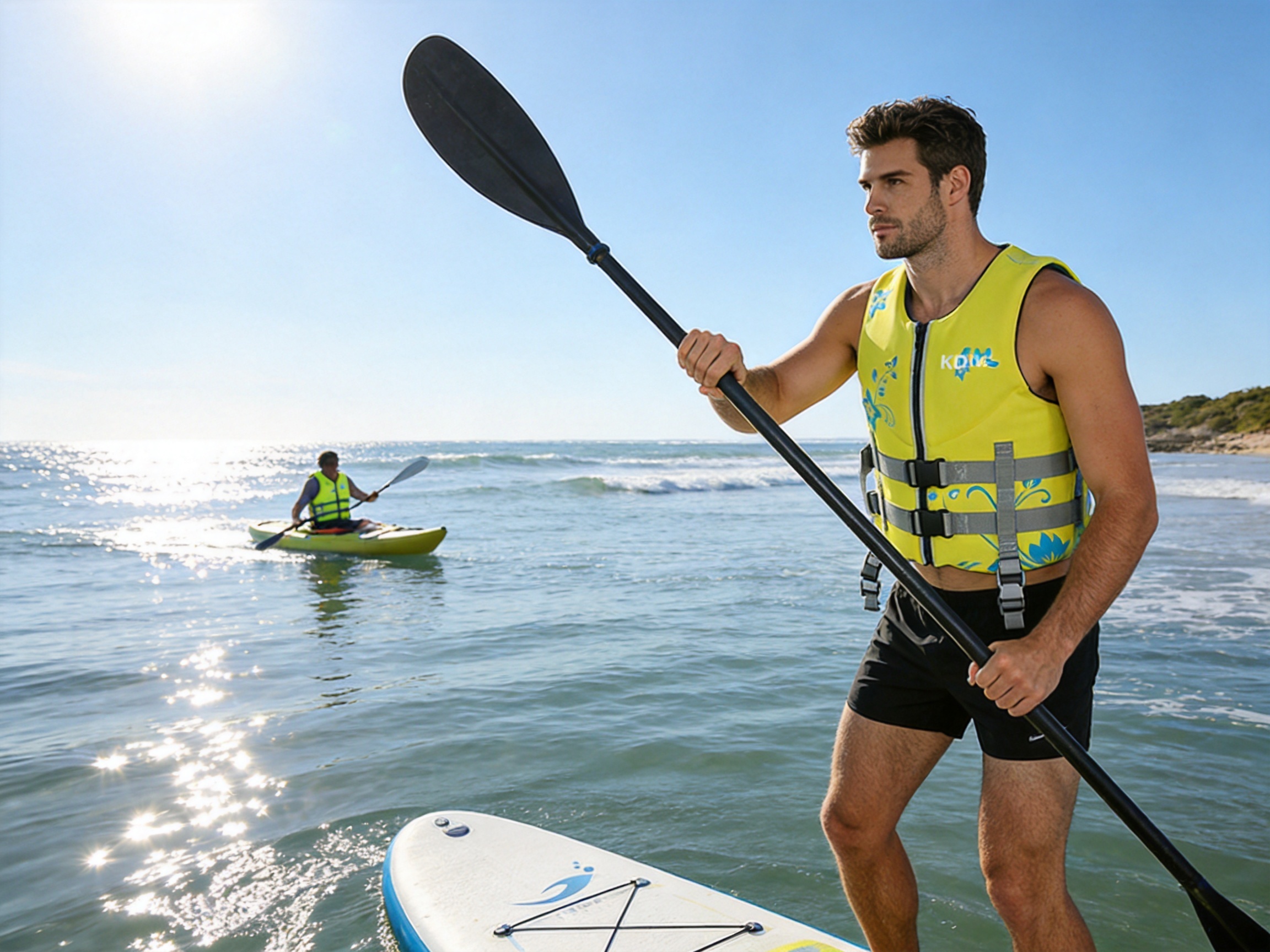
Water sports combine physical activity, outdoor exploration, and changing environmental conditions. Whether a person is paddling a kayak, standing on a paddle board, operating a small recreational boat, or fishing close to shore, suitable flotation equipment is an important part of responsible preparation. The High-Visibility Buoyancy Aid Vest in Yellow and Blue is designed to provide practical flotation support while allowing the wearer to move naturally during common recreational water activities.
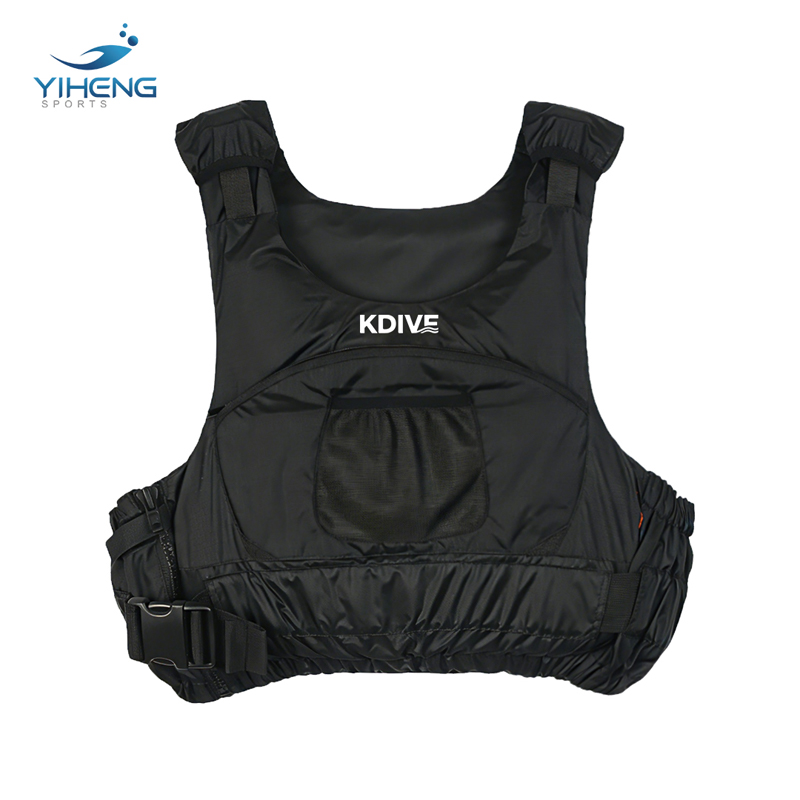
This buoyancy aid vest combines lightweight EPE foam construction, a durable YKK front zipper, adjustable nylon webbing, and dual side-release buckles. Its bright yellow base and contrasting blue print help make the wearer more noticeable in outdoor water environments. The result is a product focused on comfort, convenience, visibility, and everyday usability.
Unlike bulky flotation garments that may limit arm movement, this vest uses an ergonomic cut intended to support paddling, turning, lifting the arms, and other routine movements. The adjustable waist system helps create a more secure fit across different body shapes, while the front-entry design supports quick wearing and removal.
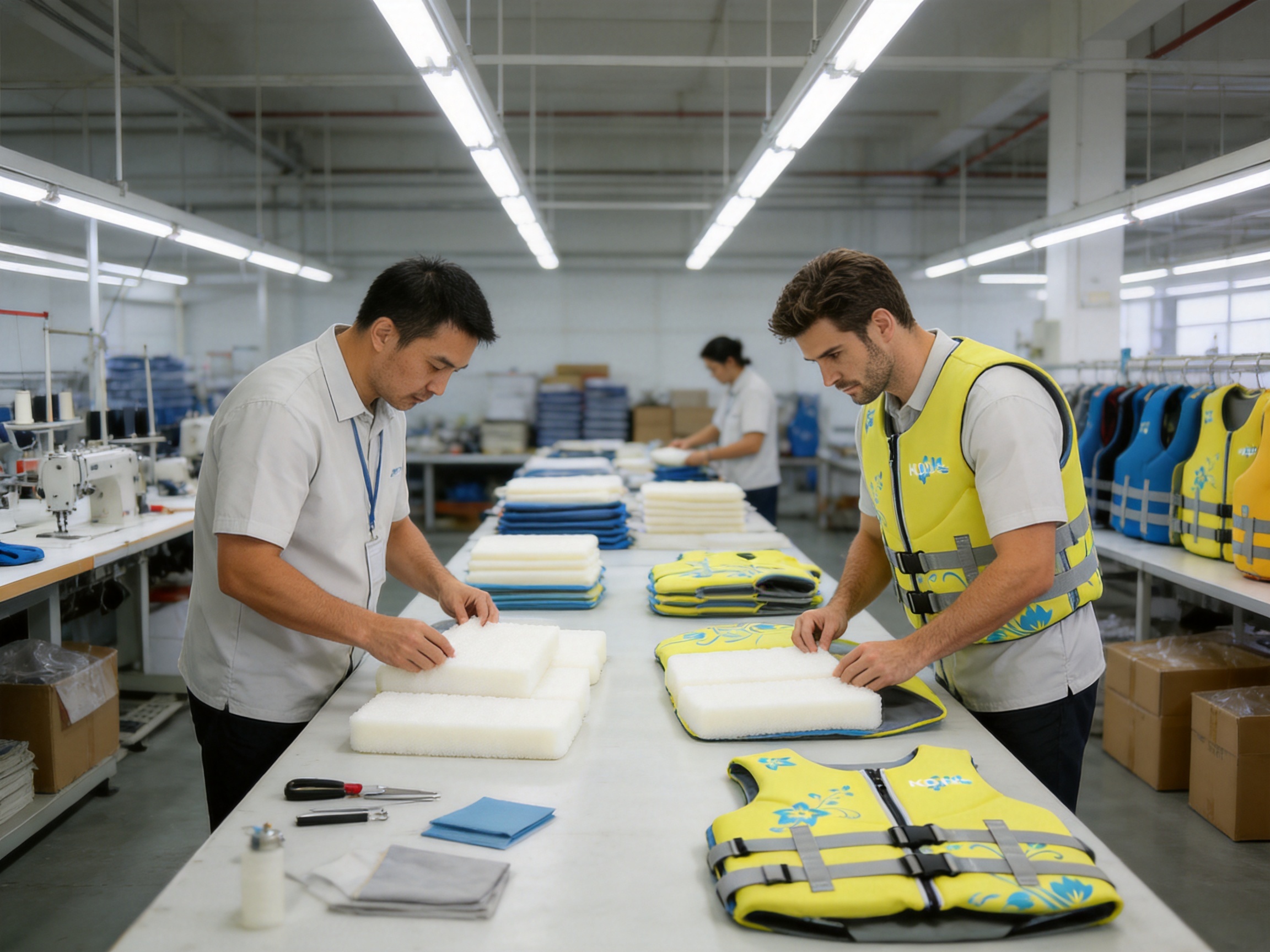
The vest is manufactured by Jiangsu Yiheng Sports Products Co., Ltd., a Chinese manufacturer specializing in neoprene materials, water sports products, and finished outdoor equipment. With more than 18 years of industry experience, a factory covering over 15,000 square meters, and a workforce of more than 120 professional employees, the company combines material knowledge with finished-product manufacturing capabilities.
This article examines the vest’s construction, functional benefits, competitive advantages, manufacturing strengths, quality considerations, application scenarios, maintenance requirements, and purchasing value. It also explains how a specialist manufacturer can support OEM, ODM, private-label, and long-term supply programs for distributors and water sports brands.
High-Visibility Buoyancy Aid Vest – Yellow / Blue
Product Overview
The High-Visibility Buoyancy Aid Vest is a recreational flotation garment designed for users who need buoyancy support without the restrictive feel of a heavily constructed life jacket. It uses EPE foam as the primary buoyancy material. EPE, or expanded polyethylene, is widely used in flotation products because it is lightweight, resilient, and capable of providing stable buoyancy when properly distributed inside a garment.
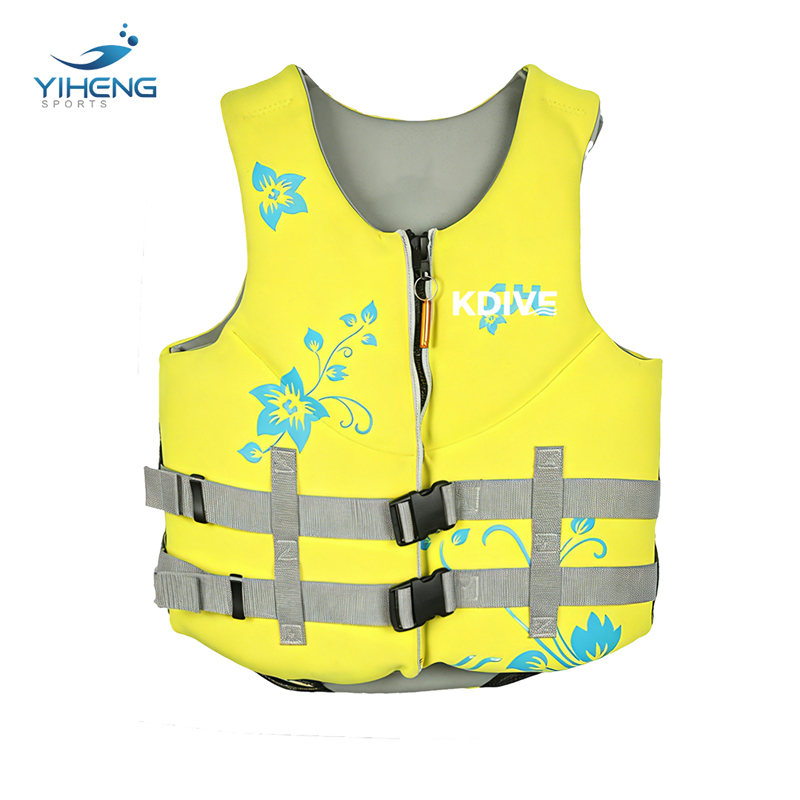
The vest has a yellow and blue visual design. The bright yellow base supports visibility in outdoor conditions, while the blue print adds visual contrast and a distinctive appearance. The combination is suitable for sports retailers, water activity operators, recreational equipment distributors, and private-label brands looking for a product that is both functional and easy to identify.
A YKK front zipper provides the principal entry and closure system. Front-zip designs are convenient for users because the garment can be put on and removed without assistance in most normal situations. The zipper is combined with a waist adjustment system made from nylon webbing and two side-release buckles. This combination allows the wearer to tighten or loosen the vest to achieve a more secure fit.
The product is intended for recreational water sports and general water use. Suitable activities include paddle boarding, kayaking, recreational boating, and nearshore fishing. Users should always select flotation equipment appropriate for their body size, swimming ability, activity, water conditions, and applicable safety regulations. A buoyancy aid is not automatically equivalent to a certified life jacket for every situation.
| Product Feature | Construction or Specification | Practical Benefit |
|---|---|---|
| Buoyancy material | EPE foam | Lightweight and consistent flotation support |
| Front closure | YKK zipper | Quick entry, removal, and repeated daily use |
| Waist adjustment | Nylon webbing with dual side-release buckles | Secure and flexible fitting for different body shapes |
| Color design | High-visibility yellow with blue print | Improved recognition in outdoor water environments |
| Intended activities | Paddle boarding, kayaking, boating, and nearshore fishing | Versatile recreational water use |
| Garment design | Ergonomic buoyancy aid cut | Supports arm movement and active participation |
Buoyancy Support with Freedom of Movement
One of the most important advantages of a recreational buoyancy aid is the balance between flotation support and mobility. A garment that provides buoyancy but interferes with paddling, casting, steering, or balance may discourage regular use. The High-Visibility Buoyancy Aid Vest addresses this concern through an ergonomic cut and a construction intended to accommodate normal upper-body movement.
The EPE foam is designed to provide stable flotation assistance without relying on excessively heavy or rigid components. Its lightweight character helps reduce the feeling of wearing a dense protective garment. For paddle boarders and kayakers, this can be especially valuable because repeated arm movements are central to the activity. The wearer can paddle, rotate the torso, reach for equipment, and adjust body position while retaining the support of the vest.
For nearshore anglers, movement is equally important. Fishing often involves casting, lifting, leaning, reaching, and changing position. A well-fitted buoyancy aid should support safety without creating unnecessary interference around the shoulders and arms. The vest’s design is suited to this type of recreational movement.
Mobility also affects user acceptance. If a flotation garment feels excessively bulky, users may be less likely to wear it consistently. A practical vest that is quick to put on, adjustable, and comfortable during active use can encourage better safety habits. The product therefore delivers value not only through its material construction but also through its approach to daily usability.
Stable EPE Foam Construction
EPE foam is commonly selected for flotation products because it has a closed-cell structure that can provide buoyancy while maintaining low weight. The material can be shaped and positioned within a garment to support a stable distribution of flotation. It is also suitable for products that may be handled frequently by rental operators, retailers, families, and recreational users.
The foam construction is fully integrated into the vest design. This helps create a consistent flotation profile and a clean exterior suitable for recreational equipment collections. When the vest is correctly sized and adjusted, the foam provides buoyancy assistance while the outer structure remains manageable for active wear.
As with any flotation product, the actual performance depends on the complete construction, user weight, fit, water conditions, and relevant testing requirements. Buyers should verify product specifications and certification requirements for their target market before placing a commercial order.
High Visibility for Outdoor Water Environments
Visibility is an important consideration in open-water recreation. Water surfaces may include reflections, waves, changing weather, vegetation, boats, and other visual distractions. A bright color can help make a wearer easier to recognize against a blue, gray, green, or natural background.
The vest uses a yellow base with blue print. Yellow is widely associated with high-visibility outdoor equipment because it creates a strong visual presence in many daylight environments. The blue print adds contrast and gives the product a more attractive sports-oriented appearance than a plain single-color garment.
Improved visual recognition can be useful when several participants are on the water together. A guide may identify customers more quickly, a family member may locate another participant more easily, and a rental operator may distinguish equipment groups by color. For commercial activity providers, the design can also contribute to a consistent visual identity across a fleet of recreational products.
Visibility should not be treated as a replacement for supervision, communication, lighting, or safe operating practices. It is one part of a complete water safety approach. Nevertheless, it is a valuable product feature because it supports recognition in common outdoor conditions without adding complicated components or electronic systems.
Quick-Wear Closure and Adjustable Fit
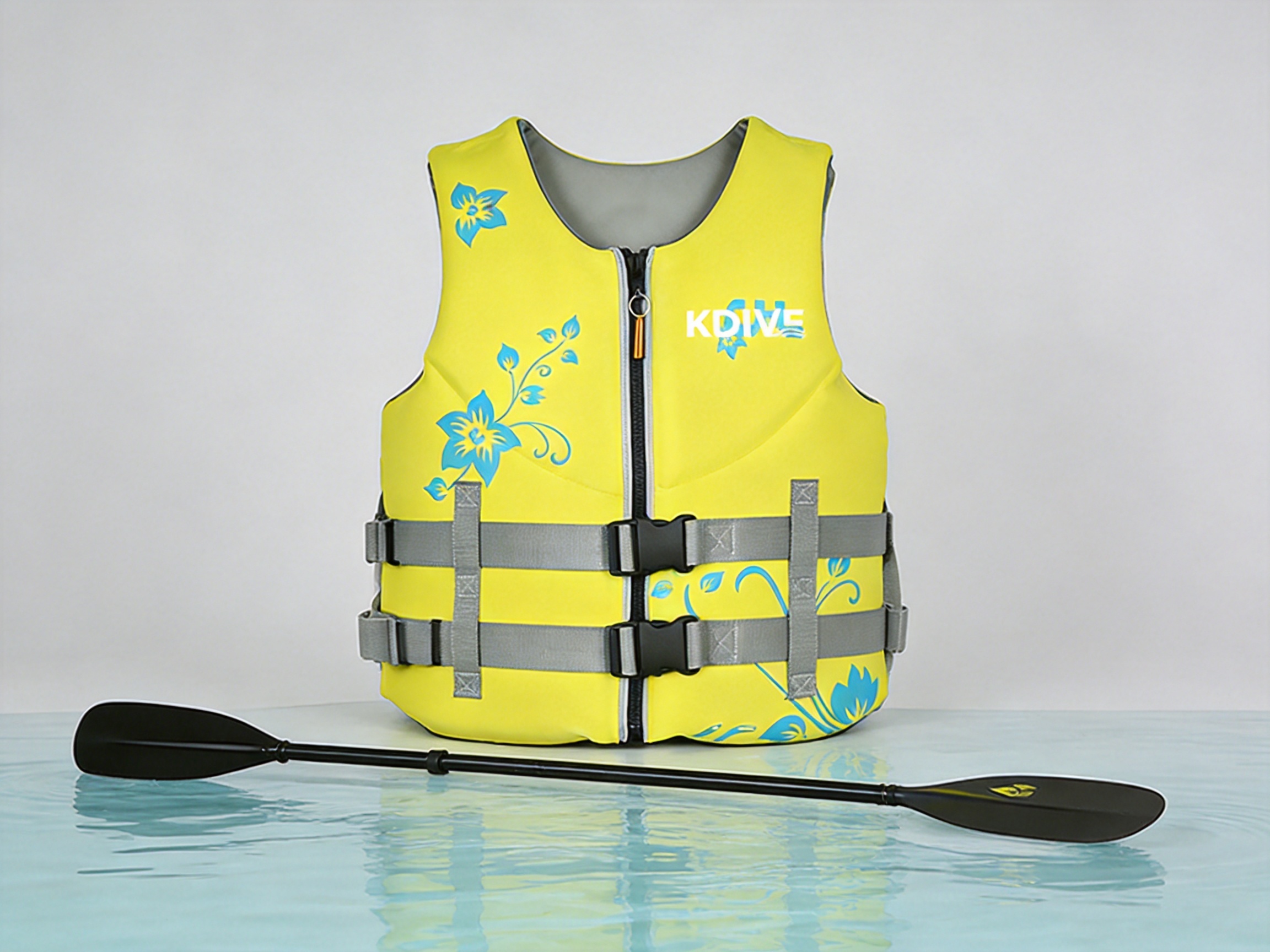
The front-entry structure is designed for convenience. The YKK zipper allows the wearer to open the vest fully, step into or place the garment over the upper body, and close it securely. This is useful for individuals who put on flotation equipment repeatedly during a day of water activities. It also benefits rental centers, instructors, and tour operators that need users to prepare efficiently.
A reliable zipper is important because the closure is used frequently and may be exposed to moisture, sand, splash, and outdoor handling. YKK is recognized internationally for zipper manufacturing, and the inclusion of a YKK front zipper supports the product’s positioning as a dependable recreational equipment item. Proper care remains necessary: users should rinse away salt, sand, and dirt and avoid forcing the zipper when it is misaligned.
The zipper works together with adjustable nylon webbing and dual side-release buckles. The webbing allows the fit to be adapted to different body shapes and clothing layers. The side-release buckles provide an additional retention system, helping the vest remain more secure during normal activity.
A well-adjusted vest should fit closely enough to prevent excessive movement but should not make breathing or arm movement uncomfortable. Users should follow the manufacturer’s fitting instructions and confirm that the vest remains correctly positioned during activity. The waist adjustment system is especially useful for shared equipment programs where several people may use the same product at different times.
Benefits for Rental and Commercial Use
Commercial water sports operations require equipment that can be put on quickly, adjusted repeatedly, and maintained without complicated procedures. The vest’s front zipper and dual-buckle waist system support these requirements. Staff can inspect the closure and straps before use, while customers can make basic fit adjustments with limited assistance.
The high-visibility color also helps operators organize equipment. Yellow and blue garments are easy to identify among other water sports products, making them suitable for activity centers, holiday resorts, kayaking schools, paddle board rental businesses, and recreational boating services.
For distributors, the product offers a broad market position. It can be sold as a general recreational buoyancy aid rather than being limited to a single sport. This increases the potential for use in outdoor retail stores, marine equipment catalogs, water sports rental fleets, and private-label safety collections.
Advantages Compared with Basic Buoyancy Garments
Many basic buoyancy garments compete primarily on price and provide only a minimal flotation structure. While cost is important, commercial buyers and end users also consider durability, fitting, ease of use, visibility, and product appearance. This vest combines several of these considerations in one design.
First, the product offers a balanced feature set. It includes EPE foam, a recognized zipper component, adjustable webbing, dual buckles, and a high-visibility color scheme. A lower-cost garment may use a simpler closure, fewer adjustment points, or a less distinctive color. By incorporating these features together, the vest can deliver a more complete user experience.
Second, the vest is designed for active movement. Some competing products may provide flotation but have a boxy shape that feels restrictive. The ergonomic cut of this product is intended to support paddling, turning, and lifting the arms. This makes it more appropriate for dynamic recreational use.
Third, the high-visibility appearance provides a practical advantage over dark or low-contrast products. Recognition is particularly important in group activities, rental fleets, and outdoor instruction. The yellow and blue combination provides both safety-oriented visibility and commercial shelf appeal.
Fourth, the product is suitable for multiple applications. A single model can serve paddle boarding, kayaking, boating, and nearshore fishing customers. This versatility can simplify inventory management for distributors and provide retailers with a product that appeals to several water sports segments.
Finally, the manufacturer’s background in neoprene materials and finished water sports products can support more consistent product development. A factory with experience across raw materials, semi-finished components, and completed garments is better positioned to coordinate material selection, construction details, production planning, and OEM requirements.
| Comparison Factor | Basic Buoyancy Garment | High-Visibility Buoyancy Aid Vest |
|---|---|---|
| Visibility | May use plain or low-contrast colors | Yellow base with contrasting blue print |
| Fit adjustment | May have limited adjustment | Nylon webbing and dual side-release buckles |
| Entry system | May use a simple pull-over design | Front YKK zipper for convenient entry |
| Activity support | May feel restrictive during active motion | Ergonomic cut designed for natural arm movement |
| Market use | Often focused on one general use | Suitable for several recreational water activities |
| Commercial value | Basic equipment positioning | Safety, usability, visibility, and private-label potential |
Manufacturing Strengths and Production Capabilities
Jiangsu Yiheng Sports Products Co., Ltd. began its business journey in 2008. The company developed from a modest starting point involving raw materials and semi-finished products into a professional manufacturer focused on neoprene materials and finished products. This development reflects long-term experience in both manufacturing operations and market-facing product requirements.
The company reports more than 18 years of industry experience in neoprene fabrics and finished products. Its factory covers more than 15,000 square meters and employs over 120 professional workers. These resources provide a foundation for production coordination, material management, product assembly, inspection, packaging, and order fulfillment.
The company’s product range includes wetsuits, drysuits, fishing waders, rash guards, water sports equipment, and neoprene fabrics. Although the featured buoyancy aid vest uses EPE foam rather than relying solely on neoprene, the manufacturer’s broad water sports background is relevant. Experience with performance garments and aquatic equipment supports an understanding of fit, movement, moisture exposure, abrasion, and outdoor use.
Material and Component Coordination
Successful flotation garment production depends on more than selecting a foam material. The foam, exterior fabric, zipper, straps, buckles, stitching, labels, and packaging must work together as a complete product. A specialist manufacturer can coordinate these elements according to the intended application and target price.
For this vest, the EPE foam must be correctly integrated into the garment structure. The closure components must operate smoothly, the webbing must be positioned to support fit adjustment, and the buckles must be assembled consistently. The bright yellow and blue color combination also requires attention to print quality, color consistency, and surface appearance.
Manufacturing experience helps reduce avoidable inconsistencies between production batches. Buyers may require consistent colors, repeatable dimensions, stable component specifications, and reliable packaging. A factory with established production processes is better equipped to document these requirements and apply them across repeat orders.
Integrated Development from Materials to Finished Products
Yiheng’s background includes both source manufacturing and direct retail-market practice. The company reports more than 15 years of production experience and eight years of direct practice in the retail market. This combination can help bridge the gap between factory capability and consumer expectations.
Material-focused manufacturers understand how fabrics, foam, coatings, and construction methods affect product performance. Retail experience adds awareness of packaging, product presentation, customer preferences, price positioning, and market feedback. Together, these capabilities can support more practical product development for brands and distributors.
For buyers developing a new water sports collection, this integrated approach can be valuable. Instead of treating product design, material sourcing, and production as separate activities, the manufacturer can help coordinate them as one development process. This may improve communication, shorten revision cycles, and reduce the risk of mismatches between a product concept and its manufacturing requirements.
OEM, ODM, and Private-Label Opportunities
The buoyancy aid vest is suitable for companies that want to add a high-visibility flotation product to their existing water sports range. OEM customers may request their own labels, packaging, color combinations, artwork, size range, or market-specific presentation. ODM customers may use the existing vest concept while adjusting selected features for their distribution channel.
Potential customization areas can include logo application, printed graphics, packaging language, hangtags, care labels, carton markings, webbing color, buckle details, and product assortment. Any customization should be confirmed through technical discussions, samples, and production specifications before mass manufacturing.
For private-label brands, the vest offers a ready product direction with strong visual recognition and broad recreational use. A bright yellow and blue design can help create a recognizable product family across online stores, retail displays, rental fleets, and water activity services.
OEM and ODM cooperation also benefits from the manufacturer’s experience with different water sports products. A customer may begin with a buoyancy aid vest and later develop matching wetsuits, rash guards, fishing waders, or other neoprene accessories. A broader manufacturing relationship can simplify sourcing and help create a coordinated product portfolio.
Support for Product Development
Product development generally begins with a discussion of the target market, intended user, required performance, price level, compliance expectations, and order quantity. The manufacturer can then review materials, construction, colors, components, and packaging requirements. Prototype samples allow buyers to assess fit, appearance, function, and adjustment before approving bulk production.
For professional buyers, it is useful to establish a written specification covering foam type, dimensions, size tolerance, zipper details, strap width, buckle style, color references, logo placement, packaging, and inspection criteria. Clear documentation helps reduce misunderstandings and provides a reference for repeat orders.
Markets may have different requirements for flotation devices. Buyers are responsible for identifying the applicable regulations, labeling rules, and certification standards in the countries where the product will be sold or used. The manufacturer should be consulted regarding available test reports, technical documentation, and customization options.
Applications Across Recreational Water Sports
Paddle Boarding
Paddle boarding requires balance, repeated arm movement, and frequent changes in body position. The vest’s lightweight EPE foam and ergonomic structure are suitable for users who want flotation assistance without a heavily restrictive garment. Its bright color may also make the wearer easier to identify on a lake, river, or coastal recreational area.
Kayaking
Kayakers need freedom to rotate the torso and move the arms while controlling a paddle. An adjustable waist system can help maintain a close fit as the wearer changes position. The front zipper makes preparation simple before launching, while the dual buckles provide additional adjustment for different body shapes and clothing layers.
Recreational Boating
Small-boat passengers, operators, and leisure users may benefit from a flotation aid that is easy to wear and visually noticeable. The vest can be included in a boat’s safety equipment collection or offered by rental operators. Users should select equipment suitable for the boat type, water conditions, local requirements, and expected emergency scenarios.
Nearshore Fishing
Nearshore fishing involves movement around a boat, dock, shoreline, or shallow-water environment. Anglers may need to cast, handle equipment, lift catches, and change posture. The vest’s mobility-oriented design supports these activities while its yellow and blue appearance adds visual recognition in the outdoor environment.
Water Sports Instruction and Rental
Water sports schools and rental centers often need a versatile product that can serve multiple customer groups. The vest’s adjustable waist system, quick-wear closure, and high-visibility appearance make it practical for shared use. Operators should establish regular inspection procedures, including checks for damaged foam, worn webbing, defective buckles, zipper problems, and weakened stitching.
Quality Control Considerations
Quality control for a buoyancy aid vest should address raw materials, components, workmanship, measurements, appearance, and packaging. EPE foam should be inspected for correct density, shape, dimensions, and placement. The exterior material should be checked for color consistency, print quality, surface defects, and seam appearance.
The YKK zipper should be tested for smooth operation and correct alignment. Nylon webbing should be examined for secure attachment, even stitching, and clean edges. The two side-release buckles should be checked for proper engagement and release. The vest should also be reviewed for loose threads, incomplete seams, uneven panels, and labeling accuracy.
Before shipment, commercial buyers may establish inspection standards based on accepted quality limits, sampling plans, and customer requirements. A pre-production sample, approved reference sample, and documented packing standard can help maintain consistency across orders.
| Inspection Area | Recommended Check | Reason |
|---|---|---|
| EPE foam | Shape, placement, dimensions, and visible damage | Supports consistent construction and flotation design |
| Zipper | Opening, closing, alignment, and puller condition | Ensures convenient and reliable entry |
| Webbing | Width, attachment, stitching, and adjustment range | Supports secure fitting |
| Buckles | Engagement, release, alignment, and cracks | Helps maintain proper retention |
| Color and print | Yellow base, blue print, and surface consistency | Maintains appearance and product recognition |
| Finished garment | Seams, loose threads, dimensions, and labels | Supports overall workmanship and presentation |
| Packaging | Quantity, carton markings, and protection | Reduces shipping and inventory errors |
Care, Storage, and Service Life
Proper care can help maintain the vest’s appearance and functional condition. After use in salt water, chlorinated water, muddy water, or sandy environments, the garment should be rinsed with clean fresh water. Salt and sand can affect zippers, buckles, webbing, and surface materials if they are allowed to remain on the product.
The vest should be dried in a well-ventilated shaded area. Direct, prolonged exposure to intense sunlight may contribute to color fading or material aging. The product should not be stored while wet, as trapped moisture can create unpleasant odors and may affect some materials over time.
Users should inspect the vest before each use. Check whether the EPE foam remains correctly positioned, whether the zipper works smoothly, whether the buckles close securely, and whether the webbing or stitching shows signs of damage. A vest with serious damage, compromised flotation components, or unreliable closures should be removed from service.
The vest should be stored away from sharp tools, fuel, solvents, excessive heat, and heavy objects that could deform the foam. It should not be used as a seat cushion, kneeling pad, towing device, or impact protector unless the manufacturer specifically approves such use.
Purchasing Guidance for Distributors and Brands
Commercial buyers should begin by defining the target customer and application. A product intended for casual paddle boarding may have different packaging and color requirements from one intended for fishing retailers or rental operators. The buyer should also establish whether the product is being sold as a buoyancy aid, a life jacket, or another legally defined flotation device in the target market.
Size selection is another important consideration. Buyers should request available size ranges, measurement charts, adjustment ranges, garment dimensions, and recommended user profiles. The fit must be suitable for the intended customers, and product descriptions should provide clear wearing instructions.
Order planning should include sample approval, minimum order quantity, lead time, packaging requirements, shipping cartons, inspection arrangements, and after-sales procedures. For private-label programs, buyers should submit accurate logo files, color references, label text, and packaging artwork.
It is also advisable to request technical information concerning material composition, component sources, available testing, and cleaning recommendations. Documentation supports responsible product marketing and helps retailers answer customer questions accurately.
Why Manufacturer Experience Matters
Water sports products must withstand repeated handling, moisture, movement, and changing outdoor conditions. Manufacturing experience helps a supplier understand how materials and construction details behave in practical use. It also supports better communication when a buyer wants to adjust the design for a particular market.
Jiangsu Yiheng Sports Products Co., Ltd. has built its business around neoprene materials and finished products since 2008. Its experience spans raw material sourcing, semi-finished product development, finished garment production, and direct retail-market practice. This broad perspective is relevant for brands that need more than a basic trading relationship.
The company’s factory scale, professional workforce, and product range support integrated production planning. Experience with wetsuits, drysuits, fishing waders, rash guards, neoprene fabrics, and water sports equipment also creates opportunities for coordinated product development.
For buyers seeking long-term supply, a stable manufacturing partner can offer advantages in repeatability, communication, quality management, and product expansion. The objective is not simply to purchase one shipment, but to build a reliable supply program with clear specifications and consistent execution.
Frequently Asked Questions
What is the primary buoyancy material used in the vest?
The vest uses EPE foam. The foam is designed to provide lightweight and stable buoyancy support within the garment.
What activities is the vest suitable for?
It is designed for recreational water activities including paddle boarding, kayaking, recreational boating, and nearshore fishing. Users should confirm that the product is suitable for their specific activity and local safety requirements.
Does the vest restrict arm movement?
The ergonomic cut is intended to support natural movement during paddling, turning, lifting the arms, and other common recreational motions. Correct sizing and adjustment are important for achieving comfortable mobility.
How is the vest secured?
The vest uses a YKK front zipper together with adjustable nylon webbing and two side-release buckles. The zipper supports quick entry, while the straps and buckles help create a closer and more secure fit.
Why is the vest designed in yellow and blue?
The bright yellow base improves visual recognition in outdoor water environments, while the blue print adds contrast and a distinctive sports-oriented appearance.
Can the vest be used for private-label products?
The product is suitable for OEM, ODM, and private-label discussions. Possible customization areas may include labels, logos, packaging, artwork, colors, and selected components, subject to technical review and order requirements.
Is this vest the same as a certified life jacket?
Not necessarily. A buoyancy aid and a certified life jacket may have different design, performance, labeling, and legal requirements. Buyers and users should verify the relevant standards for the intended market and activity before use.
How should the vest be cleaned?
Rinse the vest with clean fresh water after use, especially after exposure to salt, chlorine, mud, or sand. Allow it to dry in a shaded, ventilated location and store it only when fully dry.
What should buyers inspect before placing a bulk order?
Buyers should review samples, foam construction, dimensions, zipper operation, buckle performance, webbing attachment, color consistency, print quality, labeling, packaging, available testing, and compliance requirements.
What makes the manufacturer suitable for long-term cooperation?
The manufacturer has more than 18 years of industry experience, a factory of over 15,000 square meters, more than 120 professional employees, and capabilities covering neoprene materials and finished water sports products. Its OEM, ODM, and supply-support approach is suitable for brands and distributors seeking ongoing cooperation.
Conclusion
The High-Visibility Buoyancy Aid Vest – Yellow and Blue is designed to combine flotation support, active comfort, visibility, convenient entry, and adjustable fitting. Its EPE foam construction provides lightweight buoyancy assistance, while the ergonomic cut supports movement during paddling, fishing, boating, and other recreational water activities.
The YKK front zipper improves convenience for repeated use, and the nylon webbing with dual side-release buckles helps users adjust the garment across different body shapes. The bright yellow and blue design contributes to visibility and gives the product a distinctive appearance suitable for retail collections, rental fleets, activity centers, and private-label programs.
Compared with more basic flotation garments, the vest provides a broader combination of functional and commercial advantages. It is versatile across several water sports, easy to identify outdoors, practical to put on, and adaptable for different distribution channels.
Behind the product is a manufacturer with substantial experience in neoprene materials, finished water sports products, OEM production, ODM development, and market-oriented manufacturing. The company’s factory resources, professional workforce, and integrated product knowledge provide a foundation for consistent production and future product expansion.
For distributors, outdoor retailers, water sports operators, and private-label brands, this vest represents a practical addition to a recreational safety equipment range. With appropriate sizing, correct fitting, regular inspection, responsible use, and compliance with applicable regulations, it can serve as a useful flotation product for general recreational water environments.
References
1. Product specification materials provided for the High-Visibility Buoyancy Aid Vest – Yellow and Blue.
2. Manufacturer information provided by Jiangsu Yiheng Sports Products Co., Ltd., including company history, factory capacity, product range, and manufacturing experience.
3. General technical references concerning expanded polyethylene foam and its use in lightweight flotation products.
4. General outdoor equipment guidance concerning garment fit, flotation-device inspection, cleaning, drying, and storage.
5. General water safety guidance concerning personal flotation equipment, recreational boating, paddle sports, kayaking, and nearshore activities.
6. General quality management principles for textile garments, webbing assemblies, zipper components, molded buckles, printed surfaces, and packaged consumer products.
Product: High-Visibility Buoyancy Aid Vest – Yellow / Blue

LET’S DEVELOP YOUR NEXT NEOPRENE PRODUCT LINE
Quick Links
Product Categories
Contact Us
-
 Email: postmaster@yihengsport.com
-
 Mobile: +86-13564100539
-
 No. 480 Jiangping Road, Madian, Binjiang Town, Taixing City, Taizhou City, Jiangsu Province, China.
Copyright © Jiangsu Yiheng Sports Products Co., Ltd. All Rights Reserved
China Wetsuit Manufacturer Neoprene Fabric Manufacturer
