

 Language
 English
  中文简体
中文简体  日本語
日本語  русский
  Español
  عربى
عربى 
Sep, 08, 2026
Men’s Black Lycra Pullover Two-Piece Quick-Dry Suit: Performance, Comfort, and Manufacturing Quality
Men’s Black Lycra Pullover Two-Piece Quick-Dry Suit: Performance, Comfort, and Manufacturing Quality
For swimmers, snorkelers, freedivers, surfers, paddleboarders, and other water-sports enthusiasts, clothing must do more than provide basic coverage. It must move naturally with the body, remain comfortable during long periods of activity, dry quickly after use, and help protect the skin from sunlight and common water-related irritants. The Men’s Black Lycra Pullover Two-Piece Quick-Dry Suit is designed around these practical requirements.
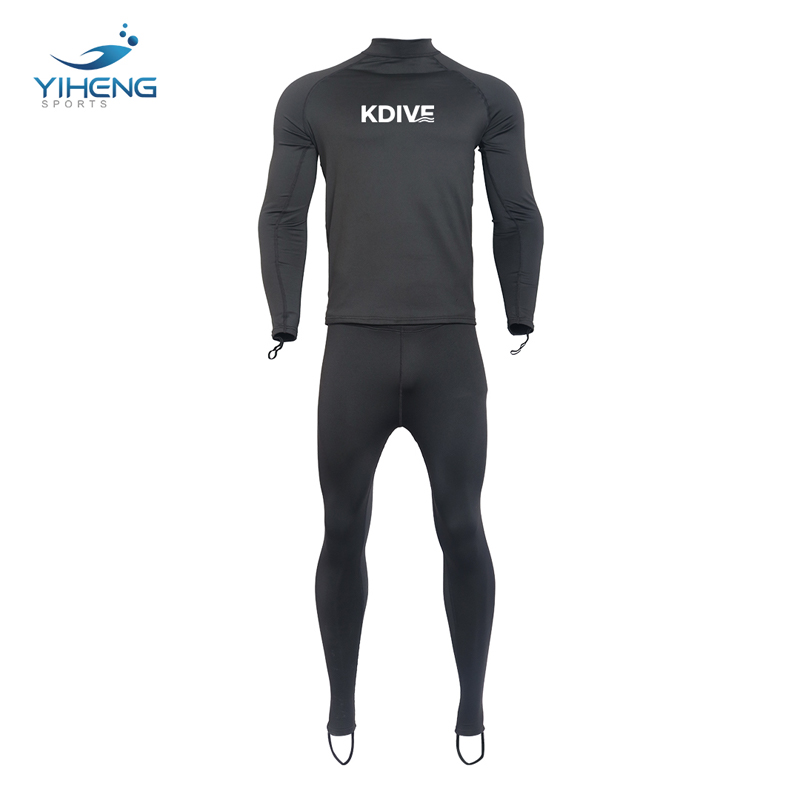
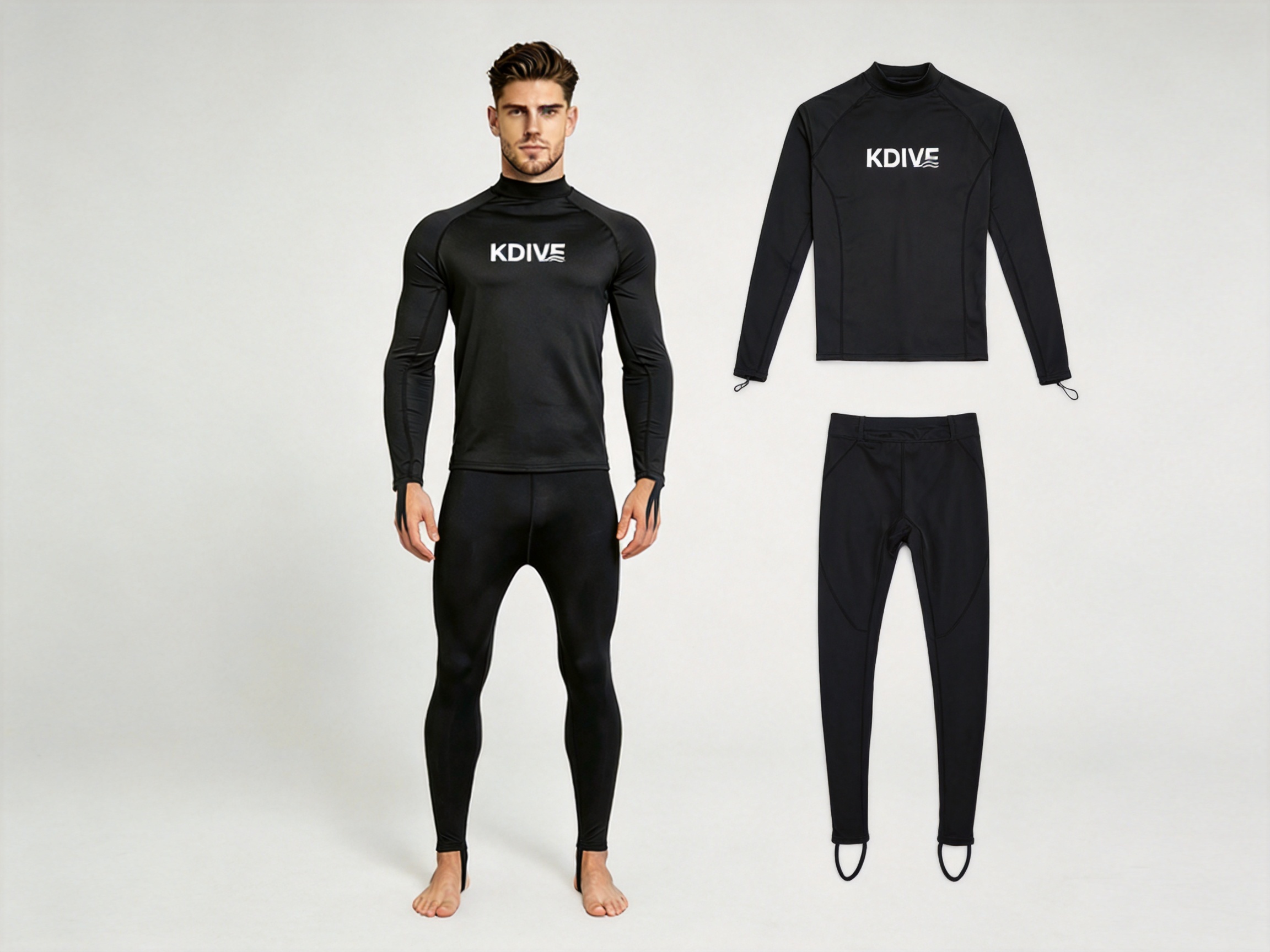
This two-piece rash guard set combines a long-sleeve pullover top with matching long pants. Made from high-stretch Lycra fabric, the suit delivers a flexible athletic fit without the bulk associated with heavier thermal garments. Its integrated thumb loops, elastic foot stirrup straps, smooth four-needle six-thread stitching, and lightweight construction provide stability during active movement in and around the water.
The design also gives users more flexibility than a one-piece suit. The top and pants can be worn together for full-body coverage or separately with other water-sports clothing. This makes the product useful across changing weather conditions, different water temperatures, and multiple activities.
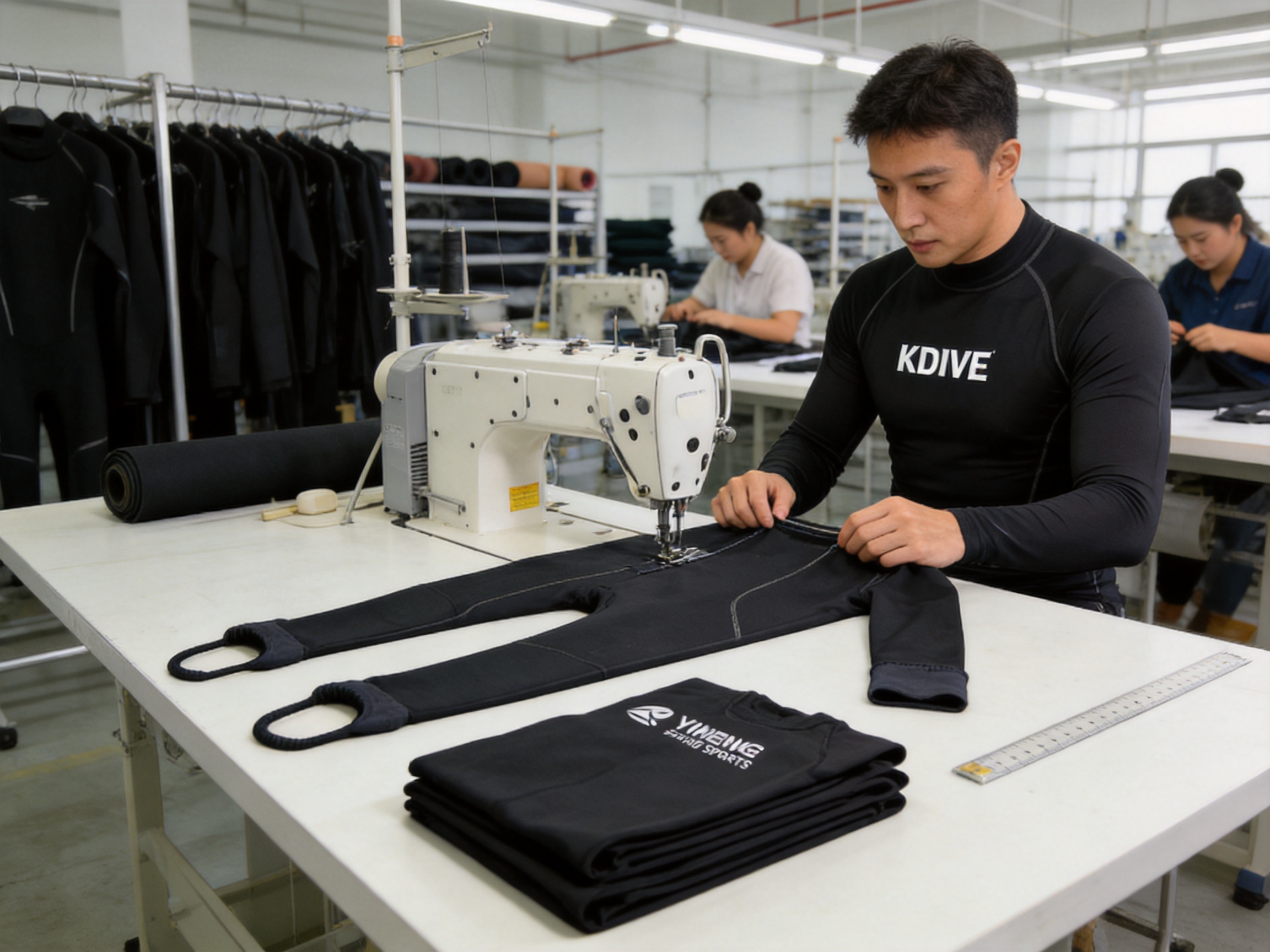
Behind the product is a manufacturer with extensive experience in neoprene materials, finished water-sports apparel, OEM production, ODM development, and private-label manufacturing. The factory combines material knowledge, garment-making capability, and market experience to support consistent production for distributors, retailers, and private brands.
Product Overview
The Men’s Black Lycra Pullover Two-Piece Quick-Dry Suit is a full-coverage water-sports clothing system consisting of a long-sleeve pullover top and long pants. It is available in black and in sizes S, M, L, XL, XXL, and XXXL.
| Product Feature | Specification |
|---|---|
| Product type | Two-piece rash guard set |
| Garment structure | Long-sleeve pullover top and long pants |
| Main fabric | High-stretch Lycra fabric |
| Color | Black |
| Entry method | Pullover design |
| Seam construction | Four-needle six-thread stitching |
| Sleeve detail | Integrated thumb loops |
| Leg detail | Elastic foot stirrup straps |
| Fit | Athletic fit |
| Performance properties | Quick-drying, breathable, lightweight, soft, high-stretch, and abrasion resistant |
| Coverage | Long sleeves and full-length pants |
| Available sizes | S, M, L, XL, XXL, and XXXL |
The product is intended to function as a versatile rash guard system rather than as a replacement for a thick insulated wetsuit. It provides lightweight coverage, sun protection, basic jellyfish protection, and a smooth base layer beneath other equipment. For colder conditions, users can combine it with a wetsuit, drysuit, or other thermal layer.
Its black color gives the suit a clean, professional appearance suitable for individual users, outdoor clubs, rental operations, water-sports retailers, and private-label brands. The neutral color also makes the garment easy to coordinate with life jackets, buoyancy equipment, fins, masks, board shorts, wetsuits, and other accessories.
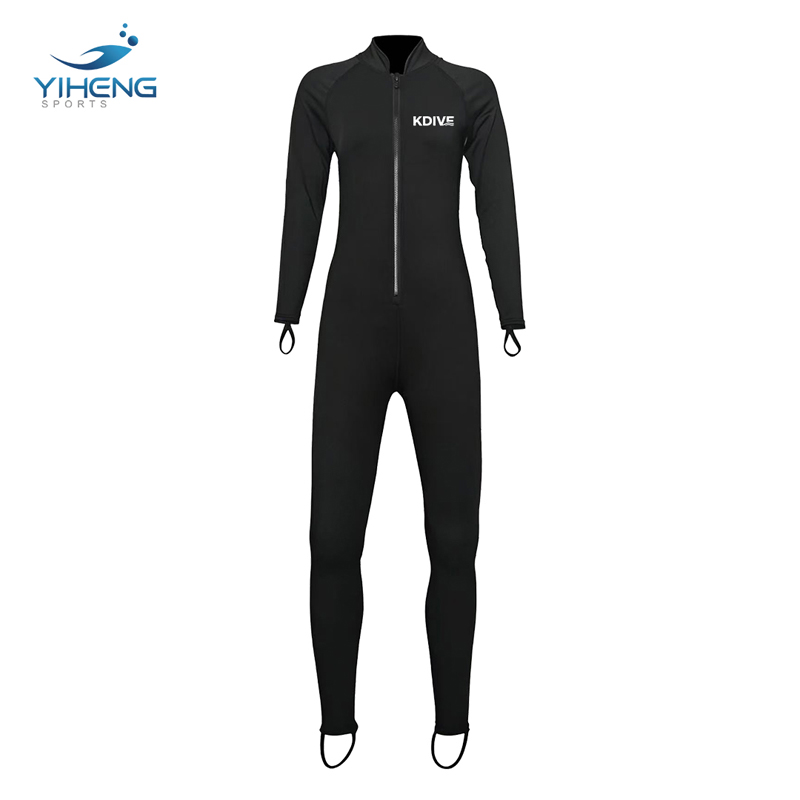
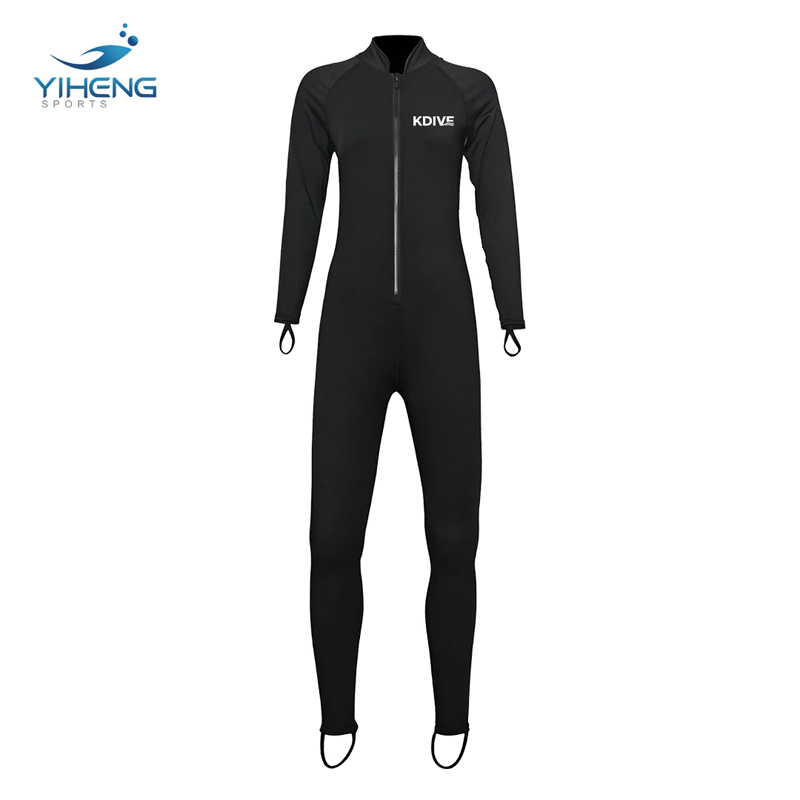
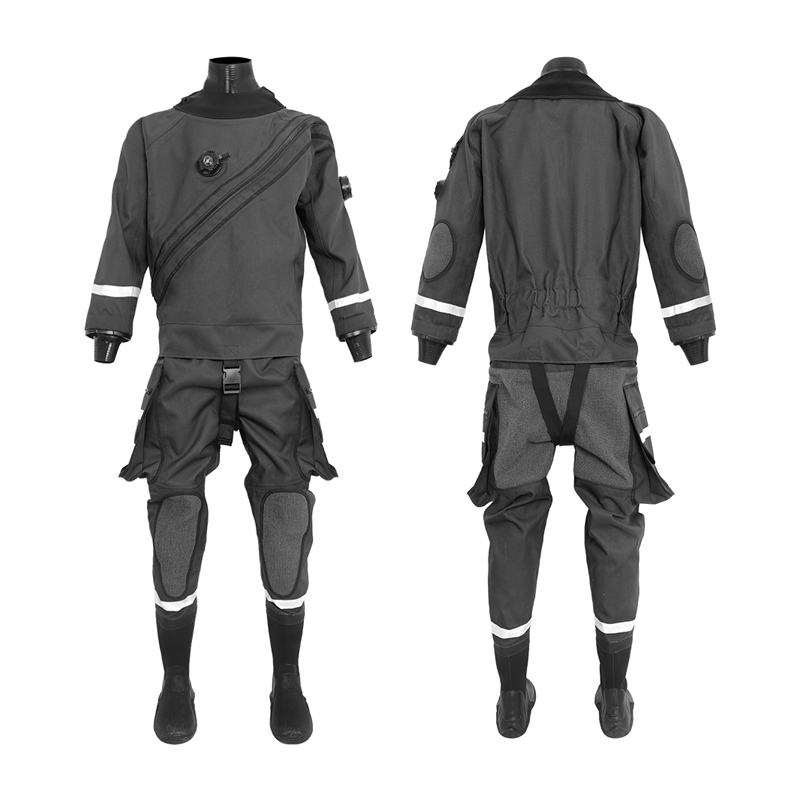
Men' s Black Lycra Pullover Two-Piece Quick-Dry Suit
High-Stretch Lycra for Unrestricted Movement
One of the most important advantages of this suit is its high-stretch Lycra fabric. Water sports often involve repetitive, multidirectional movement. A swimmer may rotate the shoulders during a stroke, a surfer may crouch and stand quickly, and a diver may extend the arms and legs while adjusting body position underwater. Clothing that resists these movements can cause discomfort, bunching, and early fatigue.
The flexible fabric is designed to follow the body rather than work against it. It stretches across the shoulders, chest, waist, hips, knees, and elbows, helping users maintain a natural range of motion. The result is an athletic fit that remains close to the body while avoiding the rigid feeling associated with less flexible fabrics.
High elasticity is also valuable when the suit is worn as a base layer. A rash guard that remains smooth beneath a wetsuit can reduce friction between the skin and the outer garment. It can also help the wetsuit slide over the body more easily during dressing and removal. Because the two-piece structure separates the upper and lower sections, users can select the combination that best matches the activity and the outer equipment.
Compared with loose-fitting water clothing, the close-fitting design reduces excess fabric that could flap in wind, catch on equipment, or create drag in the water. Compared with heavier thermal garments, the Lycra construction is lighter and more breathable. This balance makes the suit suitable for active users who need coverage without excessive weight.
Two-Piece Construction for Greater Versatility
A major difference between this product and a traditional one-piece rash suit is its separate top-and-pants configuration. The two-piece design gives users more control over how the garment is used. The full set can provide continuous coverage from the upper body through the legs, while the top or pants can also be worn independently.
For example, a user may wear the long-sleeve top with board shorts during a warm-weather paddleboarding session. During snorkeling or swimming, the complete set may be preferred for greater coverage. On a cool morning, the pants can be used beneath a wetsuit while the top is layered with another garment. This adaptability makes the product useful across a broader range of activities than a fixed one-piece garment.
The separation between top and pants can also improve convenience during changing. Users do not need to remove a single full-body garment every time they need to adjust another layer or use equipment. Retailers may also benefit from the format because customers can understand the practical value of receiving two coordinated garments rather than one inseparable piece.
From a product-development perspective, the two-piece configuration creates opportunities for future variations. The same pattern concept can support different colors, prints, sleeve treatments, waist constructions, or fabric weights. It can also be marketed as a coordinated set for men who want a complete appearance without sacrificing modularity.
Streamlined Pullover Design
The top uses a pullover entry design. By avoiding a front zipper, the garment maintains a smooth chest area and a streamlined appearance. This can reduce pressure points and friction when the user is paddling, swimming, leaning against a board, or wearing equipment over the top.
A pullover design also removes a hard zipper component that could contact the skin or create discomfort beneath a life jacket, harness, backpack, or wetsuit. The front surface remains flexible and uninterrupted, supporting a closer, more natural fit during movement.
The pullover construction is especially suitable for users who prefer simple equipment with fewer components. There is no zipper slider to catch, no front opening to adjust, and no metal or plastic closure that could become uncomfortable during long sessions. The stretch of the Lycra fabric helps the garment pass over the head and shoulders while returning to its fitted shape afterward.
At the manufacturing level, a pullover design also requires careful control of neckline dimensions, seam quality, fabric recovery, and pattern balance. If the opening is too tight, dressing becomes difficult. If it is too loose, the garment may lose its streamlined appearance. Consistent cutting, sewing, and inspection are therefore important to achieving a comfortable finished product.
Thumb Loops for Sleeve Stability
Integrated thumb loops are a practical detail for water-sports clothing. When the wearer extends the arms, reaches for a paddle, adjusts a sail, or puts on an outer wetsuit, sleeves can otherwise move upward. Thumb loops help keep the sleeves extended over the wrists and the lower hands.
This feature is useful for maintaining consistent coverage during active movement. It can also make the top easier to layer beneath gloves or other hand protection. When the thumb loops are not needed, they can generally be left unused while the sleeves remain worn in a conventional manner.
Because the loops are integrated into the sleeve structure, they form part of the garment rather than functioning as a separate accessory. Properly constructed loops should be smooth, secure, and flexible enough to support movement without creating pressure around the thumb. Their placement must be coordinated with sleeve length and cuff construction to suit the intended athletic fit.
Elastic Foot Stirrup Straps for Stable Leg Coverage
The pants include elastic foot stirrup straps at the leg openings. These straps help hold the lower legs in position and keep the pant legs flat over the feet. This is particularly helpful during diving, swimming, snorkeling, and other activities involving repeated leg movement or changes in body position.
Without a stabilizing feature, fitted pant legs may gradually ride upward, exposing more of the lower legs and creating folds around the ankles. Stirrup straps help reduce this movement. They can also make it easier to pull a wetsuit or other outer layer over the pants because the lower fabric is less likely to bunch.
The straps are designed to support stability without eliminating flexibility. Since they are elastic, they can accommodate natural foot and ankle movement. Their value is most apparent when the wearer is moving underwater, entering or exiting the water, or combining the rash guard pants with additional equipment.
As with thumb loops, the quality of the strap attachment is important. The connection must withstand repeated stretching, pulling, and washing. Careful stitching and appropriate elastic selection help maintain the function of the straps over the product’s service life.
Durable Four-Needle Six-Thread Stitching
The suit uses four-needle six-thread stitching, a construction method associated with strong, flat, and durable seams. Seam construction is a critical factor in water-sports clothing because the garment is exposed to continuous stretching, rubbing, moisture, salt water, chlorine, sand, and repeated washing.
Flat and smooth seams can improve comfort by reducing raised edges against the skin. This is valuable for a long-sleeve garment and full-length pants that may be worn for several hours. Smooth seams can also reduce the likelihood of irritation when the rash guard is placed beneath a wetsuit or other close-fitting equipment.
The multiple-thread structure supports seam strength while allowing the garment to retain flexibility. A rigid seam could restrict motion, while a weak seam may open when the fabric is stretched during dressing or activity. The goal is to balance durability with the soft, flexible behavior expected from athletic apparel.
Compared with ordinary single-needle construction, reinforced multi-thread stitching can provide greater resistance to seam separation when the garment is repeatedly extended. This is one of the key areas where manufacturing quality can distinguish a reliable water-sports garment from a low-cost product with limited durability.
Consistent seam quality depends on machine calibration, thread selection, operator skill, fabric handling, and inspection procedures. In a professional production environment, these factors are managed throughout the manufacturing process rather than addressed only after a finished garment is completed.
Quick-Drying and Lightweight Performance
Water-sports clothing becomes uncomfortable when it holds excess moisture for a long time. Heavy, saturated fabric can increase the feeling of cold after leaving the water, add unnecessary weight, and take longer to dry between uses. The lightweight Lycra fabric used in this suit is designed to shed water quickly and remain comfortable in and out of the water.
Quick-drying performance is useful for users who move between swimming, boating, beach activities, and travel. The suit can be rinsed, hung, and prepared for another session without the extended drying time associated with heavier materials. For commercial users such as rental centers, camps, and activity operators, faster drying can also support more efficient garment turnover when appropriate care procedures are followed.
The lightweight structure reduces packing volume and makes the suit convenient for travel. It can be stored in a beach bag, equipment case, or luggage without occupying the space required by thicker thermal clothing. Lightweight fabric can also reduce the sensation of bulk when worn beneath a wetsuit or drysuit.
Quick-drying capability does not mean that the garment should be stored wet for long periods. After use, it is recommended to rinse away salt, chlorine, sand, and other residues, then allow the garment to dry thoroughly in a suitable shaded and ventilated area. Proper care helps preserve fabric elasticity, color, and seam performance.
Sun Coverage and Basic Water Protection
The long sleeves and full-length pants provide broad skin coverage compared with short-sleeve tops or swim shorts. This coverage can help reduce direct exposure to sunlight during outdoor activities. It can also provide a physical layer between the skin and minor water-related irritants such as sand, floating debris, and occasional contact with marine organisms.
The garment offers basic jellyfish protection through physical coverage, but it should not be treated as specialized protective equipment for severe marine hazards. Users should always consider local conditions, safety guidance, and additional protective equipment when participating in activities where stings, abrasions, or cold exposure are possible.
Sun protection depends on factors including fabric density, fit, wetness, stretching, garment coverage, and the intensity of sunlight. The suit should therefore be used together with responsible sun-safety practices, including suitable sunscreen on exposed areas, protective headwear when appropriate, and avoidance of prolonged unprotected exposure.
Compared with applying sunscreen repeatedly to large areas of the body, a full-coverage rash guard offers a convenient physical barrier. It can be particularly helpful during long sessions when reapplication may be difficult. The black color also provides a consistent, professional appearance for individuals and organized water-sports groups.
Breathability and Athletic Comfort
Breathability is important because water-sports clothing may be worn before entering the water, during activity, and after exiting. A material that feels comfortable only when wet may become warm or clammy on land. The lightweight Lycra construction is intended to support airflow and moisture release while maintaining close contact with the body.
The soft hand feel helps reduce distraction during extended wear. This matters for activities such as snorkeling tours, freediving training, paddleboarding excursions, surf lessons, and open-water swimming, where users may remain in the garment for long periods.
An athletic fit should be close enough to reduce excess fabric but not so restrictive that it impairs breathing, shoulder rotation, hip movement, or knee flexion. Correct sizing remains important. Users should select a size that provides a secure fit while allowing the fabric to stretch naturally across the body.
The availability of sizes from S through XXXL supports a broader range of adult body types. For retailers and distributors, this size range can make the product more practical for a varied customer base and reduce the need to carry multiple unrelated styles.
Suitable Activities and Layering Applications
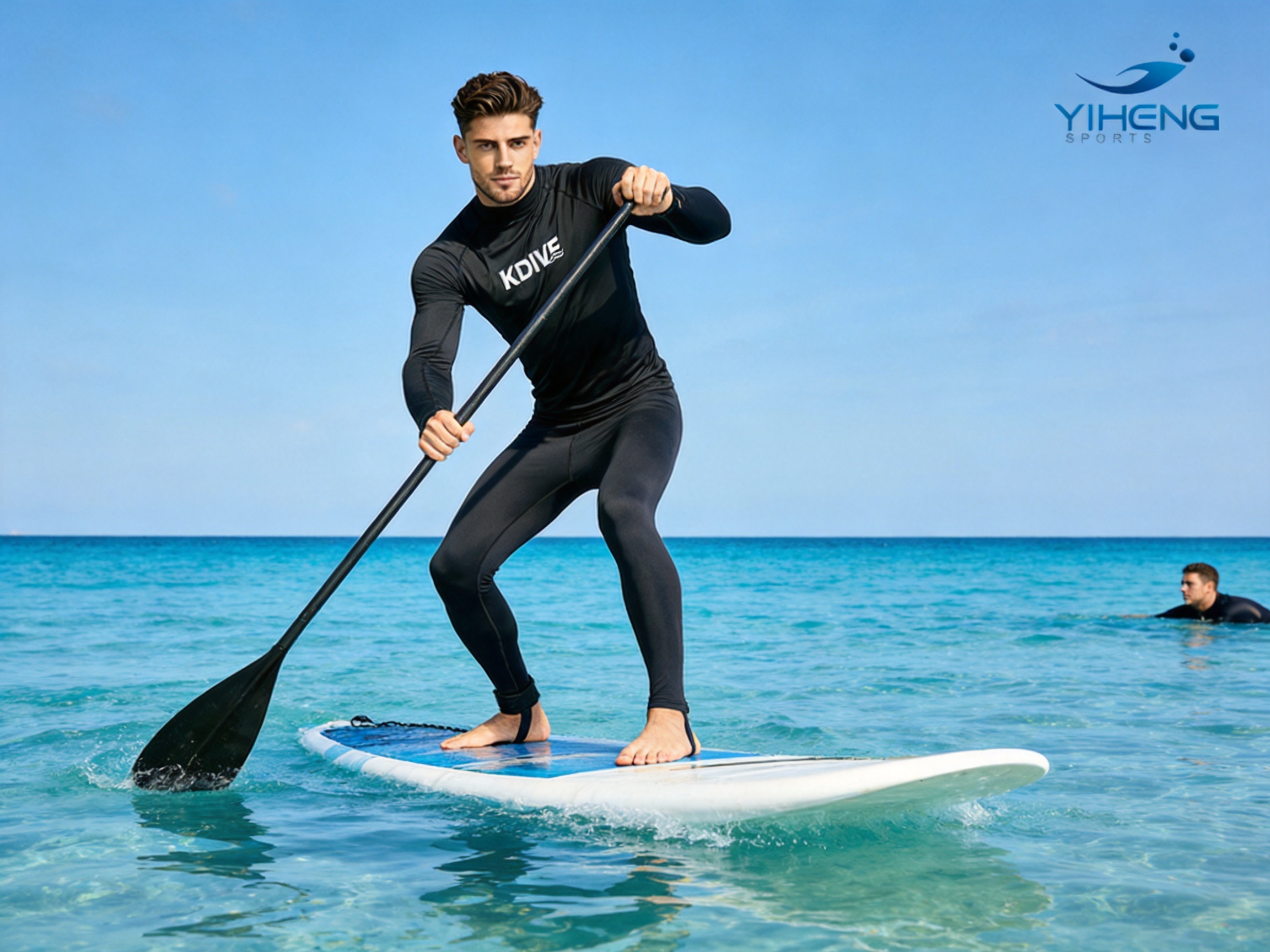
The suit is designed for swimming, snorkeling, freediving, surfing, paddleboarding, and related water activities. Each activity benefits from a combination of stretch, coverage, and secure fit.
Swimming
For swimming, the close-fitting construction helps minimize loose fabric and supports comfortable arm and leg movement. The long sleeves and pants provide additional coverage for outdoor pools, open-water locations, and training environments where sun exposure may be significant.
Snorkeling
Snorkelers often spend extended time at the surface with their backs, shoulders, and legs exposed to sunlight. The two-piece rash guard set provides lightweight coverage while allowing the wearer to move freely around a mask, snorkel, fins, and buoyancy equipment.
Freediving
Freediving requires streamlined movement and minimal distraction. The pullover design, smooth seams, thumb loops, and stirrup straps help maintain a neat profile. In colder conditions, the suit can serve as a base layer beneath a suitable thermal wetsuit, subject to the user’s fit and safety requirements.
Surfing
Surfers may benefit from the abrasion-resistant and close-fitting construction when paddling, standing, and repeatedly entering the water. The coverage can help reduce skin irritation caused by board contact, although users should select additional protection when conditions require it.
Paddleboarding
Paddleboarders often alternate between standing, kneeling, sitting, and swimming. The flexible fabric supports these changes in position, while the lightweight construction remains practical during transport and storage.
Base-Layer Use
The suit can be worn beneath wetsuits and other water-sports gear. Its smooth profile and stretch can help reduce direct skin contact with rougher materials. The suitability of any layering combination depends on the wearer’s measurements, the outer garment’s design, and the conditions of use.
Advantages Compared with Competing Garment Types
Many competing water-sports garments focus on only one benefit. Some offer sun coverage but have limited stretch. Others provide warmth but are too heavy for tropical activities. Some are inexpensive but use basic seams, loose openings, or materials that dry slowly. This two-piece Lycra suit is positioned to combine several practical benefits in one coordinated system.
Compared with a basic short-sleeve rash guard, it provides more coverage for the arms and legs. Compared with a loose beach outfit, it delivers a closer athletic fit that is less likely to flap or shift during movement. Compared with a thick wetsuit, it is lighter, less restrictive, and more suitable for warm-water activities or use as a base layer.
Compared with a one-piece rash suit, the two-piece construction offers greater flexibility in styling and layering. Users can wear only the top, only the pants, or the full set. This versatility may also make the garment more cost-effective for customers who participate in multiple activities.
The thumb loops and foot stirrup straps provide functional details that are not always included in entry-level rash guards. These features help maintain sleeve and leg position, especially during underwater movement and when the garment is worn beneath other equipment.
The four-needle six-thread construction is another potential advantage over lightly constructed competitors. Strong, smooth seams can improve comfort and durability, particularly when the garment is repeatedly stretched and exposed to demanding environments.
Finally, the manufacturer’s experience across both neoprene materials and finished products supports a broader understanding of water-sports apparel. This knowledge can be valuable when developing private-label collections that include rash guards, wetsuits, drysuits, fishing waders, and related equipment.
Manufacturing Strengths and Production Expertise
The product is manufactured by Jiangsu Yiheng Sports Products Co., Ltd., a professional producer focused on neoprene materials and finished water-sports products. The company began its business journey in 2008 and has developed more than 18 years of industry experience in neoprene fabrics and finished goods.
The company’s experience covers both source manufacturing and end-market operations. It has more than 15 years of production experience and eight years of direct retail-market practice. This combination allows the manufacturer to understand not only how to produce garments efficiently, but also how products are used, presented, sold, and evaluated by end customers.
The factory covers more than 15,000 square meters and employs more than 120 professional workers. This scale provides a production foundation for handling material preparation, cutting, sewing, inspection, packing, and order coordination. A structured facility is especially important for customers who require repeat production, consistent sizing, stable quality, and dependable delivery planning.
The company’s product range includes wetsuits, drysuits, fishing waders, rash guards, water-sports equipment, and neoprene fabrics. This broad category coverage creates opportunities for coordinated product development. A customer seeking a complete water-sports collection may be able to source multiple related products through one experienced manufacturing partner.
Advanced Manufacturing Process
Reliable performance begins with material selection. For a Lycra rash guard, the fabric must provide appropriate stretch, recovery, softness, weight, and resistance to wear. Material evaluation helps ensure that the fabric is suitable for close-fitting construction and repeated movement.
The next stage is pattern development. The top and pants must be shaped to support an athletic fit without creating excessive tension in the shoulders, chest, waist, hips, knees, or ankles. Pattern balance also affects how the garment behaves when worn beneath another layer.
During cutting, accurate alignment and controlled handling are important. Stretch fabrics can shift or deform if they are not managed correctly. Consistent cutting helps maintain size accuracy and supports reliable matching between the left and right sides of the garment. When multiple sizes are produced, careful grading is needed so that the proportions remain appropriate across the full size range.
Sewing requires attention to thread tension, seam allowance, stitch density, and the interaction between fabric elasticity and machine settings. Four-needle six-thread stitching must be applied consistently to produce smooth, durable seams. Operators also need to manage the attachment of thumb loops, elastic stirrup straps, cuffs, and other functional details.
Assembly order can influence both appearance and performance. A well-planned sequence helps maintain accurate alignment and reduces unnecessary handling of the fabric. It also supports consistent production across repeated orders and different size runs.
Inspection should take place throughout production rather than only at the final stage. Material checks, cutting checks, in-process sewing checks, and finished-garment inspections can help identify issues before they affect large quantities. Typical inspection points may include seam integrity, fabric defects, measurement accuracy, color consistency, loop attachment, strap attachment, and overall appearance.
Final packing requires garments to be folded, labeled, sized, and packed according to customer requirements. Clear size identification is particularly important for wholesale and private-label orders. Consistent packing can simplify warehouse handling, retail presentation, and distribution.
OEM, ODM, and Private-Label Support
The manufacturer provides OEM manufacturing, market-oriented ODM development, and long-term supply support. These capabilities are relevant to importers, distributors, retailers, e-commerce operators, water-sports brands, clubs, and activity providers seeking customized products.
OEM production is suitable when a customer already has a defined design, measurement chart, logo placement, packaging concept, or technical specification. The factory can organize production according to the approved requirements, subject to material availability, technical feasibility, and order conditions.
ODM development is useful for customers who need support transforming a product concept into a manufacturable garment. The Men’s Black Lycra Pullover Two-Piece Quick-Dry Suit can serve as a base design for variations in color, branding, trim, size range, fabric selection, or packaging.
Private-label services allow retailers and brands to present the product under their own market identity. Customized labels, hangtags, packaging, and selected visual details can help create a coherent product line. A neutral black design is particularly adaptable because it can serve as a foundational item within many different brand strategies.
Long-term supply support is important for businesses that require stable replenishment rather than a single trial order. Consistency in fabric, color, measurements, stitching, and finishing can help reduce differences between production batches. The manufacturer’s experience with materials and finished products provides a foundation for ongoing cooperation.
Quality Considerations for Wholesale Buyers
Wholesale buyers should evaluate more than the appearance of a sample. They should review fabric stretch and recovery, seam construction, measurement tolerance, color stability, finishing quality, and the durability of functional features. The thumb loops and foot stirrup straps deserve specific attention because they are frequently stretched during use.
Buyers should also confirm the intended size chart and consider whether the fit is designed for a close athletic profile or a more relaxed fit. The same nominal size may fit differently depending on fabric elasticity, pattern grading, and customer expectations. Accurate product measurements and clear retail guidance can reduce returns.
Packaging requirements should be discussed early. Private-label customers may need individual polybags, size stickers, barcode labels, hangtags, cartons, or other presentation details. Clear communication about packing specifications helps prevent errors during final preparation.
For larger programs, buyers may request pre-production samples, size-set samples, or approval samples. These steps allow the customer to evaluate fit, logo placement, color, fabric hand feel, and overall construction before mass production.
Product care information should also be provided to end users. General recommendations may include rinsing after saltwater or chlorinated-water use, avoiding harsh chemicals, not using excessive heat, and allowing the garment to dry thoroughly. Care instructions should be adapted to the final fabric and labeling requirements.
Recommended Customer Applications
This suit can serve several commercial and institutional markets. Water-sports retailers may offer it as a versatile entry-level or mid-range coverage garment. Surf schools and snorkeling operators may use it as part of a recommended equipment list. Outdoor clubs can select it for organized activities and team apparel programs.
Travel and resort businesses may also find value in a quick-drying two-piece set that can be used for multiple activities. Fishing and boating customers may appreciate the coverage and flexible fit, particularly when the garment is used beneath weather-resistant outerwear.
Private-label brands can position the product around sun-conscious outdoor recreation, lightweight performance, coordinated water apparel, or multi-activity travel. The available sizes from S through XXXL make it possible to serve a relatively broad adult market with one core style.
How to Choose the Correct Size
The garment should fit close to the body without creating painful pressure or restricting breathing and movement. Customers should compare their body measurements with the seller’s size chart rather than relying only on their usual clothing size.
Important measurements may include chest, waist, hip, sleeve length, inseam, and total body height. Because Lycra fabric is designed to stretch, a close fit is generally expected, but the garment should not be so tight that seams are placed under excessive tension.
Users who plan to wear the suit beneath a wetsuit should consider the fit of both garments together. The base layer should remain smooth and comfortable without creating excessive compression or folds. If the outer suit is already very close-fitting, selecting the correct size of the Lycra layer becomes especially important.
Retailers should explain that the thumb loops and foot stirrup straps are functional details rather than indicators that the garment is too short. When used properly, these features help maintain the intended position of the sleeves and pants.
Care and Maintenance
After use, the suit should be rinsed with clean water to remove salt, chlorine, sand, and other residues. Residue left in the fabric can affect softness, color, elasticity, and odor over time.
The garment should be washed according to the final care label. In general, gentle handling and mild detergent are preferable to aggressive chemicals. Bleach, fabric softener, and very high temperatures may damage elastic fibers or reduce fabric recovery.
Drying should take place in a well-ventilated area away from excessive heat. Prolonged direct sunlight may affect the color and performance of some fabrics. The suit should be stored only after it is fully dry to help prevent unwanted odor and mildew.
When packing the garment for travel, avoid placing it in a sealed bag while wet. If immediate drying is not possible, it should be removed from the sealed environment as soon as practical and rinsed and dried properly.
Frequently Asked Questions
What is included in the product?
The product includes a long-sleeve pullover top and a pair of matching long pants. It is a coordinated two-piece rash guard set.
Is this suit a replacement for a thick wetsuit?
No. The suit is made from lightweight, high-stretch Lycra and is intended for coverage, flexibility, quick drying, and basic protection. It can also be used as a base layer beneath a wetsuit, but it does not provide the same insulation as thick neoprene.
Can the top and pants be worn separately?
Yes. The separate design allows the garments to be worn together or combined with other water-sports clothing according to the activity, weather, and water temperature.
Does the garment provide sun protection?
The long sleeves and full-length pants provide physical coverage that can reduce direct exposure to sunlight. The level of protection depends on factors such as fabric construction, fit, wetness, stretching, and exposure conditions. Exposed skin should still receive appropriate sun protection.
Does it protect against jellyfish?
The fabric provides a basic physical layer between the skin and some water-related irritants. It should not be considered specialized protection against severe stings or dangerous marine life. Users should follow local safety guidance and use additional protective equipment where necessary.
What is the purpose of the thumb loops?
Thumb loops help keep the sleeves in place during swimming, diving, paddling, surfing, and layering. They reduce the tendency of the sleeves to ride upward during active movement.
What is the purpose of the foot stirrup straps?
The elastic stirrup straps help keep the pants legs flat and stable over the feet. They can reduce leg movement and bunching during underwater activity or when the pants are worn beneath another garment.
What does four-needle six-thread stitching mean?
It refers to a multi-thread seam construction designed to provide smoothness, flexibility, and durability. It is suitable for garments that must withstand repeated stretching and active movement.
Is the fabric suitable for swimming pools?
The garment can be used for swimming, including pool activities. Users should rinse it after exposure to chlorinated water and follow the care instructions to help preserve the fabric and stitching.
What activities are suitable for this suit?
Suitable activities include swimming, snorkeling, freediving, surfing, paddleboarding, boating, beach recreation, and other water-based activities. It can also be used as a base layer beneath compatible water-sports gear.
What sizes are available?
The available sizes are S, M, L, XL, XXL, and XXXL. Customers should use the applicable measurement chart to select the correct size.
Can the design be customized for a private label?
The manufacturer supports OEM and ODM production as well as private-label cooperation. Possible customization areas may include branding, labels, packaging, colors, materials, and selected design details, subject to technical and order requirements.
Where is the product manufactured?
The product is manufactured by Jiangsu Yiheng Sports Products Co., Ltd. in Jiangsu Province, China. The company operates a factory of more than 15,000 square meters and employs over 120 professional workers.
How experienced is the manufacturer?
The company began its business journey in 2008 and has more than 18 years of industry experience in neoprene fabrics and finished products. Its experience includes production, retail-market practice, OEM manufacturing, ODM development, and supply support.
Conclusion
The Men’s Black Lycra Pullover Two-Piece Quick-Dry Suit is designed as a flexible and practical solution for modern water-sports users. Its high-stretch Lycra fabric supports freedom of movement, while the lightweight and quick-drying construction helps maintain comfort during changing conditions.
The two-piece format provides more versatility than a fixed one-piece garment. Users can wear the top and pants as a complete set or combine them separately with other gear. The pullover design creates a smooth front profile, the thumb loops help stabilize the sleeves, and the elastic foot stirrup straps help maintain the position of the pant legs.
Four-needle six-thread stitching adds strength and seam smoothness, supporting the demands of repeated movement, layering, and water exposure. Full-length coverage can help reduce direct sunlight exposure and provide a basic barrier against minor water-related irritants, while the garment remains lighter and less restrictive than a traditional insulated wetsuit.
For wholesalers, retailers, and private-label brands, the product offers a commercially adaptable foundation. Its neutral black color, broad size range, modular two-piece design, and multi-activity application make it suitable for diverse customer groups. The manufacturer’s experience in neoprene materials, finished products, OEM manufacturing, ODM development, and private-label supply further supports its value as a sourcing option.
With appropriate sizing, care, and use, this rash guard set can become a dependable part of a swimmer’s, diver’s, surfer’s, paddleboarder’s, or outdoor traveler’s equipment system.
References
1. Product specification sheet for the Men’s Black Lycra Pullover Two-Piece Quick-Dry Suit, including fabric, construction, fit, features, color, and size information.
2. Manufacturer company profile for Jiangsu Yiheng Sports Products Co., Ltd., including factory capabilities, product categories, production experience, OEM services, and ODM development.
3. General apparel engineering principles for stretch-fabric garment construction, seam durability, pattern grading, and athletic-fit development.
4. General water-sports apparel guidance concerning sun coverage, layering, quick-drying fabrics, garment care, and activity-specific performance.
5. General textile product-care practices for garments exposed to salt water, chlorinated water, sand, sunlight, and repeated washing.
Product: Men' s Black Lycra Pullover Two-Piece Quick-Dry Suit

LET’S DEVELOP YOUR NEXT NEOPRENE PRODUCT LINE
Quick Links
Product Categories
Contact Us
-
 Email: postmaster@yihengsport.com
-
 Mobile: +86-13564100539
-
 No. 480 Jiangping Road, Madian, Binjiang Town, Taixing City, Taizhou City, Jiangsu Province, China.
Copyright © Jiangsu Yiheng Sports Products Co., Ltd. All Rights Reserved
China Wetsuit Manufacturer Neoprene Fabric Manufacturer
