

 Language
 English
 中文简体
 日本語
 русский
 Español
 عربى

Sep, 12, 2026
Breathable Neoprene Chest Fishing Wader: Warmth, Durability, and Practical Performance for Serious Anglers
Introduction
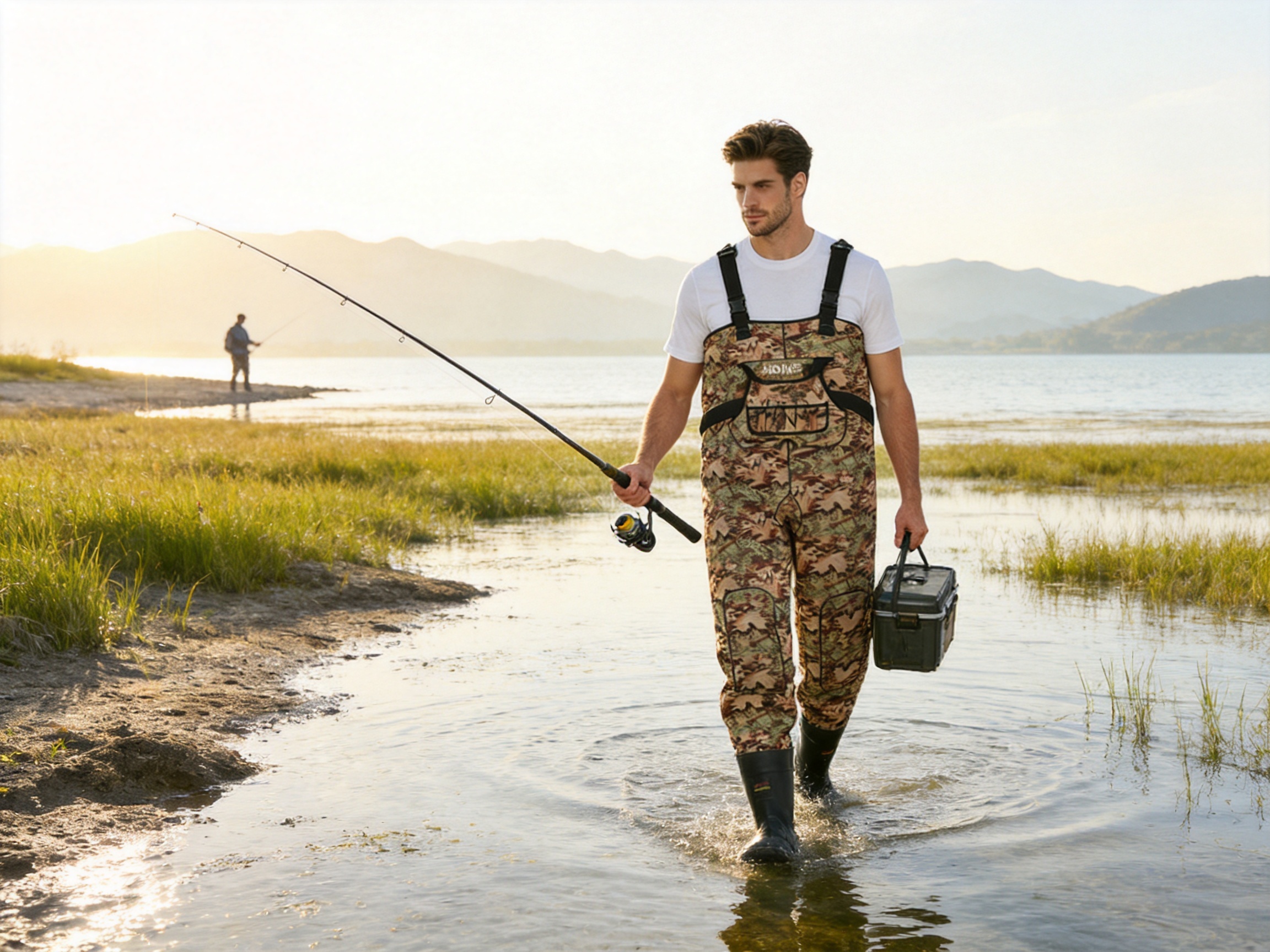
Fishing waders are essential equipment for anglers who need to enter rivers, lakes, streams, marshes, and coastal shallows while remaining protected from cold water and wet conditions. A well-designed chest wader must do more than prevent water from reaching the wearer. It must provide insulation, freedom of movement, dependable seam protection, stable footing, practical storage, and a comfortable fit for long hours in changing outdoor environments.
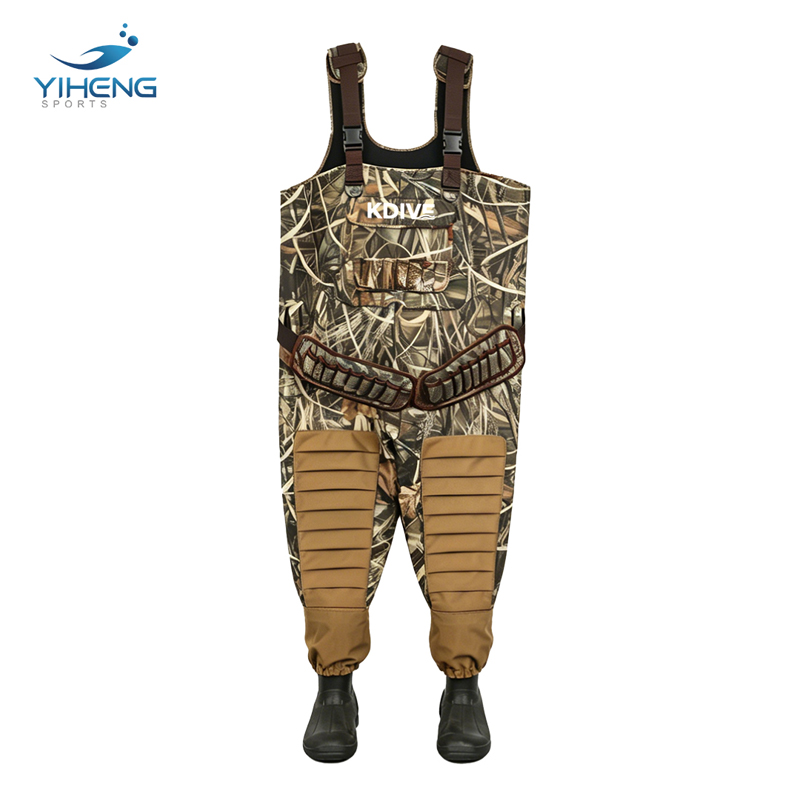
The Breathable Neoprene Chest Fishing Wader is designed around these requirements. Combining premium neoprene construction, GBS glued and blind-stitched seams, internal seam tape, adjustable suspenders, a buckle waist belt, reinforced knees, integrated vulcanized rubber boots, and organized storage, this bootfoot chest wader offers a balanced solution for recreational anglers, professional fishermen, guides, hunting users, and outdoor equipment distributors.
Unlike basic waders that focus only on coverage, this design brings together thermal protection and functional details that directly influence comfort and service life. Its neoprene body helps retain warmth in cold water, while reinforced construction helps reduce the effects of repeated kneeling, walking, bending, and contact with rough ground. The attached rubber boots provide a ready-to-use lower section without requiring a separate footwear system.
Manufactured by Jiangsu Yiheng Sports Products Co., Ltd., the wader benefits from the production experience of a company focused on neoprene fabrics and finished products. Since beginning operations in 2008, the manufacturer has developed capabilities across material sourcing, neoprene product manufacturing, OEM production, ODM development, and long-term supply support. Its factory covers more than 15,000 square meters and employs more than 120 professional workers.
This article examines the wader’s structure, materials, manufacturing strengths, competitive advantages, applications, maintenance requirements, sourcing value, and suitability for private-label programs. It also explains how each component contributes to practical performance in the field.
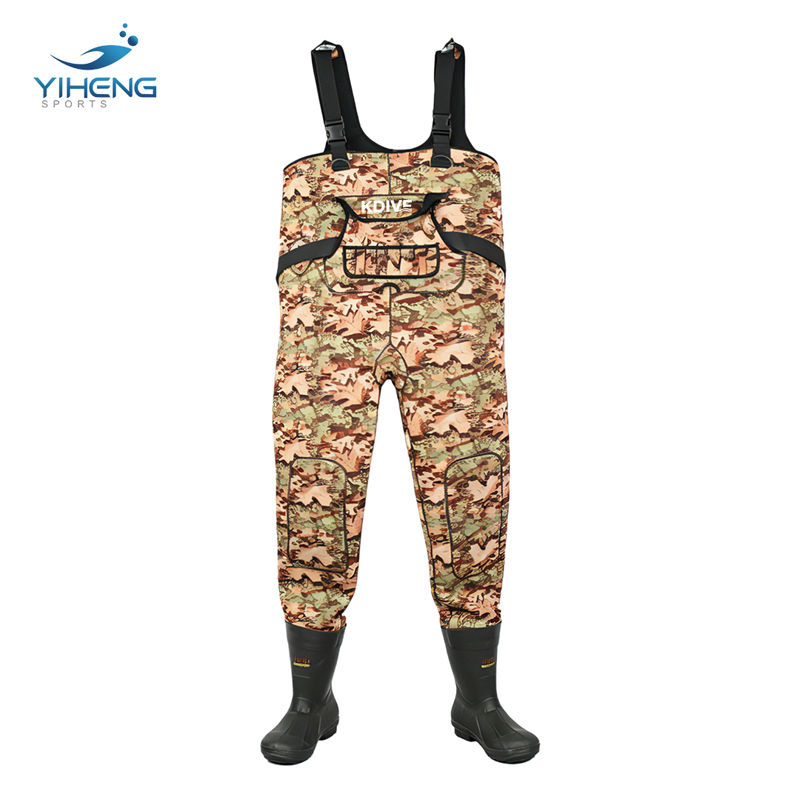
Breathable Neoprene Chest Fishing Wader
Product Overview
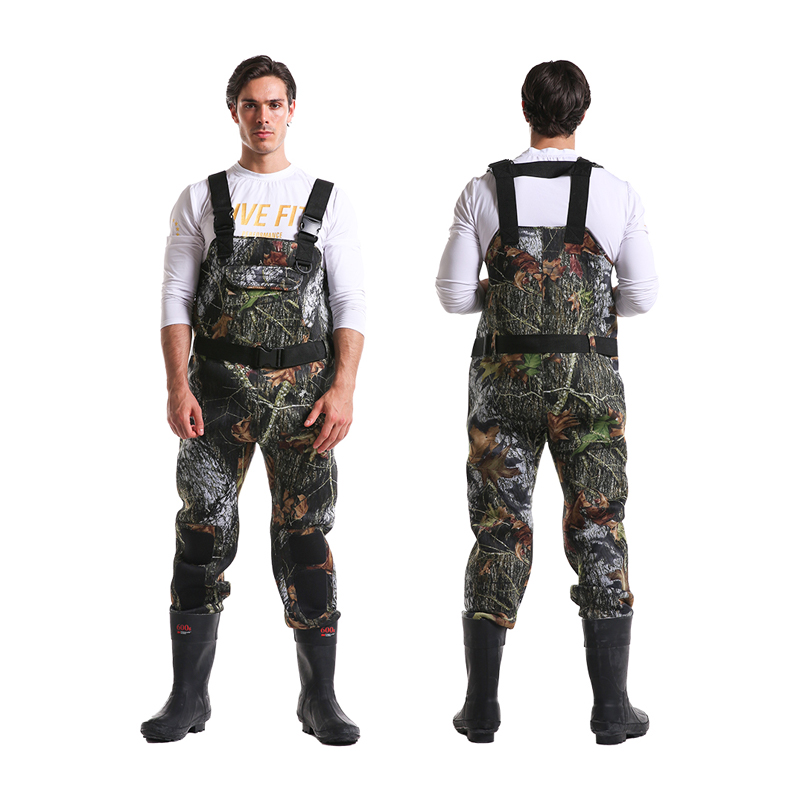
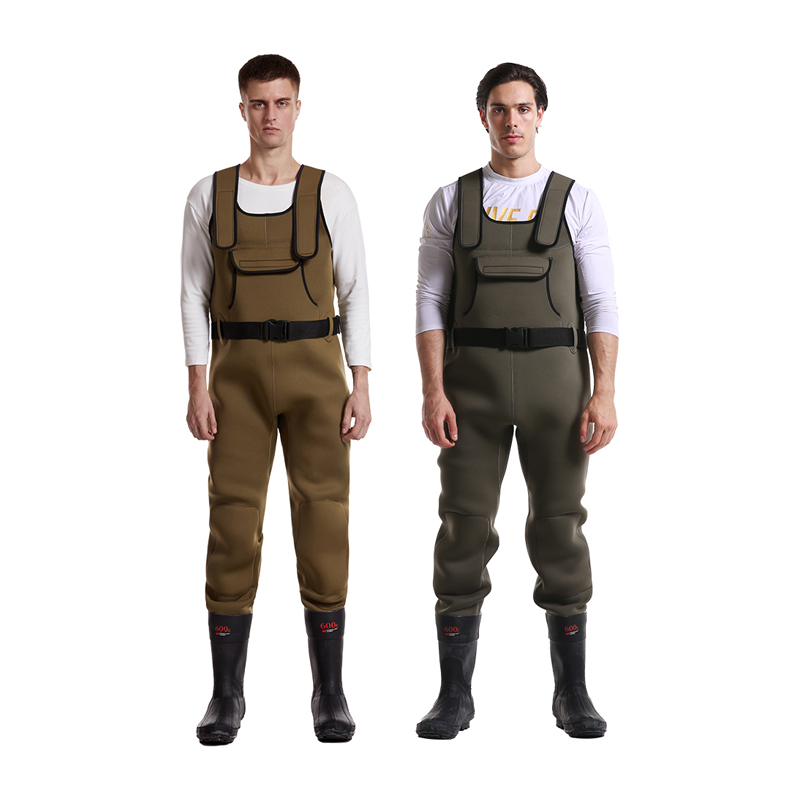
The Breathable Neoprene Chest Fishing Wader is a bootfoot chest wader made primarily from neoprene. Its chest-high construction provides coverage from the feet to the upper torso, allowing the user to move through water that is deeper than the height protected by waist waders or hip waders. This extended coverage is especially useful when crossing streams, standing in river channels, fishing from shallow coastal water, or working in wetland environments.
The product is available in sizes S, M, L, XL, XXL, and XXXL. This broad size range supports different body shapes and gives distributors greater flexibility when building a complete product assortment. Adjustable elastic suspenders and an adjustable buckle waist belt help the wearer fine-tune the fit after selecting the closest base size.
The principal construction features include:
• Neoprene body material for warmth and flexible protection.
• Bootfoot chest-wader configuration for full lower-body coverage.
• GBS glued and blind-stitched seam construction.
• Internal seam tape at key points to help limit water entry.
• Adjustable elastic suspenders for shoulder comfort and vertical fit control.
• Adjustable buckle belt for improved stability around the waist.
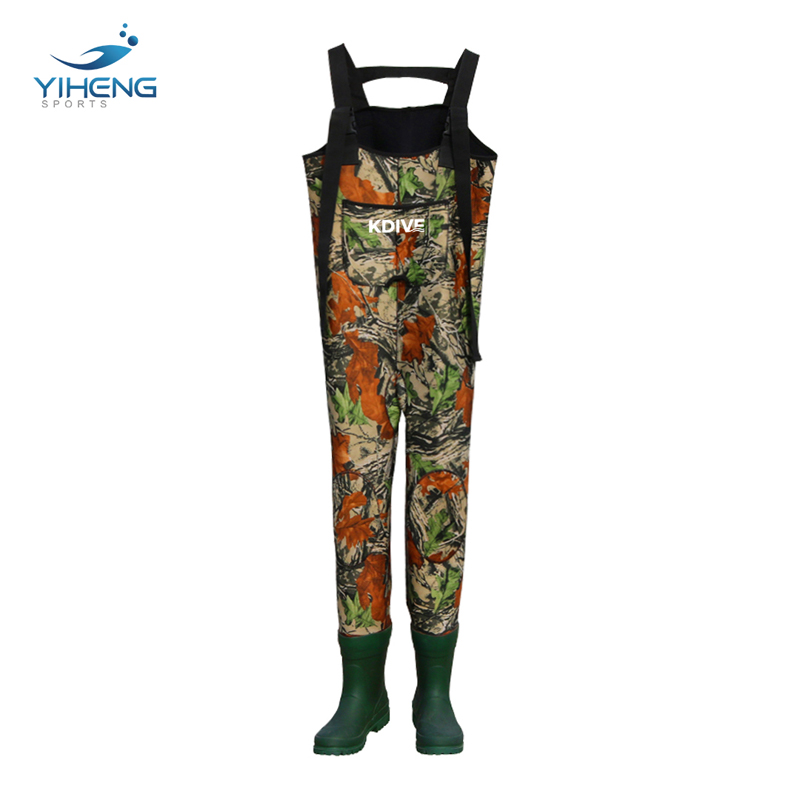
• Hook-and-loop chest pocket for frequently used accessories.
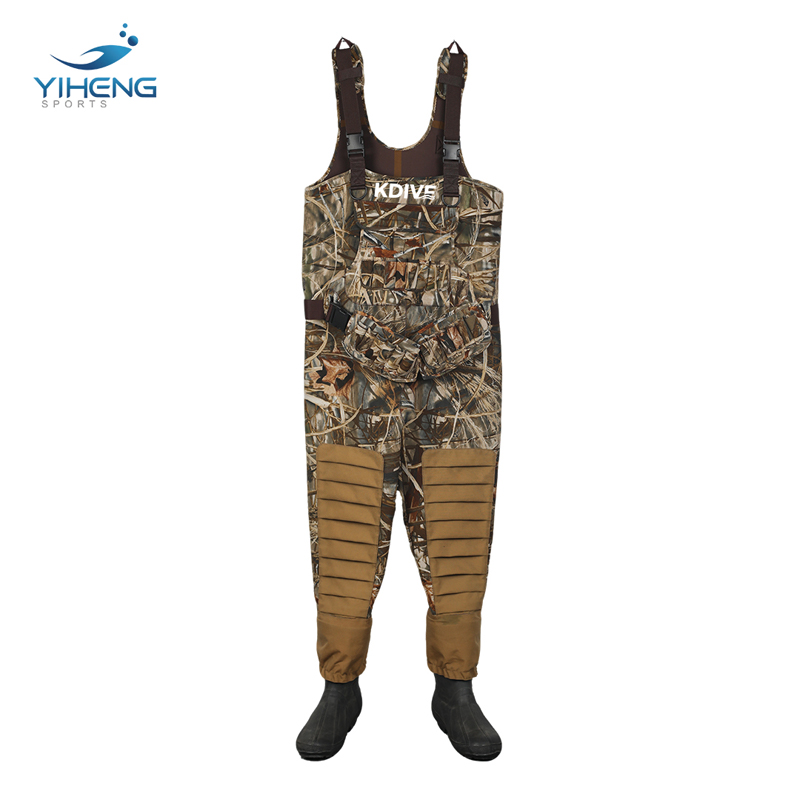
• External organizer compartments for bait, hooks, tools, and small equipment.
• Thickened neoprene knee areas for additional protection and durability.
• Vulcanized rubber boots securely attached to the wader body.
• Six available size options from S through XXXL.
These features make the product suitable for users who need warmth, coverage, and field utility in one integrated garment. The design is also appropriate for wholesalers and private-label buyers seeking a practical wader with a clear feature package that can be communicated easily to end customers.
Why Neoprene Is a Strong Choice for Fishing Waders
Neoprene has long been used in water sports, diving, fishing, and outdoor protective equipment because of its combination of flexibility, insulation, resilience, and water-resistant characteristics. Compared with thin textile-only waders, neoprene provides a warmer feel in cold conditions and can help reduce the discomfort caused by prolonged exposure to low-temperature water.
The material also offers a degree of stretch that supports common fishing movements. An angler may need to squat, step over rocks, reach forward, cast repeatedly, climb a bank, or kneel while landing a fish. A rigid garment can restrict these movements, while a properly selected neoprene construction can move more naturally with the body.
Another important advantage is the material’s cushioning effect. Neoprene has a soft, slightly resilient structure that can provide additional comfort when the wearer is standing against equipment, kneeling on a riverbed, or moving through uneven terrain. The thickened knee zones on this wader build on that inherent benefit by adding targeted reinforcement to an area that often experiences higher stress.
Neoprene is also suitable for product development across multiple categories. Jiangsu Yiheng Sports Products Co., Ltd. manufactures and supplies neoprene fabrics as well as finished products, including wetsuits, drysuits, fishing waders, rash guards, and water sports equipment. This material-focused background supports a more integrated understanding of how fabric selection, lamination, cutting, stitching, bonding, and final assembly affect finished-product quality.
Warmth in Cold-Water Conditions
Cold water can rapidly reduce comfort during long fishing sessions. A neoprene wader helps create a warmer barrier between the user and the surrounding environment. This is particularly valuable during early spring and late autumn fishing, mountain-stream angling, ice-edge conditions, and other activities where water temperatures remain low.
Warmth is influenced by material thickness, garment fit, layering, activity level, and weather conditions. The wader should therefore be used with suitable base layers and socks selected for the expected temperature. Even with proper layering, the neoprene body contributes important thermal protection that lightweight uninsulated waders may not provide on their own.
Flexibility for Active Movement
Fishing is not a stationary activity in many environments. Anglers frequently walk between fishing spots, adjust their stance, enter and exit water, and work around rocks, vegetation, boats, or riverbanks. The flexible character of neoprene helps the garment accommodate these movements without creating unnecessary resistance.
The adjustable suspenders and waist belt further support mobility by helping keep the garment in the correct position. A wader that shifts downward or hangs unevenly can create discomfort and interfere with stride length. A tailored fit allows the wearer to move more efficiently while reducing the need for repeated adjustments.
Seam Construction and Water Protection
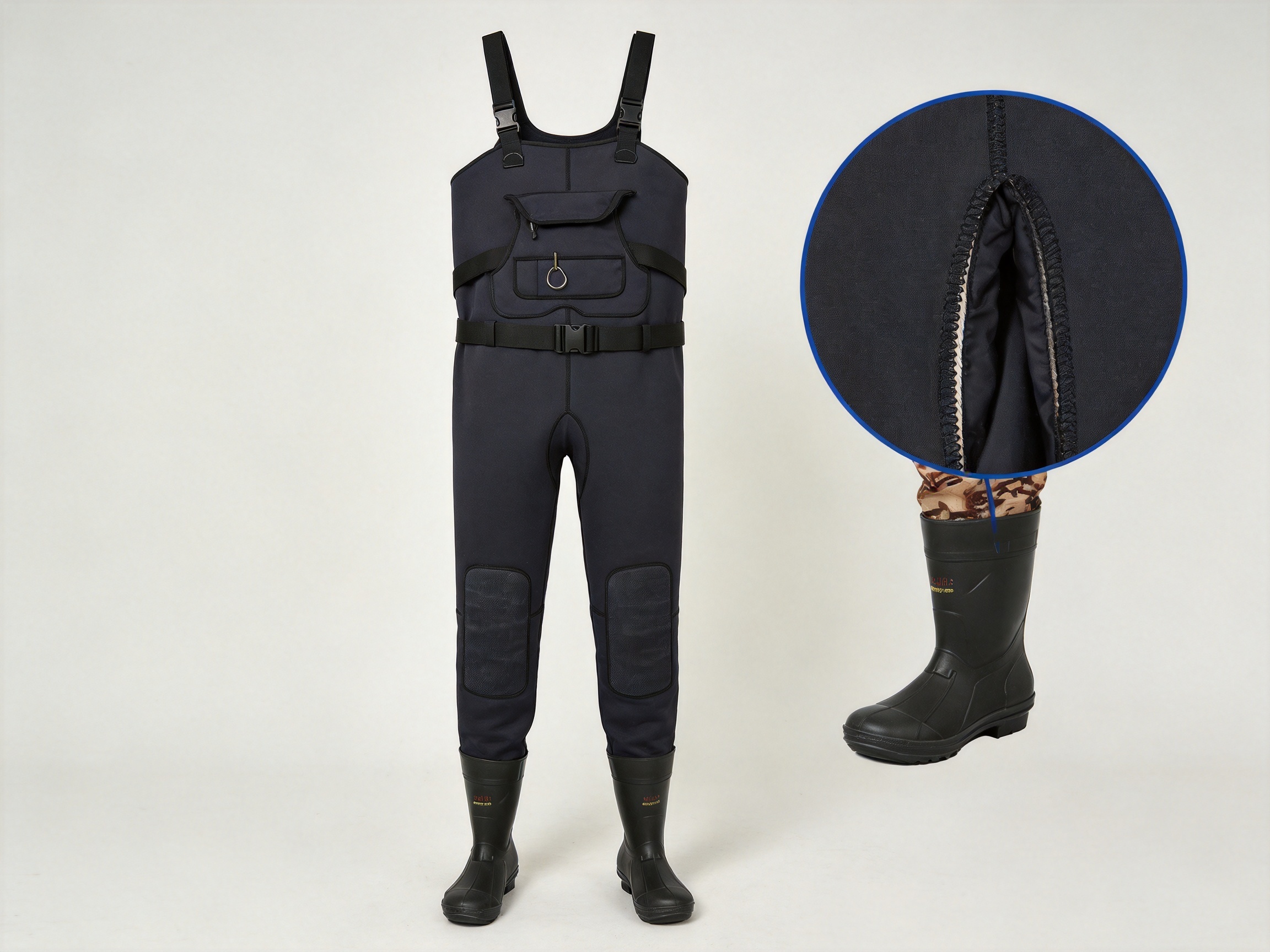
Seam performance is one of the most important factors in the service life of a wader. Even a high-quality fabric can become ineffective if water enters through poorly constructed seams. The Breathable Neoprene Chest Fishing Wader uses GBS construction, meaning the seams are glued and blind-stitched. This process is widely used in performance neoprene products because it combines adhesive bonding with controlled stitching.
In a glued and blind-stitched seam, the material panels are bonded to help close the seam line, while stitching adds structural support. Blind stitching is designed to avoid passing completely through the material in the same way as a conventional through-stitch. This helps reduce the number of direct pathways through which water might travel and supports a smoother internal seam profile.
Internal seam tape is applied at key points to provide another layer of protection. Taping helps cover or reinforce the interior seam area and can reduce water entry when the garment is exposed to repeated bending, movement, and water pressure. It also contributes to seam longevity by supporting the bonded and stitched construction.
The combination of gluing, blind stitching, and internal seam taping offers an advantage over basic sewn-only construction. Sewn-only seams may be easier to produce, but they can leave more openings around the thread path and may be less suitable for applications in which water resistance is a priority. The layered construction used in this wader is more appropriate for cold-water fishing and extended wading sessions.
Key Seam Advantages
• Bonded seam surfaces help improve water resistance.
• Blind stitching supports structural strength while limiting direct penetration.
• Internal seam tape reinforces selected areas from the inside.
• Multi-stage seam construction can improve durability during repeated movement.
• The process is consistent with the requirements of neoprene wetsuits, waders, and other water sports products.
Waterproof performance should always be understood as dependent on proper use and maintenance. Excessive abrasion, sharp objects, improper storage, chemical exposure, or damage caused during field use can affect any wader. Nevertheless, the GBS and taped-seam approach provides a stronger starting point than minimal construction methods.
Comfort and Fit System
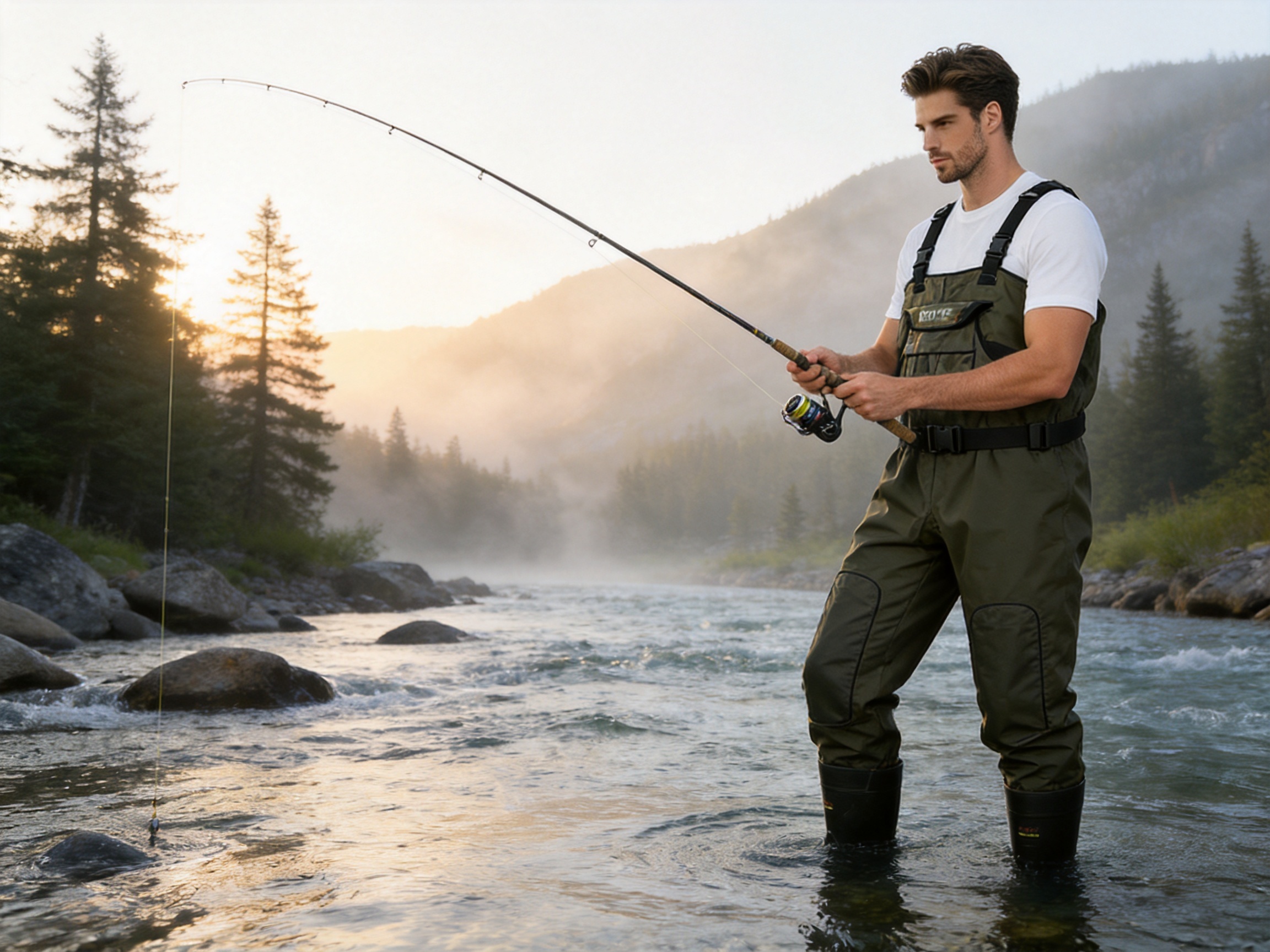
A chest wader must remain comfortable during long periods of use. Fishing sessions may last several hours, and users may spend much of that time walking, standing, casting, crouching, or carrying equipment. The fit system on this product is designed to distribute support across the shoulders and waist rather than relying on the body material alone.
Adjustable Elastic Suspenders
The elastic suspenders are adjustable, allowing the wearer to change the upper-body fit according to height, torso length, clothing layers, and personal preference. Elasticity allows the suspenders to move with the body and helps reduce excessive pressure on the shoulders during bending or walking.
Adjustable suspenders are especially valuable for products sold across different markets because body proportions can vary even among users who select the same nominal garment size. The adjustment range helps accommodate these differences and can make the wader more versatile for retail customers.
Adjustable Buckle Waist Belt
The waist belt adds stability around the middle of the garment. It can help reduce loose movement, support a closer fit, and keep the wader positioned during active use. The buckle system also allows fast adjustment when the wearer changes from light clothing to heavier cold-weather layers.
A waist belt may also contribute to a more balanced carrying experience when the chest pocket and external organizer compartments contain small fishing tools. Rather than allowing the garment to hang freely, the belt helps maintain a stable relationship between the upper body, waist, and lower legs.
Range of Sizes
Availability in S, M, L, XL, XXL, and XXXL allows the product to serve a broad customer base. A complete size offering is important for retailers, fishing equipment distributors, outdoor brands, and promotional product programs. It can reduce the risk of excluding customers who require larger or smaller sizes and makes it easier to present the wader as a full-range product rather than a limited-fit item.
| Size | Typical Customer Positioning | Fit Consideration |
|---|---|---|
| S | Smaller adult users | Check chest, inseam, and boot dimensions before ordering |
| M | Medium adult users | Allow room for base layers and normal movement |
| L | Larger medium or broad-fit users | Confirm torso length and waist adjustment range |
| XL | Large adult users | Evaluate shoulder comfort with layered clothing |
| XXL | Extended-size users | Check chest, waist, inseam, and boot fit together |
| XXXL | Extra extended-size users | Confirm complete measurement specifications before production |
For commercial orders, buyers should request a detailed measurement chart before confirming a size run. Nominal size labels may differ between regions, so chest width, body length, inseam, boot size, and waist range should be verified as part of the purchasing process.
Practical Storage for Fishing Equipment
Fishing waders are more useful when the wearer can keep essential items within reach. The product includes a hook-and-loop chest pocket and external organizer compartments. These storage areas are designed for small accessories such as hooks, bait, line tools, swivels, measuring items, compact pliers, and other frequently used equipment.
The chest pocket places lightweight essentials near the upper body, where they can be accessed without carrying a separate bag. A hook-and-loop closure is simple to operate and can be opened and closed quickly, even when the user is wearing gloves. It also avoids the need for a zipper pull that may become difficult to operate in cold or wet conditions.
The external organizer compartments help separate items instead of placing everything in one large pocket. Better organization can reduce the time required to locate small tools and helps prevent accessories from becoming mixed together. For anglers who move between locations, this practical arrangement can improve efficiency throughout the day.
Storage should be used with reasonable weight limits. Heavy or sharp tools can strain pocket attachment areas or create discomfort when the wearer bends forward. Customers should be advised to place heavier equipment in a tackle bag or belt system and reserve the wader pockets for lightweight accessories used frequently.
Reinforced Knees for Demanding Field Conditions
The knees are among the most exposed areas of a fishing wader. Anglers may kneel to release a fish, adjust a net, inspect equipment, cross uneven ground, or stabilize themselves on a riverbank. Repeated contact with stones, gravel, soil, vegetation, and boat surfaces can cause wear over time.
This product uses thickened neoprene at the knees to improve protection in these high-contact zones. The reinforcement helps create a stronger barrier between the user and the ground while supporting the durability of the garment. It also provides additional cushioning during kneeling and may reduce discomfort during repeated low-position movements.
A reinforced knee panel must balance protection with mobility. Excessive stiffness can restrict bending, while insufficient material may wear quickly. The use of thickened neoprene offers a practical middle ground by adding material where it is most needed without requiring the entire garment to be made heavier or less flexible.
For distributors comparing competing products, knee reinforcement is a valuable feature to examine closely. Some lower-cost waders may use uniform material throughout the body without reinforcing high-stress areas. A targeted reinforcement strategy can offer better value because it concentrates construction resources where field wear is most likely to occur.
Vulcanized Rubber Boots and Bootfoot Convenience
The integrated vulcanized rubber boots are one of the most practical features of this chest wader. In a bootfoot design, the boots are securely attached to the lower wader body, creating a ready-to-use system. The user does not need to purchase separate wading shoes or spend time matching footwear with the wader leg opening.
Vulcanization is a controlled process used to improve the strength, elasticity, and stability of rubber. A properly vulcanized rubber boot can provide a durable structure for walking through wet environments. The securely attached boot-to-wader connection is important because this transition area receives repeated flexing and stress during walking, climbing, and entering or exiting water.
Bootfoot construction can also simplify product selection for consumers. Separate stockingfoot waders require compatible wading boots, which adds cost and creates another sizing decision. A bootfoot model offers a more straightforward package for customers who value convenience and an integrated design.
The boots are suitable for varied wading conditions, but users should still inspect the ground before moving. Sharp rocks, broken branches, metal objects, and other hazards can damage rubber or the surrounding wader material. Proper cleaning and drying after use can also help preserve the boot and connection area.
Bootfoot Advantages Compared with Separate Footwear Systems
• One integrated product reduces the need for additional footwear purchases.
• Attached boots simplify dressing and removal.
• The boot-to-wader connection is assembled as part of the manufacturing process.
• Rubber footwear is suitable for wet ground and shallow-water environments.
• The unified design is convenient for retailers presenting a complete fishing solution.
Manufacturing Strengths and Production Experience
Jiangsu Yiheng Sports Products Co., Ltd. began its entrepreneurial journey in 2008. Over more than 15 years of production experience, the company has developed expertise in neoprene materials and finished products. Its stated industry experience exceeds 18 years in neoprene fabrics and related products, reflecting a long-term focus rather than a temporary expansion into water sports equipment.
The company’s factory covers more than 15,000 square meters and employs over 120 professional workers. This scale provides a foundation for organized production, material handling, product assembly, inspection, packaging, and order coordination. A dedicated manufacturing base can also support repeat orders more effectively than an informal or purely trading-based supply model.
The company works across source manufacturing and end-market operations. In addition to producing neoprene products, it has accumulated eight years of direct retail-market practice. This combination is valuable because product development is influenced not only by factory capabilities but also by understanding how users evaluate comfort, function, appearance, sizing, durability, and value.
Material-Focused Capability
Because the company manufactures neoprene fabrics as well as finished products, it can approach product development from the material level upward. Fabric selection affects flexibility, insulation, recovery, surface feel, cutting behavior, seam bonding, and final appearance. Experience with these factors can help improve consistency between raw material specifications and finished wader performance.
A material-focused manufacturer may also be better positioned to coordinate changes requested by customers. For example, a private-label buyer may need a different color, logo application, pocket layout, thickness specification, or size range. Understanding the material and assembly process internally can make these discussions more efficient.
GBS and Blind-Stitching Processes
The use of GBS seam construction requires controlled preparation and assembly. Fabric edges must be cut accurately, adhesive must be applied consistently, panels must be aligned correctly, and stitching must be controlled to avoid unnecessary damage. Internal seam taping requires additional attention to placement, bonding, and coverage.
These processes are particularly important in waders because the product must accommodate movement while maintaining water resistance. Manufacturing experience with wetsuits and other neoprene products can support the development of practical production methods for wader panels, stress areas, and seam transitions.
Integrated Boot Assembly
Attaching vulcanized rubber boots securely to the wader body requires coordination between the upper neoprene construction and the rubber footwear component. The connection must be stable, cleanly finished, and able to withstand normal flexing. A manufacturer experienced in integrated water sports products can organize this assembly as part of a complete production workflow rather than treating the boot as an unrelated accessory.
The result is a product that combines the thermal and flexible characteristics of neoprene with the protective and stable qualities of rubber footwear. This integrated construction is a key part of the wader’s value proposition.
Competitive Advantages
The wader competes effectively by combining several features that are often separated across different product levels. Some entry-level products provide basic water coverage but lack reinforcement, storage, or advanced seam construction. Some lightweight models prioritize low bulk but provide less warmth in cold water. Some premium systems offer high performance but require separate boots and may have a higher total cost.
The Breathable Neoprene Chest Fishing Wader occupies a practical position between these extremes. It provides integrated warmth, bootfoot convenience, reinforced stress areas, adjustable fit, and organized storage in one product.
| Feature | Basic Sewn Wader | Breathable Neoprene Chest Fishing Wader | Practical Benefit |
|---|---|---|---|
| Body material | Lightweight textile or basic coated fabric | Neoprene | Improved warmth and flexible protection |
| Seam construction | Standard sewn seams | GBS glued and blind-stitched seams | Enhanced resistance to water entry and seam stress |
| Seam reinforcement | Limited or absent | Internal seam tape at key points | Additional protection in important areas |
| Fit adjustment | Limited adjustment | Elastic suspenders and buckle waist belt | More personalized and stable fit |
| Knee protection | Uniform material | Thickened neoprene knees | Better support for kneeling and abrasion exposure |
| Footwear | Separate purchase may be required | Attached vulcanized rubber boots | Convenient integrated solution |
| Storage | Minimal pocket provision | Chest pocket and external organizers | Improved access to fishing accessories |
| Size range | May be limited | S through XXXL | Broader market coverage |
These advantages are not based on one isolated feature. They result from the interaction of materials, construction methods, fit components, reinforcement, and factory experience. For buyers evaluating products at wholesale or private-label level, this integrated approach can support stronger customer satisfaction and clearer product positioning.
Applications and Target Users
The product is suitable for a variety of water-based and wet-environment applications. Its principal use is fishing, but the chest-high coverage and attached boots can support other outdoor activities where users need protection from cold water and wet ground.
River and Stream Fishing
River anglers often move through shallow and moderately deep water while crossing current, repositioning between pools, or approaching productive fishing areas. Neoprene warmth is useful in cold streams, while the rubber boots provide a stable lower-body platform. The adjustable waist and suspenders support movement over uneven riverbeds.
Lake and Reservoir Fishing
At lakes and reservoirs, users may enter the water from gently sloping shorelines or wade near the edge to improve casting distance. The chest-high design provides additional coverage when water depth changes unexpectedly. Storage pockets can hold small items that would otherwise need to remain on shore.
Coastal and Marsh Environments
Coastal flats, marshes, and wetland areas can expose users to mud, shallow water, vegetation, and changing ground conditions. The integrated rubber boots are convenient in such environments, while reinforced knees may be useful when users crouch or kneel. After use in saltwater or muddy environments, thorough cleaning is especially important.
Fishing Guides and Outdoor Professionals
Guides and professional users may spend more days per season in waders than occasional recreational anglers. They need products that balance comfort, serviceability, durability, and cost. A wader with reinforced knees, practical storage, and secure seams can be a useful part of a professional equipment program, subject to appropriate inspection and maintenance.
Hunting and General Wet-Environment Use
Although designed for fishing, chest waders may also be considered for certain hunting, wildlife observation, land management, and outdoor work applications. The suitability of the product depends on the exact environment, temperature, movement requirements, and safety regulations. Users should ensure that the garment is appropriate for the intended activity before deployment.
Care, Cleaning, and Storage Recommendations
Correct care can extend the useful life of any wader. After use, rinse the outer surface with clean water to remove mud, sand, plant residue, and other contaminants. If the wader has been used in saltwater, rinsing is particularly important because salt deposits can affect surface materials and hardware over time.
Allow the wader to dry completely in a well-ventilated shaded area. Direct high heat, radiators, heaters, and prolonged intense sunlight may affect neoprene, adhesives, rubber, and elastic components. The wader should not be stored while damp because trapped moisture can create unpleasant odors and may contribute to material degradation.
Inspect the seams, knee panels, pocket attachments, suspenders, belt buckle, boot surfaces, and boot-to-wader connection after each significant use. Early detection of cuts, separation, or unusual wear makes repair or replacement decisions easier. Sharp tools should be kept away from the garment during transport and storage.
When storing the product, avoid compressing it under heavy objects or folding it repeatedly along the same sharp crease. A cool, dry, ventilated storage area is preferable. The boots should be cleaned of mud and allowed to dry before the wader is packed for seasonal storage.
Users should follow the care instructions supplied with the final product, especially when a private-label customer applies its own packaging or instruction system. Care guidance should clearly explain cleaning, drying, storage, inspection, and safe-use expectations.
Private-Label and OEM/ODM Opportunities
For brands and distributors, the product provides a suitable foundation for private-label development. Jiangsu Yiheng Sports Products Co., Ltd. offers OEM manufacturing, market-oriented ODM development, and long-term supply support. These capabilities can help customers bring a finished wader program to market without developing every production process independently.
Private-label opportunities may include brand labeling, packaging design, size assortment planning, color selection, product photography coordination, instruction materials, and retail presentation. Depending on project requirements, buyers may also discuss adjustments to pocket configuration, logo placement, trim details, or other approved specifications.
ODM cooperation can be useful when a buyer has a target customer group but needs assistance translating market requirements into a workable product. The manufacturer’s experience in neoprene materials and finished goods can support conversations about warmth, flexibility, seam construction, reinforcement, boot selection, fit, and production feasibility.
For a successful private-label project, buyers should provide clear information about their target market, expected order quantity, sales channel, required size range, preferred colors, packaging needs, compliance expectations, delivery schedule, and inspection standards. Sample approval should be completed before bulk production, and all agreed specifications should be documented.
Advantages for Distributors
• A complete feature package is easier to explain in catalogs and online listings.
• Six size options support broader retail coverage.
• Bootfoot construction simplifies customer purchasing decisions.
• Neoprene warmth creates a clear selling point for cold-water markets.
• Storage and knee reinforcement add visible functional value.
• OEM and ODM support can reduce product-development barriers.
• A manufacturer with both fabric and finished-product experience can support long-term supply planning.
Quality Considerations for Buyers
Commercial buyers should evaluate more than appearance when sourcing chest waders. A complete assessment should include material consistency, panel alignment, seam quality, tape placement, adhesive cleanliness, stitching regularity, pocket attachment, suspender function, waist-belt performance, boot bonding, size measurements, and packaging condition.
Samples should be examined for loose threads, open seams, incomplete bonding, uneven tape, surface damage, sharp edges, or inconsistent boot attachment. Buyers may also wish to establish inspection criteria for visual workmanship, dimensions, functional adjustments, and packaging quantities.
Water-resistance evaluation should be conducted according to the buyer’s internal testing procedure or applicable product requirements. The objective is to identify defects that may allow water entry under expected conditions. Testing should be interpreted together with normal-use instructions because no garment is immune to damage from sharp objects, improper handling, or use outside its intended environment.
Size verification is equally important. Measurements should be compared with the approved sample and technical specification. Since the wader includes attached boots, boot dimensions should be checked separately from the body measurements. A satisfactory body fit does not guarantee a satisfactory boot fit, so both aspects should be considered during product approval.
How the Product Supports Long Fishing Sessions
Long fishing sessions place continuous demands on clothing and equipment. The wearer may remain exposed to cool water, move repeatedly between locations, carry small tools, kneel near the shoreline, and adjust clothing layers as weather conditions change. The product addresses these demands through a combination of insulation, fit control, storage, reinforcement, and integrated footwear.
Neoprene helps reduce cold discomfort, while GBS seams and internal seam tape support water protection. Elastic suspenders reduce the need to hold the garment in place manually, and the buckle waist belt helps stabilize the fit. The chest pocket and organizer compartments keep essential small items accessible, while thickened knees support repeated contact with the ground. Attached rubber boots reduce the number of separate components the user must prepare before entering the water.
This combination can make the product especially attractive to anglers who prioritize reliability and convenience over the lightest possible equipment. It is a practical option for users who want one integrated garment for cold-water wading rather than a modular system that requires multiple pieces of equipment.
Safety and Responsible Use
Waders should always be used with awareness of water depth, current strength, weather, terrain, and personal swimming ability. Chest-high coverage does not mean that the wearer can safely enter any depth of water. Moving water can be powerful, and submerged holes, unstable rocks, slippery surfaces, and sudden drop-offs can create serious hazards.
Users should avoid exceeding safe wading depth and should move slowly in unfamiliar areas. A wading staff or other appropriate safety equipment may be useful in challenging terrain. The garment should not be considered a substitute for a personal flotation device when boating or participating in activities that require flotation protection.
Before each use, inspect the wader for damage. Do not use a garment with significant seam separation, torn neoprene, damaged suspenders, failed belt hardware, or compromised boot attachment. Prompt inspection is especially important after contact with sharp rocks, branches, hooks, barbed wire, or other objects that may puncture the material.
Frequently Asked Questions
What is the main advantage of this chest fishing wader?
The main advantage is its combination of neoprene warmth, reinforced GBS seam construction, adjustable fit, practical storage, strengthened knees, and attached vulcanized rubber boots. It is designed as a complete cold-water wading system rather than a basic waterproof garment.
Is the wader suitable for cold water?
Yes. The neoprene body is designed to provide dependable warmth and insulation in cold-water conditions. Users should still select suitable base layers and choose equipment according to the water temperature, weather, activity level, and expected exposure time.
What does GBS seam construction mean?
GBS means glued and blind-stitched. The seam panels are bonded together and supported by blind stitching. This construction is commonly used in neoprene products because it can improve water resistance and seam durability compared with basic sewn-only construction.
Why is internal seam tape used?
Internal seam tape covers and reinforces selected seam areas from inside the garment. It helps reduce potential water entry and supports the longevity of the seam construction during repeated movement.
Does the product include boots?
Yes. It is a bootfoot chest wader with vulcanized rubber boots securely attached to the lower wader body. This integrated design eliminates the need to purchase separate wading boots.
What sizes are available?
The available sizes are S, M, L, XL, XXL, and XXXL. Buyers should consult the detailed measurement chart before ordering because size labels and body proportions can vary between markets.
Can the fit be adjusted?
Yes. The product includes adjustable elastic suspenders and an adjustable buckle waist belt. These features help users fine-tune the fit for different body shapes and clothing layers.
What can be carried in the pockets?
The hook-and-loop chest pocket and external organizer compartments can hold lightweight fishing accessories such as hooks, bait, line tools, swivels, compact pliers, and other small items. Heavy or sharp tools should be carried in a separate tackle bag or suitable equipment system.
Are the knees reinforced?
Yes. The knee areas use thickened neoprene to provide additional protection and durability during kneeling, crouching, and contact with rough ground.
Who manufactures the product?
The product is manufactured by Jiangsu Yiheng Sports Products Co., Ltd., a Chinese manufacturer specializing in neoprene fabrics and finished products. The company has operated since 2008 and provides OEM manufacturing, ODM development, and supply support.
Can the wader be produced under a private label?
Private-label, OEM, and ODM cooperation can be discussed with the manufacturer. Buyers should provide details about branding, packaging, colors, size distribution, order quantities, product specifications, and inspection requirements.
How should the wader be cleaned?
Rinse the wader with clean water after use, especially after exposure to mud or saltwater. Allow it to dry fully in a cool, ventilated, shaded area. Avoid high heat and store the product in a dry location away from sharp objects.
Can it be used in saltwater?
The wader may be used in appropriate coastal or saltwater fishing environments, but it should be rinsed thoroughly with clean water afterward. Salt and sand should not be allowed to remain on seams, hardware, pockets, or boots.
Conclusion
The Breathable Neoprene Chest Fishing Wader is designed for anglers and outdoor users who need warmth, coverage, durability, and practical functionality in a single product. Its neoprene construction supports cold-water comfort, while GBS glued and blind-stitched seams and internal seam tape provide a stronger approach to water protection. Adjustable elastic suspenders and a buckle waist belt help create a stable, personalized fit, and the chest pocket with external organizers keeps essential fishing tools accessible.
Thickened neoprene knees add protection in a high-wear area, while securely attached vulcanized rubber boots provide the convenience of an integrated bootfoot system. The availability of sizes from S through XXXL makes the product suitable for broad market distribution, and the combination of features offers clear advantages over simpler waders with limited insulation, basic seams, minimal storage, or separate footwear requirements.
The manufacturer’s experience further strengthens the product’s commercial value. Jiangsu Yiheng Sports Products Co., Ltd. has focused on neoprene materials and finished products since 2008, with a factory covering more than 15,000 square meters and a workforce of over 120 professional employees. Its capabilities in material manufacturing, finished-product production, OEM services, ODM development, and market-oriented product support make it a suitable partner for distributors, outdoor brands, fishing equipment companies, and private-label buyers.
For end users, the wader offers a practical solution for cold-water fishing, river and lake access, coastal flats, marshes, and other wet environments. For commercial customers, it offers a complete product platform with recognizable performance features and opportunities for customized branding. With correct sizing, responsible use, regular inspection, and proper care, it can serve as a dependable part of a serious angler’s equipment system.
References
1. Product specification sheet: Breathable Neoprene Chest Fishing Wader, including material, seam construction, fit system, storage, reinforcement, boots, and available sizes.
2. Jiangsu Yiheng Sports Products Co., Ltd. company information, manufacturing history, product categories, factory scale, and OEM/ODM capabilities.
3. General technical principles of neoprene garment construction, including glued seams, blind stitching, internal seam taping, and flexible thermal protection.
4. General outdoor equipment care practices for neoprene garments, rubber footwear, waterproof seams, and long-term storage.
5. General fishing and wading equipment safety guidance concerning water depth, current conditions, terrain awareness, inspection, and responsible use.
Product: Breathable Neoprene Chest Fishing Wader

LET’S DEVELOP YOUR NEXT NEOPRENE PRODUCT LINE
Quick Links
Product Categories
Contact Us
-
 Email: postmaster@yihengsport.com
-
 Mobile: +86-13564100539
-
 No. 480 Jiangping Road, Madian, Binjiang Town, Taixing City, Taizhou City, Jiangsu Province, China.
Copyright © Jiangsu Yiheng Sports Products Co., Ltd. All Rights Reserved
China Wetsuit Manufacturer Neoprene Fabric Manufacturer
