

 Language
 English
 中文简体
 日本語
 русский
 Español
 عربى

Sep, 20, 2026
Slim-Fit Neoprene Chest Waders for Cold-Water Fishing and Demanding Outdoor Use
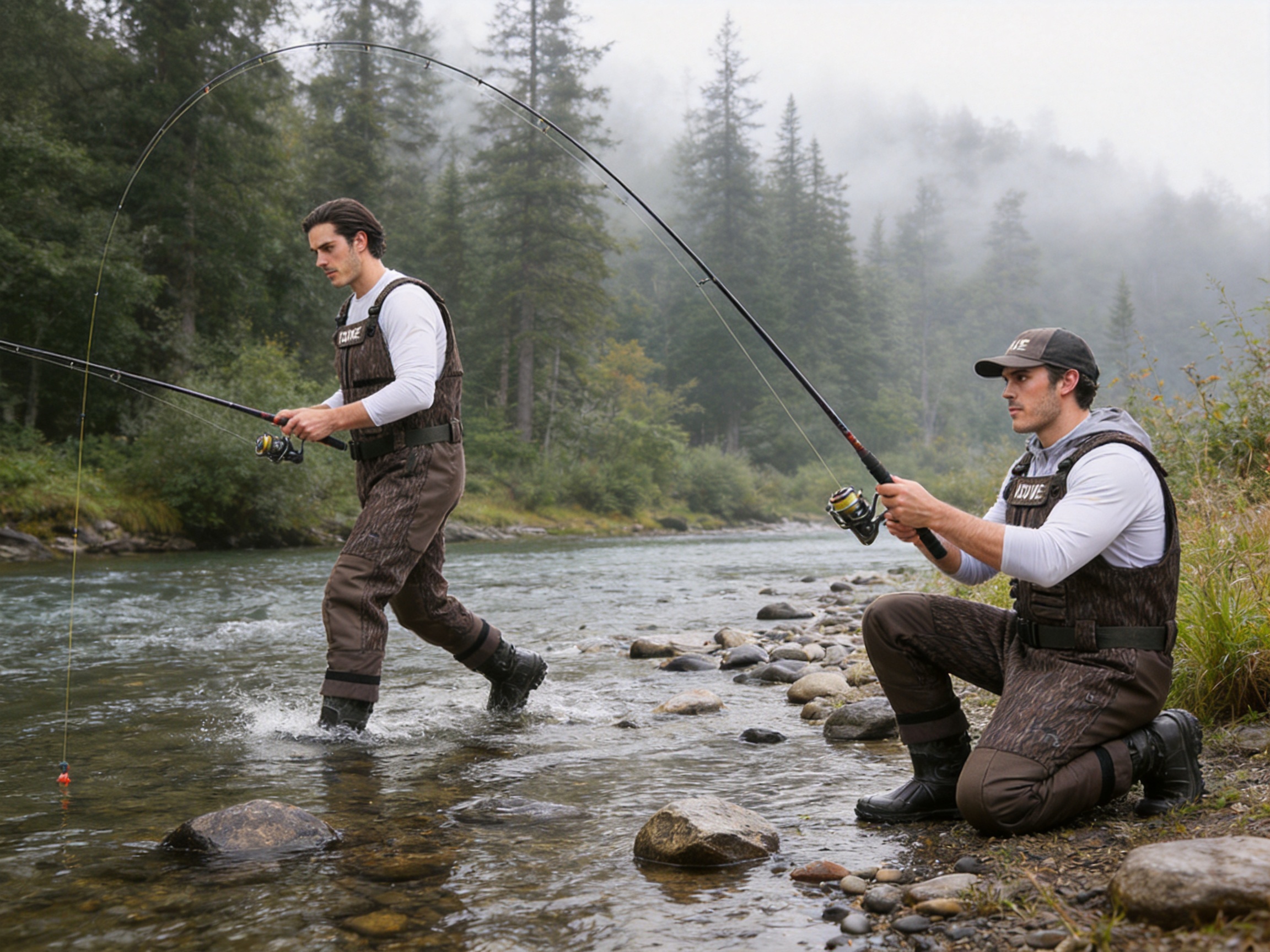
Introduction: A Purpose-Built Wader for Mobility, Protection, and Comfort
Fishing waders are essential equipment for anglers who need to move through rivers, streams, lakes, marshes, and other wet environments while keeping their lower body protected from water and cold. However, not every wader offers the same balance of waterproof protection, thermal insulation, flexibility, durability, and fit. Traditional loose-fitting chest waders can provide generous coverage, but they may feel bulky during casting, walking, climbing over riverbanks, or navigating uneven underwater surfaces. Lightweight fabric waders may improve mobility, but they often provide less warmth in cold water.
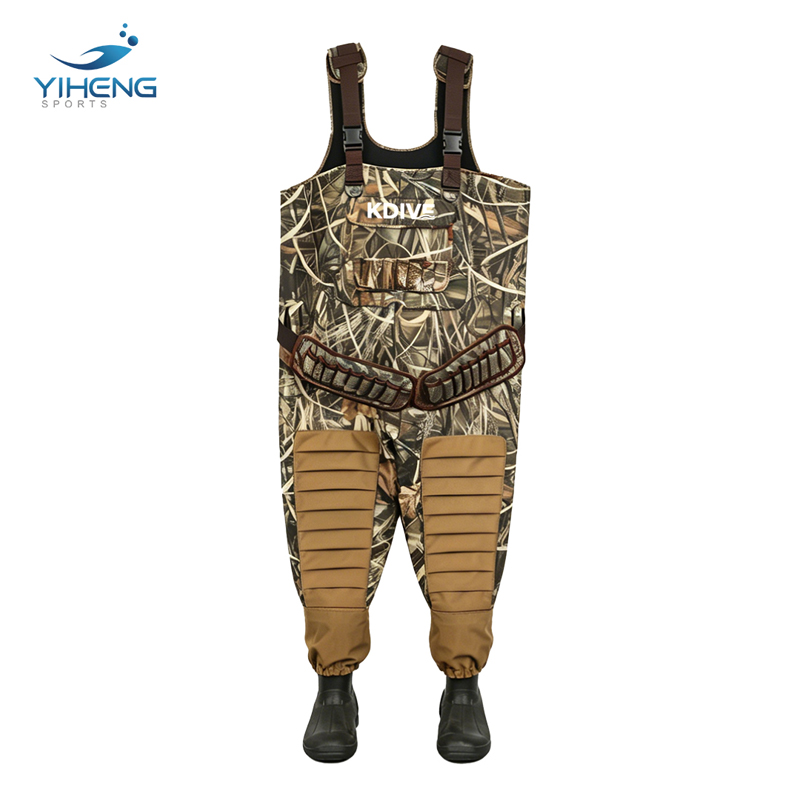
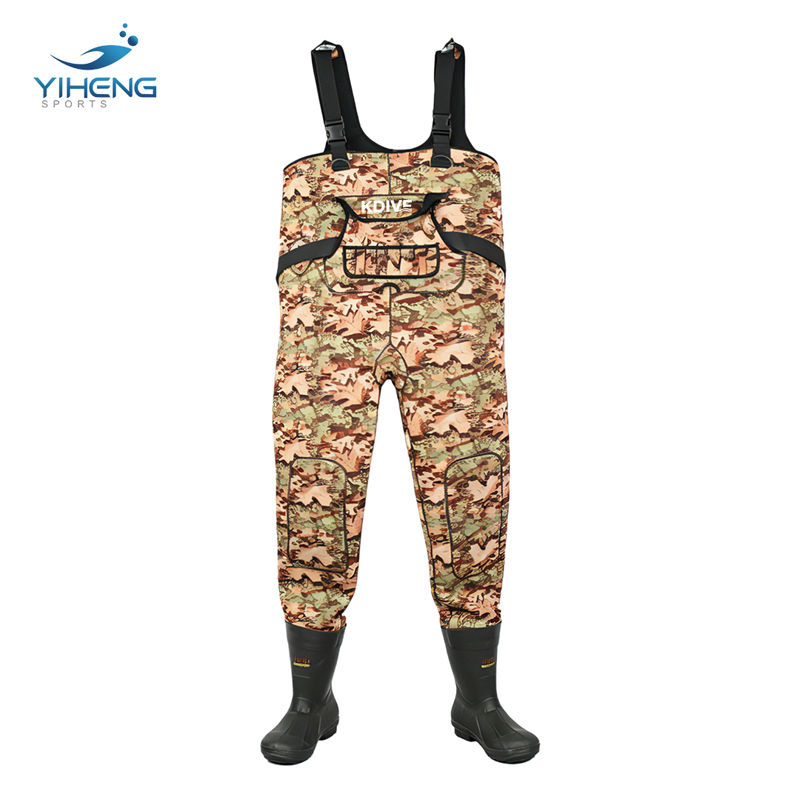
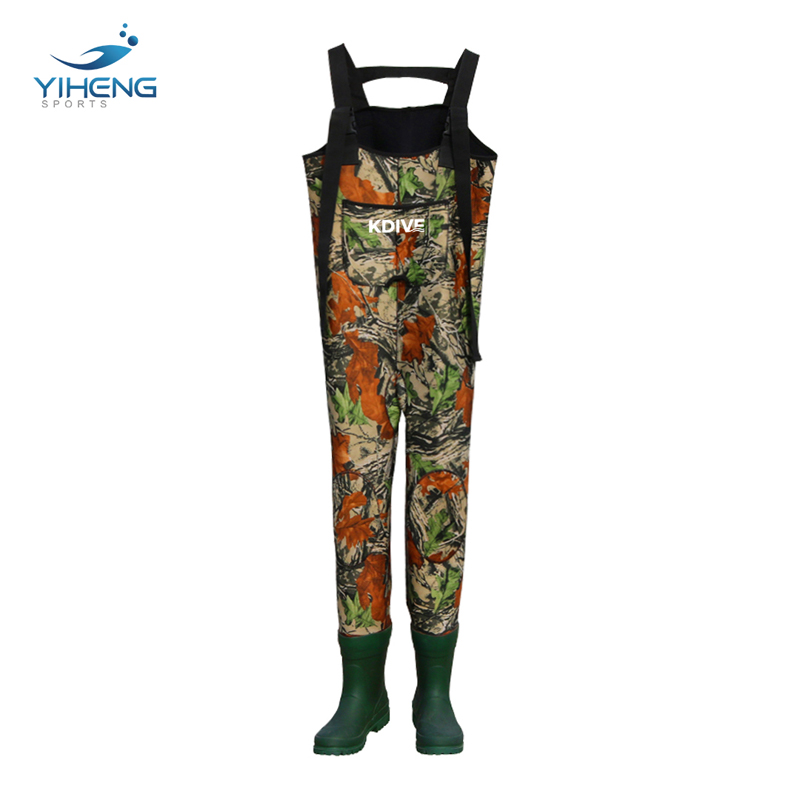
The Slim Fit Neoprene Chest Waders – Brown Bark Camo are designed to address these practical challenges. This one-piece neoprene fishing wader combines a closer-fitting silhouette with adjustable elastic shoulder straps, an adjustable waistband, reinforced knees and seat, waterproof GBS seam construction, internal waterproof tape at critical seams, and vulcanized rubber boots. The result is a fishing wader intended for anglers who want reliable cold-water protection without the excessive looseness associated with many conventional designs.
Its brown bark camouflage pattern provides a natural outdoor appearance suitable for woodland streams, riverbanks, marshes, and other fishing environments. More importantly, the wader is developed around the real movement requirements of active anglers. Wading is not simply standing in water. It involves walking, bending, kneeling, stepping over obstacles, sitting briefly, casting, landing fish, and adjusting equipment. Every one of these actions places different demands on the material, seams, straps, waistband, knees, seat, and boots.
Manufactured by Jiangsu Yiheng Sports Products Co., Ltd., the product benefits from a production background focused on neoprene fabrics and finished outdoor products. The company has operated since 2008, with more than 15 years of production experience, a factory covering more than 15,000 square meters, and more than 120 professional employees. Its experience includes wetsuits, drysuits, fishing waders, rash guards, water sports equipment, and neoprene fabrics. This vertically informed product knowledge supports a practical approach to material selection, pattern development, seam construction, reinforcement, and finished-product quality control.
This article examines the design, performance characteristics, manufacturing strengths, customization potential, and commercial advantages of the Slim Fit Neoprene Chest Waders – Brown Bark Camo. It is intended for distributors, fishing retailers, private-label brands, outdoor-equipment buyers, and professional users evaluating a dependable neoprene wader for cold-water activities.
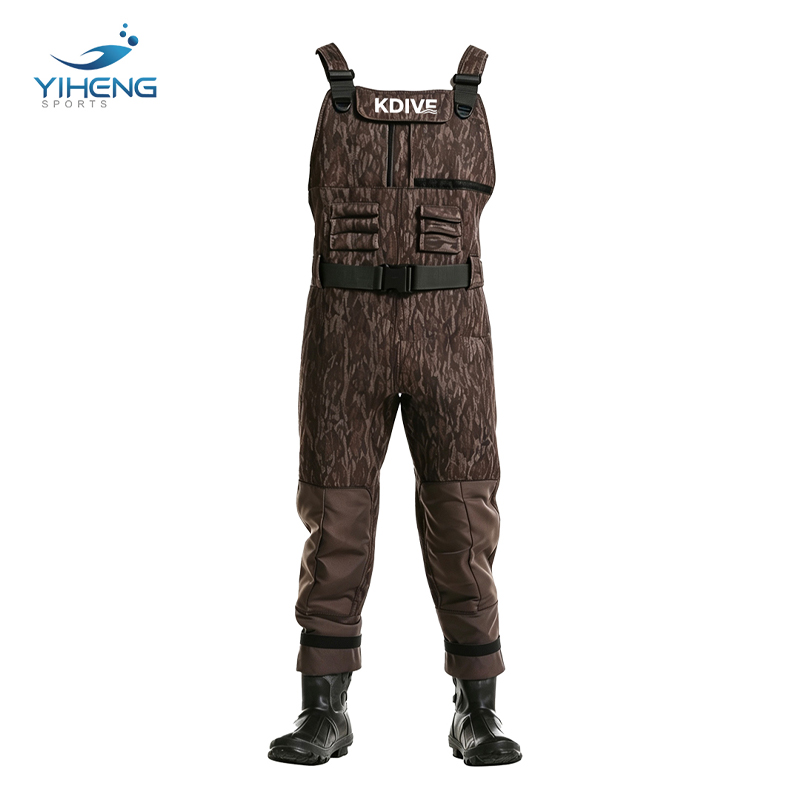
Slim Fit Neoprene Chest Waders – Brown Bark Camo
Product Overview and Core Specifications
The Slim Fit Neoprene Chest Waders are constructed as one-piece chest waders. This design extends from the vulcanized rubber boots upward to the chest area, providing broad protection against water, mud, spray, splashes, wet vegetation, and cold conditions. The chest-high structure is suitable for anglers who must enter deeper water or work in environments where waist-height protection is not sufficient.
The waders use neoprene as the primary material. Neoprene is widely used in water-sports and outdoor equipment because it combines flexibility, resilience, and thermal insulation. Its closed-cell structure helps reduce the direct transfer of cold water and air, making it suitable for extended use in cool or cold-water conditions. Although actual warmth depends on water temperature, activity level, clothing layers, and individual tolerance, neoprene provides a useful insulation advantage over many unlined or lightweight fabric-only alternatives.
The slim-cut design is one of the product’s defining characteristics. Rather than relying on a very loose profile, the pattern is shaped to provide a closer and more ergonomic fit. This helps reduce excess material around the legs and torso, which can improve comfort during movement. A closer fit may also reduce fabric drag when walking through water and make it easier to combine the wader with fishing jackets, flotation layers, or other outdoor garments.
Adjustable elastic shoulder straps support fit flexibility across different body types. The elastic construction helps the straps move with the user instead of creating a rigid connection between the upper body and the wader. Length adjustment allows the user to tune the position of the chest section and reduce unnecessary pressure on the shoulders.
The adjustable waistband adds another level of fit control. A waistband can help stabilize the garment around the midsection, reduce shifting during movement, and create a more secure feeling when the user bends or walks over uneven ground. It also helps the product accommodate moderate differences in body shape within each size range.
Oxford fabric reinforcement is applied to the knees and seat. These are two of the most heavily exposed areas on a fishing wader. The knees may contact stones, gravel, riverbeds, boat edges, or rough ground when the angler kneels. The seat may experience repeated contact with rocks, benches, boat seats, riverbanks, or other abrasive surfaces. Reinforcing these high-wear areas strengthens the product where ordinary neoprene may experience greater mechanical stress.
Vulcanized rubber boots complete the lower section. Rubber boots provide a stable, waterproof extension from the wader body to the ground. They are designed for use in wet and muddy surroundings and offer a practical foundation for walking in shallow water, riverbeds, marshes, and fishing access areas. The boot structure also avoids the need for separate footwear during many common wading applications.
| Product Feature | Specification or Benefit |
| Product type | One-piece neoprene chest wader |
| Primary material | Neoprene |
| Fit profile | Slim-cut design for closer, more ergonomic movement |
| Seam construction | GBS, or glued and blind stitched, seams with internal waterproof tape at critical seams |
| Shoulder system | Adjustable elastic shoulder straps |
| Waist system | Adjustable waistband |
| Reinforcement areas | Oxford fabric reinforcement at the knees and seat |
| Boot construction | Vulcanized rubber boots |
| Color | Brown bark camouflage |
| Available sizes | S, M, L, XL, XXL, and XXXL |
Why Neoprene Is Suitable for Cold-Water Wading
Cold-water exposure is one of the most important considerations when selecting fishing waders. Water removes body heat much faster than air, and even moderate water temperatures can become uncomfortable during long periods of standing or walking. Anglers may also face cold wind, rain, wet vegetation, and low activity levels while waiting for fish. A wader material that provides basic thermal insulation can make the experience more manageable.
Neoprene is a practical material for these conditions because its cellular structure helps slow the transfer of heat. The material creates a layer between the wearer and the surrounding water, offering insulation that is valuable during cold-season fishing, early-morning outings, mountain-stream fishing, and other low-temperature activities.
Compared with many thin fabric waders, neoprene waders can provide a warmer wearing experience without requiring the user to depend entirely on thick underlayers. This does not mean that neoprene replaces proper cold-weather clothing. Users should still select suitable base layers, insulating garments, socks, and outerwear according to the environment. The advantage is that neoprene contributes its own level of insulation and can work together with a carefully selected layering system.
Neoprene also offers flexibility. A material that is too rigid can restrict the user when stepping over obstacles, kneeling to release a fish, or reaching for tackle. The slim-fit pattern is intended to use the natural flexibility of neoprene while limiting excess bulk. This balance is particularly useful for active anglers who move frequently instead of remaining in one position.
Another benefit is the material’s suitability for repeated use in wet environments. With correct care, neoprene can maintain its functional properties over numerous fishing sessions. After use, the waders should be rinsed with clean water when exposed to mud, sand, salt, or contaminated water, then dried thoroughly in a shaded and ventilated area. Proper maintenance helps protect the material, seams, and boots from premature deterioration.
Slim-Fit Engineering and Improved Mobility
Fit has a direct impact on the practical performance of fishing waders. A wader that is too loose can create folds, catch on brush, add unnecessary weight, and interfere with movement. A wader that is too tight can restrict bending, make layering difficult, and create discomfort around the shoulders or waist. The slim-fit design aims to create a closer relationship between the garment and the wearer without eliminating the movement required for fishing.
The closer silhouette can be especially useful when walking along narrow riverbanks or moving through reeds and brush. Less excess fabric may reduce snagging and make the garment easier to control. It can also help the user maintain a more natural stride when crossing shallow water or climbing over small obstacles.
For casting and landing fish, the upper body must rotate freely. The adjustable elastic shoulder straps help the chest section remain positioned while the user turns, reaches, or bends. The adjustable waistband supports the middle of the garment, helping prevent excessive movement between the upper wader and the wearer’s body.
The design is also suitable for users who prefer a more athletic appearance. Brown bark camouflage provides an outdoor-oriented visual identity, while the slim construction avoids the oversized appearance of some traditional waders. This can be an important consideration for retailers and private-label brands that want to offer products combining technical function with modern styling.
Fit should always be selected according to the user’s body measurements, intended underlayers, and preferred movement range. The availability of sizes from S through XXXL allows distributors to serve a broad customer base. Buyers should confirm detailed size measurements before ordering, especially when the wader will be used with heavy cold-weather clothing.
Waterproof Construction: GBS Seams and Internal Tape
Waterproofness depends on more than the main material. Seams are among the most vulnerable areas of any wader because they join separate panels and may be exposed to repeated bending, stretching, and pressure from water. A well-designed seam system is therefore essential to reducing water ingress and maintaining long-term performance.
The Slim Fit Neoprene Chest Waders use GBS construction, meaning the seams are glued and blind stitched. Gluing helps bond the adjoining neoprene panels, while blind stitching provides mechanical support without creating the same type of open needle penetration associated with some basic sewing methods. This combination is widely used in water-sports equipment because it can provide a strong and flexible joint when correctly executed.
Internal waterproof tape is applied at critical seams. The tape adds another barrier over vulnerable joint areas and helps reinforce the internal seam structure. Together, glued construction, blind stitching, and internal waterproof taping are intended to reduce the risk of leakage during extended use in wet conditions.
Seam performance depends on accurate panel cutting, suitable adhesive application, controlled stitching, correct tape placement, and careful inspection. These processes require more than simply assembling fabric pieces. Operators must work with consistent pressure, temperature, timing, and alignment. Inconsistent seam preparation can create weak points, uneven bonding, or poor tape adhesion. A manufacturer with experience in neoprene products is better positioned to control these details throughout production.
For professional buyers, GBS construction is an important product feature because it provides a clear technical distinction from basic stitched-only waders. It also communicates that the product has been designed with water resistance as a central performance requirement rather than as an incidental feature.
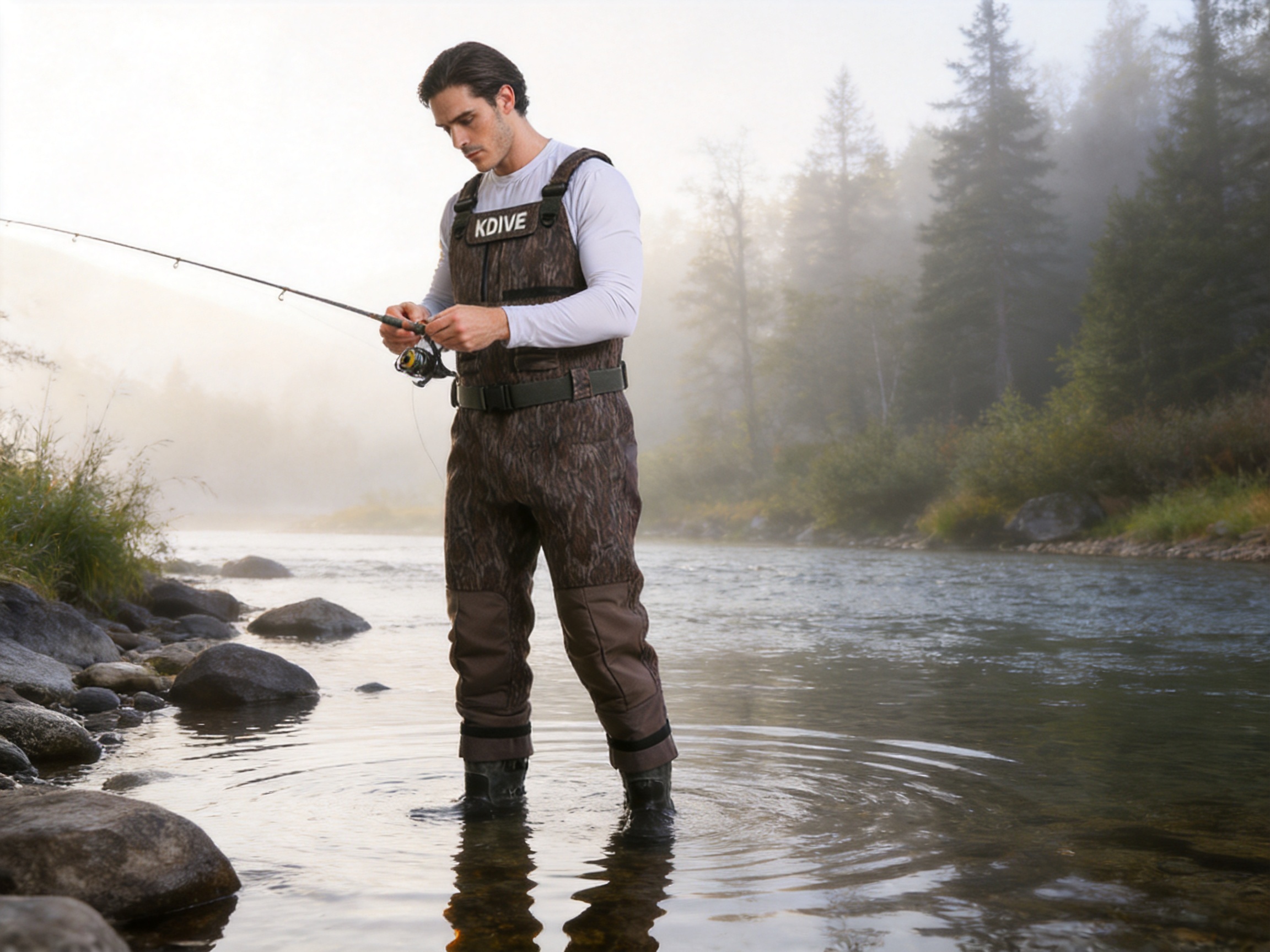
Reinforced Knees and Seat for High-Wear Environments
Fishing waders are regularly exposed to abrasion. Anglers may kneel while tying leaders, handling fish, or moving across a riverbed. They may sit on a rough bank, boat edge, or rock while changing tackle. The lower body can rub against submerged branches, stones, gravel, reeds, and other obstacles. These actions place concentrated stress on the knees and seat.
The Oxford fabric reinforcements on the knees and seat provide additional resistance in these high-wear areas. Oxford fabric is valued in outdoor products for its woven structure and practical durability. When combined with the flexibility of neoprene, it can create a more balanced design: the main wader body remains comfortable and flexible, while selected areas receive additional protection against abrasion and repeated contact.
Strategic reinforcement is often more practical than adding heavy material across the entire garment. Full-body reinforcement could increase weight, reduce flexibility, and make the product less comfortable. By focusing on the locations most likely to experience damage, the product can preserve mobility while improving durability where it matters most.
The knee reinforcement is relevant to both recreational and professional users. Recreational anglers may kneel occasionally, while guides, fishing instructors, and outdoor workers may repeat these movements throughout the day. The seat reinforcement similarly supports users who frequently sit on riverbanks, docks, boats, or other outdoor surfaces.
Reinforcement does not eliminate the need for careful use. Sharp objects, barbed hooks, broken branches, and rough metal edges can damage any flexible garment. Users should inspect the waders regularly, especially after fishing in dense vegetation or rocky environments. However, the reinforced construction provides a stronger starting point for demanding use than an unreinforced design.
Vulcanized Rubber Boots and Ground Contact
The boots are an integral part of the chest wader rather than a separate accessory. This one-piece configuration simplifies preparation because the user does not need to select waterproof footwear for ordinary wading tasks. The vulcanized rubber construction is intended for repeated contact with wet ground, mud, shallow water, and other challenging outdoor surfaces.
Rubber boots offer a durable barrier between the user’s feet and the surrounding environment. They are suitable for fishing access points, wetlands, riverbanks, marshes, and muddy shorelines. Their waterproof structure helps prevent water from entering through the lower section when the boots are properly maintained and the wader is worn correctly.
For distributors, integrated boots make the product easier to position as a complete fishing solution. Customers can purchase one coordinated item rather than combining a separate wader shell with compatible boots. This can simplify merchandising, inventory planning, and customer education.
Boot fit remains important. Customers should choose a size that accommodates appropriate fishing socks or thermal layers without creating excessive looseness. The boot should feel secure during walking, but the toes should not be compressed. In cold conditions, adequate room for thermal socks can contribute to comfort and warmth.
Users should clean mud and grit from the boots after each outing. Grit can accelerate wear when it remains trapped around folds or storage points. Waders should be stored dry, away from direct sunlight, sharp objects, fuel, solvents, and excessive heat.
Brown Bark Camouflage for Outdoor Applications
The brown bark camouflage pattern is designed to coordinate visually with natural outdoor surroundings. Brown, bark-inspired tones are suitable for woodland streams, forested riverbanks, marsh edges, and earth-toned fishing environments. The pattern offers a less visually aggressive appearance than bright solid colors and supports an outdoor-oriented product identity.
Camouflage can also have commercial value. Many anglers associate natural patterns with fishing, hunting, hiking, and outdoor exploration. A brown bark pattern may help retailers differentiate the product from plain black, green, or gray waders. It can be used in product photography, point-of-sale displays, seasonal campaigns, and private-label collections focused on wilderness activities.
The pattern is applied to a functional wader rather than used as a decorative feature alone. Its value is strongest when combined with the product’s mobility, warmth, seam sealing, reinforcement, and boot construction. This combination allows the wader to appeal both to customers seeking practical performance and to buyers who value an authentic outdoor appearance.
Advantages Compared with Common Alternative Wader Designs
Compared with Basic Fabric-Only Waders
Lightweight fabric-only waders can be comfortable in mild weather and may appeal to users who prioritize low weight. However, they generally provide less inherent thermal insulation than neoprene. In cold water, users may need thicker underlayers, which can increase bulk beneath the wader and reduce the comfort advantage of a lightweight outer shell.
The neoprene construction of this product provides basic cold-water insulation as part of the wader itself. This makes it a strong option for users who fish in cooler conditions or remain in the water for longer periods. The reinforced knees and seat also add protection in areas that may receive considerable abrasion.
Compared with Loose Traditional Neoprene Waders
Some conventional neoprene waders use a generous, loose cut to accommodate multiple clothing layers. While this approach can be useful in extremely cold conditions, excess material may feel bulky during active movement. It may also produce more folds and require greater effort when walking, kneeling, or climbing.
The slim-fit design provides a closer alternative for anglers who want neoprene insulation with improved mobility. Adjustable shoulder straps and an adjustable waistband help refine the fit, allowing users to achieve a more controlled wearing experience without relying entirely on a loose silhouette.
Compared with Stitched-Only Construction
Simple stitched seams can leave more potential paths for water ingress, particularly when the seam is repeatedly flexed or exposed to pressure. The GBS construction used in this product combines adhesive bonding with blind stitching, while internal waterproof tape is added at critical seams. This multi-stage construction is intended to provide a more secure barrier than stitching alone.
Compared with Waders Without Reinforcement
Unreinforced neoprene can be vulnerable to abrasion in high-contact areas. The Oxford fabric reinforcements at the knees and seat create a practical durability advantage for users who kneel, sit, or work around rocks and rough surfaces. This targeted approach supports a longer service life under normal use conditions while preserving flexibility in less exposed areas.
Manufacturing Strengths and Production Expertise
Jiangsu Yiheng Sports Products Co., Ltd. began its operations in 2008. From an early foundation involving raw materials and semi-finished products, the company developed into a professional manufacturer focused on neoprene fabrics and finished products. This history is relevant because fishing waders require knowledge of both material behavior and finished-garment assembly.
The company has more than 15 years of production experience and more than 18 years of industry experience in neoprene fabrics and finished products according to its company profile. It also has eight years of direct retail-market practice. This combination gives the manufacturer insight into two connected areas: how to produce reliable goods efficiently and how end users evaluate fit, comfort, appearance, durability, and value.
The factory covers more than 15,000 square meters and employs more than 120 professional workers. A facility of this scale can support specialized production areas, organized material handling, pattern preparation, assembly operations, seam processing, inspection, packing, and order coordination. For wholesale buyers, production capacity and organizational structure are important because they influence lead-time planning, repeat orders, quality consistency, and communication.
Yiheng’s product range includes wetsuits, drysuits, fishing waders, rash guards, water-sports equipment, and neoprene fabrics. This broad category coverage allows the company to apply knowledge developed across related products. Wetsuit manufacturing contributes expertise in neoprene cutting, panel joining, flexible seams, and body-contoured construction. Drysuit production contributes an understanding of water protection and sealing priorities. Rash-guard production supports knowledge of close-fitting patterns and user comfort. These related capabilities can contribute to the development and refinement of fishing waders.
Manufacturing quality begins before sewing. Material inspection, thickness control, color consistency, surface evaluation, and pattern accuracy all influence the final product. Neoprene panels must be cut according to approved patterns so that the finished garment has the intended dimensions and fit. Misaligned panels may affect comfort, appearance, or seam stress. Careful preparation is therefore an important part of a stable manufacturing process.
During assembly, operators must maintain consistent alignment between neoprene panels, Oxford reinforcement sections, waistband components, shoulder straps, and boot connections. The sequence of operations matters because each step can affect the next. For example, reinforcement placement must be accurate before final seam treatment, and strap attachment must be positioned correctly to support balanced wear.
Seam processing is particularly important. GBS construction requires controlled adhesive application, blind stitching, and internal tape placement. Critical areas should be checked for incomplete bonding, loose stitching, wrinkles, gaps, or uneven tape coverage. Finished waders may also undergo visual inspection and functional testing to identify obvious defects before packing.
The company’s OEM manufacturing, ODM development, and long-term supply capabilities are relevant to brands seeking more than a standard catalog product. An OEM customer may require its own labels, packaging, size presentation, color arrangement, or approved specifications. An ODM customer may need help developing a variation in pattern, material combination, reinforcement, or visual design. A manufacturer that works with both source materials and finished products can support these discussions more effectively.
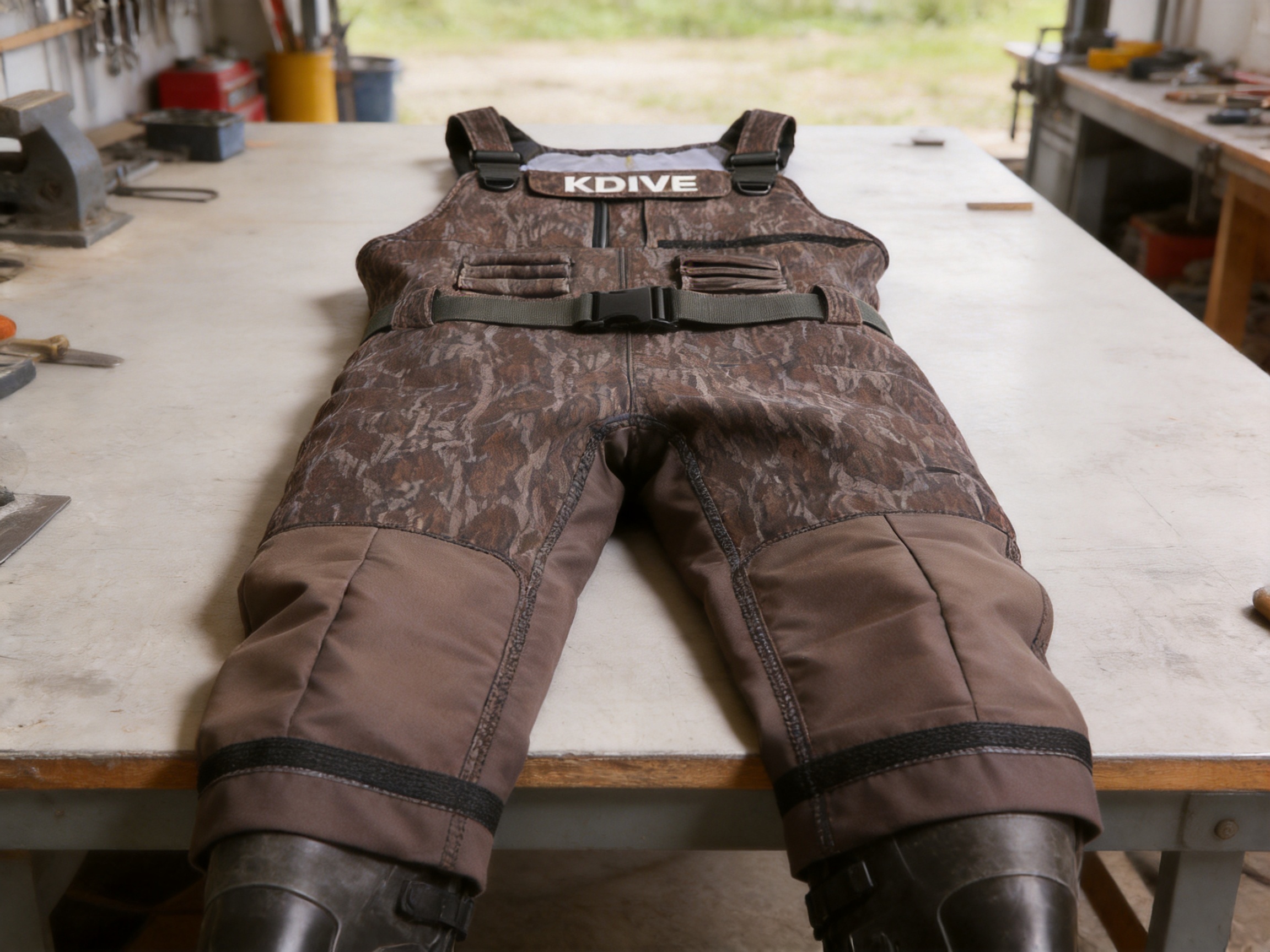
OEM and Private-Label Opportunities
The Slim Fit Neoprene Chest Waders can serve as a foundation for private-label outdoor and fishing collections. Brands may position the product for freshwater anglers, fly-fishing customers, outdoor guides, fishing clubs, sporting-goods retailers, or general water-activity consumers. The combination of slim fit, brown bark camouflage, neoprene insulation, reinforced panels, and integrated rubber boots creates a clear product story for commercial presentation.
Private-label development may include branded labels, packaging, hangtags, carton markings, instruction materials, and color or pattern adjustments subject to production requirements. Buyers may also evaluate options for different branding placements, such as chest labels, strap labels, packaging graphics, or care tags.
For a broader product line, the base design could be developed into seasonal or market-specific variants. A lighter version may be considered for transitional weather, while a warmer version may be paired with increased insulation or suitable layering allowances. Other variants may use alternative camouflage patterns, solid colors, different reinforcement layouts, or adjusted boot specifications.
Any customization should be assessed through technical sampling and wear evaluation. Changes to material thickness, panel dimensions, reinforcement placement, or seam structure can affect fit and performance. A responsible development process should include specification confirmation, sample approval, size review, visual inspection, and production feedback before larger-scale manufacturing.
Retailers can also use the product’s six-size range to create a more inclusive offering. Sizes S through XXXL allow a brand to serve different body types, although final size charts and measurement tolerances should be established clearly. Proper sizing information reduces returns and helps customers choose suitable underlayers.
Quality Control Considerations for Professional Buyers
Professional buyers should evaluate several areas when reviewing a neoprene chest wader. The first is material consistency. Neoprene should present a stable surface, consistent thickness, and uniform color or camouflage application. Buyers should discuss acceptable tolerances and inspection standards before mass production.
The second area is seam quality. GBS seams should be inspected for continuous adhesive bonding, clean blind stitching, and properly applied internal waterproof tape. Particular attention should be paid to high-stress areas, including crotch joints, leg seams, upper-body connections, shoulder strap attachments, waistband interfaces, and boot transitions.
The third area is reinforcement quality. Oxford fabric panels should be securely integrated, without lifting edges, uneven stitching, excessive wrinkles, or exposed gaps. Reinforcements should be positioned consistently across sizes so that the protection remains aligned with the knees and seat.
The fourth area is hardware and adjustment function. Shoulder straps should adjust smoothly and remain secure during normal use. The waistband should provide useful adjustment without twisting or detaching. Hardware should be checked for burrs, sharp edges, corrosion concerns, or other defects that could affect user comfort.
The fifth area is boot attachment and finish. The boot-to-wader connection must be visually clean and secure. Buyers should review size consistency, boot symmetry, sole condition, and the absence of visible defects. Since boots experience direct contact with the ground, they deserve special attention during inspection.
The sixth area is packaging and labeling. Waders should be packed in a way that limits unnecessary creasing, protects the camouflage surface, and keeps size and care information clear. Private-label buyers should verify carton quantities, product codes, barcodes, instruction sheets, and packaging artwork during the approval process.
Recommended Applications
The product is suitable for freshwater fishing, river fishing, stream fishing, fly fishing, lake fishing, marsh activities, wetland work, and general outdoor water access. Its neoprene construction makes it particularly appropriate for cool or cold-water conditions where insulation is valuable.
It may also serve fishing guides, outdoor instructors, rental programs, and sporting-goods retailers. Professional users often value durability in high-wear zones and a fit that permits frequent movement. The Oxford knee and seat reinforcements are useful for users who repeatedly kneel, sit, or work around rough surfaces.
For recreational customers, the wader offers a practical combination of warmth, coverage, and visual appeal. The integrated boots simplify equipment selection, while the adjustable straps and waistband make it easier to achieve a personalized fit.
The product is not intended to replace specialized immersion protection, personal flotation equipment, or safety systems required for deep, fast-moving, or hazardous water. Users should assess water depth, current speed, weather, visibility, and personal ability before entering the water. Waders should always be used responsibly and in accordance with appropriate outdoor safety practices.
Care, Storage, and Service-Life Recommendations
Proper care helps maintain the waterproof and insulating properties of neoprene waders. After each use, the garment should be inspected for hooks, thorns, stones, mud, and other debris. The exterior should be rinsed with clean water, especially after exposure to saltwater, muddy water, or chemically contaminated environments.
Waders should be dried completely before storage. They should be turned as appropriate according to the construction and care instructions, placed in a shaded area with good airflow, and kept away from direct heat. Radiators, heaters, strong sunlight, and hot vehicle interiors may damage neoprene, adhesives, coatings, or rubber components.
The garment should not be stored while wet or folded tightly for extended periods. Long-term compression can create creases and may place unnecessary stress on some components. A cool, dry storage location away from sharp tools, oils, fuels, solvents, and rodents is recommended.
Users should check for small cuts, punctures, loose seam tape, damaged straps, boot wear, or separation at reinforcement edges. Early attention to minor problems may help prevent more extensive damage. Hooks and fishing tools should be carried carefully because sharp equipment can puncture flexible wader materials.
Q&A: Frequently Asked Questions
What type of product is this?
It is a one-piece neoprene chest wader with integrated vulcanized rubber boots. The design provides chest-high water protection for fishing and other outdoor activities in wet environments.
What makes the fit different from a traditional wader?
The product uses a slim-cut design intended to provide a closer and more ergonomic fit. Adjustable elastic shoulder straps and an adjustable waistband help the user refine the fit while preserving freedom of movement.
Is it suitable for cold water?
Neoprene provides basic thermal insulation and is suitable for cool or cold-water environments. The actual level of warmth depends on water temperature, exposure time, physical activity, personal tolerance, and the clothing worn underneath.
How are the seams constructed?
The seams use GBS construction, which combines gluing and blind stitching. Internal waterproof tape is applied at critical seams to reinforce the joints and reduce the risk of water ingress.
Which areas have additional reinforcement?
Oxford fabric reinforcement is applied to the knees and seat. These areas are commonly exposed to abrasion from kneeling, sitting, rocks, gravel, riverbanks, and repeated contact with outdoor surfaces.
What are the benefits of the integrated rubber boots?
The vulcanized rubber boots provide a waterproof lower section and eliminate the need to select separate wading footwear for many applications. They are suitable for wet ground, mud, shallow water, riverbanks, and fishing access areas.
Which sizes are available?
The available sizes are S, M, L, XL, XXL, and XXXL. Buyers should confirm detailed measurements and consider the thickness of any thermal layers worn underneath.
Is the brown bark camouflage only decorative?
No. The pattern provides an outdoor-oriented appearance suitable for natural environments, while the main functional benefits come from the neoprene material, waterproof seam construction, fit system, reinforcement, and rubber boots.
Can the product be used for private labeling?
The manufacturer offers OEM manufacturing, ODM development, and long-term supply support. Private-label opportunities may include branding, packaging, labels, color or pattern arrangements, and other specifications subject to technical review and production requirements.
What should buyers inspect before placing a large order?
Buyers should review material consistency, seam bonding, blind stitching, internal tape, reinforcement placement, strap adjustment, waistband function, boot attachment, size measurements, packaging, labeling, and sample performance before confirming mass production.
How should the waders be stored?
They should be rinsed, dried completely, and stored in a cool, dry, ventilated place away from direct sunlight, heat, sharp objects, fuels, oils, and solvents. Avoid storing them while wet or compressed tightly for long periods.
Are these waders suitable for every water condition?
No wader should be considered suitable for every situation. Users must evaluate depth, current, weather, temperature, personal ability, and local safety requirements. Additional protective or flotation equipment may be necessary in hazardous conditions.
Conclusion: A Balanced Wader Platform for Outdoor Brands and Anglers
The Slim Fit Neoprene Chest Waders – Brown Bark Camo combine several features that are important to modern fishing and outdoor users. The neoprene body provides basic cold-water insulation, while the slim-cut pattern supports a closer and more mobile fit. Adjustable elastic shoulder straps and an adjustable waistband improve fit control. GBS seams, internal waterproof tape, Oxford reinforcements, and vulcanized rubber boots address the key performance demands of wet and abrasive environments.
Compared with basic fabric-only waders, the product offers an insulation advantage for cold-water use. Compared with loose traditional neoprene designs, it provides a more controlled silhouette and potentially improved mobility. Compared with stitched-only products, the GBS seam system and internal tape provide a more comprehensive approach to water protection. Compared with unreinforced waders, the Oxford knee and seat panels provide targeted durability where contact and abrasion are most likely.
Its commercial value is supported by a practical brown bark camouflage pattern, six available sizes, integrated boots, and suitability for OEM and private-label development. The product can serve fishing retailers, outdoor brands, distributors, professional guides, and customers seeking a dependable wader for cool-water activities.
Manufacturing expertise is another important strength. Jiangsu Yiheng Sports Products Co., Ltd. brings more than 15 years of production experience, a factory of more than 15,000 square meters, over 120 professional employees, and a product portfolio covering neoprene fabrics, wetsuits, drysuits, fishing waders, rash guards, and water-sports equipment. This combination of material knowledge, finished-product manufacturing, retail-market experience, and OEM or ODM capability provides a solid foundation for consistent product development and long-term supply.
For buyers evaluating a new fishing-wader program, the product offers a balanced platform: warm enough for cold-water applications, flexible enough for active movement, reinforced for frequent contact, sealed for improved water resistance, and adaptable for private-label presentation. With appropriate sizing, responsible use, regular inspection, and proper care, it can become a practical component of a professional outdoor-equipment range.
References
1. Product specification sheet for Slim Fit Neoprene Chest Waders – Brown Bark Camo, including material, construction, fit, reinforcement, boot, color, and size information.
2. Manufacturer company profile for Jiangsu Yiheng Sports Products Co., Ltd., including company history, factory scale, employee information, production experience, product categories, OEM services, and ODM capabilities.
3. General technical guidance on neoprene materials and their use in wetsuits, waders, and water-sports equipment.
4. General manufacturing principles for glued and blind stitched seams in flexible waterproof garments.
5. General outdoor-equipment guidance concerning abrasion reinforcement, rubber footwear, garment care, drying, storage, and cold-water preparation.
Product: Slim Fit Neoprene Chest Waders – Brown Bark Camo

LET’S DEVELOP YOUR NEXT NEOPRENE PRODUCT LINE
Quick Links
Product Categories
Contact Us
-
 Email: postmaster@yihengsport.com
-
 Mobile: +86-13564100539
-
 No. 480 Jiangping Road, Madian, Binjiang Town, Taixing City, Taizhou City, Jiangsu Province, China.
Copyright © Jiangsu Yiheng Sports Products Co., Ltd. All Rights Reserved
China Wetsuit Manufacturer Neoprene Fabric Manufacturer
