

 Language
 English
 中文简体
 日本語
 русский
 Español
 عربى

Oct, 16, 2026
Men’s Black 2mm Full Wetsuit: Flexible Warmth, Reliable Protection, and Professional Manufacturing
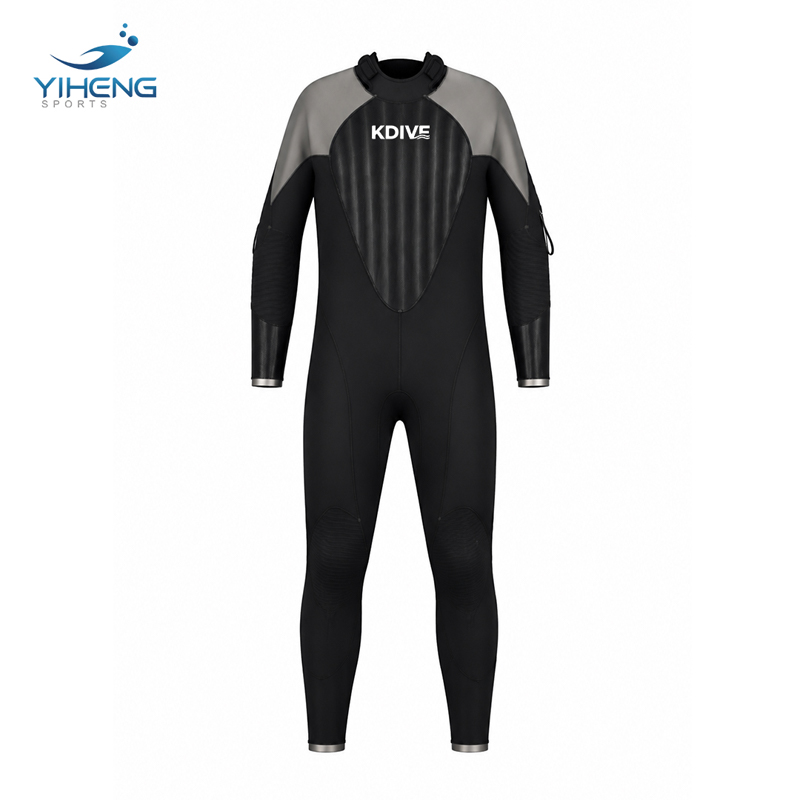
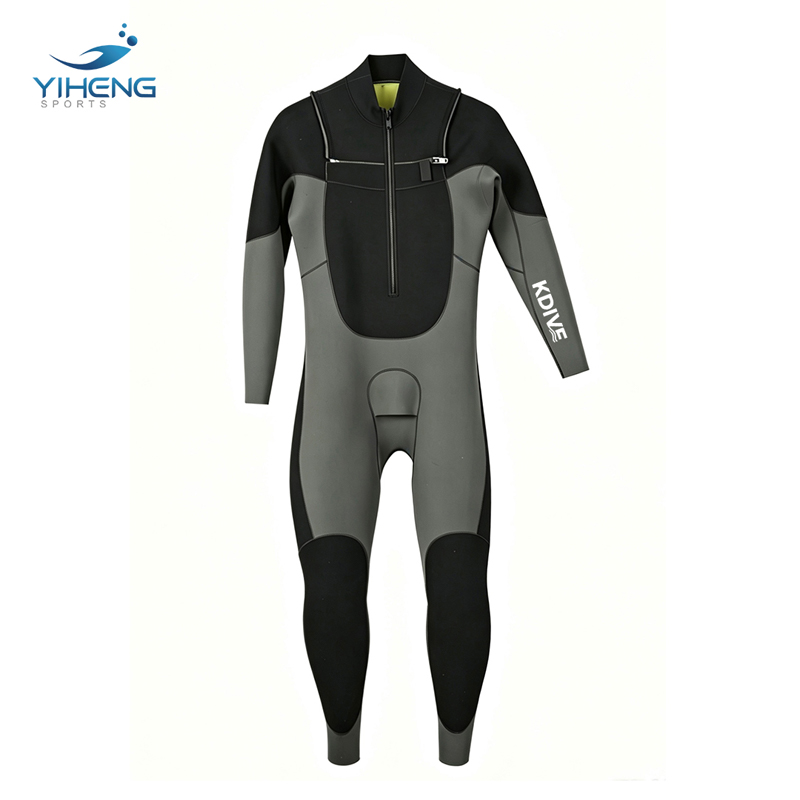
A well-designed full wetsuit should do more than cover the body. It should help reduce heat loss, support comfortable movement, protect the skin from abrasion, and remain dependable after repeated use in demanding water environments. The men’s black 2mm full wetsuit described in this article is designed around those practical requirements. It combines flexible CR neoprene, a full-length long-sleeve construction, reinforced knees, a secure back-entry closure, and durable flatlock stitching for a broad range of water activities.
With its understated black appearance and all-purpose design, this wetsuit is suitable for recreational users, water sports schools, rental operators, private-label brands, and distributors seeking a versatile product platform. It can be used for snorkeling, surfing, scuba diving, freediving, paddleboarding, kayaking, swimming, beach activities, and water park recreation, particularly in warm to mild water conditions where a 2mm layer offers a useful balance between insulation and flexibility.
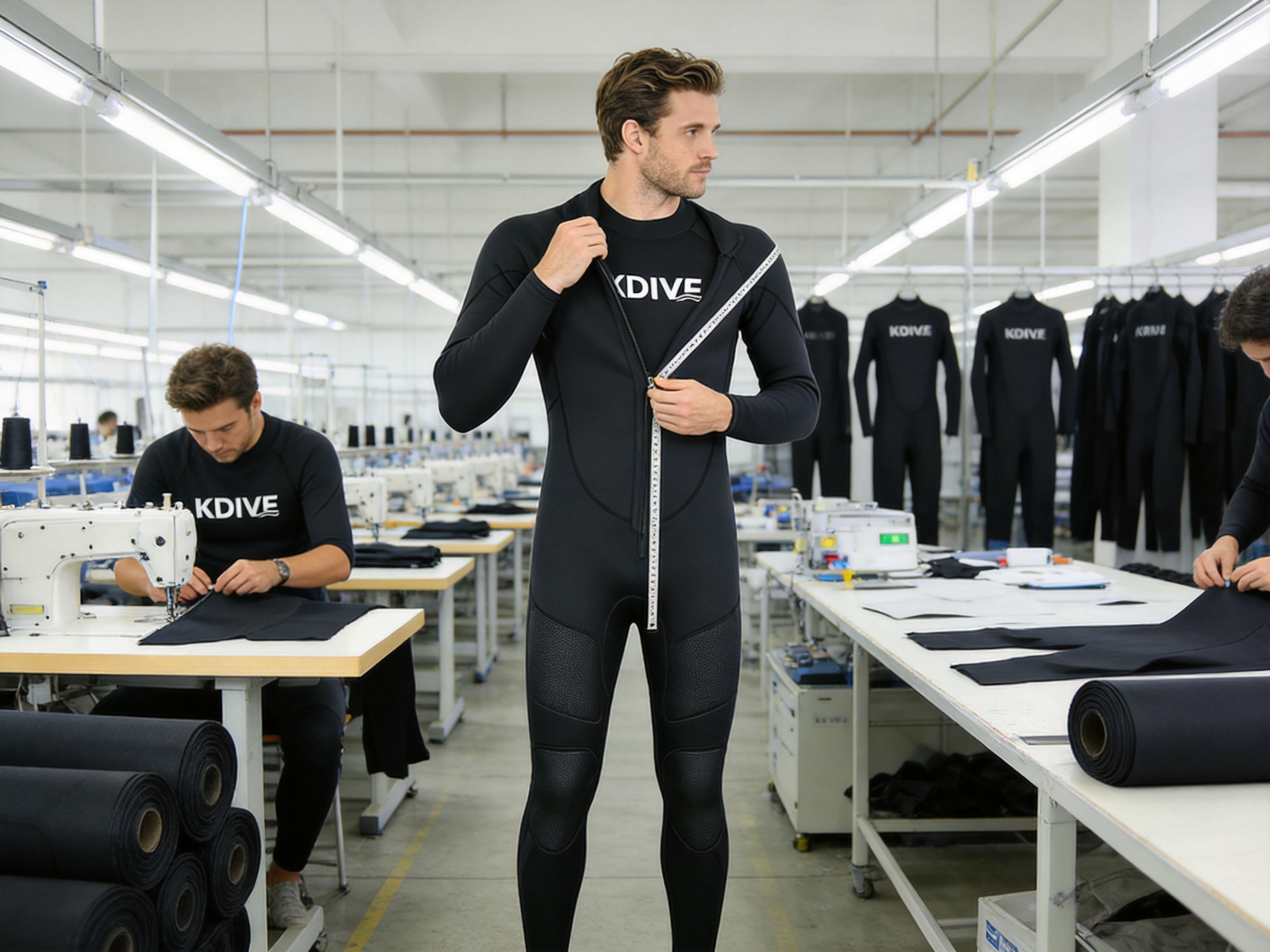
Beyond the product itself, manufacturing quality plays a major role in wetsuit performance. Neoprene thickness, lamination, cutting accuracy, seam construction, closure quality, reinforcement placement, and inspection standards all affect the final user experience. A wetsuit that looks attractive but has poor seam integrity or an uncomfortable fit may quickly lead to customer complaints. For this reason, professional manufacturing capabilities are essential for brands that need consistent quality, private-label development, and stable long-term supply.
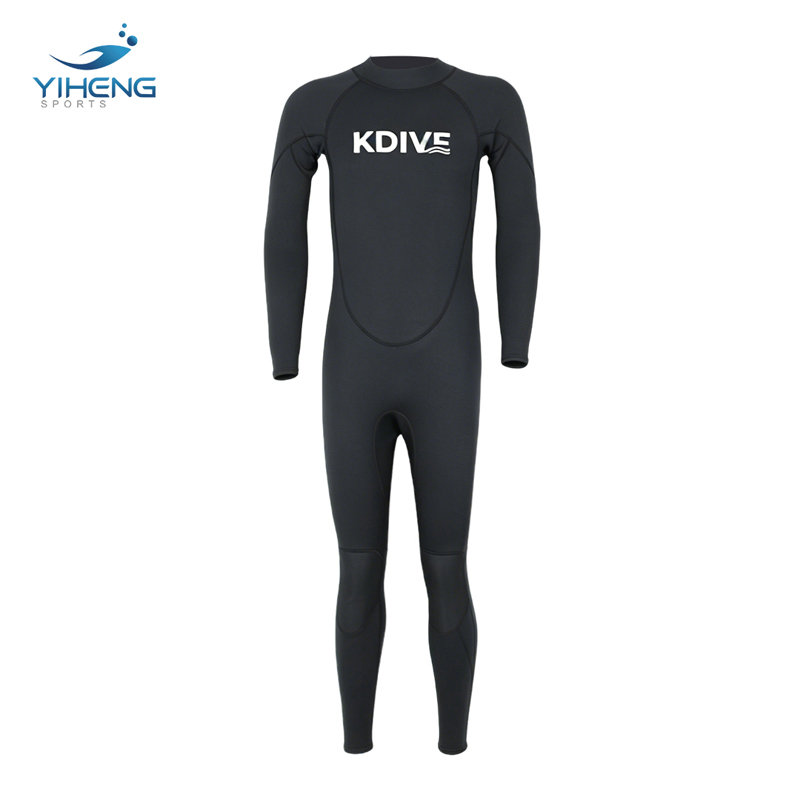
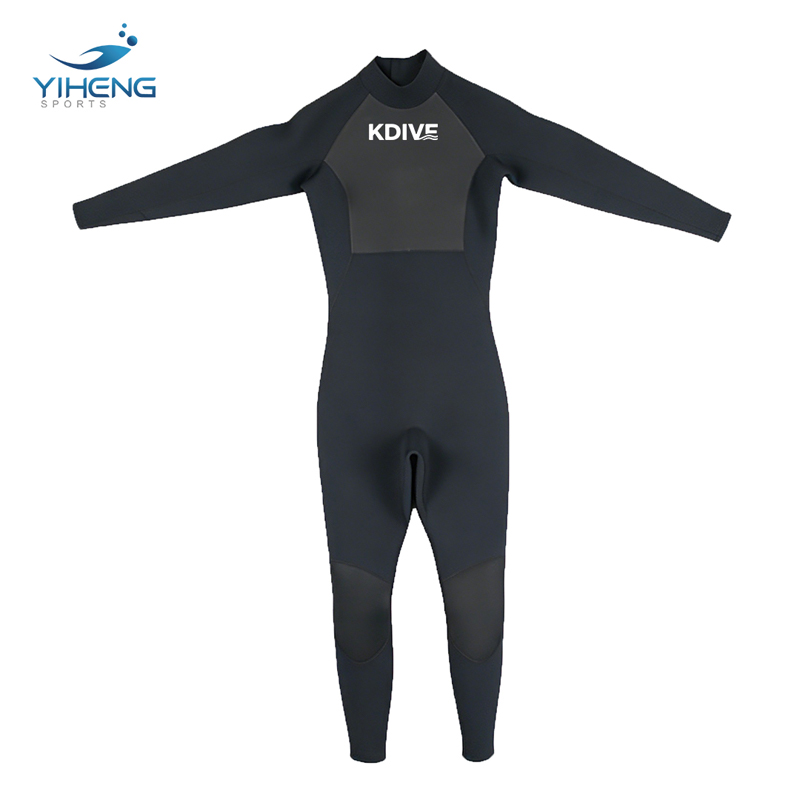
Men' s Black 2mm Full Wetsuit – Super Stretch Neoprene for Surf Snorkel
1. Product Overview
This one-piece full wetsuit is constructed from 2mm CR neoprene laminated with nylon fabric. The material is selected to provide a practical combination of thermal insulation, stretch, softness, and durability. A 2mm thickness is generally suited to warm and mild water conditions, where users need some protection from cooling without the bulk and restricted movement associated with thicker cold-water suits.
The long-sleeve, full-length format covers the torso, arms, and legs. This extended coverage helps protect the wearer from sun exposure, minor scrapes, contact with equipment, and friction against boards or other surfaces. It also provides greater thermal coverage than a shorty wetsuit or sleeveless design.
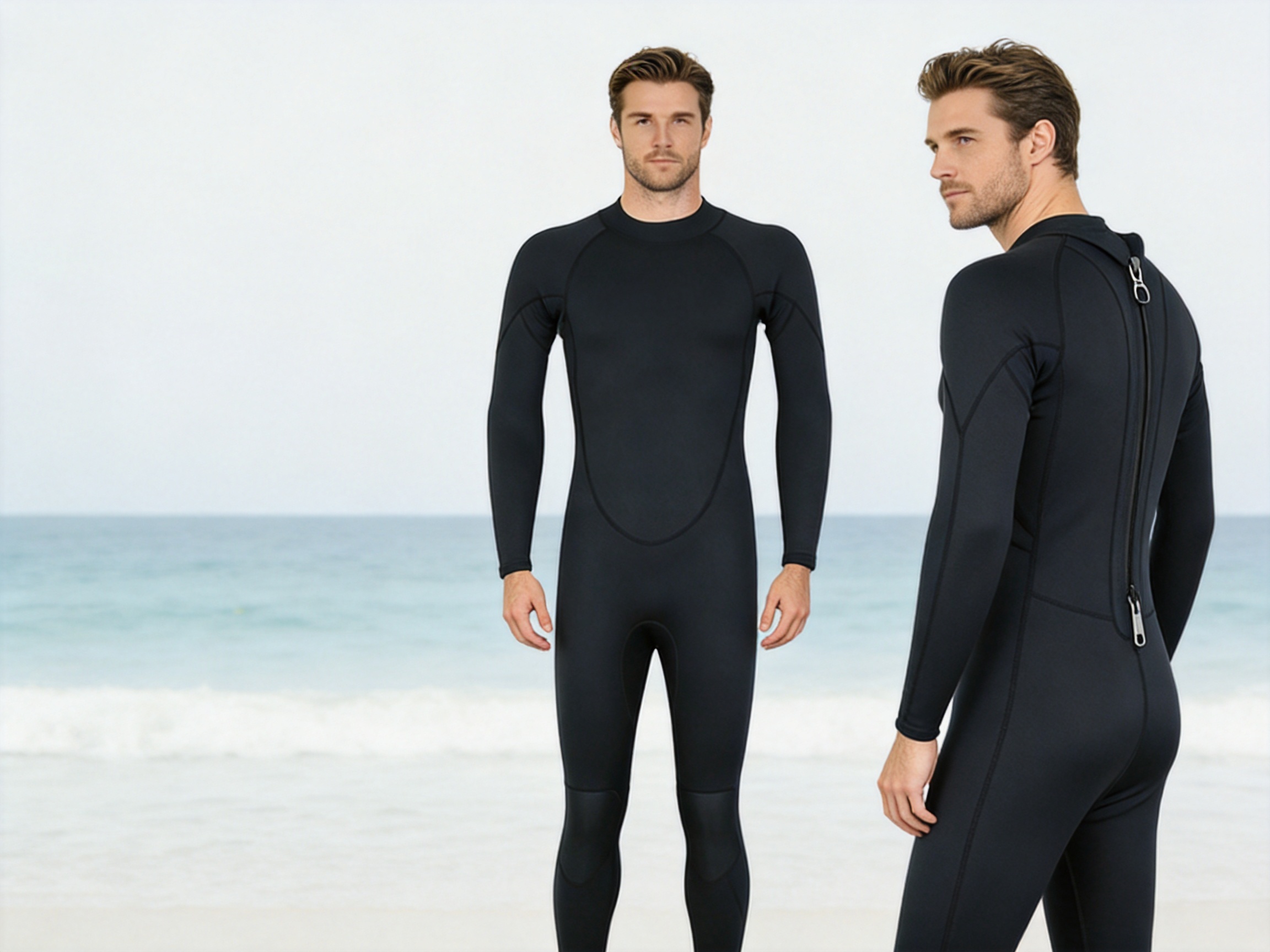
The product includes a back zipper with hook-and-loop fastening at the top. The back-entry design is familiar to many recreational users and allows the wearer to put on and remove the suit without struggling with a tight neck opening. A longer zipper pull can make independent dressing easier, particularly for users with limited shoulder mobility.
Reinforced knee pads are incorporated into the design to improve protection in one of the areas most likely to experience contact and abrasion. Knees may rub against surfboards, kayaks, paddleboards, boat surfaces, pool edges, or underwater terrain. Reinforcement in this area can help extend service life while also improving comfort when kneeling.
The wetsuit is available in S, M, L, XL, XXL, and XXXL. A broad size range helps support different body profiles and makes the style more suitable for international distribution. However, correct measurement remains important because a wetsuit should fit closely without causing excessive pressure, restricted breathing, or uncomfortable pulling at the shoulders and joints.
| Product feature | Specification | Practical benefit |
|---|---|---|
| Product type | One-piece full wetsuit | Full-body coverage for versatile water use |
| Material | 2mm CR neoprene laminated with nylon | Balanced warmth, flexibility, and durability |
| Sleeve and leg design | Long sleeves and full-length legs | Improved coverage against cooling, sunlight, and abrasion |
| Entry system | Back zipper with hook-and-loop fastening | Convenient dressing and secure closure |
| Stitching | Flatlock four-needle, six-thread construction | Comfortable seams and reliable structural support |
| Reinforcement | Reinforced knee panels | Additional resistance in high-contact areas |
| Color | Black | Classic appearance and easy coordination with equipment |
| Sizes | S, M, L, XL, XXL, XXXL | Broad market coverage |
2. Why a 2mm Full Wetsuit Is a Practical Choice
Wetsuit thickness has a direct effect on insulation, flexibility, weight, and comfort. A thicker wetsuit normally provides more thermal protection, while a thinner wetsuit generally offers greater freedom of movement and a lighter feel. The 2mm format occupies a useful position for users who need more coverage than a rash guard but do not require the heavy insulation of a 5mm or 7mm cold-water suit.
In warm or mild water, excessive thickness can make an activity uncomfortable. A heavy wetsuit may cause overheating, add unnecessary bulk, and require more effort during swimming or paddling. By contrast, a 2mm CR neoprene suit can help reduce the rate of heat loss while allowing the wearer to move naturally during active sports.
The full-body cut also creates an advantage over partial wetsuit formats. A shorty suit leaves the arms and legs more exposed, while a vest or spring suit provides less protection against sunlight, rough surfaces, and accidental contact. The full-length silhouette is especially useful for users who move between different activities during the same outing.
For distributors and private-label buyers, a 2mm all-purpose wetsuit can also be commercially attractive because it addresses several user groups. The same base style may appeal to surfers, snorkelers, paddleboarders, kayaking enthusiasts, recreational divers, swimmers, and vacation users. This broad application can simplify product selection and reduce the need to stock many specialized designs.
It is important to position the product accurately. A 2mm wetsuit is not intended to replace a thick cold-water diving suit. Instead, its principal strengths are lightweight insulation, high mobility, full-body coverage, and comfortable use in warm to mild conditions. Clear product positioning helps consumers choose appropriately and reduces the risk of unrealistic performance expectations.
3. CR Neoprene Construction and Material Advantages
3.1 Balanced insulation
CR neoprene is a synthetic rubber material widely used in wetsuits because it contains closed-cell structures that help slow heat transfer through the material. When used at a 2mm thickness, it provides moderate insulation without making the garment unnecessarily heavy. The result is a practical layer for activities in which users remain active and generate body heat.
The material does not eliminate heat loss, and actual comfort depends on water temperature, wind, activity level, body composition, fit, and exposure duration. Nevertheless, properly fitted neoprene can offer a meaningful improvement over ordinary swimwear, particularly when the user is repeatedly entering and leaving the water or spending extended periods near the surface.
3.2 Flexibility for active movement
Water sports demand repeated movement through the shoulders, elbows, hips, knees, and torso. Swimming requires arm rotation, surfing involves paddling and standing, kayaking depends on torso rotation, and paddleboarding requires balance and continuous leg movement. A rigid garment can make these activities tiring and uncomfortable.
The flexible structure of 2mm neoprene helps the wetsuit follow the body’s natural contours. The nylon lamination contributes to a smoother outer and inner surface while supporting the material’s overall durability. When the pattern, stretch direction, and seam placement are properly engineered, the suit can provide close-fitting coverage without excessively limiting motion.
3.3 Comfort against the skin
Comfort is determined by more than material softness. A well-made wetsuit must combine suitable neoprene, accurate pattern grading, smooth seam construction, a comfortable collar, and a closure system that does not create excessive pressure. This model uses flatlock stitching and smooth-skin edging around the collar to help reduce irritation and limit unnecessary water entry.
For private-label buyers, material selection is also an important brand consideration. Customers may not see the internal construction process, but they immediately notice whether a suit feels flexible, whether the collar rubs, whether the zipper operates smoothly, and whether the material retains its shape after use. Consistent neoprene quality therefore contributes directly to perceived product value.
4. Full-Length Design for Multiple Water Activities
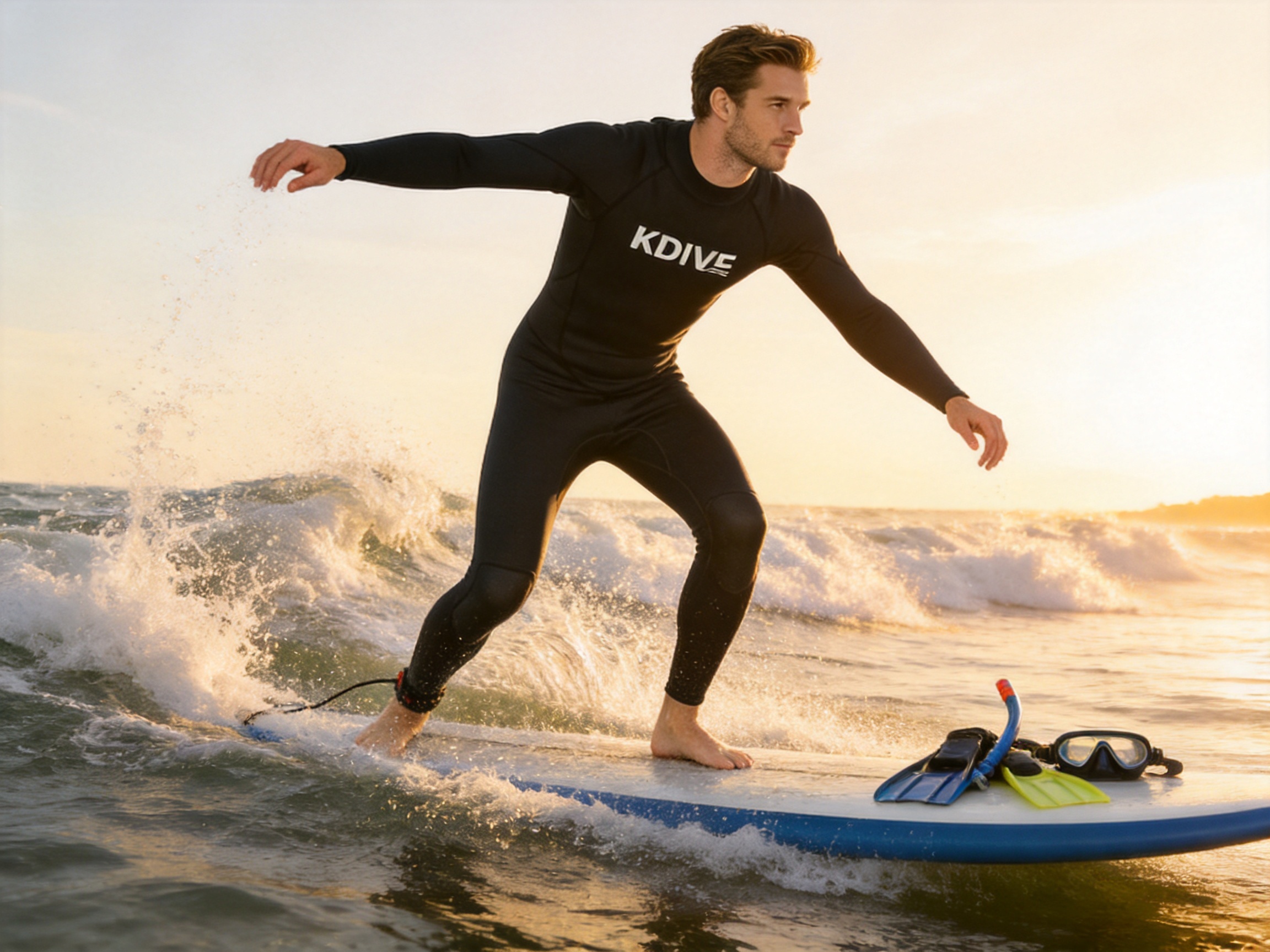
The full-length design gives this wetsuit a versatile role across different environments. In surfing, it provides coverage while users paddle, sit on the board, and repeatedly transition between prone and standing positions. In snorkeling and freediving, it offers protection from cooler water, sun exposure, and incidental contact with rocks or equipment.
For scuba diving in warm conditions, a full suit can act as a lightweight exposure layer beneath or instead of a thicker system, depending on the water temperature and diving plan. Divers should always select exposure protection according to professional safety guidance and actual environmental conditions. The suit’s 2mm construction is best understood as a warm-water option rather than a universal diving solution.
Paddleboarders and kayakers can benefit from the additional protection provided by long sleeves and full legs. Even when the primary activity takes place above the water, accidental falls, splashes, wind chill, and contact with equipment can create discomfort. Full coverage can make repeated water entry more manageable.
Swimmers and beach users may also appreciate the coverage against sunlight and surface abrasion. The suit is not a substitute for dedicated sun-protection practices, but it can reduce the amount of exposed skin during extended outdoor activity. At water parks, the reinforced knees may be useful when users kneel, slide, or move across equipment surfaces.
| Activity | How the wetsuit can help | Important consideration |
|---|---|---|
| Surfing | Provides thermal coverage and protection during paddling and board contact | Select a close fit that does not restrict shoulder movement |
| Snorkeling | Helps reduce cooling and protects the skin from minor abrasion | Use suitable flotation and sun protection where required |
| Freediving | Offers lightweight coverage for warm-water sessions | Thickness and fit should match the diving environment |
| Scuba diving | Can serve as warm-water exposure protection | Follow dive planning and thermal safety requirements |
| Paddleboarding | Provides protection during falls and changing weather conditions | Pair with appropriate personal flotation equipment |
| Kayaking | Supports coverage against splashes and contact with equipment | Check comfort while seated and rotating the torso |
| Swimming | Offers more warmth and coverage than standard swimwear | Ensure the neckline and wrists remain comfortable |
| Beach and water parks | Helps protect skin during active recreation | Rinse thoroughly after exposure to chlorine or salt water |
5. Construction Details That Support Durability
5.1 Flatlock four-needle, six-thread stitching
Seam construction is one of the most important differences between a reliable wetsuit and a poorly assembled garment. The seams must hold neoprene panels together while remaining comfortable against the skin. Flatlock stitching places the joined edges in a relatively flat configuration, helping reduce bulky ridges and minimizing direct irritation during movement.
The specified four-needle, six-thread method is intended to provide a stable and durable seam structure. Multiple threads distribute sewing stress across the seam rather than concentrating it in one narrow line. This is particularly relevant in high-movement areas such as the shoulders, sides, hips, and knees.
Stitching quality depends on more than the number of needles or threads. Thread tension, stitch density, seam allowance, machine calibration, operator skill, and panel alignment all affect performance. Professional factories must control these variables consistently throughout production rather than relying only on final visual inspection.
5.2 Reinforced knee pads
The knees receive repeated stress in many water sports. Users may kneel on paddleboards, sit on boards, climb onto boats, crawl across poolside surfaces, or make contact with underwater terrain. Reinforced knee panels add a protective layer where wear is likely to occur.
The use of Ottoman fabric reinforcement panels adds texture and structural support to the knee area. This type of reinforcement can help improve abrasion resistance and may also provide a more stable contact surface when kneeling. It is a practical detail that distinguishes the product from simpler entry-level suits with uniform material throughout.
5.3 Smooth-skin collar edging
Water can enter most easily at openings around the neck, wrists, and ankles. A collar that is too loose may allow flushing, while one that is too tight may cause discomfort. Smooth-skin edging around the collar is designed to create a closer interface with the skin and help reduce water entry.
Collar comfort is especially important during long sessions. A sharp seam, rough edge, or poorly shaped neckline can lead to chafing. Careful pattern design and finishing are therefore essential. The collar should sit close enough to support thermal performance while allowing comfortable breathing and head movement.
5.4 Back zipper and hook-and-loop closure
The back zipper offers a familiar entry method that is convenient for a wide range of recreational users. A durable YKK zipper is specified for dependable operation, while the extended pull tab helps make the garment easier to close. The hook-and-loop fastening at the top helps secure the zipper in place during activity.
Closure design affects both convenience and performance. A zipper that catches or separates can make a wetsuit frustrating to use, while a poorly secured top can move during swimming or surfing. The hook-and-loop tab provides an additional retention point and helps keep the upper zipper area closed.
Back-entry suits may be easier for first-time users than some front-entry or chest-zip designs. On the other hand, users should take care not to force the zipper, twist the pull tab, or use excessive pressure while putting on the suit. Correct dressing technique helps protect both the zipper and the neoprene.
6. Performance Specifications and Quality Indicators
The product specifications include measurable targets for abrasion resistance, hydrostatic resistance, and tensile strength. These indicators provide useful information for buyers evaluating the suit’s expected durability and material performance. They should be understood as controlled test results or product requirements rather than guarantees that every suit will perform identically in every environment.
6.1 Abrasion resistance
The specified abrasion performance is no damage after 4,000 friction cycles under pressure of at least 9 kPa. This indicates that the tested material or construction is intended to withstand repeated rubbing under controlled pressure. Such resistance is relevant to knees, seat areas, board contact points, and other locations exposed to repetitive friction.
Actual service life still depends on how the suit is used. Rough concrete, sharp rocks, hook-and-loop fasteners, fingernails, boat hardware, and improper dressing can damage neoprene even when the fabric performs well in laboratory testing. Buyers should therefore consider both material testing and user-care instructions.
6.2 Hydrostatic resistance
The stated hydrostatic pressure resistance is at least 80 kPa with no water seepage under the specified test conditions. Hydrostatic resistance measures the ability of a material or seam system to resist water pressure. It provides an indication of material integrity and resistance to water penetration.
A wetsuit is not designed to function as a completely dry garment. Water may enter through openings at the neck, wrists, ankles, zipper, or seams, and a thin layer of water inside the suit is normally warmed by the body. The value of hydrostatic testing is that it helps assess whether the fabric and construction are capable of resisting unwanted seepage under controlled conditions.
6.3 Tensile strength
The product specification states that there is no breakage after 10 seconds under tension of at least 150 N in both lengthwise and crosswise directions. Tensile performance is important because wetsuits are stretched during dressing, swimming, paddling, and body movement.
Good tensile strength reduces the risk of tearing when the material is placed under normal use stress. However, neoprene should never be pulled aggressively by the zipper, collar, or thin edge. Users should use the palms and fingers to distribute pressure when putting on the suit, rather than gripping the fabric with fingernails.
| Performance indicator | Stated requirement | Why it matters |
|---|---|---|
| Abrasion resistance | No damage after 4,000 friction cycles at pressure of at least 9 kPa | Supports durability in areas exposed to rubbing |
| Hydrostatic resistance | At least 80 kPa with no water seepage under test conditions | Indicates resistance to water penetration |
| Tensile strength | No breakage after 10 seconds at at least 150 N, lengthwise and crosswise | Supports material integrity during stretching and movement |
| Seam construction | Flatlock four-needle, six-thread stitching | Balances seam strength and wearer comfort |
7. Advantages Over Basic Competitor Designs
Different wetsuits serve different price points and use cases. The advantages of this product are most apparent when compared with basic suits that use thinner or less consistent materials, limited sizing, minimal reinforcement, and simpler closures.
7.1 More coverage than shorty styles
Shorty wetsuits may be comfortable in very warm conditions, but they leave substantial portions of the arms and legs exposed. The full-length design provides more comprehensive coverage for users who want additional protection from cooling, sunlight, and abrasion.
7.2 Greater mobility than thick cold-water suits
Compared with heavier wetsuits, the 2mm structure is lighter and generally easier to move in. This makes it suitable for active users who prioritize flexibility for swimming, paddling, surfing, and snorkeling. The product therefore occupies a useful middle ground between minimal coverage and heavy insulation.
7.3 More durable contact zones
Some entry-level products use a single layer of neoprene throughout the garment. Reinforced knee pads provide an advantage in high-contact areas by adding support where users are likely to kneel or experience friction. This can improve practical durability without making the entire suit unnecessarily thick.
7.4 More secure closure system
A back zipper with a long pull tab and hook-and-loop top fastening provides greater convenience and security than a poorly finished zipper without retention support. The use of a recognized zipper component can also contribute to smoother operation and improved customer confidence.
7.5 Broad application and size coverage
The six-size range from S through XXXL supports a wider customer base than a limited-size product. The all-purpose design can be marketed for several recreational activities instead of only one specialized sport. For wholesalers and brands, this flexibility can simplify inventory planning and support multiple sales channels.
7.6 More complete quality documentation
Stated targets for abrasion, hydrostatic resistance, and tensile strength give professional buyers more information than a simple product description based only on appearance. Technical criteria can support supplier evaluation, private-label specification writing, and internal quality-control procedures.
8. Manufacturing Process and Production Expertise
The quality of a wetsuit begins long before sewing. A professional production process integrates material purchasing, incoming inspection, pattern development, cutting, lamination, stitching, reinforcement, finishing, testing, and packing. Each stage affects the consistency of the final product.
8.1 Material selection and incoming inspection
Manufacturing begins with the selection of neoprene, nylon fabric, thread, zipper components, hook-and-loop tape, reinforcement fabric, labels, and packaging materials. The neoprene should be checked for thickness consistency, surface defects, stretch behavior, color uniformity, and lamination quality.
Incoming inspection helps prevent defective raw materials from entering production. If material thickness varies significantly across a roll, finished suits may not provide consistent insulation or fit. If lamination is weak, the nylon layer may separate from the neoprene during use. Professional factories therefore need documented acceptance standards and traceable material batches.
8.2 Pattern engineering and size grading
A wetsuit pattern must follow the body while allowing the material to stretch in the intended direction. Pattern makers consider shoulder width, chest circumference, waist, hip, inseam, arm length, leg length, collar position, and movement zones. The pattern is then graded across the available sizes.
Accurate size grading is essential for international markets. A product may be technically well made but still generate returns if the sizing is inconsistent or poorly communicated. Sample fitting, measurement charts, and production checks help maintain consistency from S through XXXL.
8.3 Computer-assisted cutting and panel control
Cutting accuracy affects seam alignment, symmetry, fit, and material efficiency. Professional operations may use computer-assisted pattern layout or carefully controlled manual cutting, depending on order requirements and production configuration. The goal is to keep panel dimensions within tolerance while reducing unnecessary material waste.
Stretch direction should also be considered during layout. A panel intended to expand across the torso may not perform correctly if it is cut against the required grain or orientation. Experienced production teams understand how material direction affects comfort and mobility.
8.4 Lamination and bonding control
Neoprene is commonly laminated with nylon or other textiles to improve handling, durability, and comfort. Lamination requires suitable pressure, temperature, adhesive distribution, and curing conditions. Inconsistent bonding can result in bubbling, peeling, stiffness, or uneven stretch.
Production control should include visual inspection and, where appropriate, adhesion checks. A stable laminated structure is particularly important for products intended for repeated recreational use and private-label distribution.
8.5 Stitching and seam assembly
After cutting, panels are assembled according to the approved sample and sewing specifications. Operators must maintain correct seam allowances, thread tension, stitch density, and alignment. Flatlock four-needle, six-thread stitching requires suitable machinery and operator familiarity to achieve a clean, comfortable result.
Inspection at the sewing stage can identify skipped stitches, loose threads, puckering, uneven seams, and misaligned panels before the product reaches final finishing. Early correction is more efficient than discovering defects after the complete garment has been assembled.
8.6 Reinforcement and closure installation
Knee panels, collar edging, zipper components, hook-and-loop fastening, labels, and other details are installed according to the approved technical package. Reinforcement must be placed accurately so that it covers the intended area without interfering with natural movement.
Zipper installation requires particular care. The zipper should be correctly aligned, securely sewn, and checked for smooth operation. The upper hook-and-loop tab should hold firmly without creating an uncomfortable edge. Small details in these areas can have a significant effect on customer satisfaction.
8.7 Final inspection and packing
Finished wetsuits should be checked for size labeling, color consistency, seam appearance, closure operation, reinforcement placement, loose threads, stains, panel symmetry, and overall workmanship. Measurement checks can confirm that the garment remains within approved tolerances.
After inspection, the suit should be folded or packed in a way that avoids permanent creasing or unnecessary stress on the neoprene. Packaging should protect the product from dust, moisture, and damage during transport. Private-label buyers may also require customized labels, hangtags, polybags, cartons, or instruction sheets.
9. Factory Capabilities and Supply-Chain Strengths
Jiangsu Yiheng Sports Products Co., Ltd. began its business in 2008 and focuses on neoprene materials and finished products. Its product range includes wetsuits, drysuits, fishing waders, rash guards, water sports equipment, and neoprene fabrics. This breadth provides useful experience across both raw materials and finished garment categories.
The company reports more than 15 years of production experience, 18 or more years of industry experience in neoprene fabrics and finished products, and eight years of direct retail-market practice. Experience in both manufacturing and retail can help a supplier understand not only how to make a product but also how the product is used, displayed, described, and evaluated by end customers.
The factory covers more than 15,000 square meters and has more than 120 professional employees. A facility of this scale can support organized production flows, separate work areas, material handling, quality control, sample development, and order management. Actual capacity depends on product complexity, order volume, customization requirements, and production scheduling, but an established facility provides a stronger foundation than an unverified trading operation.
The company’s combined material and finished-product capabilities can also improve communication during product development. Buyers may be able to discuss neoprene thickness, fabric lamination, pattern construction, reinforcement, seam methods, and finished-garment requirements with a supplier that understands the full chain rather than only the final assembly stage.
9.1 OEM manufacturing support
OEM manufacturing allows a buyer to supply its own specifications, branding, packaging requirements, and commercial positioning. For this wetsuit, OEM work may include private labels, custom size charts, color adjustments, logo placement, packaging design, hangtags, care labels, and carton markings, subject to technical feasibility and minimum order requirements.
9.2 ODM development support
ODM development is useful for buyers who want to launch a product without creating every technical detail from the beginning. An experienced manufacturer can provide a base design and help adjust material thickness, panels, reinforcement, zipper placement, color combinations, collar structure, or activity-specific details.
For example, a buyer may use the 2mm full wetsuit as a starting platform and request a different logo package, revised knee reinforcement, alternative sleeve graphics, or a modified size range. Development should be managed through approved samples and written specifications to ensure that the final bulk production matches the agreed design.
9.3 Long-term supply support
Stable supply is important for distributors and established brands. Consistency in neoprene, color, sizing, stitching, and packaging helps reduce product variation between orders. A long-term manufacturing relationship can also improve forecasting, replenishment planning, sample retention, and corrective-action communication.
10. Private-Label Opportunities for Different Markets
The product’s simple black appearance provides a flexible base for private-label branding. Black is widely accepted in water sports and can be paired with contrasting logos, reflective details, colored zipper pulls, or branded neck labels. It can also be positioned as a practical unisex-adjacent style, although the listed product is specifically designed and marketed for men.
Outdoor and water sports retailers may present the wetsuit as an entry-level or mid-range all-purpose exposure garment. Surf schools and recreational centers may use it as part of a rental or instruction fleet, provided the selected size assortment matches their customer base and the suits are maintained appropriately.
Travel and beach brands can market the product to customers who participate in several activities during vacations. Divers and snorkeling operators may also consider it for warm-water programs. E-commerce sellers can emphasize the combination of full coverage, 2mm flexibility, reinforced knees, and broad sizing.
When creating a private-label version, buyers should define the target customer clearly. A suit for surfing may require special attention to shoulder mobility, while a suit for rental use may prioritize durable reinforcement and easy size recognition. A product for premium retail may place greater emphasis on packaging, branding, seam appearance, and detailed care instructions.
| Buyer type | Potential use of the product | Recommended focus |
|---|---|---|
| Water sports retailer | General-purpose warm-water wetsuit range | Size assortment, packaging, product education |
| Surf school | Instruction and recreational sessions | Durability, easy dressing, replacement availability |
| Snorkeling operator | Warm-water visitor equipment | Fast drying, cleaning procedures, size identification |
| Private-label outdoor brand | Branded retail collection | Logo placement, color standards, packaging, consistency |
| Online seller | Direct-to-consumer product listing | Measurement chart, photos, care guidance, clear positioning |
| Water park or recreation center | Protective garment for active users | Reinforcement, cleaning, inventory management |
11. Fit, Sizing, and User Guidance
A wetsuit should fit close to the body because excessive loose space can permit water movement and reduce thermal efficiency. At the same time, the suit must not cause painful pressure or restrict breathing. Users should consult the manufacturer’s measurement chart and compare chest, waist, hip, height, and inseam measurements where available.
The correct size may feel snug when dry. This is normal for a close-fitting wetsuit, but the wearer should still be able to move the shoulders, bend the knees, rotate the torso, and breathe comfortably. Excessive wrinkles may indicate a loose fit, while strong pulling at the shoulders or compression around the neck may indicate that a larger size or different pattern is needed.
Putting on the suit carefully is important. Users should make sure fingernails, rings, watches, and rough surfaces do not catch the neoprene. The material should be pulled gradually using the flats of the fingers rather than pinched sharply. The zipper should be closed without forcing it, and the hook-and-loop tab should be secured once the zipper is correctly positioned.
Retailers should provide a clear size chart and explain that sizing can vary by body shape. A customer who falls between sizes may need to prioritize chest and shoulder comfort while checking that the legs and arms remain reasonably close fitting. For business buyers, pre-production fitting samples are strongly recommended before approving a size run.
12. Care and Maintenance
Proper care can significantly extend the life of a wetsuit. After each use, rinse the suit thoroughly with fresh water to remove salt, chlorine, sand, and other residues. These contaminants may affect fabric surfaces, stitching, zippers, and hook-and-loop components over time.
The suit should be dried in a shaded, ventilated location. Prolonged direct sunlight and high heat can accelerate aging, fading, and loss of material flexibility. It is best to avoid hot dryers, radiators, irons, and other heat sources unless specifically approved by the manufacturer.
Users should not store the suit while it is wet or tightly compressed. A damp, folded suit may develop unpleasant odors, while long-term compression may create permanent creases. Once fully dry, it can be stored in a cool, dry place away from sharp objects, solvents, oils, and extreme temperatures.
The zipper should be kept free from sand and debris. Hook-and-loop fasteners should be closed during storage so they do not catch on the neoprene or other garments. Small cuts should be addressed promptly with suitable wetsuit repair products to prevent them from becoming larger tears.
For rental operators and commercial users, a written cleaning and inspection routine is especially important. Each suit should be checked for seam damage, zipper problems, stretched openings, missing labels, and tears before being issued to another user. Consistent maintenance protects both the product and the customer experience.
13. Sustainability and Responsible Product Management
Durability is one practical aspect of more responsible product use. A wetsuit that remains functional for a longer period does not need to be replaced as frequently. Reinforced knees, reliable stitching, stable lamination, and good care instructions can all contribute to longer service life.
Manufacturers and buyers can also reduce waste through accurate cutting layouts, appropriate packaging sizes, production planning, and careful management of defects. Using the correct material specification from the beginning helps avoid unnecessary rework and product rejection.
Responsible product communication is equally important. Marketing should accurately state the intended water conditions, material thickness, and limitations. Describing a 2mm wetsuit as suitable for every climate or all-season diving could mislead consumers. Clear information supports safer purchasing decisions and reduces avoidable returns.
14. How the Product Compares with Other Garment Categories
Full wetsuit versus rash guard
A rash guard is lightweight and useful for sun protection, modesty, and minor abrasion resistance, but it normally provides much less thermal insulation than a neoprene wetsuit. The 2mm full wetsuit is a better choice when users need additional warmth and more substantial exposure protection.
Full wetsuit versus shorty wetsuit
A shorty wetsuit may feel cooler and easier to put on in very warm conditions, but it leaves the limbs exposed. The full wetsuit provides greater coverage and is more adaptable when the water temperature, wind, or activity level changes.
2mm wetsuit versus thicker wetsuit
Thicker suits generally provide more insulation for colder water but may be heavier and less flexible. The 2mm option is intended for users who value mobility and lightweight comfort in warm to mild environments. Selecting thickness should always be based on actual conditions and activity requirements.
Wetsuit versus drysuit
A drysuit is designed around a different protection concept and is typically used with additional thermal layers in colder or more specialized environments. The 2mm wetsuit is simpler, closer fitting, and more suitable for active recreational use in relatively mild conditions. The two categories should not be treated as interchangeable.
15. Buyer Checklist for Wholesale and Private-Label Orders
Professional buyers should confirm the material thickness, neoprene type, textile lamination, color standard, zipper brand or specification, stitching method, reinforcement material, available sizes, packaging, and labeling requirements before placing an order.
It is also useful to request a pre-production sample and compare it with the approved technical specifications. The sample should be checked for fit, seam appearance, collar comfort, zipper operation, knee-panel placement, label accuracy, and overall finishing.
Buyers should clarify quality-control procedures, acceptable defect limits, inspection timing, packing methods, production lead times, and replacement or corrective-action policies. If technical testing is required, the test methods and acceptance criteria should be agreed in writing rather than described only in general terms.
For customized orders, artwork files should be approved before production. Logo size, position, color, label materials, care instructions, and carton marks should be documented. Any change after sample approval should be reviewed carefully because even a small change in material or construction may affect fit, cost, or production timing.
16. Frequently Asked Questions
Q1: What water conditions are best suited to this wetsuit?
The 2mm thickness is best suited to warm and mild water conditions. The appropriate choice depends on water temperature, air temperature, wind, activity level, body type, and exposure duration. Users in colder environments may require a thicker wetsuit or a different exposure-protection system.
Q2: Is this wetsuit suitable for surfing?
Yes. The full-length design, flexible 2mm neoprene, reinforced knees, and long-sleeve coverage make it suitable for recreational surfing, especially in warm to mild conditions. Users should confirm that the selected size allows comfortable shoulder movement during paddling.
Q3: Can it be used for snorkeling and freediving?
Yes. The suit is suitable for recreational snorkeling and warm-water freediving applications. It provides more coverage and thermal protection than ordinary swimwear. Divers should select exposure protection according to their training, activity plan, water conditions, and safety requirements.
Q4: Is it suitable for scuba diving?
It can be used for warm-water scuba diving when a 2mm suit is appropriate for the conditions. It should not automatically be considered sufficient for cold water or extended exposure. Divers should follow professional dive planning guidance and select equipment based on the actual environment.
Q5: What makes the reinforced knees useful?
The reinforced knee panels provide additional support in an area exposed to kneeling, board contact, equipment friction, and repeated movement. They can improve practical durability and comfort during activities such as paddleboarding, kayaking, surfing, and water park recreation.
Q6: Is the back zipper easy to use?
The back zipper design is intended to make entry and removal convenient. The extended pull tab can help users operate the zipper, while the hook-and-loop fastening at the top helps secure it during activity. The zipper should be handled carefully and never forced.
Q7: Does a 2mm wetsuit prevent all water from entering?
No. A wetsuit is not a completely dry garment. Water may enter through the collar, cuffs, ankles, zipper area, or seams. The suit works partly by allowing a thin layer of water to be warmed by the body. The stated hydrostatic resistance indicates performance under controlled testing, not total waterproofing during all movement.
Q8: How should the wetsuit be washed?
Rinse it with fresh water after every use, especially after exposure to salt water or chlorine. Allow it to dry in a shaded, ventilated location and avoid high heat. Do not store it while damp, and keep the zipper and hook-and-loop areas free from sand and debris.
Q9: What sizes are available?
The available sizes are S, M, L, XL, XXL, and XXXL. Buyers should use the manufacturer’s measurement chart and compare body measurements rather than selecting a size based only on height or weight.
Q10: Can the product be customized for a private label?
The manufacturer offers OEM manufacturing, ODM development, and private-label support. Potential customization may include labels, packaging, logo application, size specifications, colors, and selected construction details. Custom requirements should be confirmed through technical discussions and approved samples.
Q11: What testing information is available?
The product specifications state targets for abrasion resistance, hydrostatic resistance, and tensile strength. The listed targets include no damage after 4,000 friction cycles under pressure of at least 9 kPa, hydrostatic resistance of at least 80 kPa without seepage under test conditions, and no breakage after 10 seconds under tension of at least 150 N in both directions.
Q12: What should a buyer check before bulk production?
A buyer should confirm material, thickness, size grading, color, stitching, reinforcement, zipper, labels, packaging, inspection criteria, testing requirements, and delivery schedule. A pre-production sample should be reviewed and formally approved before bulk manufacturing begins.
17. Conclusion
The men’s black 2mm full wetsuit is designed as a versatile solution for warm and mild water activities. Its principal advantages include flexible CR neoprene, full-body coverage, long sleeves, reinforced knees, flatlock four-needle six-thread stitching, a secure back zipper, smooth-skin collar edging, and a broad range of sizes. These features help distinguish it from basic wetsuits that offer less coverage, fewer reinforcement details, or limited fit options.
The product is suitable for surfing, snorkeling, freediving, warm-water scuba diving, paddleboarding, kayaking, swimming, beach recreation, and water park activities. Its 2mm construction emphasizes mobility and lightweight insulation rather than extreme cold-water protection, making accurate product positioning essential.
For commercial buyers, the product is supported by a manufacturer with experience in neoprene fabrics and finished water sports products. Jiangsu Yiheng Sports Products Co., Ltd. reports a factory area of more than 15,000 square meters, a workforce of over 120 professional employees, and experience spanning OEM production, ODM development, private-label manufacturing, and direct retail-market practice.
When material control, pattern engineering, lamination, stitching, reinforcement, testing, and final inspection are managed carefully, a wetsuit can deliver much more than basic appearance. It can provide a dependable foundation for a retail collection, rental program, water sports school, or private-label brand. For buyers seeking a practical, flexible, and broadly marketable warm-water wetsuit, this 2mm full-length design offers a strong balance between comfort, protection, performance, and manufacturing adaptability.
References
1. Product technical specifications for the men’s black 2mm full wetsuit, including material, construction, size range, closure system, reinforcement design, and performance targets.
2. Product information concerning CR neoprene, nylon lamination, flatlock stitching, YKK zipper construction, smooth-skin collar edging, and recommended water sports applications.
3. Manufacturer company information regarding neoprene materials, finished water sports products, OEM manufacturing, ODM development, factory facilities, and production experience.
4. General textile and garment quality-control principles for material inspection, pattern grading, sewing construction, finished-product inspection, and packaging management.
5. General water sports equipment guidance concerning wetsuit thickness, fit, thermal protection, cleaning, drying, storage, and activity-specific use.
Product: Men' s Black 2mm Full Wetsuit – Super Stretch Neoprene for Surf Snorkel

LET’S DEVELOP YOUR NEXT NEOPRENE PRODUCT LINE
Quick Links
Product Categories
Contact Us
-
 Email: postmaster@yihengsport.com
-
 Mobile: +86-13564100539
-
 No. 480 Jiangping Road, Madian, Binjiang Town, Taixing City, Taizhou City, Jiangsu Province, China.
Copyright © Jiangsu Yiheng Sports Products Co., Ltd. All Rights Reserved
China Wetsuit Manufacturer Neoprene Fabric Manufacturer
