

 Language
 English
 中文简体
 日本語
 русский
 Español
 عربى

Oct, 22, 2026
Why the Green Camouflage Spearfishing Wetsuit Is Built for Flexible, Protected Underwater Performance
Spearfishing demands more from a wetsuit than ordinary recreational swimming. A diver needs freedom of movement when finning, reaching, turning, and controlling a speargun. The suit must also help manage body temperature, resist abrasion, remain secure during repeated use, and fit closely enough to reduce unnecessary water circulation. At the same time, the material cannot be so rigid or bulky that it interferes with breath-hold diving and underwater awareness.
The Green Camouflage Spearfishing Wetsuit is designed around these practical requirements. It combines 2mm CR neoprene, an anatomically tailored two-piece construction, a beavertail closure, reinforced protection zones, silicone grip prints, and durable four-needle six-thread stitching. Its green camouflage pattern is intended to help divers blend more naturally into underwater surroundings, while the flexible neoprene construction supports unrestricted movement during spearfishing, freediving, and casual snorkeling.
Beyond the product itself, the wetsuit reflects a manufacturing approach centered on neoprene expertise, controlled construction, and long-term production experience. The manufacturer has developed capabilities across neoprene fabrics and finished water-sports products, supported by a factory of more than 15,000 square meters and a professional workforce of more than 120 employees. These resources are important for buyers seeking consistent production, private-label development, OEM manufacturing, or ODM support rather than a one-time supply of generic products.
This article examines the suit’s design, materials, performance advantages, manufacturing strengths, quality considerations, and suitability for different users. It also explains why a specialized spearfishing wetsuit can offer meaningful advantages over a basic surfing suit, diving suit, or low-cost general-purpose neoprene garment.
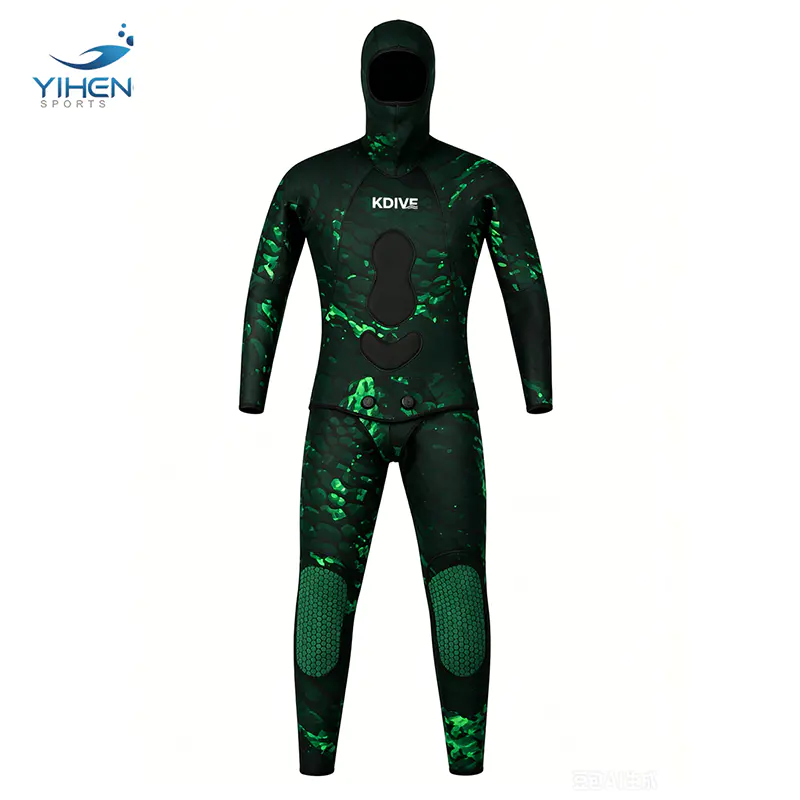
Green Camouflage Spearfishing Wetsuit
1. The Performance Requirements of a Spearfishing Wetsuit
Spearfishing is a highly active underwater sport, but it is also a controlled and technical activity. A diver may spend considerable time on the surface, descend repeatedly, remain motionless while observing fish, and then make a rapid movement toward a target. This combination of stillness and activity creates a distinctive set of requirements for clothing.
First, the wetsuit must support mobility. The shoulders, elbows, knees, hips, and torso need to move smoothly without excessive resistance. A rigid garment can make surface swimming tiring and can reduce control during descent or ascent. Excessively loose clothing can create water circulation and drag, while an overly tight suit can restrict breathing comfort and make dressing difficult.
Second, a spearfishing suit needs protection in areas that experience frequent contact or loading. The chest can be exposed to pressure from a speargun during loading. The knees and elbows may contact rocks, the seafloor, boat surfaces, or equipment. Seams also experience repeated stretching when the diver bends, kicks, reaches, and rotates.
Third, the suit should provide an appropriate level of thermal insulation for the intended water conditions. A 2mm wetsuit is comparatively lightweight and flexible. It is particularly appropriate for temperate waters and for users who prioritize mobility, reduced bulk, and an easy-to-wear construction. Water temperature, dive duration, personal tolerance, and activity level should always be considered when selecting thickness.
Finally, the garment must remain dependable after repeated use. A suit that looks attractive but develops seam separation, tears, water leakage, or loss of shape after limited use will increase replacement costs and reduce user confidence. For this reason, stitching quality, material recovery, reinforcement, closure security, and abrasion resistance are central to product value.
2. Product Overview
The Green Camouflage Spearfishing Wetsuit is a two-piece spearfishing garment made from 2mm CR neoprene. It is available in sizes S, M, L, XL, XXL, and XXXL, allowing suppliers and retailers to serve a broad range of adult users. The camouflage colorway gives the product a purpose-built appearance rather than the appearance of a general swimming wetsuit.
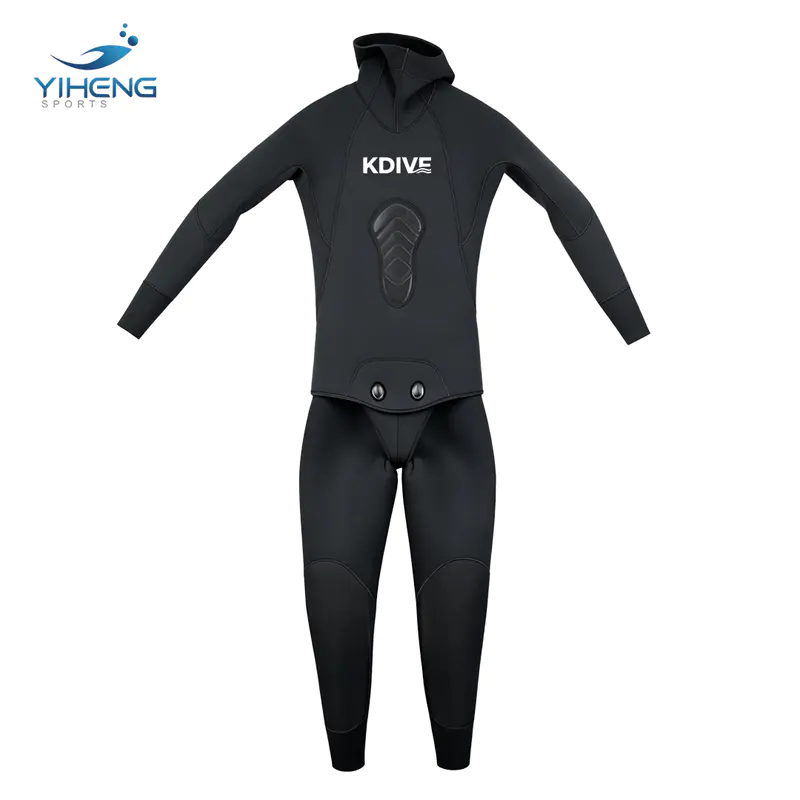
The two-piece structure is designed to provide practical coverage while preserving mobility. The upper section incorporates a beavertail closure with a dual snap-button design. This helps secure the top section in place and supports a stable fit during active movement. The closure also contributes to the characteristic construction used in many spearfishing wetsuits, where the upper and lower parts work together to cover the torso and waist area.
The suit uses four-needle six-thread stitching. This construction is intended to provide a balance of seam strength, flexibility, and durability. Compared with a simple low-cost stitch approach, a more substantial multi-thread seam can help the garment withstand repeated stretching and movement when properly assembled and paired with suitable neoprene.
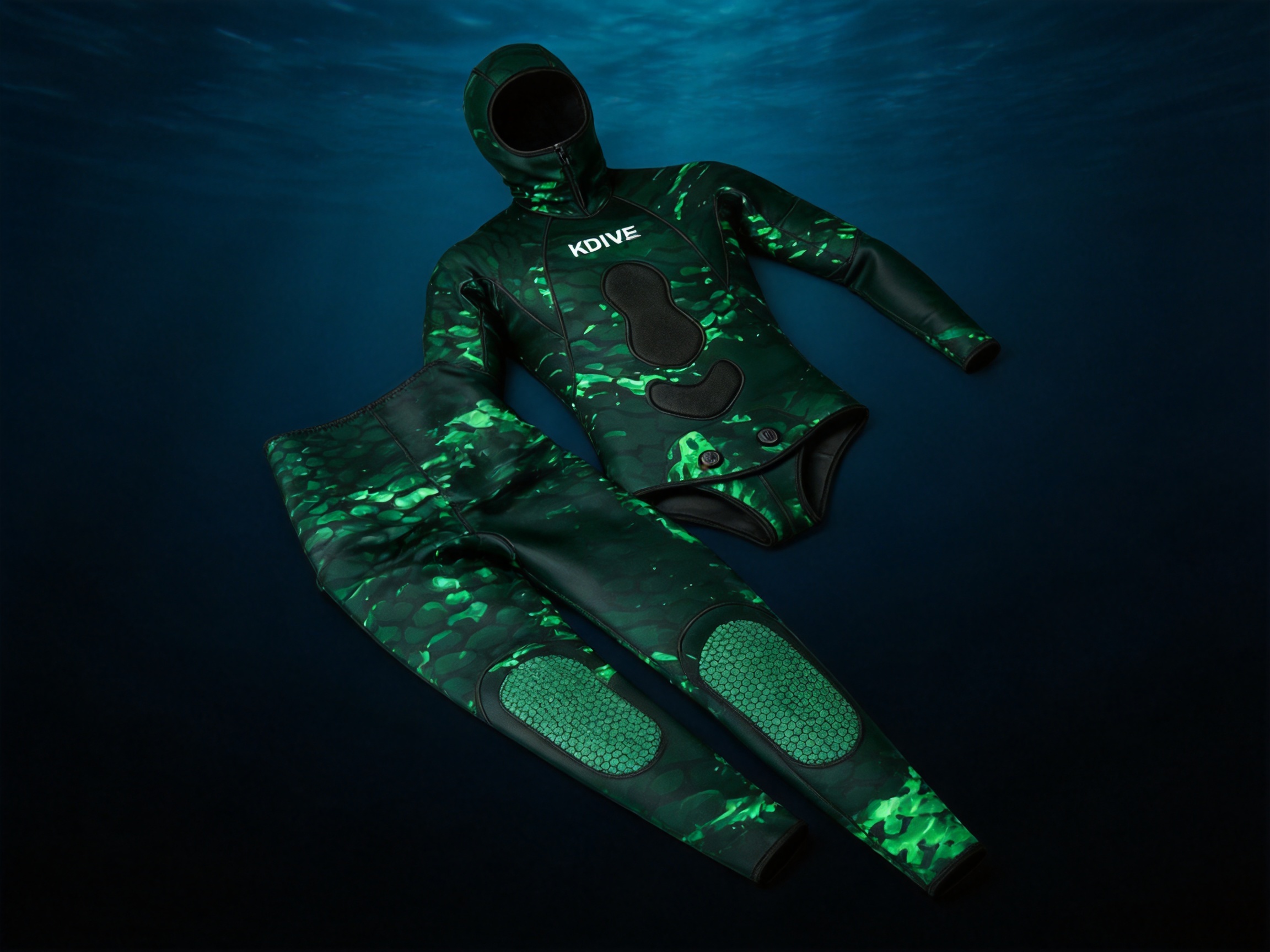
A reinforced chest loading pad provides additional support and protection when loading a speargun. Silicone grip prints on the knees and elbows improve contact in high-wear areas. These features are not merely decorative. They address specific points of use where a spearfisher may place pressure on the suit or encounter repeated friction.
The product specifications include abrasion resistance testing with no damage after 4,000 friction cycles under pressure of at least 9 kPa. The stated hydrostatic resistance is at least 80 kPa with no water seepage, and the tensile-strength specification indicates no breakage after 10 seconds under tension of at least 150 N in both lengthwise and crosswise directions. These figures provide measurable reference points for product evaluation and quality communication.
| Product Feature | Specification or Design Detail | Practical Benefit |
|---|---|---|
| Material | 2mm CR neoprene | Lightweight thermal retention, flexibility, and comfort |
| Construction | Two-piece spearfishing design | Practical coverage and freedom of movement |
| Seam construction | Four-needle six-thread stitching | Improved durability and flexible seam performance |
| Closure | Dual snap-button beavertail closure | Secure fit during active underwater movement |
| Chest protection | Reinforced chest loading pad | Support and increased resistance to loading-related wear |
| High-wear protection | Silicone grip prints on knees and elbows | Improved abrasion resistance and surface grip |
| Color | Green camouflage | Helps the diver blend into underwater surroundings |
| Available sizes | S, M, L, XL, XXL, XXXL | Broad sizing coverage for different body types |
3. The Role of 2mm CR Neoprene
Neoprene is valued in water-sports clothing because it forms a flexible barrier between the body and the surrounding water. The material can help slow heat loss while allowing the garment to stretch with the body. In a 2mm construction, the balance generally favors flexibility and low weight over maximum insulation.
For spearfishing, this balance can be particularly useful. A diver must often make repeated fin strokes, rotate the torso, lift the arms, bend the knees, and maintain a streamlined position. A lighter and thinner material can reduce the feeling of bulk during these movements. It can also make the suit more practical for warm or temperate-water use, casual snorkeling, and active surface swimming.
The designation CR neoprene indicates a chloroprene rubber-based neoprene material. Its performance depends not only on the nominal thickness but also on density, elasticity, lamination, lining, pattern design, seam construction, and finishing. A well-designed 2mm garment can feel significantly different from a poorly patterned 2mm garment because fit and panel engineering influence the way the material behaves.
The product information emphasizes a soft, stretchable construction and a soft lining. These characteristics are important for comfort during long periods in the water. A soft lining can improve contact with the skin and make the garment more comfortable during repeated wear. It can also help the suit feel less harsh when the diver moves through a full range of motion.
Buyers should understand that a 2mm suit is not intended to provide the same thermal protection as a 5mm or 7mm cold-water suit. Its value lies in the combination of mobility, comfort, lower weight, and adequate thermal retention for suitable conditions. Selecting the correct thickness for the water environment is essential for safe and comfortable use.
4. Camouflage for the Spearfishing Environment
The green camouflage pattern gives the garment a visual identity associated with underwater hunting and natural surroundings. In shallow or temperate environments containing vegetation, rocks, and varied green tones, camouflage can help break up the outline of the diver. This may support a more natural approach to fish when combined with appropriate diving technique and controlled movement.
Camouflage should not be understood as a substitute for skill. Fish behavior is influenced by motion, noise, water clarity, light, current, and the diver’s position. However, a pattern that visually disrupts the body’s outline can be a useful part of a specialized spearfishing system.
The green colorway also differentiates the product from plain black recreational suits. This makes it attractive to specialty retailers, spearfishing equipment distributors, and private-label buyers looking for a product that communicates a clear use case. A distinctive pattern can improve shelf appeal and make product positioning easier in catalogs and online stores.
For a manufacturer or importer, the camouflage design offers additional opportunities for assortment development. Different color palettes, printed patterns, panel combinations, and private-label treatments may be considered according to market requirements, subject to development and production confirmation. The existing design provides a functional foundation for that type of product customization.
5. Anatomical Fit and Freedom of Movement
An anatomically tailored cut is one of the most important advantages of a purpose-built spearfishing wetsuit. The human body does not move as a flat shape. The shoulders rotate, the back extends and contracts, the hips flex, and the knees bend repeatedly. A suit designed around these movements can reduce fabric tension and improve comfort.
The product’s ergonomic cut is intended to support diving, swimming, and spearfishing. Its close fit helps minimize unnecessary water circulation inside the suit. When excessive water enters and moves through loose areas, the body may lose heat more quickly and the garment may feel less stable. A snug fit helps maintain a more consistent relationship between the suit and the body.
A snug fit must still allow proper breathing and circulation. Users should select the correct size rather than simply choosing the smallest possible size. The available range from S through XXXL gives distributors the ability to provide more accurate size options, but each wearer should consult a size chart and consider body measurements, torso length, chest circumference, waist, hips, and leg proportions.
The flexibility of 2mm neoprene supports arm movement, torso rotation, and leg motion. This is useful during surface approaches, duck dives, equalization, and finning. The suit is also suitable for casual snorkeling, where the user may value comfort and flexibility more than the heavy insulation of a cold-water diving garment.
The two-piece format can provide additional practical benefits. It may be easier to put on and remove than a single-piece design, especially when the diver is changing before or after a session. It can also allow a closer fit around the torso and waist while preserving flexibility in the legs and shoulders. The beavertail closure helps keep the upper and lower sections connected during movement.
6. Protection Where Spearfishers Need It
6.1 Reinforced Chest Loading Pad
Loading a speargun can place concentrated pressure on the chest area. Without reinforcement, repeated loading can compress or damage the neoprene, create discomfort, and reduce the service life of the garment. The reinforced chest loading pad distributes pressure more effectively and provides a more stable contact surface.
This feature gives the suit a clear functional advantage over basic recreational wetsuits that may not include a dedicated loading area. A general-purpose suit can be suitable for swimming or surfing but may not be designed for the repeated contact associated with spearfishing equipment. The chest pad demonstrates that the product has been developed with the activity’s actual use conditions in mind.
6.2 Knee and Elbow Grip Prints
The knees and elbows are vulnerable to friction because they bend frequently and may contact rocks, platforms, boats, or underwater surfaces. Silicone grip prints add a textured treatment to these areas. They are intended to improve abrasion resistance and provide additional grip in high-wear zones.
Localized reinforcement is an efficient design strategy. Instead of making the entire garment unnecessarily heavy, the product adds protection where wear is most likely to occur. This supports mobility while improving resistance in key areas. For a diver, the result can be a more practical balance between flexibility and durability.
6.3 Seam Durability
Seams are critical because they connect the panels and transfer stress during movement. Four-needle six-thread stitching provides a substantial seam construction designed to withstand repeated use while retaining flexibility. The value of this construction depends on accurate sewing, suitable thread tension, precise panel alignment, and careful inspection.
Strong seams are especially important in a close-fitting garment. When the diver stretches, bends, or rotates, stress is distributed across the panels and seam lines. A reliable sewing process helps reduce the likelihood of premature separation and contributes to consistent product quality across production batches.
7. Performance Testing and Quality Indicators
Product specifications are more useful when they include measurable performance indicators. The stated test results for this wetsuit address abrasion resistance, hydrostatic resistance, and tensile strength. Together, these categories provide a broader view of garment durability than appearance alone.
According to the supplied specifications, the material showed no damage after 4,000 friction cycles under pressure of at least 9 kPa. Abrasion testing is relevant because wetsuits are regularly exposed to contact with equipment, storage surfaces, rocks, boat decks, and other materials. It is important to recognize that laboratory test conditions may not reproduce every real-world situation, but the result provides a defined benchmark for comparison and quality control.
The hydrostatic resistance specification is at least 80 kPa with no water seepage. This indicates resistance to water pressure under the stated test conditions. A wetsuit is not a drysuit, and the purpose of neoprene is not to create a completely waterproof shell. Nevertheless, material and construction quality affect how well the garment limits water movement and maintains its intended performance.
The tensile-strength specification indicates no breakage after 10 seconds under tension of at least 150 N in both lengthwise and crosswise directions. Testing in both directions is important because neoprene garments experience multi-directional stress. Panel stretch, seam movement, dressing forces, and underwater motion can all place tension along different axes.
For wholesale and private-label buyers, these specifications can support technical files, product descriptions, internal quality standards, and supplier evaluation. Buyers may also request sample approval, inspection procedures, size measurements, color references, packaging specifications, and batch-level quality documentation before placing large orders.
| Quality Area | Stated Benchmark | Why It Matters |
|---|---|---|
| Abrasion resistance | No damage after 4,000 friction cycles at pressure of at least 9 kPa | Supports resistance to repeated rubbing and contact |
| Hydrostatic resistance | At least 80 kPa with no water seepage | Provides a reference for resistance to water pressure |
| Tensile strength | No breakage after 10 seconds under tension of at least 150 N | Indicates resistance to stretching in lengthwise and crosswise directions |
| Seam construction | Four-needle six-thread stitching | Supports flexible and durable panel connections |
| High-wear reinforcement | Chest pad and silicone prints on knees and elbows | Protects areas exposed to loading and friction |
8. Manufacturing Strengths Behind the Product
A technically useful wetsuit depends on more than a pattern and a material specification. Manufacturing control affects panel accuracy, seam quality, consistency of thickness, surface finishing, sizing, reinforcement placement, and final inspection. A supplier with experience in both neoprene materials and finished products can coordinate more parts of the production process.
The manufacturer’s history began in 2008, when the business started with raw materials and a small quantity of semi-finished products. Since then, it has developed more than 15 years of production experience and more than 18 years of industry experience in neoprene fabrics and finished products, according to the supplied company information. This background provides an established foundation for manufacturing knowledge and product development.
The factory covers more than 15,000 square meters and employs more than 120 professional workers. A facility of this scale can support organized production areas, material handling, sewing operations, inspection, finishing, and order coordination. It also creates a stronger foundation for serving customers who require repeat orders and stable production rather than occasional small-batch sourcing.
The company’s product range includes wetsuits, drysuits, fishing waders, rash guards, water-sports equipment, and neoprene fabrics. This broader product portfolio is relevant because it indicates experience with different types of neoprene applications. Knowledge gained from fabrics, garments, and equipment can support material selection, construction decisions, and product adaptation.
The stated manufacturing services include OEM manufacturing, market-oriented ODM development, and long-term supply support. For buyers, this means the relationship can extend beyond a standard catalog item. OEM customers may provide their own branding, packaging, labels, colors, or specifications. ODM customers may seek assistance with adapting an existing concept or developing a product for a particular market segment.
In a private-label program, manufacturing coordination is especially important. A product may require custom labels, hangtags, packaging, printed artwork, size grading, color approval, instruction materials, and carton markings. A supplier with experience in finished neoprene products can help align these elements with the physical garment and its intended market position.
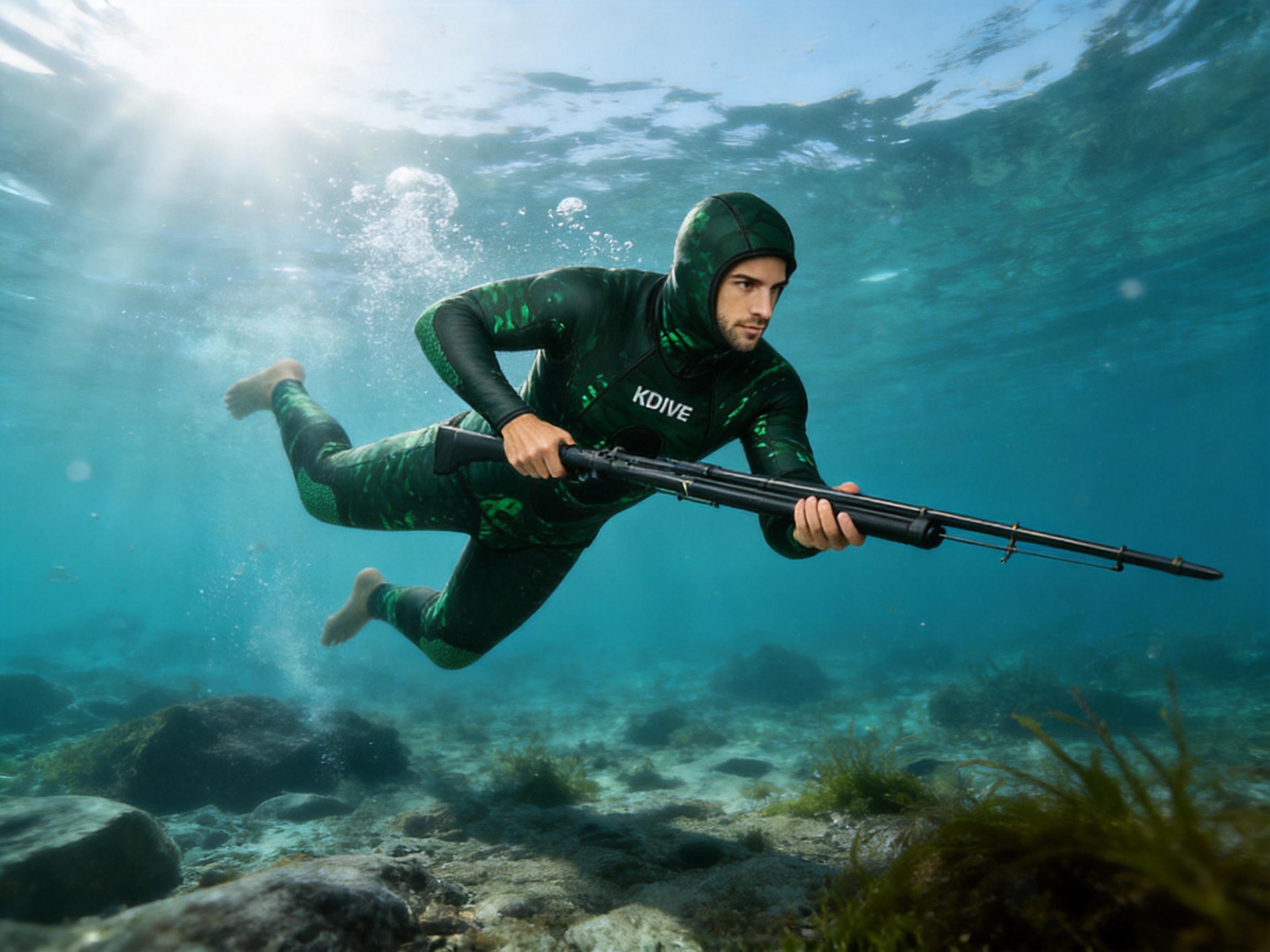
9. Manufacturing Process Considerations
9.1 Material Preparation
Production begins with material preparation. Neoprene sheets, linings, printed surfaces, reinforcement materials, silicone treatments, thread, closures, and labels must be checked against the product specification. Material consistency is important because variations in stretch, thickness, density, or surface finish can affect fit and performance.
For a 2mm wetsuit, accurate thickness control is particularly valuable. Small variations can influence flexibility, thermal behavior, weight, and the way panels align during sewing. Material inspection should therefore be integrated into the production process rather than treated as a final-stage activity only.
9.2 Pattern Development and Cutting
The ergonomic fit of the garment depends on pattern development. Panels must follow the body’s contours while allowing movement at the shoulders, waist, hips, knees, and elbows. Cutting accuracy affects both the final fit and the efficiency of material use.
Camouflage materials require additional attention because pattern direction and panel placement may influence the finished appearance. Consistent alignment can improve the visual quality of the garment and support a professional private-label presentation. Reinforcement pieces also need precise positioning so that the chest pad, knee prints, and elbow prints serve their intended functions.
9.3 Sewing and Seam Assembly
The four-needle six-thread construction must be applied consistently across the designated seams. Operators need to maintain suitable stitch density, thread tension, seam allowance, and panel alignment. Excessive tension can reduce seam flexibility, while insufficient tension may weaken the connection between panels.
Sewing quality is also affected by operator training and equipment maintenance. Needles, thread paths, presser-foot settings, and machine timing should be managed carefully. Regular inspection during production can identify skipped stitches, uneven seams, loose threads, misalignment, or local damage before the garment reaches final inspection.
9.4 Reinforcement Application
The chest loading pad must be placed in the correct position relative to the torso and the upper garment. Its attachment should be secure and comfortable, without creating hard edges or unnecessary restriction. Silicone prints on the knees and elbows also require controlled application so that coverage is consistent and the surface remains appropriately flexible.
Reinforcement is most effective when it is integrated with the overall design rather than added as an afterthought. Its size, shape, location, and bonding or sewing method should correspond to the stresses encountered during actual use.
9.5 Closure and Final Assembly
The dual snap-button beavertail closure contributes to fit stability. Snap placement, attachment strength, alignment, and operation should be checked during assembly. The closure should function smoothly without damaging the surrounding neoprene.
Final assembly includes trimming loose threads, checking seam appearance, confirming panel alignment, reviewing the camouflage surface, and verifying that the suit matches the approved sample. A careful finishing stage helps ensure that the product is ready for consumer presentation and distribution.
9.6 Inspection and Packing
Final inspection may include visual review, measurement checks, closure testing, reinforcement inspection, seam examination, and verification of labels or packaging. For larger orders, buyers may define an inspection standard covering acceptable defects, size tolerances, carton quantities, and sample approval procedures.
Proper packing helps prevent deformation, contamination, and unnecessary pressure during storage and transport. Neoprene products should be handled in a way that protects their surfaces and maintains the finished appearance until they reach the customer.
10. Advantages Over General-Purpose Wetsuits
A general-purpose wetsuit may be adequate for occasional swimming, surfing, or recreational snorkeling, but it is not always optimized for spearfishing. The Green Camouflage Spearfishing Wetsuit provides several activity-specific features that distinguish it from a basic design.
The first advantage is the chest loading pad. Standard suits often do not include a reinforced area designed for speargun loading. A dedicated pad provides more appropriate support for this activity and can reduce stress on the underlying neoprene.
The second advantage is the camouflage pattern. Plain black or brightly colored suits may be practical for other sports, but camouflage offers a more specialized appearance and can help the diver blend with underwater surroundings.
The third advantage is the combination of a two-piece ergonomic design and secure beavertail closure. This construction is intended for the movement patterns of spearfishing and freediving rather than only surface-based water sports.
The fourth advantage is localized high-wear protection. Silicone grip prints on the knees and elbows address areas that may experience friction, while substantial multi-thread stitching supports repeated movement throughout the garment.
The fifth advantage is the balance provided by 2mm neoprene. Users who dive in temperate waters or prioritize flexibility may find a lightweight construction more suitable than a thicker, heavier suit. It can also be more comfortable for casual snorkeling and active swimming.
11. Advantages Over Low-Cost Basic Neoprene Garments
Low-cost neoprene garments are often designed around price reduction rather than specialized performance. They may use simpler seams, limited reinforcement, fewer size options, or generic panel shapes. While the initial purchase price may be lower, these limitations can affect fit, durability, and user satisfaction.
The Green Camouflage Spearfishing Wetsuit addresses these areas through a more complete feature set. Four-needle six-thread stitching, a reinforced chest pad, silicone grip prints, an anatomical cut, and a secure closure represent a more deliberate approach to spearfishing use.
Its stated performance benchmarks also give buyers more information than a product description based only on appearance. Abrasion, hydrostatic, and tensile specifications can support supplier comparison and internal product evaluation. They do not eliminate the need for sample testing, but they create a clearer technical basis for decision-making.
The broad size range from S to XXXL is another commercial advantage. Retailers can serve more customers without relying on a single unisex fit. Better size coverage can reduce fit-related returns and improve the customer experience, provided accurate measurement charts are supplied.
For private-label buyers, the manufacturing background is equally important. A supplier with experience in neoprene fabrics and finished products may be better positioned to support repeatability, product adjustments, packaging coordination, and future assortment expansion than a trading source with limited technical production capability.
12. Applications and Suitable Water Conditions
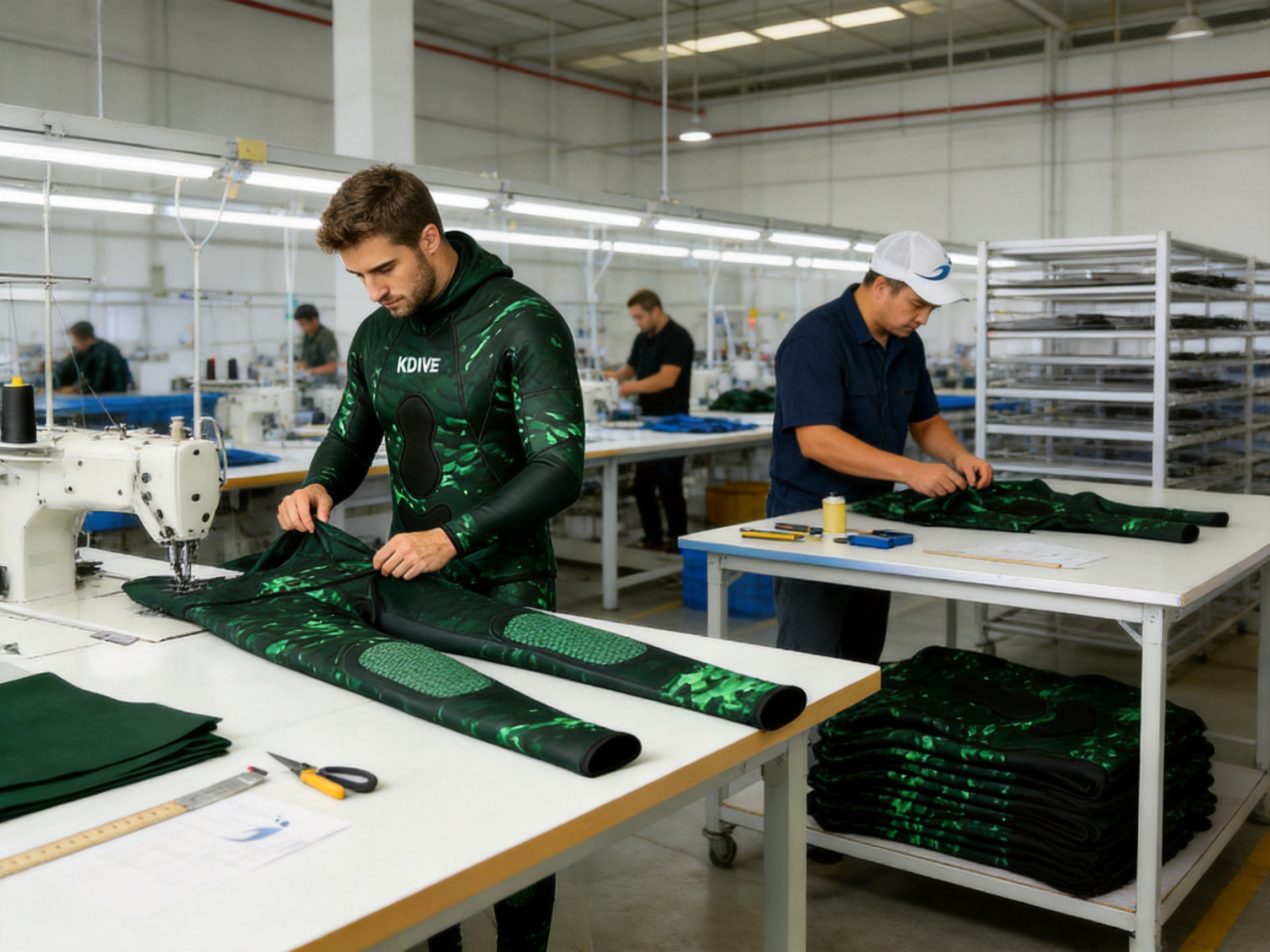
The primary application is spearfishing. The camouflage pattern, loading pad, ergonomic cut, and flexible construction all support this purpose. The product is suitable for divers who need a lightweight suit for active movement and temperate-water conditions.
The suit is also appropriate for freediving. Freedivers require low-bulk equipment that does not interfere with body movement or breath-hold technique. The 2mm construction and close fit can provide comfort for users who do not need the insulation of a thicker cold-water suit.
Casual snorkeling is another suitable application. Snorkelers may appreciate the soft lining, flexible material, and lightweight structure. The camouflage appearance may also appeal to users who prefer an outdoor or specialized watersports style.
Water temperature and personal thermal tolerance should guide selection. In colder conditions, users may require a thicker wetsuit, additional thermal layers, gloves, boots, or a different product category. The 2mm design should be positioned accurately in product listings so that customers understand its intended environment.
As with any close-fitting neoprene garment, users should inspect the suit before each session. They should check the seams, closure, reinforcement areas, and surface for damage. Proper rinsing with fresh water after use, drying away from direct heat, and careful storage can help preserve the material and finish.
13. Guidance for Importers, Distributors, and Private-Label Buyers
Importers and distributors should first define the target market. A product intended for warm-water spearfishing may require different thickness options, colors, packaging, and instructions from a product intended for temperate recreational diving. The existing 2mm green camouflage model can serve as a focused product for users who prioritize mobility and a specialized appearance.
Sample approval should be completed before bulk production. Buyers should review the sample’s fit, seam appearance, camouflage alignment, snap operation, chest pad placement, silicone print quality, lining softness, and overall finishing. Measurements should be compared against an approved size chart.
Private-label customers should also confirm the available branding elements. These may include woven labels, printed labels, hangtags, packaging bags, instruction cards, carton marks, and barcode placement. Artwork should be approved carefully so that the final product is consistent with the brand’s market position.
Order planning should address minimum order quantities, lead times, production schedules, color approvals, inspection requirements, and shipping documentation. Clear communication is especially important when the buyer requests changes to materials, thickness, pattern, closure, reinforcement, or packaging.
The manufacturer’s broader range of wetsuits, drysuits, fishing waders, rash guards, water-sports equipment, and neoprene fabrics may also support line expansion. A distributor could develop a coordinated assortment around spearfishing, fishing, swimming, snorkeling, and other water-based activities.
14. Care and Use Recommendations
Users should put on the wetsuit carefully and avoid pulling aggressively on thin edges, seams, or printed areas. Using clean hands and taking time to position the panels can reduce unnecessary stress during dressing. Fingernails and sharp objects should be kept away from the neoprene surface.
After use, the suit should be rinsed with fresh water to remove salt, sand, chlorine, and other residues. It should be dried in a shaded, ventilated area and kept away from intense heat sources. Prolonged exposure to direct sunlight can affect materials and colors over time.
The suit should not be stored compressed under heavy equipment for long periods. Folding or hanging practices should follow the product supplier’s recommendations. Before storage, the garment should be completely dry to reduce the risk of odor and material deterioration.
Small problems should be addressed early. Loose threads, damaged snaps, surface cuts, or separation near reinforcement areas should be examined before the next dive. Proper maintenance does not make a wetsuit indestructible, but it can help preserve comfort, appearance, and service life.
15. Frequently Asked Questions
Q1: What thickness is the Green Camouflage Spearfishing Wetsuit?
The wetsuit is made from 2mm CR neoprene. This thickness is designed to provide a lightweight balance of flexibility, comfort, and thermal retention, particularly for temperate-water activities.
Q2: Is the wetsuit a one-piece or two-piece design?
It is a two-piece spearfishing wetsuit. The design includes a beavertail closure with dual snap buttons to help secure the fit during underwater movement.
Q3: What activities is the wetsuit suitable for?
The primary application is spearfishing. It is also suitable for freediving, casual snorkeling, swimming, and other underwater activities in appropriate water conditions.
Q4: Does the suit include protection for speargun loading?
Yes. It includes a reinforced chest loading pad designed to provide support and improve durability in the area that contacts the speargun during loading.
Q5: How are the knees and elbows reinforced?
Silicone grip prints are applied to the knees and elbows. These areas are intended to improve abrasion resistance and provide additional grip in locations exposed to frequent contact and movement.
Q6: What type of stitching is used?
The wetsuit uses four-needle six-thread stitching. This construction is designed to improve seam durability while maintaining the flexibility required for diving and swimming.
Q7: What sizes are available?
The listed sizes are S, M, L, XL, XXL, and XXXL. Users should select a size according to the supplier’s measurement chart and their own body measurements.
Q8: Does the camouflage pattern guarantee that fish will not see the diver?
No. Camouflage may help break up the diver’s outline and support a more natural appearance, but it cannot guarantee concealment. Water clarity, movement, lighting, noise, and diving technique also influence fish behavior.
Q9: Is this wetsuit suitable for very cold water?
The 2mm construction is intended for suitable warm or temperate-water conditions. Users who dive in cold water may need a thicker wetsuit or a different thermal system.
Q10: What durability test results are provided?
The supplied specifications state no damage after 4,000 friction cycles under pressure of at least 9 kPa, hydrostatic resistance of at least 80 kPa with no water seepage, and no tensile breakage after 10 seconds under tension of at least 150 N in both lengthwise and crosswise directions.
Q11: Can the product be used for private labeling?
The manufacturer provides OEM manufacturing, ODM development, and long-term supply support. Private-label buyers should confirm branding, packaging, customization, minimum order, and production requirements during project discussions.
Q12: What manufacturing resources support the product?
The manufacturer operates a factory covering more than 15,000 square meters and has more than 120 professional employees. Its experience covers neoprene fabrics and finished products, including wetsuits, drysuits, fishing waders, rash guards, water-sports equipment, and related materials.
16. Overall Assessment
The Green Camouflage Spearfishing Wetsuit is a purpose-oriented product that combines lightweight neoprene with features directly related to spearfishing. Its 2mm CR neoprene supports flexibility and comfort, while the anatomical cut helps reduce unnecessary water circulation and maintain a close fit.
The product’s strongest advantages are its specialized design details. The reinforced chest loading pad addresses speargun use, silicone grip prints protect high-wear areas, four-needle six-thread stitching supports seam durability, and the dual snap-button beavertail closure helps keep the two-piece construction secure.
The green camouflage pattern gives the suit a recognizable identity and may help the diver blend into suitable underwater environments. The available size range supports broader market coverage, while the flexible construction makes the product suitable for spearfishing, freediving, and casual snorkeling in appropriate water conditions.
From a sourcing perspective, the product is supported by a manufacturer with extensive experience in neoprene materials and finished goods. The factory scale, professional workforce, broad product range, and OEM and ODM capabilities make the product relevant not only to individual divers but also to distributors, retailers, and private-label brands.
Compared with a basic recreational wetsuit, the product offers more activity-specific protection and construction. Compared with a low-cost generic neoprene garment, it provides a more complete combination of specialized features, stated testing benchmarks, size coverage, and manufacturing support.
For buyers seeking a flexible and protective spearfishing wetsuit for temperate-water use, this product represents a practical balance between mobility, comfort, specialized protection, and commercial adaptability. Correct sizing, appropriate water-temperature selection, proper care, and thorough sample approval remain essential to achieving the best results.
References
1. Product specification sheet for the Green Camouflage Spearfishing Wetsuit, including material, construction, sizing, closure, reinforcement, and performance information.
2. Manufacturer-provided company profile covering production history, factory area, employee resources, product categories, OEM services, ODM development, and supply support.
3. General neoprene garment design principles relating to flexibility, thermal retention, fit, seam construction, reinforcement, and water-sports applications.
4. General quality-control considerations for wetsuit materials, including abrasion resistance, tensile strength, hydrostatic resistance, sewing inspection, and finished-garment evaluation.
Product: Green Camouflage Spearfishing Wetsuit

LET’S DEVELOP YOUR NEXT NEOPRENE PRODUCT LINE
Quick Links
Product Categories
Contact Us
-
 Email: postmaster@yihengsport.com
-
 Mobile: +86-13564100539
-
 No. 480 Jiangping Road, Madian, Binjiang Town, Taixing City, Taizhou City, Jiangsu Province, China.
Copyright © Jiangsu Yiheng Sports Products Co., Ltd. All Rights Reserved
China Wetsuit Manufacturer Neoprene Fabric Manufacturer
