
 Language
 English
 中文简体
 日本語
 русский
 Español
 عربى

Oct, 04, 2026
2mm/3mm Neoprene Long Sleeve Snorkeling Jacket: Protection, Mobility, and Manufacturing Reliability
Choosing the right snorkeling jacket involves more than comparing thicknesses or colors. A well-designed jacket must balance thermal protection, freedom of movement, comfort, durability, ease of use, and consistent manufacturing quality. The 2mm/3mm Neoprene Long Sleeve Snorkeling Jacket is designed as a versatile solution for snorkeling, scuba diving, surfing, kayaking, swimming, and other water sports. It combines a flexible neoprene construction with full long-sleeve coverage, a practical front zipper, reinforced performance characteristics, and two thickness options for different water temperatures.
This product is suitable for water sports participants who need more protection than a basic rash guard can provide but do not always require a complete full-body wetsuit. The 2mm version is intended for warmer water from approximately 22°C to 30°C, while the 3mm version is suited to cooler water from approximately 18°C to 24°C. Depending on the activity and climate, the jacket can be worn independently or used as an inner layer under a wetsuit.
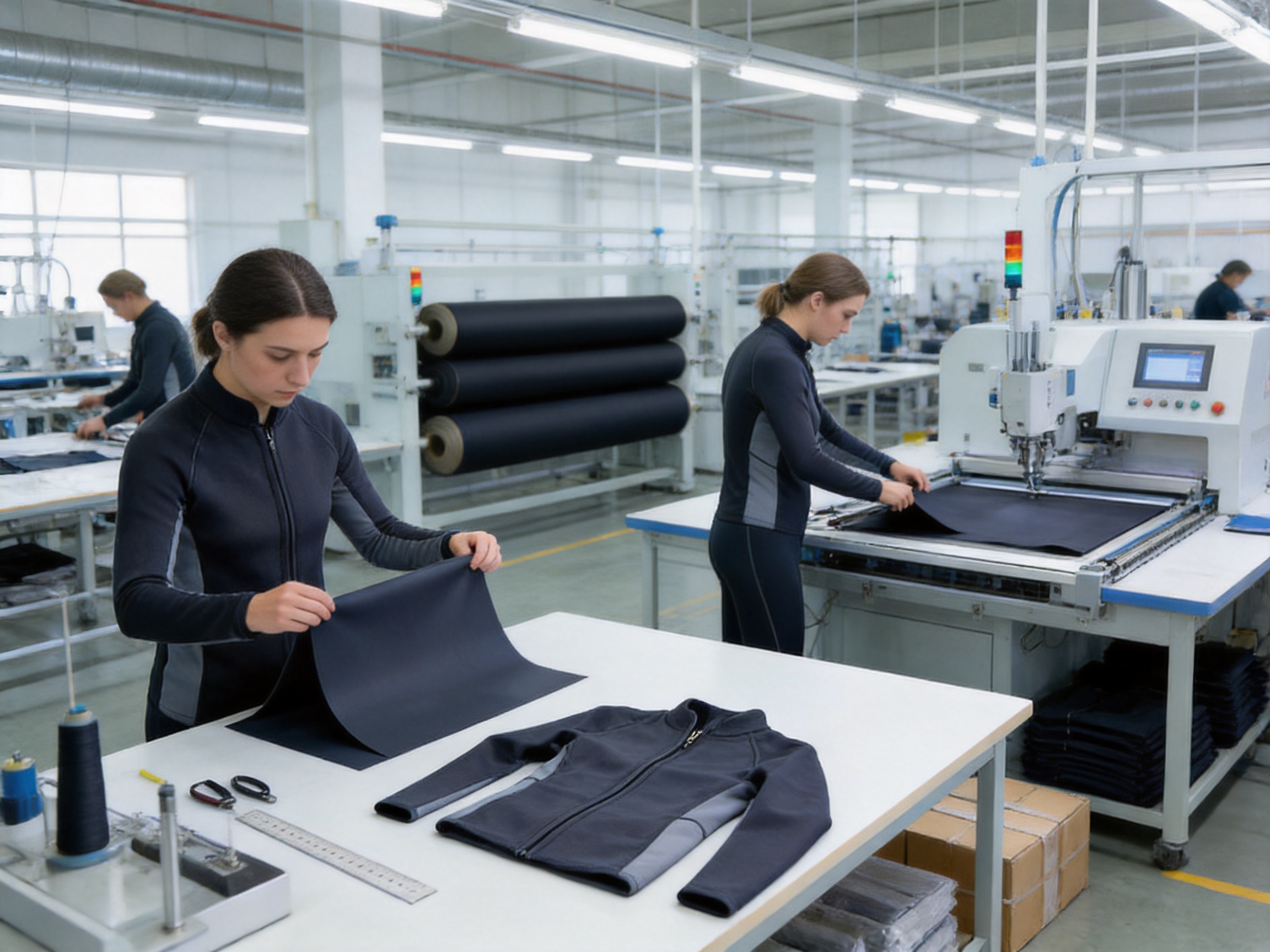
Behind the product is Jiangsu Yiheng Sports Products Co., Ltd., a professional manufacturer specializing in neoprene fabrics and finished water sports products. Since beginning operations in 2008, the company has developed experience in raw material selection, neoprene processing, garment production, quality control, OEM manufacturing, ODM development, and market-oriented product improvement. Its factory covers more than 15,000 square meters and employs more than 120 professional workers, supporting the production of wetsuits, drysuits, fishing waders, rash guards, water sports equipment, and neoprene fabrics.
Understanding the Product Concept
The 2mm/3mm Neoprene Long Sleeve Snorkeling Jacket is a diving-style jacket with a front zipper and full arm coverage. Its construction is intended to provide practical thermal insulation without creating the bulk or restriction sometimes associated with thicker full wetsuits. The jacket is made from high-quality neoprene with a thickness of at least 2mm, providing a combination of softness, elasticity, water resistance, and wear resistance.
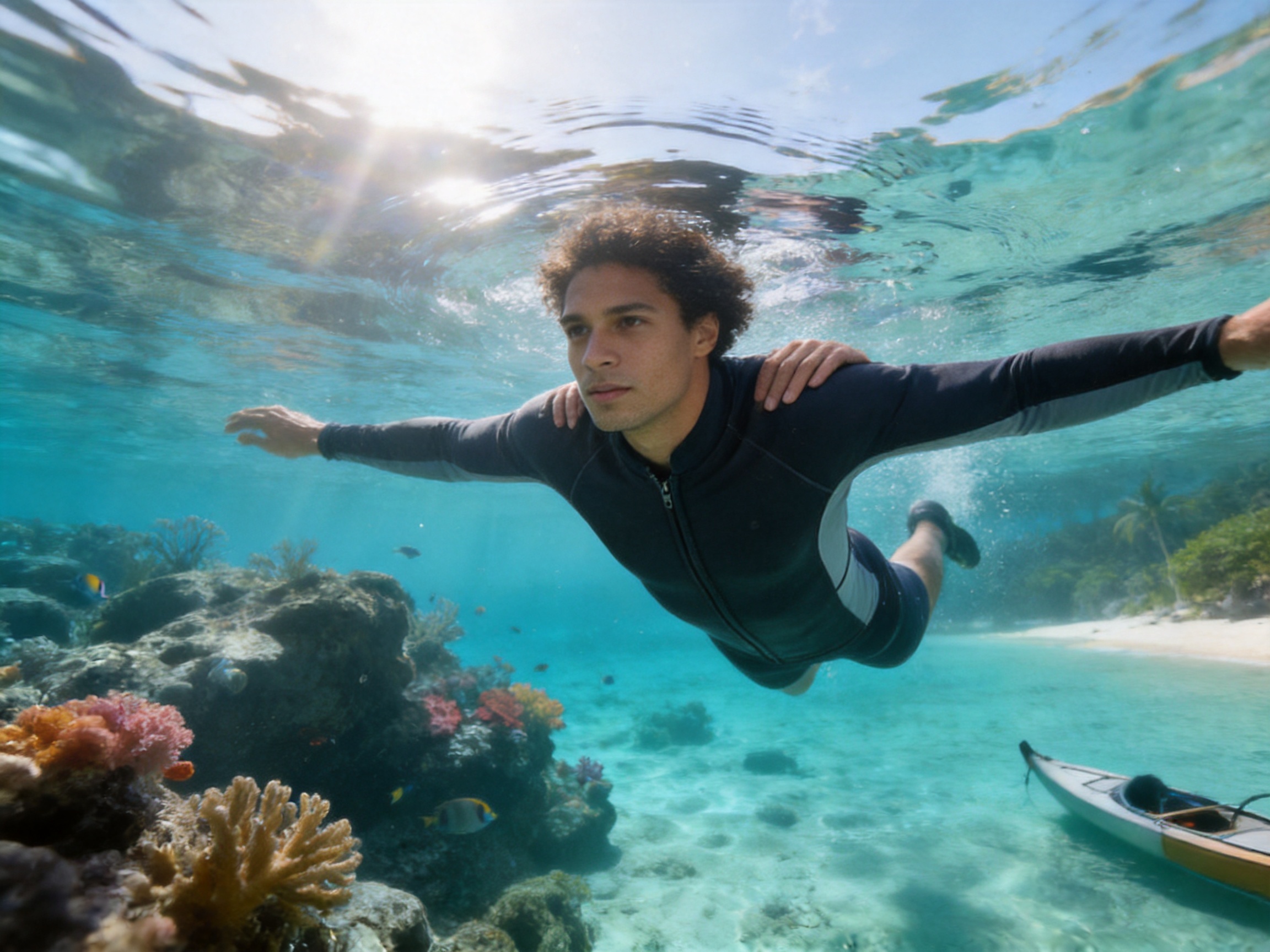
The product addresses several common needs at the same time. First, it helps reduce heat loss during extended activity in the water. Second, it shields the arms and upper body from sunlight, jellyfish stings, minor coral scratches, and contact with rocks or equipment. Third, its flexible construction supports swimming, paddling, snorkeling, and diving movements. Finally, the front zipper makes the garment easier to put on and remove independently than many back-zipper designs.
Rather than treating the snorkeling jacket as a simple neoprene top, the design considers how the garment performs during repeated shoulder rotation, arm extension, torso bending, and entry into and exit from the water. The underarm and lower-back areas use an elastic mobility-oriented construction to support movement where the body needs the greatest flexibility. This makes the jacket suitable for both recreational users and commercial buyers looking for a practical, broadly applicable water sports garment.
The jacket can serve as a stand-alone top in warm conditions, a protective layer over swimwear, or a supplementary insulation layer beneath a full wetsuit. This dual-use capability gives it an advantage over products designed for only one activity or temperature range.
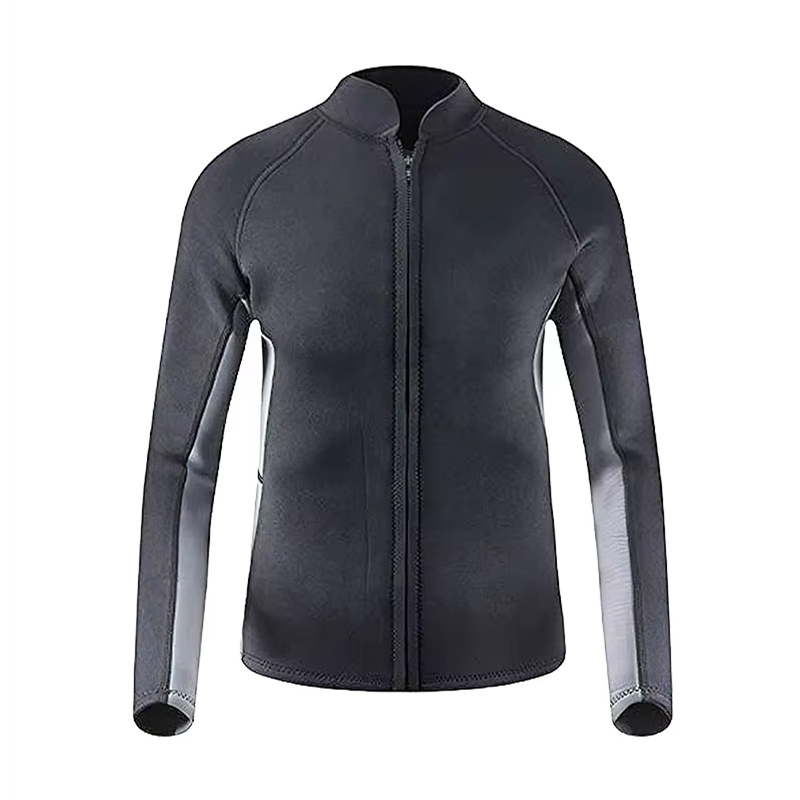
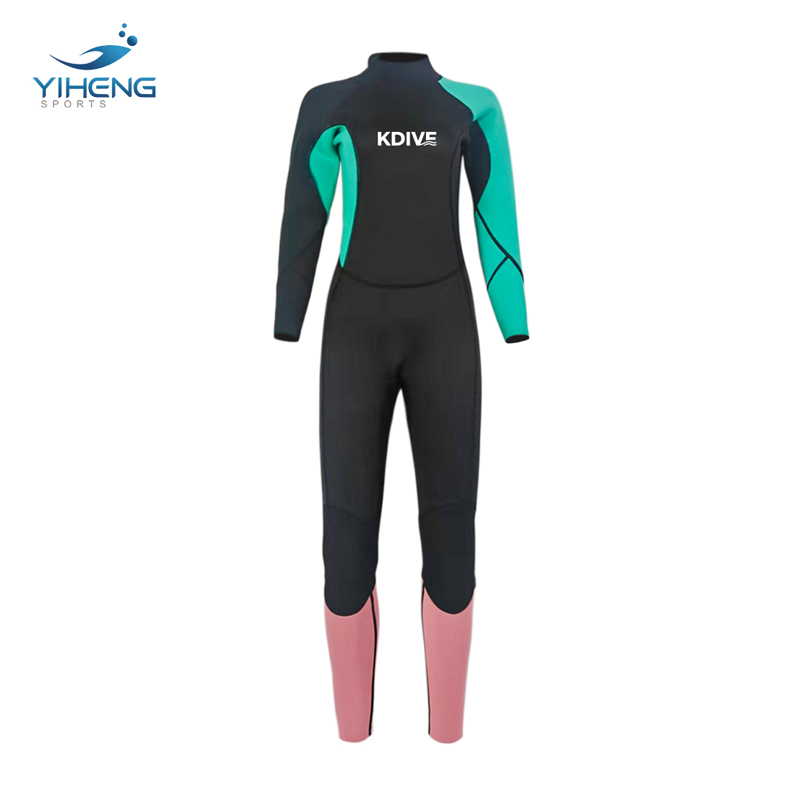
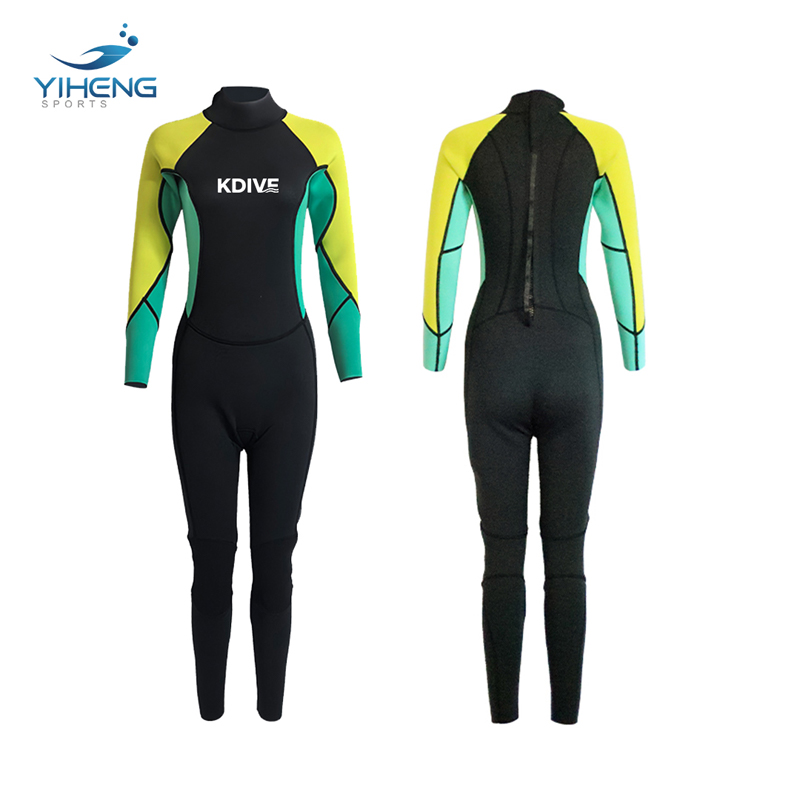
2mm/3mm Neoprene Long Sleeve Snorkeling Jacket
Key Product Advantages
Full Long-Sleeve Protection
Full arm coverage is one of the most important advantages of this design. Short-sleeve swim tops may offer limited sun protection, while sleeveless garments leave the shoulders and upper arms exposed to the environment. The long-sleeve construction helps cover the arms during snorkeling, paddle sports, and surface swimming.
Protection is especially useful in tropical and coastal environments. Users may encounter strong sunlight, floating marine organisms, rough rocks, coral surfaces, or equipment straps that rub against exposed skin. The neoprene material creates a protective barrier that can help reduce the risk of minor scratches, irritation, and discomfort. It is not intended to replace specialized protective equipment for severe hazards, but it provides a practical level of coverage for ordinary recreational activity.
The design is also valuable for users who want to reduce direct sun exposure. A long-sleeve garment can cover more skin than sunscreen alone, particularly during long snorkeling sessions when water, perspiration, and repeated movement may reduce sunscreen performance. For retailers and distributors, this broad protection benefit makes the jacket relevant to customers seeking both thermal performance and skin coverage.
Two Thickness Options for Different Conditions
The availability of 2mm and 3mm versions allows buyers to select a jacket according to water temperature, activity intensity, and individual comfort preferences. The 2mm version is designed for approximately 22°C to 30°C water. It provides light insulation while remaining relatively easy to wear during warm-water snorkeling, surfing, kayaking, and swimming.
The 3mm version is intended for approximately 18°C to 24°C water. It provides additional insulation for users who are more sensitive to cold or who plan to stay in the water for longer periods. The thicker construction can also be useful when the jacket is worn as part of a layered system under a full wetsuit.
Temperature ranges are general guidance rather than absolute limits. Personal tolerance, wind conditions, activity intensity, body size, exposure time, and the fit of the garment all affect thermal comfort. Nevertheless, offering two thickness choices is more versatile than a single-thickness product. It enables wholesalers, retailers, dive centers, and private-label brands to build a more complete product range without changing the basic jacket concept.
Front Zipper Convenience
The front zipper is designed to make the jacket easier to put on and take off. Users can see and reach the zipper directly, which is particularly helpful when dressing without assistance. This is a meaningful convenience for travelers, casual swimmers, and customers who may struggle with a back zipper or require another person to close the garment.
A front-opening design can also simplify fitting in retail environments. Customers can put on the jacket more easily during a product trial, and staff can provide sizing assistance without complicated handling. For rental businesses and water sports schools, easy entry and removal may reduce preparation time between activities.
The zipper area includes a zipper guard intended to help reduce direct contact between the zipper and the skin. This detail can improve comfort around the neck, chest, and upper abdomen. It also reflects a broader design approach in which convenience and user comfort are considered alongside insulation and durability.
Enhanced Shoulder and Back Mobility
Swimming and diving require frequent shoulder movement. A garment that fits tightly but does not accommodate arm rotation can cause discomfort and fatigue. The snorkeling jacket uses elastic fabric and special cutting around the underarms and lower back to support a wider range of movement.
The underarm area is important because it expands and contracts as the arms move forward, upward, and outward. A flexible underarm construction helps reduce pulling across the chest and shoulders. The lower-back area also contributes to comfort when users bend, paddle, reach for equipment, or turn their torso.
Compared with a rigid or poorly patterned neoprene top, this mobility-oriented structure can make the garment feel more natural during activity. It is intended to let users swim, snorkel, paddle, and dive with fewer restrictions while preserving the close-fitting characteristics needed for thermal performance.
Soft, Elastic, and Shape-Retaining Neoprene
High-quality neoprene is central to the product’s performance. The material is soft against the skin, highly elastic, and resistant to deformation during normal use. These characteristics help the garment adapt to different body movements while maintaining a close and comfortable fit.
Elasticity is especially important for a jacket that may be worn over swimwear or beneath another wetsuit. The fabric must stretch sufficiently during dressing and activity without becoming loose too quickly. A material that recovers its shape effectively can provide a more consistent fit over repeated use.
Neoprene also contributes to thermal insulation by helping reduce heat transfer from the body to the surrounding water. The insulating effect depends on thickness, fit, water temperature, activity level, and the rest of the user’s equipment. The 2mm and 3mm options therefore provide different levels of insulation while retaining the same basic garment concept.
Wear and Water Resistance
The product specifications include a wear-resistance requirement of no damage after 4,000 friction cycles under a pressure of at least 9kPa. This performance target indicates that the material and construction are designed to withstand repeated contact and rubbing during ordinary use.
Wear resistance matters because snorkeling jackets may contact life jackets, buoyancy equipment, surfboards, kayak seats, diving accessories, storage bags, and other garments. Repeated friction around the shoulders, sides, waist, and arms can gradually damage weaker materials. A wear-resistant construction helps support a longer service life and lowers the risk of premature replacement.
The garment also has a hydrostatic pressure resistance requirement of at least 80kPa without water seepage. This specification supports the product’s role as a protective and insulating outer layer. It should not be interpreted as making the jacket a completely waterproof drysuit, because water can enter through the zipper, openings, seams, and fit gaps during active use. However, the material itself is designed to resist water penetration under the stated testing condition.
Strength in Multiple Directions
The garment is required to remain unbroken for 10 seconds under a longitudinal tension of at least 150N and also remain unbroken for 10 seconds under a transverse tension of at least 150N. Testing in both directions is important because a garment experiences different forces during dressing and movement.
Longitudinal strength relates to forces along the length of the body or sleeve, while transverse strength relates to stretching across the chest, back, arms, and torso. A product that performs well in only one direction may still fail when pulled across the body or when users extend their arms. Multidirectional strength testing provides a more complete view of garment durability.
Performance Compared with Basic Alternatives
Compared with a standard swim shirt or lightweight rash guard, the neoprene jacket provides greater thermal insulation and a thicker protective barrier. A rash guard is often optimized for sun protection, quick drying, and lightweight comfort in warm water. The neoprene jacket adds insulation and can be more suitable when water temperatures are lower or when the user remains submerged for longer periods.
Compared with a full wetsuit, the jacket is easier to put on, less restrictive for certain activities, and more adaptable to warm conditions. A full wetsuit provides broader body coverage and may be necessary for cold-water diving, but it can be excessive for short snorkeling sessions or surface activities in moderate temperatures. The jacket offers a practical middle option between a thin rash guard and a complete suit.
Compared with some back-zipper designs, the front zipper offers greater independence during dressing. A back zipper can provide a smooth front panel, but it may be difficult for users to reach and close without assistance. The front zipper of this jacket is a functional advantage for individual users, rental operations, and activity providers.
Compared with generic neoprene tops that use uniform cuts, the mobility-focused underarm and lower-back structure is intended to improve comfort during active movement. The product is not only a piece of insulating material; it is a garment developed around the motion patterns associated with swimming, snorkeling, diving, surfing, and kayaking.
For buyers comparing competing products, the most meaningful differences should be evaluated together: material quality, thickness accuracy, pattern design, zipper construction, stretch recovery, seam quality, dimensional consistency, and quality-control documentation. A low purchase price alone does not guarantee reliable performance if the material becomes loose, the zipper irritates the skin, or the garment varies significantly between production batches.
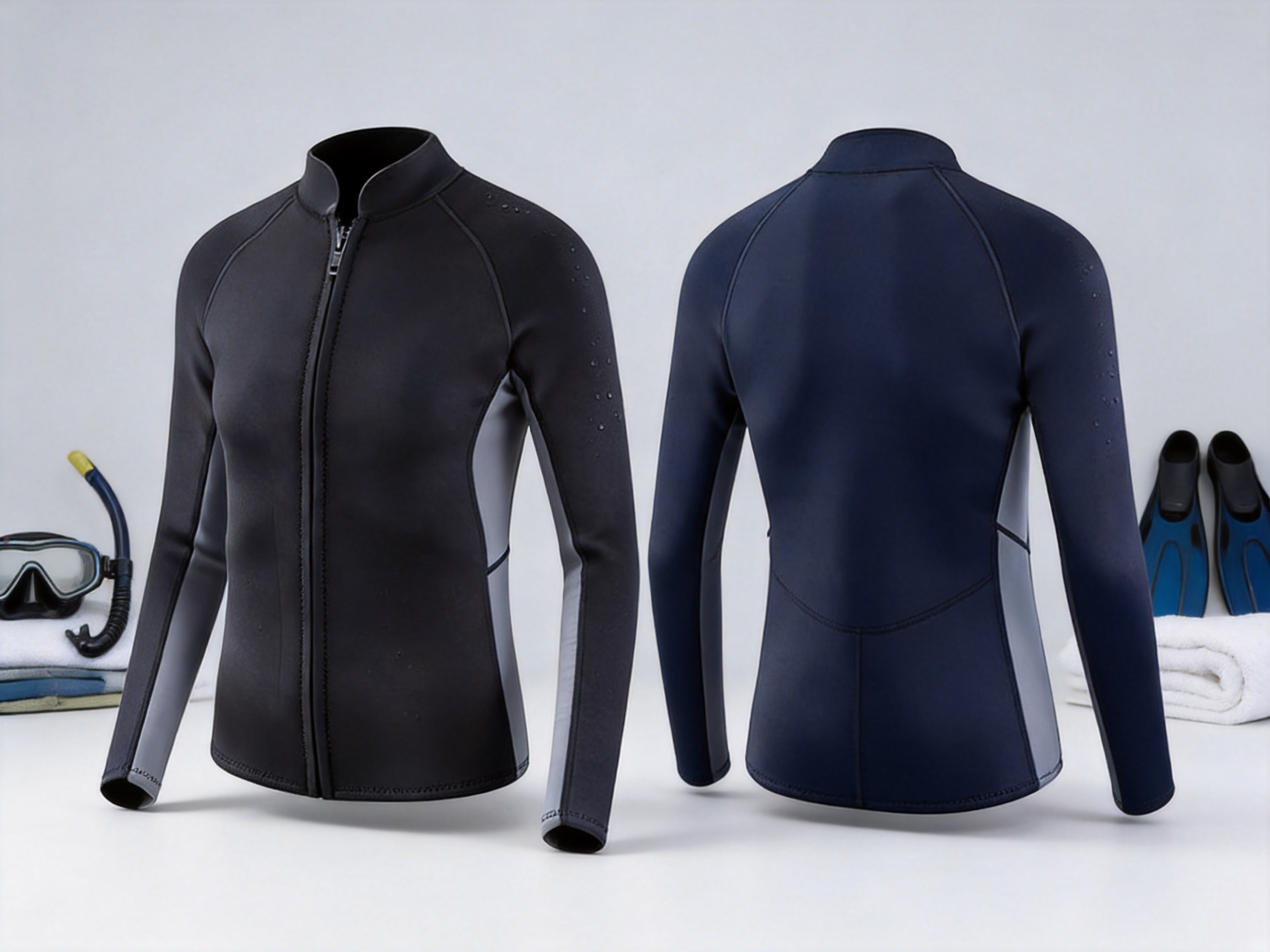
Applications Across Water Sports
Snorkeling
Snorkeling is the primary application for the product. Snorkelers often spend extended periods at the surface, where they may experience changing wind, sunlight, and water temperatures. The jacket can provide a comfortable layer that helps reduce heat loss while protecting the arms from sun exposure and minor environmental contact.
The long sleeves are useful when snorkelers approach coral areas, rocky shorelines, or floating structures. The jacket does not eliminate the need for careful behavior around marine environments, but it can provide an extra layer between the skin and common minor hazards.
Scuba Diving
The jacket can be worn as part of a layered diving system or as a supplementary top in suitable water conditions. The 3mm version may be particularly useful when paired with other neoprene equipment in moderate temperatures. Divers should select the overall suit configuration according to depth, exposure time, local conditions, and professional safety guidance.
In diving applications, flexibility around the shoulders and lower back is important because divers frequently adjust equipment, control buoyancy, handle accessories, and change body position. The jacket’s mobility-oriented cutting is intended to support these movements without unnecessary restriction.
Surfing
Surfers need a garment that can withstand repeated arm movement, contact with equipment, and movement between the board and the water. The jacket’s neoprene construction provides more insulation than a basic rash guard, while its long sleeves offer additional protection against board contact and environmental exposure.
The front zipper can also be convenient before and after a session when users are changing in outdoor or travel environments. The jacket may be worn independently in suitable water temperatures or combined with other wetsuit components depending on conditions.
Kayaking and Paddle Sports
Kayaking involves continuous upper-body movement, especially around the shoulders, arms, and back. A garment that is too rigid can interfere with paddling rhythm. The elastic underarm and lower-back areas are intended to help users rotate and extend the upper body more comfortably.
The jacket can also offer useful protection from wind and splashing. While it is not a replacement for a dedicated dry top or safety equipment, it can be a practical insulating layer for recreational paddlers in moderate conditions.
Swimming and Water Recreation
For recreational swimming, water parks, beach activities, and boat trips, the jacket provides a combination of coverage and warmth. It may be especially useful for users who become cold quickly or who want to limit direct sun exposure during extended outdoor activity.
Because it can be used as a stand-alone top, the jacket is suitable for customers who do not want the coverage or cost of a complete wetsuit. This expands its appeal beyond dedicated divers and makes it relevant to a wider consumer market.
Manufacturing Capabilities and Production Experience
Product quality begins with manufacturing capability. Jiangsu Yiheng Sports Products Co., Ltd. has been involved in neoprene materials and finished products since 2008. Over more than 15 years of production experience, the company has built knowledge covering material sourcing, neoprene processing, garment construction, product development, and order management.
The company’s experience also includes approximately eight years of direct practice in the retail market. This combination of manufacturing and market exposure is valuable because it connects factory production with actual consumer needs. Retail experience can help identify common complaints, sizing issues, zipper preferences, comfort requirements, packaging expectations, and product features that influence purchasing decisions.
The factory covers more than 15,000 square meters and has more than 120 professional employees. A facility of this scale can support dedicated production areas, coordinated workflows, quality inspection, material handling, sample development, and order fulfillment. It also provides a foundation for serving customers that require repeat production rather than isolated small-batch manufacturing.
Material Selection and Incoming Inspection
Neoprene performance depends heavily on the consistency of the raw material. Before production, materials should be checked for thickness, elasticity, surface condition, color consistency, density, and visible defects. Incoming inspection helps reduce the risk that unsuitable material will enter cutting or sewing processes.
For a 2mm/3mm jacket, accurate thickness is particularly important. If the material is thinner than specified, thermal performance may be reduced. If thickness varies excessively, the fit and appearance of finished garments may become inconsistent. Controlled material selection helps ensure that the final product corresponds to the intended specification.
Material inspection should also consider how the neoprene behaves during stretching and recovery. A fabric may appear acceptable when flat but perform poorly when repeatedly extended. Evaluating elasticity and recovery helps manufacturers select materials that support long-term wearability.
Pattern Development and Cutting
Pattern development determines how the jacket follows the body and how it behaves during movement. The front, back, sleeves, underarms, and lower-back panels must work together to create a comfortable fit. Special attention is needed around the shoulders because this area experiences substantial movement during swimming and paddling.
Accurate cutting helps maintain panel symmetry and dimensional consistency. Poorly controlled cutting can lead to uneven sleeves, misaligned seams, uncomfortable tension, or inconsistent sizing. Professional production processes use standardized patterns and controlled cutting procedures to reduce these risks.
For private-label customers, pattern development may also support adjustments to fit, branding requirements, target-market sizing, or product positioning. The manufacturer’s experience with both OEM and ODM work allows buyers to choose between a proven existing design and a more customized development process.
Assembly and Zipper Installation
Neoprene garments require careful assembly because the material is flexible and can be affected by tension during sewing or bonding. Operators must maintain accurate alignment while preventing excessive stretching that could distort panels. The zipper area requires particular attention because it influences both ease of use and garment comfort.
A correctly installed front zipper should operate smoothly, remain securely attached, and align with the surrounding panels. The zipper guard must also be positioned properly to reduce the possibility of irritation. Consistent assembly helps ensure that different production batches provide a similar user experience.
Seam construction is another important factor. Seams must tolerate repeated stretching and movement without opening or causing discomfort. Depending on the construction method and customer requirements, production may involve sewing, adhesive processes, or other suitable assembly techniques. The chosen process should correspond to the material characteristics and intended use.
Process Quality Control
Quality control should take place throughout production rather than only at the end. In-process checks may include panel dimensions, seam alignment, zipper operation, sleeve symmetry, garment measurements, appearance, and stretch behavior. Detecting problems early reduces rework and helps protect delivery schedules.
Finished-product inspection can verify the overall appearance, dimensional consistency, closure performance, material condition, and packaging readiness. For buyers, a documented inspection approach provides greater confidence in repeat orders and private-label programs.
The stated product performance requirements, including wear resistance, hydrostatic pressure resistance, and longitudinal and transverse tensile strength, provide measurable targets for evaluating the garment. These tests help move quality assessment beyond visual inspection and create objective criteria for product performance.
Production Coordination and Supply Support
A reliable supplier must coordinate more than manufacturing. Material planning, sample approval, production scheduling, quality inspection, packaging, and shipment preparation all influence the success of an order. Yiheng’s focus on long-term supply support is intended to help customers manage these connected stages.
For importers, distributors, retailers, and private-label brands, stable communication is essential. Clear specifications for thickness, color, size range, logo placement, labels, packaging, and inspection requirements can reduce misunderstandings. A manufacturer experienced in OEM and ODM projects can help translate these requirements into practical production instructions.
OEM, ODM, and Private-Label Potential
The jacket is suitable for customers that want to expand an existing water sports range or develop a private-label snorkeling product. A proven base design can reduce development time, while customization may be available for branding, colors, labels, packaging, size grading, and market-specific requirements.
OEM production is appropriate when the buyer has established product specifications and branding instructions. The manufacturer produces according to the agreed design and quality requirements. ODM development may be more suitable when the buyer wants assistance with product structure, materials, functional details, or market adaptation.
A private-label customer may position the jacket for snorkeling, travel, resort activities, beginner diving, water fitness, or outdoor recreation. Different markets may emphasize different benefits. A tropical resort retailer may focus on sun and jellyfish protection, while a diving distributor may emphasize layering and thermal insulation. The same core product can support multiple marketing approaches when the specifications and communication remain accurate.
Private-label buyers should define technical details before mass production. These may include the selected thickness, size range, color standards, logo method, zipper color, neck construction, hangtags, packaging, carton markings, care labels, and testing requirements. Clear approval procedures for samples and pre-production units can help reduce the risk of costly changes after production begins.
How to Select the Correct Version
Choosing Between 2mm and 3mm
The 2mm option is generally appropriate for warmer water, higher activity levels, and users who prioritize lighter weight and easier movement. It can be suitable for tropical snorkeling, warm-weather kayaking, surface swimming, and active watersports where excessive insulation may cause overheating.
The 3mm option is generally preferable for cooler water, longer sessions, lower activity levels, or users who require additional warmth. It may also function well as an inner layer beneath a full wetsuit when additional insulation is needed without adding a complete second suit.
Considering Fit
Neoprene garments work most effectively when they fit close to the body without creating painful pressure or limiting breathing. A loose fit can allow water circulation and reduce thermal efficiency, while an excessively tight fit may restrict movement and make dressing difficult.
Users should consult the supplier’s size chart and consider chest, waist, sleeve, and torso measurements. Body shape varies, so a single numerical size may not describe fit equally for every customer. For private-label brands, accurate size charts and clear fit guidance can reduce returns and improve customer satisfaction.
Considering Layering
The jacket can be worn alone in appropriate warm or moderate conditions. It can also be layered with swimwear, a neoprene bottom, a vest, or a full wetsuit. When layering, users should ensure that the combined garments do not restrict breathing, circulation, or movement.
Layering is one of the product’s practical strengths because it allows users to adapt to changing conditions. A customer may use the 2mm jacket during warm-water travel and later wear it under another suit during a cooler activity. This flexibility can make the product more valuable than a single-purpose garment.
Care, Maintenance, and Service Life
Proper care helps preserve neoprene elasticity, surface condition, and appearance. After use, the jacket should be rinsed with clean water to remove salt, chlorine, sand, and other residues. It should then be allowed to dry in a well-ventilated shaded area.
Direct, prolonged exposure to intense sunlight can accelerate material aging and may affect color and elasticity. The jacket should not be stored while wet, tightly compressed, or folded around sharp objects. Hanging or laying it flat in a suitable location can help reduce permanent creasing.
Users should operate the zipper carefully and avoid forcing it when fabric or sand is caught in the teeth. The zipper area should be kept clean, and the zipper guard should remain properly positioned. Sharp jewelry, rough surfaces, and unnecessary contact with abrasive equipment should also be avoided.
Care instructions should be included in retail packaging or product labeling. For private-label buyers, localized care information can help consumers understand how to protect the product and may reduce avoidable warranty issues.
Quality, Safety, and Responsible Product Communication
The jacket is designed for water sports, but it is not a personal flotation device, drysuit, or substitute for appropriate diving and water safety equipment. Users should select their complete equipment system according to the activity, location, weather, water temperature, experience level, and applicable safety guidance.
Marketing claims should accurately reflect the product’s capabilities. The jacket provides insulation, coverage, elasticity, and resistance to water penetration under specified test conditions. It should not be described as completely waterproof in all circumstances or as protection against every marine hazard.
Transparent specifications can strengthen buyer confidence. Information such as thickness, recommended water-temperature range, material type, zipper position, intended applications, care instructions, and available customization should be presented clearly. For commercial buyers, test targets and inspection procedures can be incorporated into purchase agreements where appropriate.
Responsible communication is particularly important for products used in aquatic environments. Customers should understand that thermal comfort varies between individuals and that water temperature alone does not determine safety. Strong currents, wind, fatigue, and exposure time must also be considered.
Why Manufacturing Experience Matters to Buyers
Manufacturing experience affects the consistency of every stage, from raw material selection to final inspection. A company that has spent many years producing neoprene fabrics and finished products is more likely to understand the practical relationships between material thickness, stretch, cutting, sewing, fit, and end use.
Experience in finished products is also important. Fabric expertise alone does not guarantee that a jacket will be comfortable or durable. Finished-garment production requires knowledge of body movement, pattern engineering, zipper integration, seam placement, size grading, and user expectations.
Yiheng’s product range includes wetsuits, drysuits, fishing waders, rash guards, water sports equipment, and neoprene fabrics. This broader category experience can support cross-product development and material knowledge. It also positions the company to work with customers that need several related product categories from one manufacturing partner.
The company’s history of direct retail-market practice adds another perspective. Understanding the retail environment can help connect factory decisions with customer concerns such as ease of dressing, attractive presentation, comfort, repeat purchase potential, and after-sales issues. For buyers building a long-term product line, this combination of factory expertise and market awareness can be a meaningful advantage.
Buyer Checklist for Commercial Orders
Commercial buyers should confirm the following details before placing a production order:
1. Selected thickness: 2mm or 3mm.
2. Target water-temperature range and intended activity.
3. Size range, measurement chart, and fit preference.
4. Material composition, elasticity expectations, and color requirements.
5. Front zipper specifications and zipper-guard construction.
6. Logo, label, hangtag, packaging, and carton-marking requirements.
7. Applicable testing requirements for wear, hydrostatic pressure, and tensile strength.
8. Sampling, approval, inspection, and production timelines.
9. Required documentation for import, distribution, or retail sale.
10. Care instructions and customer-facing product information.
Confirming these points early helps align product development, production, inspection, and marketing. It also allows the manufacturer to identify any technical or packaging issues before mass production begins.
Technical Specification Summary
| Item | Specification or Feature | Practical Benefit |
|---|---|---|
| Product type | Long-sleeve neoprene snorkeling jacket | Provides upper-body insulation and protection for water sports |
| Thickness options | 2mm and 3mm | Supports different water temperatures and layering needs |
| Recommended temperature range | 2mm: approximately 22°C–30°C; 3mm: approximately 18°C–24°C | Helps buyers select a suitable version for climate and activity |
| Material | High-quality neoprene | Softness, elasticity, thermal insulation, and water resistance |
| Coverage | Full long sleeves and upper-body coverage | Helps protect against sunlight, minor scratches, and marine contact |
| Closure | Front zipper with zipper guard | Facilitates independent dressing and helps reduce skin irritation |
| Mobility construction | Elastic fabric and special cutting at underarms and lower back | Supports shoulder, arm, and torso movement |
| Wear resistance | No damage after 4,000 friction cycles at pressure of at least 9kPa | Supports durability during repeated contact and use |
| Hydrostatic resistance | At least 80kPa without water seepage under the stated test condition | Supports resistance to water penetration through the material |
| Tensile strength | Remains unbroken for 10 seconds at at least 150N longitudinally and transversely | Supports structural integrity during stretching and movement |
| Applications | Snorkeling, scuba diving, surfing, kayaking, swimming, and water sports | Broadens retail and commercial market potential |
| Manufacturing support | OEM, ODM, private-label, and long-term supply support | Enables customized product programs and repeat orders |
Questions and Answers
What is the main purpose of this snorkeling jacket?
The jacket is designed to provide light-to-moderate thermal insulation, full arm coverage, and improved comfort during snorkeling and other water sports. It can be used alone in suitable conditions or layered under a full wetsuit.
What is the difference between the 2mm and 3mm versions?
The 2mm version is intended for warmer water, approximately 22°C to 30°C, and offers a lighter feel. The 3mm version is intended for cooler water, approximately 18°C to 24°C, and provides additional insulation. Actual comfort depends on the user, activity, wind, exposure time, and complete equipment system.
Can the jacket replace a full wetsuit?
It can replace a full wetsuit for some warm-water or surface activities, but it does not provide the same full-body coverage or cold-water protection. Divers and other users should select equipment according to the specific conditions and safety requirements of the activity.
Why is the front zipper useful?
The front zipper makes the jacket easier to put on and remove independently than many back-zipper designs. The zipper guard is intended to reduce direct contact between the zipper and the skin.
Is the jacket suitable for both men and women?
Yes. The product uses a neutral unisex style intended for both men and women. Users should select the size according to the supplier’s measurement chart and their preferred close-fitting level.
Can it be worn under another wetsuit?
Yes. The jacket can function as an inner layer under a full wetsuit when additional insulation or upper-body coverage is desired. Users should confirm that the combined layers do not restrict breathing or movement.
What activities are suitable for the jacket?
It is suitable for snorkeling, scuba diving in appropriate conditions, surfing, kayaking, swimming, and various recreational water sports. It can also be used for beach and boat activities where additional coverage and warmth are useful.
How durable is the product?
The stated specifications include resistance to 4,000 friction cycles under a pressure of at least 9kPa, hydrostatic pressure resistance of at least 80kPa without water seepage under the test condition, and tensile performance of at least 150N in both longitudinal and transverse directions. Proper care is still necessary to preserve the material and zipper.
Does the jacket provide complete waterproof protection?
No. It is a neoprene water-sports jacket, not a drysuit. The material is designed to resist water penetration under a specified hydrostatic test, but water may enter through openings, seams, the zipper area, or during active movement.
What manufacturing services are available for commercial buyers?
The manufacturer provides professional production support for neoprene materials and finished products, including OEM manufacturing, ODM development, private-label programs, and long-term supply cooperation. Buyers should confirm specific customization options during product development.
What should buyers request before mass production?
Buyers should request a sample, confirm measurements and materials, approve colors and branding, define packaging requirements, agree on inspection standards, and confirm testing or documentation needs. Clear specifications help ensure consistent production.
Conclusion
The 2mm/3mm Neoprene Long Sleeve Snorkeling Jacket is a versatile water sports garment positioned between a lightweight rash guard and a full wetsuit. Its strongest advantages include two thickness options, full long-sleeve protection, a convenient front zipper, a skin-friendly zipper guard, flexible underarm and lower-back construction, soft high-quality neoprene, and measurable durability requirements.
The product is suitable for snorkeling, scuba diving in appropriate conditions, surfing, kayaking, swimming, and general water recreation. The 2mm version supports warmer-water use, while the 3mm version provides additional insulation for cooler conditions or layering. Its dual-use design allows it to function as an independent top or as part of a broader wetsuit system.
For commercial customers, the product is supported by a manufacturer with more than 15 years of production experience in neoprene materials and finished products, a factory covering more than 15,000 square meters, and a workforce of more than 120 professional employees. Experience in OEM manufacturing, ODM development, retail-market practice, and long-term supply support creates a foundation for consistent production and private-label cooperation.
When evaluated as both a garment and a manufacturing program, the jacket offers a practical combination of comfort, protection, mobility, durability, and market flexibility. Buyers seeking a reliable neoprene product for their water sports assortment can use the design as a ready-made solution or as a starting point for a customized product line.
References
1. Product specification information for the 2mm/3mm Neoprene Long Sleeve Snorkeling Jacket, including material, construction, performance requirements, applications, and temperature guidance.
2. Jiangsu Yiheng Sports Products Co., Ltd. company information, including manufacturing history, factory capacity, workforce, product categories, OEM services, ODM development, and private-label support.
3. General technical principles of neoprene garment design, thermal insulation, elasticity, water resistance, abrasion resistance, and tensile performance.
4. General water-sports equipment selection principles concerning water temperature, activity intensity, layering, fit, garment care, and user safety.
5. General quality-control principles for neoprene material inspection, garment cutting, zipper installation, seam assembly, finished-product inspection, and repeat-order consistency.
6. General product-development practices for snorkeling jackets, wetsuits, rash guards, diving apparel, surfing garments, kayaking apparel, and related water sports equipment.
Product: 2mm/3mm Neoprene Long Sleeve Snorkeling Jacket

LET’S DEVELOP YOUR NEXT NEOPRENE PRODUCT LINE
Quick Links
Product Categories
Contact Us
-
 Email: postmaster@yihengsport.com
-
 Mobile: +86-13564100539
-
 No. 480 Jiangping Road, Madian, Binjiang Town, Taixing City, Taizhou City, Jiangsu Province, China.
Copyright © Jiangsu Yiheng Sports Products Co., Ltd. All Rights Reserved
China Wetsuit Manufacturer Neoprene Fabric Manufacturer
