

 Language
 English
 中文简体
 日本語
 русский
 Español
 عربى

Oct, 10, 2026
Smooth Skin Spearfishing Wetsuit: Design, Performance, and Manufacturing Excellence
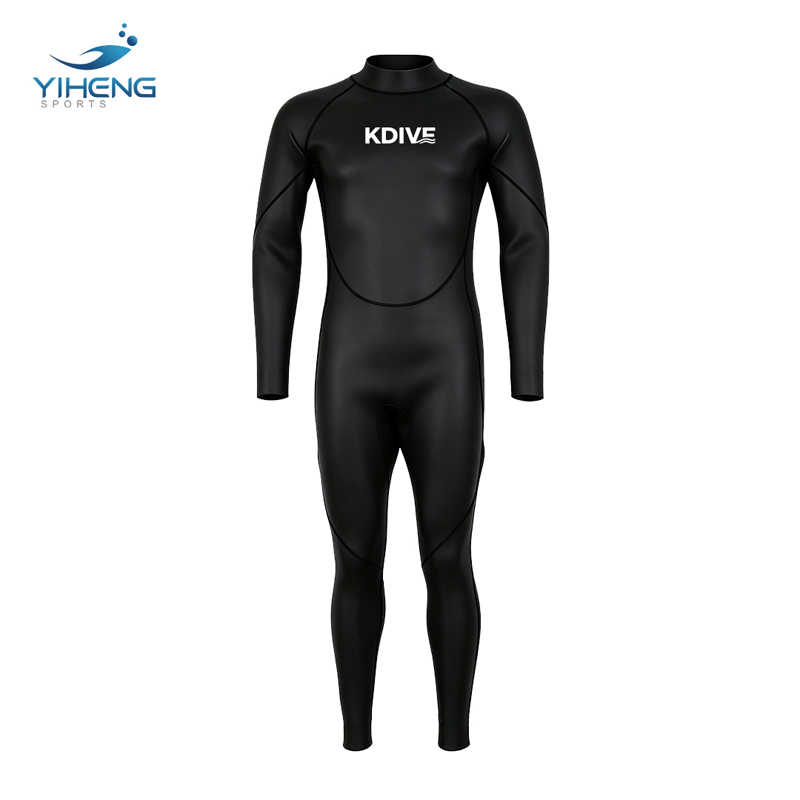
Smooth Skin Spearfishing Wetsuit
Spearfishing demands more from a wetsuit than ordinary recreational swimming. Divers need reliable thermal protection, freedom of movement, resistance to abrasion, a stable fit, and enough durability to withstand repeated contact with rocks, equipment, boats, and underwater surfaces. A well-designed spearfishing wetsuit must also support long periods of controlled movement and breath-hold diving without creating unnecessary drag or discomfort.
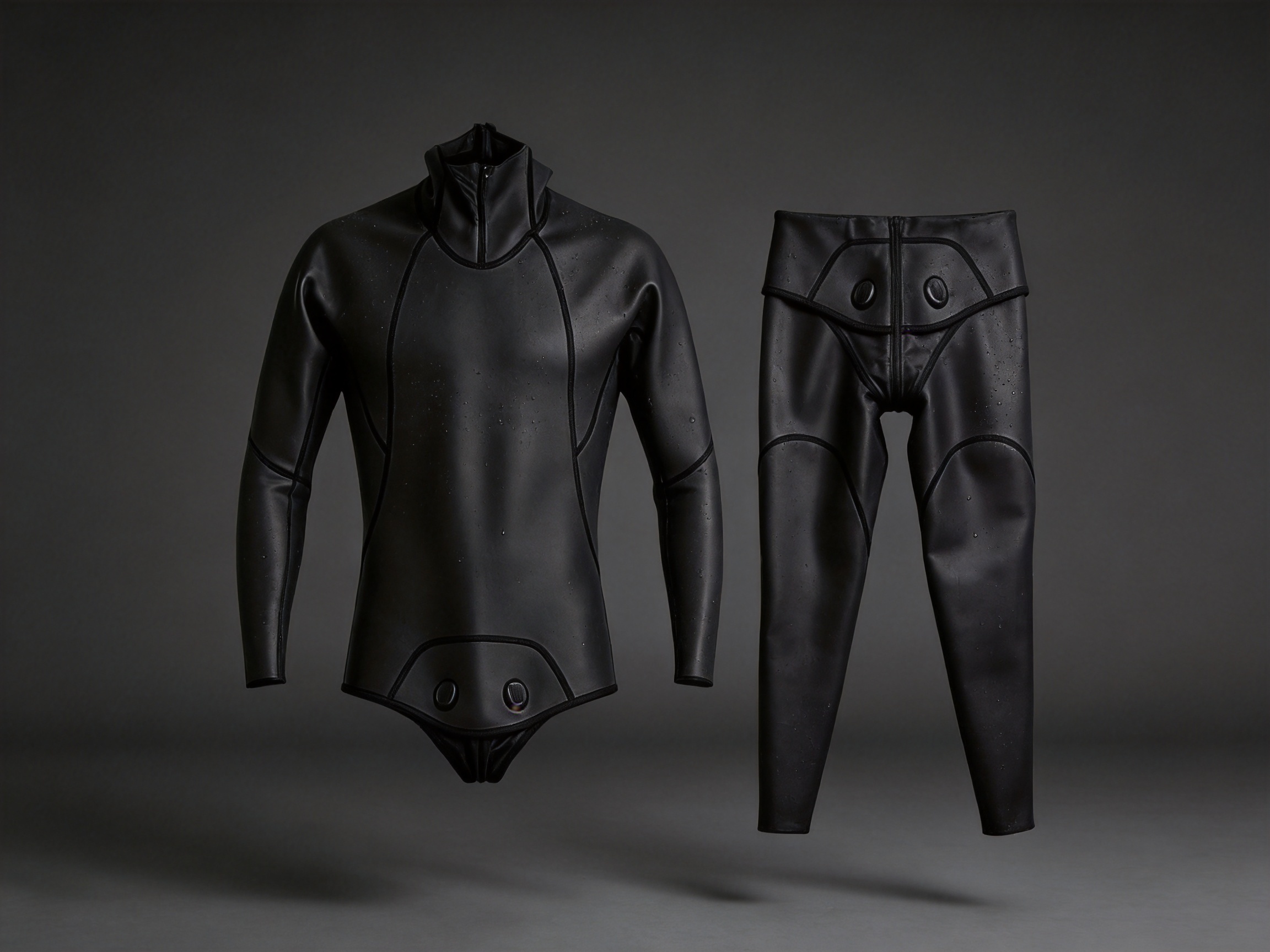
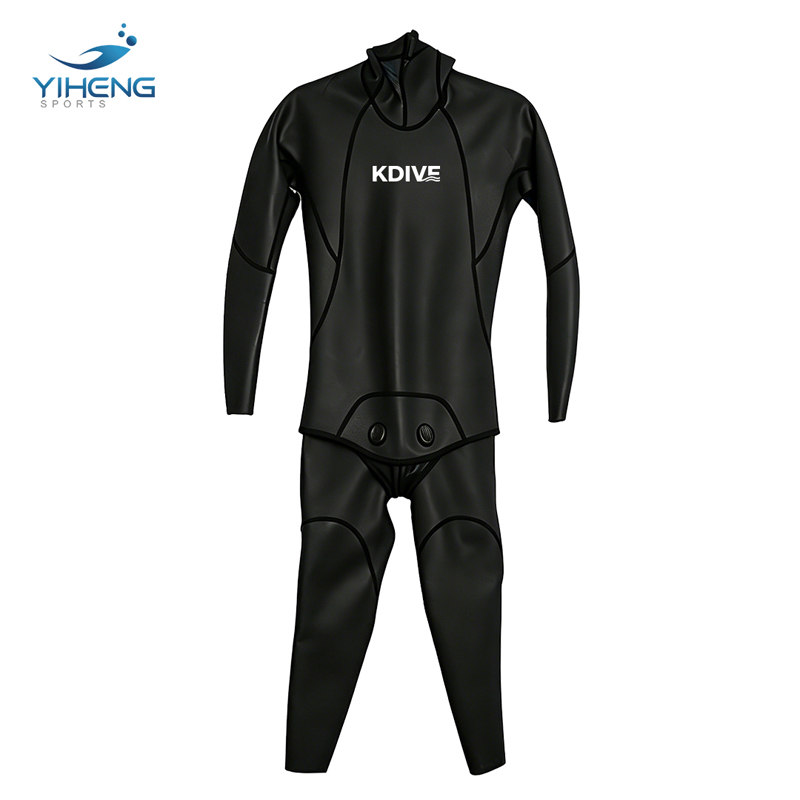
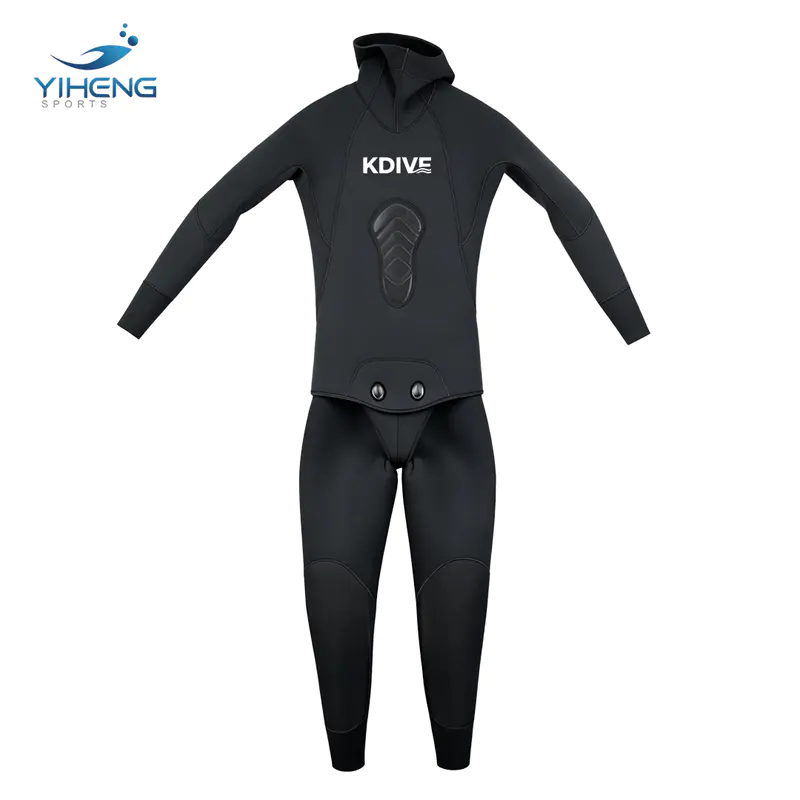
The Smooth Skin Spearfishing Wetsuit is developed around these demanding requirements. It is a two-piece wetsuit system made from smooth skin neoprene and reinforced with four-needle six-thread stitching. Its beavertail closure uses a dual snap-button design to help keep the upper and lower sections securely positioned during movement. The ergonomic cut supports close body contact, while the elastic neoprene construction is intended to preserve flexibility during swimming, finning, duck diving, and equipment handling.
Available in sizes S through XXXL and supplied in black, the wetsuit is suitable for spearfishing, freediving, recreational diving, and other water activities that require thermal insulation and dependable protection. Its construction combines material selection, seam reinforcement, water resistance, tensile strength, and ergonomic design into one performance-oriented product.
This article examines the product’s main advantages, construction details, performance characteristics, manufacturing considerations, quality-control standards, and suitability for private-label and wholesale programs.
Why Spearfishing Wetsuits Require Specialized Construction
Spearfishing is a highly active underwater sport. A diver may swim against currents, descend repeatedly, hold position near a reef, move through confined areas, or make contact with rocks and marine structures. These actions create stress in different directions across the wetsuit. The garment must stretch with the body while resisting tearing, seam failure, abrasion, and water penetration.
Unlike a general-purpose surf suit or entry-level swimming suit, a spearfishing wetsuit is expected to maintain a close fit throughout repeated underwater movement. Excess material can increase drag and allow water to circulate inside the garment. A loose fit may also reduce thermal efficiency because the insulating layer of water cannot remain stable against the skin. Conversely, a wetsuit that is too restrictive can interfere with breathing, body rotation, finning, and safe movement.
Material surface is also important. Smooth skin neoprene is commonly selected for applications where reduced water friction and close body contact are desirable. The smooth outer surface can help water pass over the suit with less resistance than a heavily textured exterior. It also contributes to the characteristic appearance associated with many dedicated spearfishing wetsuits.
Construction quality determines whether the material can deliver its intended benefits. A high-quality neoprene panel can still fail if seams are weak, stitching is inconsistent, or closures are poorly positioned. For this reason, the product combines smooth skin neoprene with reinforced stitching, a shaped cut, and a secure beavertail system.
Product Overview
| Product Feature | Specification or Description | Performance Relevance |
|---|---|---|
| Product type | Two-piece smooth skin spearfishing wetsuit | Supports flexible use, easier dressing, and stable underwater coverage |
| Primary material | Neoprene, smooth skin finish | Provides elasticity, insulation, and a streamlined surface |
| Thickness information | Technical specification lists 2 mm; product information references 3 mm CR neoprene | Thickness should be confirmed for the specific order, climate, and application |
| Seam construction | Four-needle six-thread stitching | Reinforces seams and helps reduce splitting during intensive use |
| Closure | Dual snap-button beavertail | Helps secure the two-piece system and maintain stable wearing |
| Color | Black | Creates a professional appearance and supports coordinated product collections |
| Available sizes | S, M, L, XL, XXL, XXXL | Supports a broad customer size range |
| Abrasion resistance | No damage after 4,000 friction cycles under pressure of at least 9 kPa | Indicates resistance to repeated rubbing under specified test conditions |
| Hydrostatic resistance | At least 80 kPa with no water seepage | Demonstrates resistance to water penetration under laboratory pressure |
| Tensile strength | No breakage after 10 seconds under at least 150 N tension, lengthwise and crosswise | Supports confidence in material and construction durability |
The thickness information supplied for this product contains two references: the technical specification identifies 2 mm, while the product information describes 3 mm CR neoprene. Thickness has a direct effect on thermal protection, flexibility, buoyancy, and intended water temperature. Buyers, distributors, and private-label customers should confirm the final thickness before production or purchase. This clarification is especially important when developing product pages, packaging, size charts, and technical catalogs.
Smooth Skin Neoprene and Its Functional Advantages
Neoprene is widely used in water-sports apparel because it provides a combination of elasticity, insulation, and resilience. The material helps reduce heat loss by creating an insulating barrier between the diver and the surrounding water. It also conforms to the body, allowing a close fit without requiring rigid panels or excessive fasteners.
The smooth skin finish gives the wetsuit a distinctive performance profile. A smooth surface can help reduce drag as the diver moves through the water. It may also reduce the tendency of water to remain on the outer surface compared with some heavily fabric-covered materials. For spearfishing and freediving, where efficient movement is valuable, a streamlined exterior can contribute to a more natural swimming experience.
Smooth skin neoprene also supports close contact around the torso and limbs. When correctly sized, the material can help limit internal water flushing. Water flushing occurs when large amounts of cold water enter and circulate inside a garment. Reducing this movement helps preserve a more stable insulating layer and can improve perceived warmth during extended sessions.
The material’s elasticity is equally important. Spearfishing involves repeated shoulder rotation, torso bending, leg extension, and controlled changes in body position. Neoprene must stretch without permanently deforming or creating excessive resistance. The balance between flexibility and recovery is one of the primary factors that separates a purpose-built wetsuit from a basic protective garment.
Compared with products made from thin, low-grade foam or poorly laminated materials, a carefully selected neoprene structure can provide better consistency across panels and improved resistance to everyday use. The smooth skin construction is therefore not only a visual choice; it is part of the product’s functional identity.
Two-Piece Design for Spearfishing and Freediving
The wetsuit uses a two-piece format consisting of an upper section and lower section secured through a beavertail closure. This design is commonly valued by divers because it allows the garment to be put on in a controlled sequence and can provide overlapping coverage around the waist and lower torso.
The beavertail helps maintain the position of the upper section during movement. Without a secure connection, the top may ride upward when the diver stretches, bends, or swims forcefully. The dual snap-button design provides a practical way to fasten the beavertail and support a stable fit during extended activity.
A two-piece design can also offer flexibility in dressing and product configuration. Some users appreciate being able to adjust the order in which the pieces are worn. Retailers may also find the format attractive because it clearly communicates a specialized spearfishing construction rather than a generic one-piece water-sports suit.
The overlap created by the beavertail can contribute to coverage around the waist. This is especially useful when the diver is changing position frequently or wearing additional equipment. The closure should be handled carefully, and users should ensure that snap buttons are fully engaged before entering the water.
From a manufacturing perspective, a two-piece suit requires accurate panel cutting and careful alignment. The upper and lower sections must work together without creating pressure points or unnecessary bulk. The beavertail must be sized and positioned so that it secures the suit while preserving comfortable movement around the hips and abdomen.
Ergonomic Fit and Freedom of Movement
The product is designed around an ergonomic cut intended to sit closely against the body. Fit is essential for both performance and comfort. A correctly fitted wetsuit reduces unnecessary internal movement, helps retain warmth, and allows the material to follow the diver’s body during swimming and breath-hold movement.
The cut must account for the natural shape of the shoulders, chest, waist, hips, knees, and elbows. Areas that require frequent articulation need sufficient stretch and panel shaping. If the suit is cut too straight, the diver may experience pulling across the shoulders or behind the knees. If it is cut too generously, the suit may create folds that increase drag and permit water circulation.
Four-needle six-thread stitching supports the product’s ergonomic purpose. Reinforced seams help hold the panels together while allowing the neoprene to flex repeatedly. Stitching that is too rigid or poorly controlled can reduce stretch at the seam line. Consistent industrial stitching helps create a more predictable balance between strength and flexibility.
The size range from S to XXXL allows the product to serve a wider group of users. However, customers should select the size according to the supplier’s actual measurement chart rather than relying only on ordinary clothing sizes. Chest, waist, hip, torso, arm, and leg measurements can vary significantly between individuals and markets.
A snug wetsuit should feel close without causing sharp pressure, restricted breathing, numbness, or excessive difficulty in movement. Some resistance is normal when putting on a close-fitting neoprene suit, but the material should not be pulled aggressively by the fingernails. Proper dressing technique helps reduce damage to the smooth outer skin.
Reinforced Four-Needle Six-Thread Stitching
Seam performance is one of the most important durability factors in a wetsuit. Seams join multiple neoprene panels and must withstand stretching, compression, rubbing, and repeated dressing. A weak seam can split even when the surrounding material remains intact.
The four-needle six-thread construction used for this product is intended to reinforce seam areas and reduce the risk of splitting under intensive use. Multiple needles and threads distribute the joining force across the seam instead of concentrating stress at a single line. This supports improved dimensional stability and helps preserve the shape of the garment over time.
Stitching quality depends on more than the number of needles and threads. Thread tension, stitch density, seam allowance, machine calibration, panel alignment, and operator skill all affect the final result. An advanced manufacturing process therefore includes equipment maintenance, standardized sewing procedures, inspection of seam lines, and corrective action when irregularities are identified.
Consistent stitching is particularly important around high-movement areas such as the shoulders, crotch, waist, elbows, knees, and beavertail attachment points. These locations experience repeated flexing and may also be affected by the tension created when the diver puts on or removes the suit.
The reinforced construction gives the product an advantage over lower-cost wetsuits that rely on minimal stitching or inconsistent seam finishing. Buyers seeking private-label products can also benefit from this construction because seam reliability contributes directly to customer satisfaction, return rates, and long-term brand reputation.
Resistance to Abrasion and Mechanical Stress
Spearfishing environments can be demanding. Divers may kneel or rest against rocks, move near reef structures, handle equipment, or encounter rough surfaces while entering and exiting the water. Repeated rubbing can damage exposed neoprene, weaken the surface, and eventually affect the integrity of the garment.
The product specification reports no damage after 4,000 friction cycles under pressure of at least 9 kPa. This stated result indicates that the material and construction were evaluated under repeated abrasion conditions. Test outcomes should always be interpreted in relation to the specified pressure, equipment, sample preparation, and laboratory method, but the result provides a useful indicator of resistance to repeated rubbing.
Abrasion resistance is valuable for both professional and recreational users. A durable surface can help the wetsuit maintain its appearance and functionality after repeated use. It may also reduce the likelihood that minor contact with equipment or underwater structures will immediately become a serious defect.
Users should still treat smooth skin neoprene carefully. Sharp rocks, spear tips, hooks, buckles, and fingernails can damage almost any flexible foam material. The best performance is achieved when the suit is handled with care, rinsed after use, dried away from direct heat, and stored without sharp folds or heavy compression.
For distributors, the abrasion test result is a useful technical point when comparing products. It offers more meaningful information than general claims such as “high durability” because it identifies a defined cycle count and pressure condition. Retailers can use this information as part of a structured product comparison, provided that the test method and final product specification are confirmed.
Hydrostatic Resistance and Water Protection
The product specification identifies hydrostatic pressure resistance of at least 80 kPa with no water seepage. Hydrostatic testing evaluates how a material or assembled section responds to water pressure. This is relevant to diving garments because the suit must resist the movement of water through material, seams, or construction defects.
Hydrostatic resistance contributes to comfort by helping reduce unwanted water entry. When a wetsuit allows excessive water movement, the diver may experience faster cooling and a less stable fit. Maintaining a close, reliable barrier is particularly important during longer sessions or in cooler water.
Water resistance depends on the complete garment rather than on neoprene alone. Panel joints, stitching, closure areas, and transitions around the neck, wrists, ankles, and waist all influence real-world performance. Careful assembly and inspection are therefore essential parts of the manufacturing process.
The reported test value should not be interpreted as a guarantee for every possible water condition. Actual performance can be affected by fit, body movement, wear, seam damage, incorrect dressing, water temperature, and the presence of additional equipment. Nevertheless, a defined hydrostatic resistance result provides a stronger technical foundation than an unsupported waterproofing statement.
For commercial buyers, hydrostatic testing can also support quality documentation. Test reports, batch records, and inspection results help establish consistency between production lots. These documents can be especially useful when supplying retailers, distributors, diving schools, or private-label customers.
Tensile Strength in Lengthwise and Crosswise Directions
Wetsuits are exposed to tension in more than one direction. When a diver stretches an arm forward, bends a knee, or pulls the beavertail into position, the material may experience lengthwise, crosswise, or diagonal forces. Testing in both lengthwise and crosswise directions helps provide a more complete picture of material performance.
The product specification reports no breakage after 10 seconds under tension of at least 150 N in both directions. This indicates resistance to a defined tensile load and supports confidence that the material can withstand controlled mechanical stress without immediate failure.
Tensile strength works together with elasticity. A material can be strong but uncomfortable if it does not stretch sufficiently. It can also be flexible but unsuitable if it tears easily under tension. The product’s design aims to combine stretch, recovery, and strength through selected neoprene and reinforced construction.
Testing should be supported by proper sample preparation and consistent environmental conditions. Neoprene behavior can vary according to temperature, aging, thickness, lamination, and exposure to chemicals or ultraviolet light. A responsible production program therefore combines laboratory testing with visual inspection and process control.
For customers, tensile performance matters during dressing as well as during diving. The suit is often stretched while being pulled over the shoulders, hips, knees, and ankles. Careful dressing remains necessary, but stronger material and reliable seams provide an additional margin against accidental damage.
Thermal Comfort and Thickness Considerations
Neoprene thickness is directly related to insulation, flexibility, buoyancy, and seasonal use. Thicker material generally offers greater thermal protection but may feel less flexible. Thinner material typically supports easier movement but may be better suited to warmer water or shorter sessions.
The supplied product information contains both a 2 mm technical thickness reference and a statement describing 3 mm CR neoprene. Because these specifications differ, buyers should confirm the intended final version with the manufacturer. The appropriate thickness may vary according to target market, water temperature, product positioning, and customer expectations.
A 2 mm version may be positioned toward warm-water use, active movement, and customers who prioritize flexibility. A 3 mm version may provide additional insulation for cooler conditions while retaining a relatively mobile feel. These are general product-positioning considerations, not a substitute for verified thermal testing or professional diving guidance.
The close ergonomic fit also affects thermal performance. Even a thick wetsuit can feel cold if it is too loose and allows water to circulate freely. Likewise, a properly fitted suit may provide better comfort because it helps maintain a stable layer between the body and the surrounding water.
Product descriptions, labels, packaging, and size charts should clearly identify the final thickness. Accurate information helps prevent customer confusion and ensures that distributors position the product correctly. If multiple thickness options are available, they should be separated into clear model codes or color-coded specifications.
Manufacturing Capabilities and Production Experience
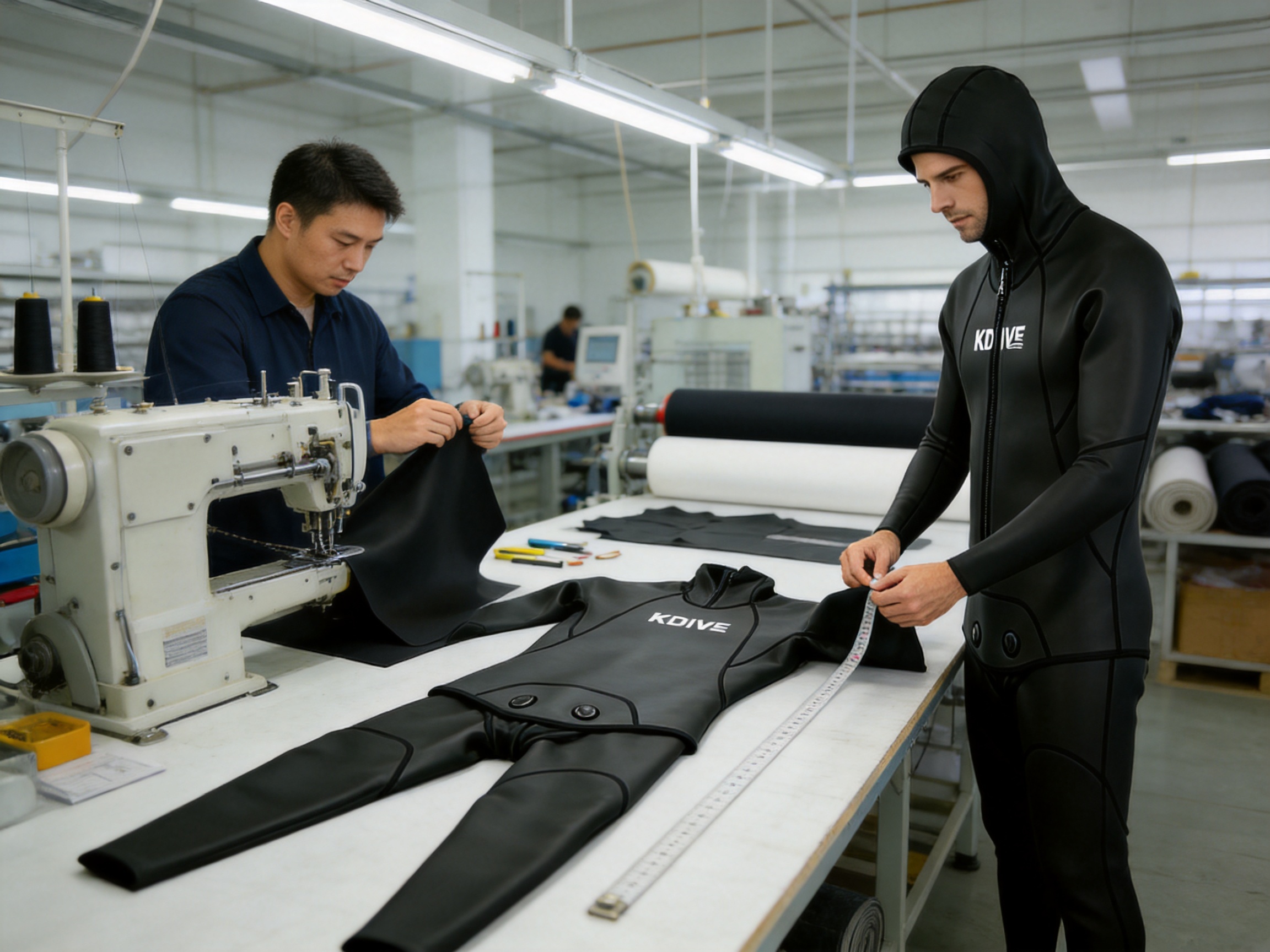
Jiangsu Yiheng Sports Products Co., Ltd. began its business journey in 2008 and has developed more than 18 years of experience in neoprene fabrics and finished products. The company operates a factory covering more than 15,000 square meters and has more than 120 professional employees.
This combination of production space, personnel, and industry experience supports a manufacturing model that extends beyond the assembly of individual garments. The company works with neoprene materials, finished wetsuits, drysuits, fishing waders, rash guards, water-sports equipment, and related products. Its broader product scope creates opportunities to share knowledge across material development, cutting, sewing, inspection, and customer requirements.
The company also reports more than 15 years of solid production experience and eight years of direct practice in the retail market. Direct exposure to retail environments can help a manufacturer understand customer expectations relating to comfort, sizing, packaging, appearance, durability, and product presentation. This knowledge is valuable when developing products for distributors and private-label clients.
A manufacturer with both source-manufacturing experience and market-oriented development capability can support customers at several stages. These may include material selection, product specification, sample development, fit adjustment, production planning, quality control, packaging coordination, and long-term supply support.
Manufacturing strength is not determined only by factory size. It also depends on process discipline, communication, technical documentation, employee training, equipment maintenance, traceability, and the ability to respond to design changes. The company’s stated focus on OEM manufacturing, ODM development, and long-term supply support reflects a production model designed for continuing business relationships rather than one-time transactions.
From Material Selection to Finished Wetsuit
The manufacturing process begins with material planning. Neoprene must be selected according to thickness, elasticity, surface finish, density, color, lamination requirements, and intended use. For a smooth skin spearfishing wetsuit, surface quality and flexibility are particularly important because the material remains visible and exposed during use.
Incoming material inspection helps identify variation before production begins. Relevant checks may include thickness, width, color consistency, surface condition, elasticity, foam uniformity, and visible defects. Controlling these factors at the beginning of the process reduces the chance that irregular materials will enter cutting or sewing operations.
Pattern development follows material selection. The pattern determines the shape and dimensions of each panel, the position of seams, the direction of stretch, and the overall ergonomic profile. A well-developed pattern distributes movement across the garment and avoids unnecessary stress concentration.
Panel cutting must be accurate because small dimensional errors can affect fit, seam alignment, and final appearance. Automated or guided cutting systems may help improve repeatability, while trained operators remain important for material handling and defect avoidance. The direction of the neoprene’s stretch should be considered when placing panels.
After cutting, panels are prepared for assembly. Edges may be checked, matched, and organized according to production instructions. Careful preparation helps prevent mismatched seams, uneven tension, and visible irregularities in the finished garment.
Sewing is performed using the specified four-needle six-thread construction. Machine settings must be controlled to maintain consistent thread tension and stitch formation. Operators inspect the seam as it is created, while quality personnel may perform additional checks after major assembly steps.
The beavertail and snap-button components require accurate placement. If the closure is positioned incorrectly, it may affect fit, comfort, or the ability to secure the two-piece system. Snap buttons should be firmly attached and checked for function without damaging the surrounding neoprene.
Final inspection may include visual examination, measurement verification, closure testing, seam review, surface inspection, and packaging checks. Depending on the customer’s requirements, additional performance tests may be conducted on materials, samples, or finished garments.
Quality Control as a Competitive Advantage
Quality control gives a manufacturer an advantage when it is integrated throughout production rather than applied only at the end. Early inspection helps prevent defects from moving through the manufacturing process, where they become more expensive and time-consuming to correct.
For this wetsuit, quality control can focus on several key areas. Material thickness should match the approved specification. Smooth skin surfaces should be checked for scratches, bubbles, uneven texture, and visible contamination. Panels should match the approved patterns and be assembled according to the correct size.
Seam quality should be evaluated for stitch consistency, skipped stitches, loose threads, puckering, and alignment. The beavertail should be checked for correct overlap and secure snap-button attachment. The finished garment should be measured to confirm that it falls within the approved tolerance range.
Performance-related tests may include abrasion resistance, hydrostatic resistance, and tensile strength. The stated results of 4,000 friction cycles under at least 9 kPa, at least 80 kPa hydrostatic resistance without seepage, and at least 150 N tensile load in both directions provide defined benchmarks for evaluating the product.
Batch traceability can further strengthen quality management. Recording material lots, production dates, inspection outcomes, and operator or machine information helps identify the source of any later issue. It also supports continuous improvement by revealing recurring patterns.
For private-label buyers, quality-control communication is especially important. The final product may be sold under the buyer’s own brand, making consistency essential to the buyer’s reputation. Clear approval samples, written specifications, inspection criteria, and packaging instructions help align expectations before mass production begins.
Advantages Compared with Basic Competitor Products
The Smooth Skin Spearfishing Wetsuit offers several advantages over basic wetsuits that are designed primarily for occasional recreation.
First, its purpose-built two-piece construction with a beavertail closure is better aligned with spearfishing and freediving than a general-purpose one-piece suit. The dual snap-button system helps keep the garment stable, while the overlapping design supports secure coverage around the waist and lower torso.
Second, the smooth skin neoprene surface supports a streamlined appearance and can help reduce water resistance. This is particularly relevant to divers who value efficient movement and a close-fitting underwater profile.
Third, the four-needle six-thread stitching provides a more reinforced construction than lightweight garments that rely on minimal seam treatment. Stronger seams can improve service life and help the suit withstand repeated use.
Fourth, the product has defined performance indicators rather than relying only on general marketing language. Abrasion resistance, hydrostatic resistance, and tensile strength are identified with specific test conditions. These details can help buyers make more informed comparisons.
Fifth, the wide size range from S to XXXL supports broader market coverage. Retailers can serve more customer body types without needing to source entirely different product families.
Sixth, the manufacturer’s experience across neoprene fabrics and finished water-sports products supports integrated development. Customers can work with a supplier familiar with both raw-material considerations and finished-garment requirements.
Finally, OEM and ODM capabilities make the product suitable for businesses seeking more than a standard catalog item. Private-label customers may be able to coordinate product details, packaging, labeling, size presentation, and market-specific requirements through one manufacturing partner.
Applications and Target Users
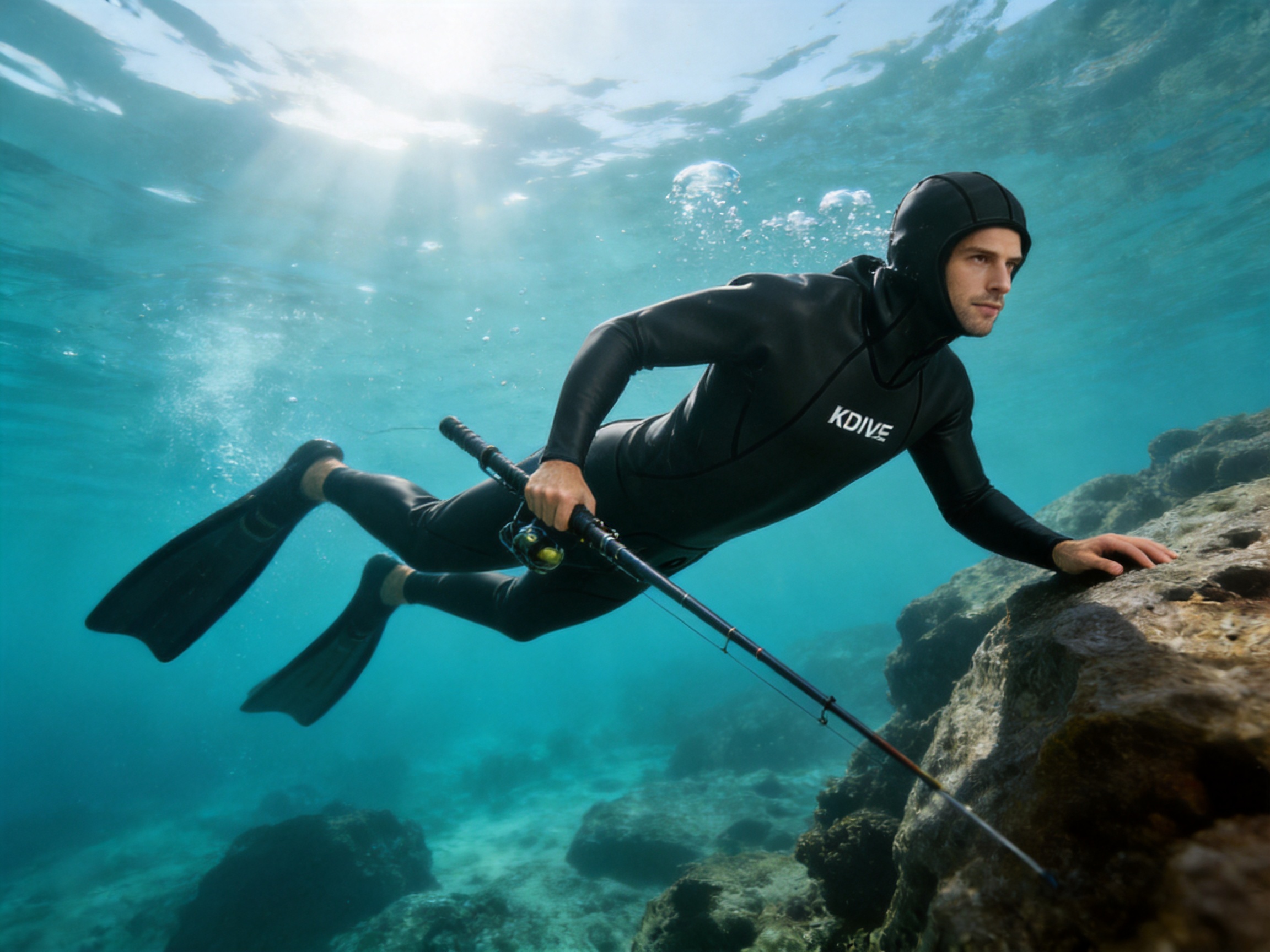
The primary application is spearfishing. In this environment, divers need a suit that supports repeated swimming, controlled descent, body positioning, and contact with underwater surroundings. The close fit, smooth surface, and reinforced construction are aligned with these needs.
The product is also suitable for freediving applications. Freedivers often prioritize flexibility, a stable fit, low drag, and thermal comfort. The final suitability depends on the confirmed thickness and the water conditions in which the suit will be used.
Recreational divers may use the wetsuit for training, coastal exploration, and other non-commercial activities. The two-piece format can appeal to users who prefer specialized spearfishing-style construction and a close-fitting design.
Retailers and distributors can position the product toward customers who are upgrading from entry-level wetsuits. It may also be suitable for diving clubs, sports schools, equipment rental programs, and private-label water-sports collections, subject to the buyer’s durability and hygiene requirements.
Because the product is supplied in black, it can be incorporated into a clean, professional product range. Black also pairs easily with accessories such as gloves, socks, masks, fins, weight belts, and equipment bags.
Private-Label and OEM Opportunities
Private-label customers often need a reliable base product that can be adapted to a specific market identity. A smooth skin spearfishing wetsuit offers a clear product concept for diving retailers, sporting-goods distributors, online brands, and specialized water-sports companies.
OEM cooperation may involve applying customer labels, preparing branded packaging, adjusting carton information, and coordinating product documentation. The exact options depend on order volume, materials, production planning, and technical feasibility.
ODM development can go further by modifying patterns, thickness, colors, closure details, logo placement, packaging, and other product elements. Any design change should be evaluated for its effect on flexibility, seam strength, water resistance, and production consistency.
Private-label buyers should prepare a detailed specification before sampling. The specification should identify the confirmed thickness, target water temperature, material finish, color standard, size range, logo requirements, packaging, labeling language, test expectations, and acceptable tolerances.
Sample approval is a critical stage. Buyers should evaluate fit, ease of dressing, seam appearance, closure operation, surface finish, mobility, and overall comfort. If revisions are needed, they should be documented clearly so that the approved sample becomes the production reference.
Long-term supply support is another important consideration. A manufacturer with experience in both materials and finished products can help manage repeat orders, material continuity, production schedules, and future product extensions.
Care and Handling Recommendations
Proper care helps preserve the performance of smooth skin neoprene. After use, the wetsuit should be rinsed thoroughly with clean, fresh water to remove salt, sand, chlorine, and other residues. These substances can affect closures, surfaces, and seams if allowed to remain on the garment.
The suit should be dried in a shaded, ventilated location. Direct high heat, radiators, hot vehicle interiors, and prolonged intense sunlight may accelerate material aging or damage the smooth surface. The garment should be turned carefully when necessary so that both sides can dry completely.
Users should avoid pulling the wetsuit with fingernails or sharp accessories. A smooth skin exterior can be damaged by concentrated point pressure. Gloves designed for wetsuit dressing may help reduce accidental tearing during donning.
The dual snap-button beavertail should be opened and closed carefully. Excessive force or misalignment may damage the fastening area. Before use, the wearer should check that both snaps are fully engaged and that the beavertail lies flat.
The wetsuit should be stored in a cool, dry place away from sharp objects. Heavy folding or long-term compression can create permanent creases. Hanging methods should support the garment without placing excessive stress on the shoulders or neck area.
Routine inspection is recommended. Users should examine seams, snap buttons, panel surfaces, and high-contact areas before each season or after intensive use. Early repair of minor damage can help prevent more extensive failure.
Purchasing and Specification Checklist
Before ordering, buyers should confirm whether the final garment is 2 mm or 3 mm. This is the most important clarification because the supplied material information contains both specifications. The confirmed thickness should appear consistently on quotations, samples, labels, product pages, and packaging.
Buyers should also confirm the intended size chart. Measurements should include chest, waist, hip, torso, sleeve, inseam, and other dimensions relevant to the final pattern. Regional sizing assumptions should not replace a manufacturer-approved chart.
The construction should be verified as a two-piece system with a dual snap-button beavertail. If a buyer requires a different closure, reinforcement, logo position, or pattern, these changes should be approved before production.
Testing expectations should be documented. The stated benchmarks include no damage after 4,000 abrasion cycles at pressure of at least 9 kPa, no water seepage under hydrostatic pressure of at least 80 kPa, and no breakage after 10 seconds at a tensile load of at least 150 N in both directions.
Buyers should ask whether testing applies to the material, a seam sample, or the finished garment. They should also confirm whether test reports are available for the specific production batch or represent a type-test result.
Packaging and labeling should identify the final product accurately. Instructions may include thickness, size, material composition, care recommendations, closure guidance, and intended use. Accurate labeling supports customer confidence and reduces avoidable returns.
Q&A
What is the Smooth Skin Spearfishing Wetsuit designed for?
The wetsuit is designed primarily for spearfishing and freediving. It can also be used for recreational diving and other water-sports activities that require close-fitting neoprene protection, flexibility, and thermal insulation.
Is the wetsuit made from smooth skin neoprene?
Yes. The product is described as being made from smooth skin neoprene. The smooth exterior contributes to its streamlined appearance and is intended to support close contact and efficient movement in the water.
Is the product 2 mm or 3 mm thick?
The supplied information includes both specifications. The technical product details list 2 mm, while the product description refers to 3 mm CR neoprene. The final thickness must be confirmed with the manufacturer before ordering, labeling, or publishing a product listing.
What does the two-piece design include?
The design includes an upper and lower section supported by a beavertail closure. The beavertail uses two snap buttons to help secure the suit and keep it stable during underwater movement.
How does the beavertail improve the fit?
The beavertail helps hold the upper section in position and provides overlapping coverage around the waist and lower torso. This can reduce riding up during swimming, bending, and other active movements.
What type of stitching is used?
The wetsuit uses four-needle six-thread stitching. This reinforced construction is intended to improve seam durability, reduce splitting, and maintain flexibility during repeated use.
What sizes are available?
The listed sizes are S, M, L, XL, XXL, and XXXL. Customers should use the manufacturer’s measurement chart because body proportions and regional size standards can vary.
What color is available?
The listed color is black. Black provides a versatile appearance that can coordinate with other diving and water-sports equipment.
What abrasion-resistance result is reported?
The product specification reports no damage after 4,000 friction cycles under pressure of at least 9 kPa. The exact test method and report details should be confirmed for formal technical documentation.
What hydrostatic resistance is reported?
The stated hydrostatic resistance is at least 80 kPa with no water seepage. Actual field performance also depends on fit, seam condition, closure use, maintenance, and the surrounding water environment.
What tensile-strength result is reported?
The specification states that there is no breakage after 10 seconds under tension of at least 150 N in both lengthwise and crosswise directions.
Can the wetsuit be used in cold water?
Suitability depends on the confirmed thickness, water temperature, dive duration, individual tolerance, and additional equipment. Because the supplied information lists both 2 mm and 3 mm references, buyers should confirm the final version before selecting it for a particular climate.
Is the product suitable for private labeling?
The manufacturer offers OEM manufacturing and ODM development capabilities. Private-label buyers should discuss logo application, packaging, labeling, product modifications, order quantities, sampling, and quality requirements before placing a production order.
How should the wetsuit be cared for?
Rinse it with fresh water after use, dry it in a shaded ventilated place, avoid direct heat, keep sharp objects away from the smooth surface, and store it without excessive compression. Closures and seams should be inspected regularly.
What should buyers confirm before mass production?
Buyers should confirm thickness, material, color, size chart, pattern, seam construction, beavertail design, snap-button placement, test standards, labeling, packaging, logo requirements, inspection procedures, and the approved sample.
Conclusion
The Smooth Skin Spearfishing Wetsuit combines specialized underwater design with reinforced manufacturing. Its two-piece structure, dual snap-button beavertail, ergonomic cut, smooth skin neoprene, and four-needle six-thread stitching are all directed toward the needs of active divers.
The product is supported by defined technical indicators, including abrasion resistance after 4,000 friction cycles at pressure of at least 9 kPa, hydrostatic resistance of at least 80 kPa without water seepage, and tensile performance of at least 150 N in both lengthwise and crosswise directions. These specifications provide useful reference points for distributors and private-label customers comparing product quality.
The manufacturer’s experience in neoprene materials and finished water-sports products, together with its factory resources, professional workforce, OEM capability, ODM development experience, and retail-market knowledge, provides a foundation for reliable product cooperation.
Before purchasing or developing a private-label version, the most important action is to confirm the final material thickness, since the supplied information contains both 2 mm and 3 mm references. Once the thickness, fit, testing, labeling, and packaging requirements are verified, the wetsuit can serve as a strong option for spearfishing, freediving, recreational diving, and specialized water-sports product collections.
References
1. Product technical specification for the Smooth Skin Spearfishing Wetsuit, including material, seam construction, size range, closure, abrasion resistance, hydrostatic resistance, and tensile-strength data.
2. Product information describing the two-piece beavertail design, ergonomic fit, smooth skin neoprene construction, flexibility, and water-pressure resistance.
3. Company information for Jiangsu Yiheng Sports Products Co., Ltd., including manufacturing history, factory area, employee numbers, product categories, OEM services, ODM development, and retail-market experience.
4. General technical principles of neoprene wetsuit design, including thermal insulation, elasticity, fit, seam construction, hydrostatic resistance, and material durability.
5. General quality-control practices for neoprene garments, including incoming material inspection, panel cutting, sewing inspection, performance testing, batch traceability, and final garment evaluation.
Product: Smooth Skin Spearfishing Wetsuit

LET’S DEVELOP YOUR NEXT NEOPRENE PRODUCT LINE
Quick Links
Product Categories
Contact Us
-
 Email: postmaster@yihengsport.com
-
 Mobile: +86-13564100539
-
 No. 480 Jiangping Road, Madian, Binjiang Town, Taixing City, Taizhou City, Jiangsu Province, China.
Copyright © Jiangsu Yiheng Sports Products Co., Ltd. All Rights Reserved
China Wetsuit Manufacturer Neoprene Fabric Manufacturer
