

 Language
 English
 中文简体
 日本語
 русский
 Español
 عربى

Oct, 02, 2026
Professional Ice Diving Drysuit: Advanced Neoprene Protection for Cold-Water Exploration
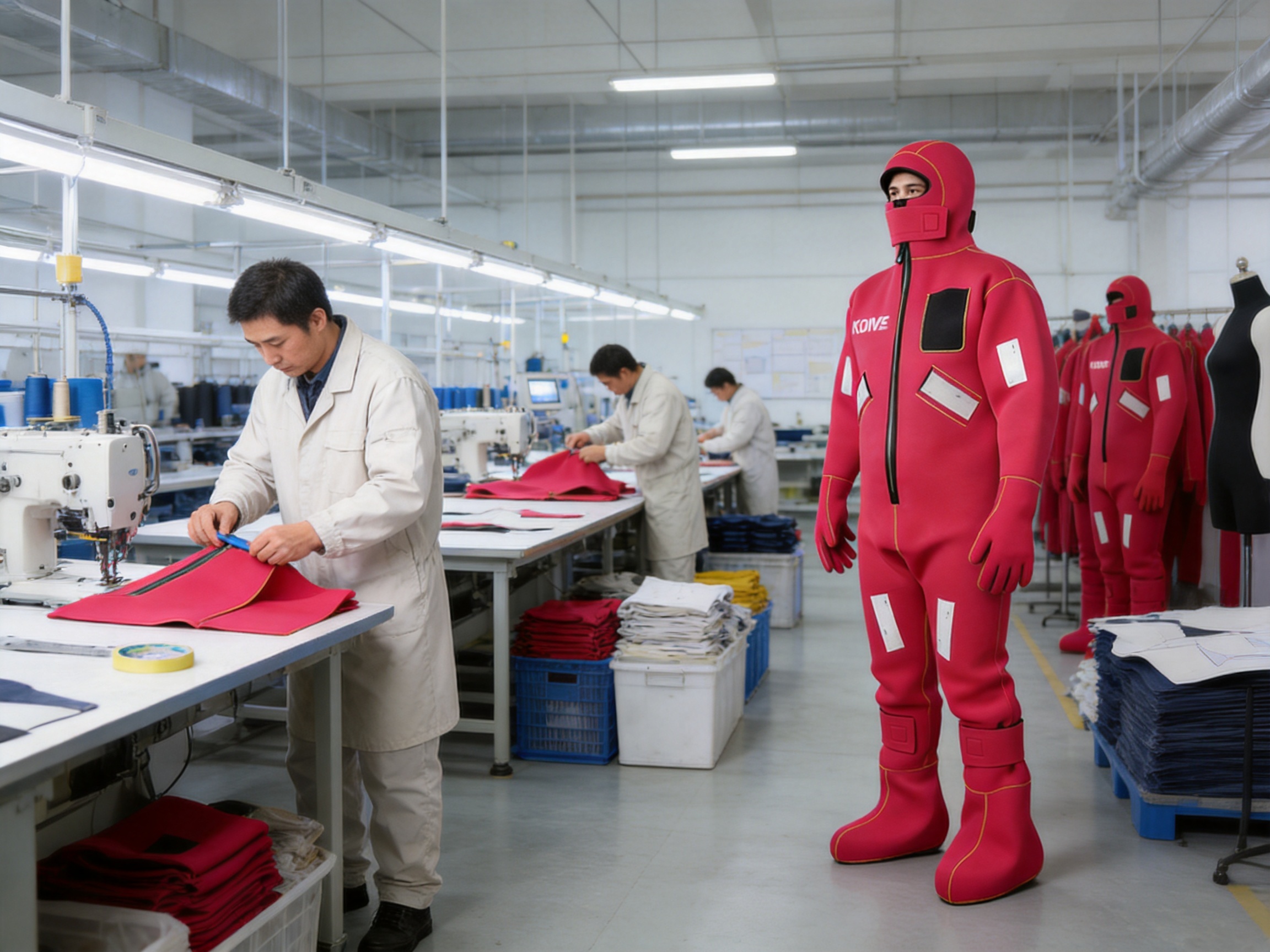
Ice diving and cold-water exploration demand equipment that performs reliably in some of the most challenging aquatic environments. Low temperatures, reduced visibility, floating ice, restricted access, and prolonged exposure all place higher demands on a diving suit than ordinary recreational watersports. A suitable drysuit must do more than provide thermal coverage. It should help reduce water entry, support comfortable movement, improve visibility, and provide dependable protection throughout demanding outdoor activities.
The Professional Ice Diving Drysuit is designed around these requirements. Combining high-density neoprene with nylon composite fabric, an airtight waterproof zipper, heat-sealed critical seams, glued and blind-stitched construction, integrated neoprene socks, and visibility-focused red fabric with reflective strips, the suit provides a practical solution for ice diving, cold-water diving, ice floating, winter adventures, and other low-temperature activities.
Manufactured by Jiangsu Yiheng Sports Products Co., Ltd., the product reflects more than 18 years of experience in neoprene fabrics and finished products. The manufacturer operates a factory of more than 15,000 square meters and employs over 120 professional workers. Its experience across raw materials, production, product development, and retail-market practice supports a manufacturing approach focused on consistency, practical performance, and long-term supply cooperation.
Why Ice Diving Requires Specialized Drysuit Protection
Cold-water activities create a combination of risks and performance challenges that are not normally encountered in warm-water diving. Water conducts heat away from the body much faster than air, while wind, snow, spray, and contact with ice can further increase discomfort. Even a short period of exposure may affect dexterity, concentration, and physical endurance.
For this reason, a professional ice diving suit should be designed as an integrated system. The material must provide insulation and flexibility. The closure system must help limit water penetration. Seams must be reinforced to reduce leakage points. Foot protection must offer traction on wet or slippery surfaces. The overall design should allow the user to move, swim, enter or exit the water, and manage equipment without excessive restriction.
Visibility is another important consideration. Ice and winter environments may include overcast skies, low light, drifting snow, dark water, or distant support personnel. A bright exterior combined with reflective details can make the wearer easier to identify. The high-visibility red fabric and reflective strips used in this drysuit are intended to improve visual recognition in aquatic and cold-weather settings.
The suit is therefore suited to more than technical ice diving alone. It can also support ice-floating experiences, cold-water recreational activities, winter outdoor adventures, and other situations where water resistance, warmth, mobility, and visibility are important.
Product Overview
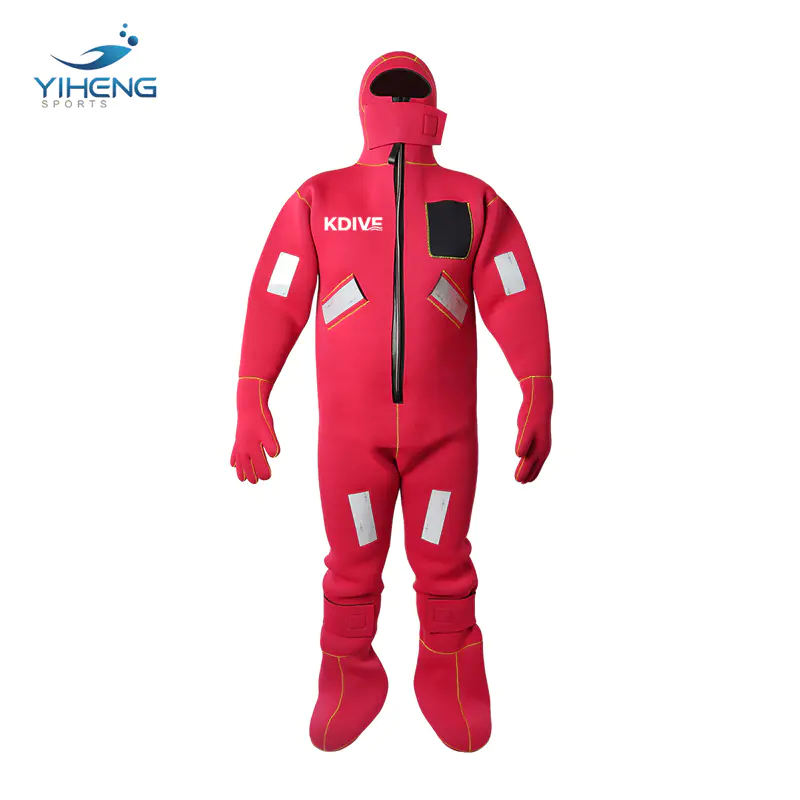
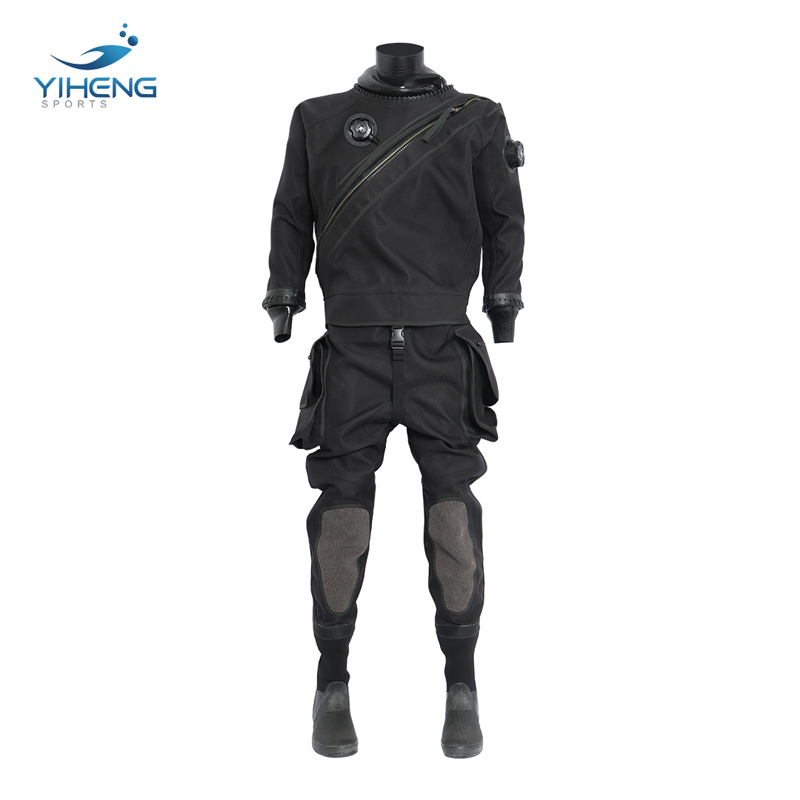
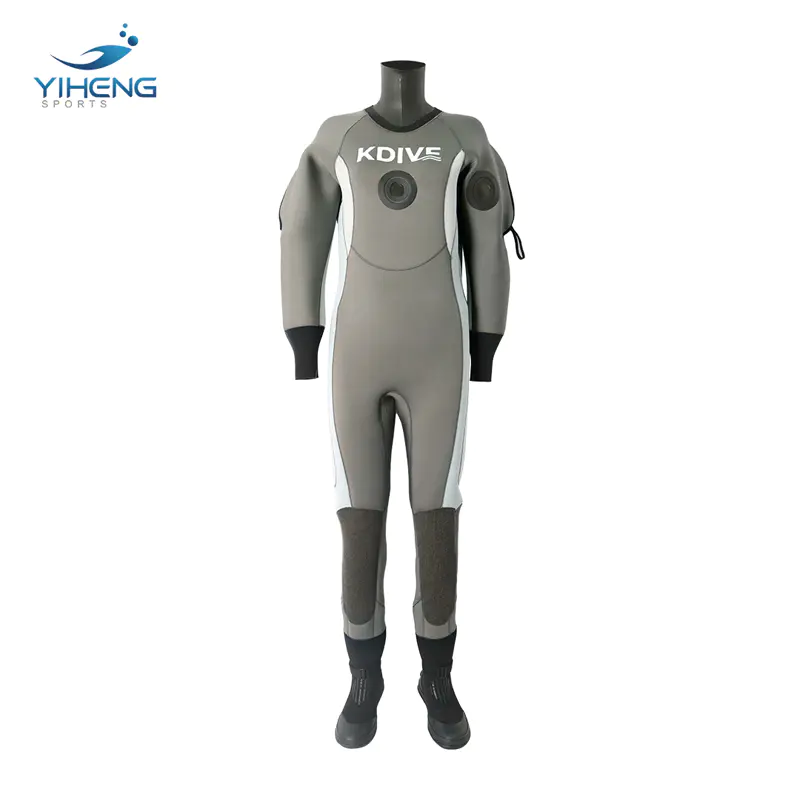
The Professional Ice Diving Drysuit is a one-piece neoprene drysuit constructed from high-density neoprene and nylon composite fabric. It incorporates an airtight waterproof zipper, heat-sealed tape on critical seams, and glued and blind-stitched seam construction. These elements work together to create a more protective barrier against water ingress while retaining the flexibility needed for movement.
A built-in back buoyancy support system helps improve flotation and stability on the water. This feature can be valuable during cold-water activities because a stable body position may help users conserve energy and maintain better control. It is intended as a support feature within the suit design and does not replace appropriate buoyancy-control equipment, training, or safe operating procedures.
The integrated neoprene socks include anti-slip sole strips and adjustable hook-and-loop straps. This design provides coverage for the feet while helping users maintain a more secure stance on wet surfaces. An integrated hood contributes additional coverage around the head and neck, areas that can be especially vulnerable to cold air and water exposure.
| Product Element | Design Specification | Practical Benefit |
|---|---|---|
| Suit construction | One-piece neoprene drysuit | Integrated coverage for cold-water activities |
| Main material | High-density neoprene and nylon composite fabric | Combines insulation, durability, and flexibility |
| Closure system | Airtight waterproof zipper | Helps minimize water entry through the main opening |
| Seam protection | Heat-sealed tape on critical seams | Adds protection at important leakage-risk areas |
| Seam method | Glued and blind stitched | Supports seam strength and water resistance |
| Visibility | High-visibility red fabric and reflective strips | Improves recognition in low-light and winter environments |
| Flotation support | Built-in back buoyancy support | Helps improve flotation and water stability |
| Foot design | Integrated neoprene socks with anti-slip sole strips | Provides coverage and traction support |
| Adjustment | Hook-and-loop straps | Allows practical adjustment around the foot area |
| Available sizes | S, M, ML, L, LT, and more | Supports a broader range of user requirements |
Professional Ice Diving Drysuit
High-Density Neoprene and Nylon Composite Construction
The material combination is central to the performance of the Professional Ice Diving Drysuit. High-density neoprene is widely used in aquatic protective equipment because it offers thermal insulation, cushioning, and stretch. In cold water, material thickness and density influence how the suit helps retain body heat and how it responds to pressure, movement, and repeated use.
The nylon composite outer structure adds another layer of practical performance. Nylon can contribute to abrasion resistance and surface durability while helping protect the underlying neoprene from wear caused by equipment, handling, and outdoor contact. The composite approach balances the requirements of a cold-water suit: it must be protective enough for demanding environments without becoming unnecessarily rigid.
Flexibility is particularly important in ice diving. Users may need to operate equipment, stabilize themselves near ice, swim, climb from water, or move across uneven surfaces. Excessively stiff material can make these activities tiring and reduce control. The combination of neoprene flexibility and nylon reinforcement allows the suit to support freedom of movement while maintaining a durable exterior.
Compared with a basic single-layer aquatic garment, a composite neoprene drysuit can provide a more complete performance profile. It is designed not only for thermal coverage but also for environmental protection, repeated use, visibility, and compatibility with practical outdoor activity. This integrated material strategy is one of the product’s key advantages in professional and commercial applications.
Balancing Warmth and Mobility
Thermal protection should not be considered separately from mobility. A suit that keeps the wearer warm but restricts arm, leg, or torso movement may create additional fatigue. The product design addresses this balance through flexible neoprene construction, a one-piece pattern, and an integrated hood and sock system that reduce the number of exposed transitions between garments.
Because users have different cold tolerances, activity levels, and layering requirements, the suit can be used as part of a broader cold-water clothing system. Appropriate undergarments, gloves, head protection, and other equipment should be selected according to water temperature, activity duration, user experience, and local safety procedures.
Waterproof Protection Through Multiple Construction Methods
A drysuit’s water resistance depends on the combined performance of its materials, seams, closures, and openings. No single component can provide reliable protection if the remaining construction is neglected. The Professional Ice Diving Drysuit uses several complementary techniques to address the most important water-entry pathways.
Airtight Waterproof Zipper
The zipper is one of the most critical components of a drysuit because it creates a large opening in the main body of the garment. An airtight waterproof zipper is designed to help form a closed barrier when properly fastened. It helps minimize water penetration while allowing the user to put on and remove the one-piece suit.
A reliable zipper also contributes to user confidence. In cold water, a small leak can quickly affect comfort, especially when the wearer is stationary or exposed for an extended period. The waterproof zipper works together with the suit body and seam construction rather than functioning as an isolated feature.
Heat-Sealed Tape on Critical Seams
Seams connect separate panels and therefore represent areas where water may potentially enter. Heat-sealed tape is applied to critical seams to reinforce these junctions and create an additional barrier. This is especially useful in regions exposed to water pressure, repeated flexing, or movement during use.
Critical-seam taping also demonstrates a practical approach to manufacturing. Rather than relying only on the thickness of the fabric, the construction gives additional attention to the areas most likely to influence waterproof performance. The result is a more comprehensive protective design.
Glued and Blind-Stitched Seams
Glued and blind-stitched construction, commonly referred to as GBS, is used to combine seam strength and water resistance. Adhesive helps bond the neoprene panels, while blind stitching is designed to reinforce the joint without passing completely through the material in the same way as a conventional through-stitch.
This method can reduce the number of direct pathways through which water may travel. It also helps maintain flexibility at the seam compared with some heavier construction methods. The combination is well suited to neoprene products that need to move with the body while enduring repeated aquatic use.
When GBS construction is combined with heat-sealed tape and a waterproof zipper, the suit benefits from a layered approach to water management. This multi-stage construction can offer an advantage over simpler garments that rely on untreated stitched seams or basic closures.
Buoyancy Support and Water Stability
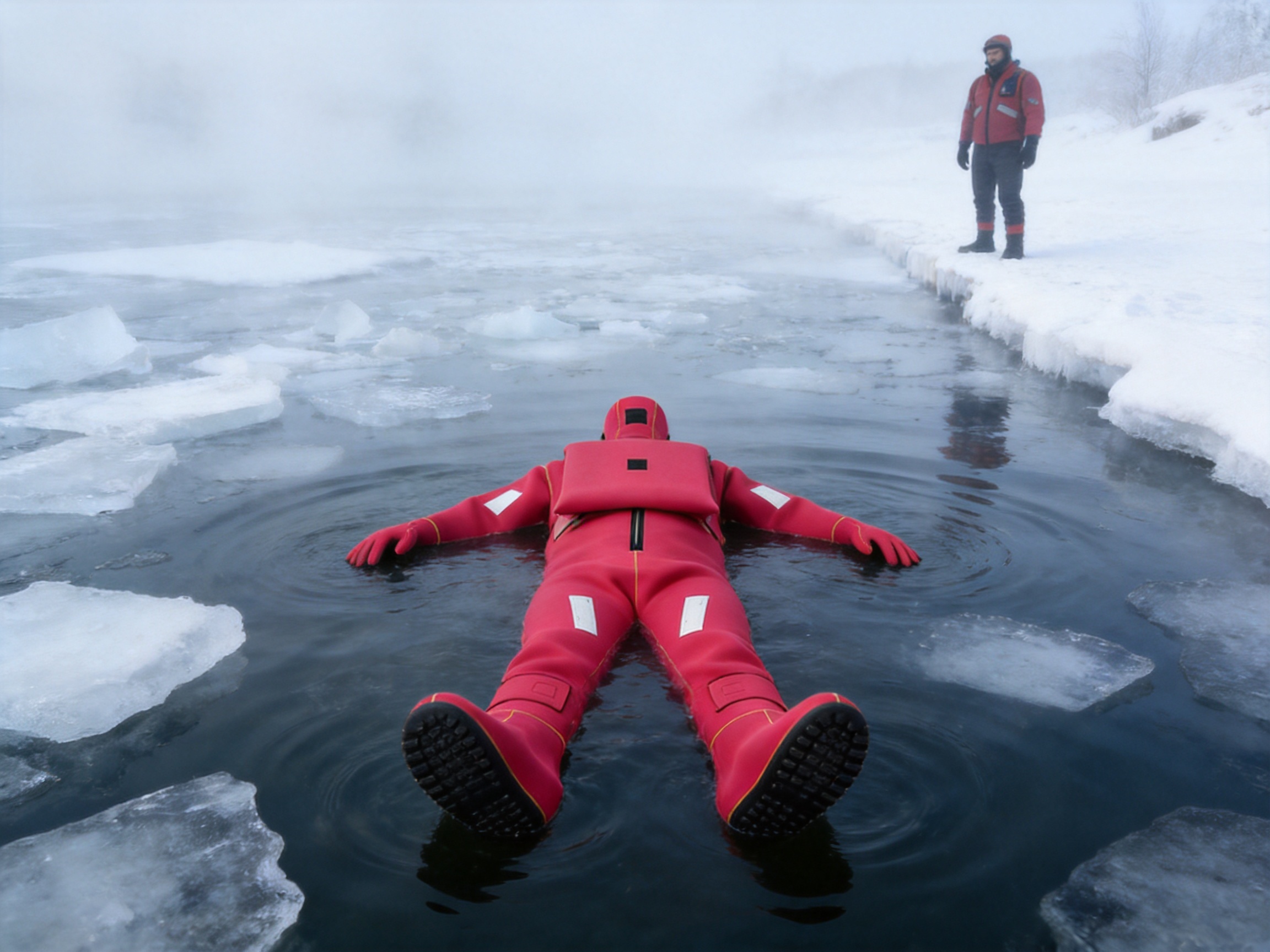
The built-in back buoyancy support is designed to help improve flotation and stability on the water. During ice floating or cold-water activities, maintaining a stable position can make it easier to conserve energy and manage equipment. A support feature located at the back can also contribute to a more balanced body position while the wearer is in the water.
Stability is particularly valuable in cold environments because unnecessary movement may increase fatigue. A stable position may help the wearer focus on navigation, communication, observation, or other activity-specific tasks. The back support is therefore a functional part of the overall suit system rather than an ornamental addition.
However, buoyancy behavior may vary according to body size, undergarments, equipment, and water conditions. Users should always understand the performance of their complete equipment configuration and follow appropriate training and safety procedures. The built-in support should not be treated as a substitute for required flotation equipment or professional instruction.
Visibility for Ice, Water, and Low-Light Environments
The bright red exterior is one of the most recognizable visual features of the drysuit. High-visibility coloring can help distinguish the wearer from gray water, white ice, snow, or dark outdoor backgrounds. This may be useful during group activities, training, rescue-oriented operations, and recreational ice experiences.
Reflective strips provide an additional visibility element. When illuminated by a flashlight, vehicle light, boat light, or other light source, reflective details may be more noticeable than non-reflective fabric. This can assist recognition in overcast conditions, early morning activity, late afternoon use, or other low-light situations.
Visibility is a practical advantage over plain black or dark-colored suits when the activity takes place in open water or around floating ice. While color and reflective features cannot guarantee detection, they can make the wearer easier to identify as part of a broader safety system involving communication, supervision, lighting, and appropriate planning.
Integrated Hood and Neoprene Sock Design
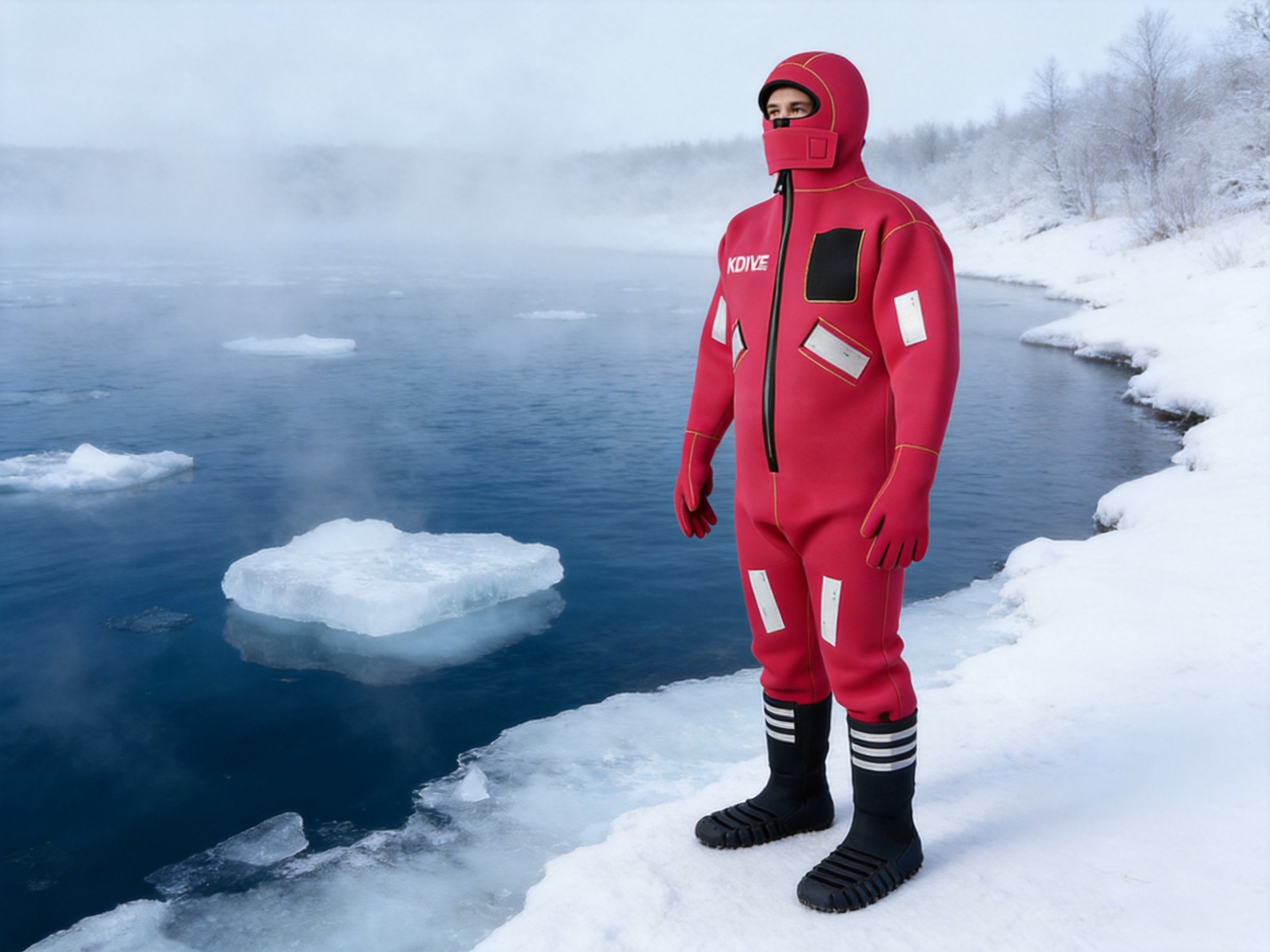
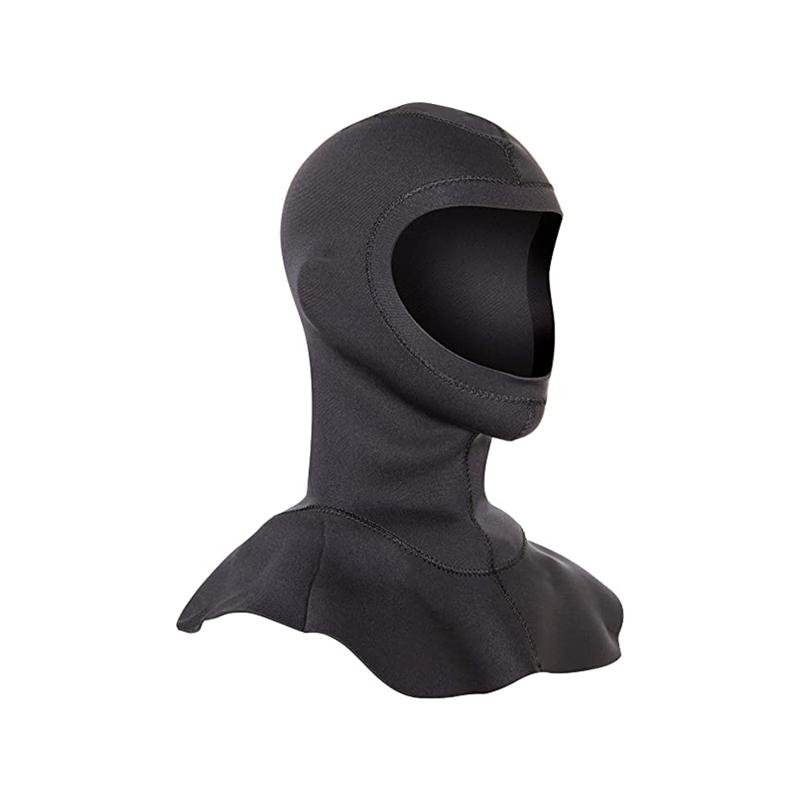
The integrated hood helps extend cold-weather coverage above the shoulders and around the head and neck. These areas can lose heat quickly, and an integrated hood reduces the exposed transition between the suit and separate headwear. It can also help reduce direct contact with cold wind and splashing water.
The foot design includes integrated neoprene socks with anti-slip sole strips. This provides a continuous protective solution from the legs to the feet and can simplify dressing compared with a suit that ends above the ankles. Integrated socks are also useful when users need to move between water, ice, decks, shorelines, or other wet surfaces.
Anti-slip sole strips are designed to improve traction support. Wet surfaces can be unstable, and ice or smooth boat decks may increase the risk of slipping. The sole treatment helps the wearer maintain a more secure footing, although users should still move carefully and assess the surface before stepping.
Adjustable hook-and-loop straps enable practical fitting around the foot area. A suitable adjustment can help reduce unwanted movement of the sock and improve comfort when combined with appropriate footwear or protective equipment. The straps also support a more adaptable fit across different users and layering configurations.
Comfort and Freedom of Movement
Comfort in a professional cold-water suit is closely related to safety and endurance. If the garment causes excessive restriction, pressure, or discomfort, the wearer may become fatigued sooner or avoid necessary movements. The one-piece design and flexible neoprene construction are intended to provide coverage without eliminating mobility.
The suit supports movement through the shoulders, arms, torso, and legs. This is important for swimming, equipment handling, surface movement, entering or exiting the water, and outdoor tasks around ice. The nylon composite structure contributes durability, while the neoprene base allows the garment to flex with the body.
The range of S, M, ML, L, LT, and additional sizes helps address variations in height, body proportions, and fit preferences. A correctly sized drysuit is essential. An overly tight suit can restrict movement and increase discomfort, while an overly loose suit may create excess material, reduce efficiency, and interfere with equipment.
For distributors and private-label buyers, offering multiple size options can make the product more suitable for different markets. Retailers may also benefit from size-range flexibility when developing collections for diving schools, outdoor organizations, rental operations, or winter recreation providers.
Applications for Multiple Cold-Water Activities
Ice Diving
Ice diving is the product’s primary application. The suit’s waterproof closure, seam protection, thermal neoprene construction, visibility-focused exterior, and buoyancy support are all relevant to activity around frozen water. Ice diving requires careful planning, specialized training, reliable communication, and equipment suited to the environment.
Cold-Water Diving
Beyond ice-covered locations, the drysuit can support diving in cold lakes, rivers, coastal waters, and seasonal environments. The high-density neoprene and protective construction help provide a barrier against cold water while allowing the wearer to move during underwater activity.
Ice Floating Experiences
Ice floating and related recreational experiences require strong protection from cold water and a design that supports surface stability. The built-in back buoyancy support, high-visibility red fabric, and integrated hood and socks make the suit suitable for organized activities in which participants may spend time in or around icy water.
Ice-Based Recreational Activities
Some winter activities involve direct contact with water, snow, ice, or spray without being formal diving operations. A one-piece drysuit may be used for supervised aquatic experiences, winter training programs, outdoor demonstrations, or recreational events where users need additional protection against cold and moisture.
Winter Outdoor Adventures
The suit may also be considered for winter expeditions and outdoor adventures near wet environments. Its protective design can help users remain more comfortable during activities involving splashing, wet shorelines, cold rain, or accidental immersion. Activity leaders should select equipment based on the actual conditions and the level of exposure expected.
| Application | Relevant Product Features | Operational Consideration |
|---|---|---|
| Ice diving | Waterproof zipper, taped seams, GBS construction, visibility features | Requires specialized training and a complete cold-water diving system |
| Cold-water diving | Neoprene insulation, flexible construction, integrated hood and socks | Select suitable undergarments and accessories for water temperature |
| Ice floating | Back buoyancy support, red fabric, reflective strips | Use supervision, communication, and appropriate flotation procedures |
| Winter recreation | One-piece coverage, waterproof closure, anti-slip sole strips | Check surface conditions and maintain safe movement around ice |
| Outdoor water activities | Nylon composite exterior, flexible neoprene, multiple sizes | Inspect the suit before use and select the correct size |
Advantages Over Simpler or Less Specialized Alternatives
The Professional Ice Diving Drysuit offers several functional advantages compared with basic wetsuits, untreated neoprene garments, and low-visibility outdoor suits. These advantages come from the way multiple features are combined rather than from any single component.
First, the suit is designed as a drysuit with an airtight waterproof zipper and reinforced seam protection. A conventional wetsuit may provide thermal insulation but is generally intended to permit a controlled amount of water inside the garment. A drysuit design instead focuses on minimizing water entry, making it more appropriate for activities where staying dry is a major requirement.
Second, the GBS seam construction and heat-sealed tape provide a more deliberate approach to leakage control than simple stitched seams. This can support improved durability and water resistance in areas that experience movement and pressure.
Third, the high-visibility red fabric and reflective strips provide an advantage over dark, low-contrast colors in icy or low-light surroundings. Visibility can be important for group management and recognition from a distance.
Fourth, the product includes integrated neoprene socks, anti-slip sole strips, hook-and-loop adjustments, and a hood. These elements reduce the need to coordinate multiple separate garments and help create a more unified cold-water system.
Fifth, the built-in back buoyancy support adds a stability-oriented feature that may not be present in basic protective suits. While it does not replace dedicated buoyancy equipment, it contributes to the suit’s water-activity design.
Finally, the product is supported by a manufacturer with experience in both neoprene fabrics and finished aquatic products. This vertical product knowledge can help buyers communicate about material selection, construction, private-label development, and production requirements more efficiently.
Manufacturing Strengths and Production Experience
Jiangsu Yiheng Sports Products Co., Ltd. began its development journey in 2008. From an initial focus involving raw materials and semi-finished products, the company developed into a manufacturer of neoprene materials and finished products. The company’s history reflects a gradual accumulation of practical knowledge in material handling, product construction, and market requirements.
With more than 18 years of industry experience, the manufacturer has developed expertise across neoprene fabrics, wetsuits, drysuits, fishing waders, rash guards, water sports equipment, and related products. This product breadth is valuable because many technical challenges are shared across categories, including bonding, cutting, stitching, seam management, sizing, flexibility, and wear resistance.
The factory covers more than 15,000 square meters and has over 120 professional employees. A facility of this scale supports organized production planning, dedicated work areas, material management, assembly operations, finishing, and quality-related procedures. It also provides a foundation for handling both standard products and private-label manufacturing programs.
The company combines source manufacturing with direct retail-market experience. In addition to more than 15 years of production experience, it has eight years of direct practice in the retail market. This exposure can help the manufacturer understand how product specifications translate into customer expectations, packaging requirements, fit considerations, and market positioning.
Material and Product Integration
One of the manufacturer’s strengths is its ability to work with both neoprene materials and finished products. Understanding the material at the source level can support more informed decisions during product development. Material density, elasticity, surface treatment, lamination, and composite structure all influence the final behavior of a drysuit.
By working across material and finished-product categories, the company can approach product development as a complete process rather than treating fabric procurement and garment assembly as entirely separate activities. This integrated knowledge is particularly relevant for specialized products such as ice diving drysuits, where material performance and construction technique must work together.
OEM and ODM Capability
The company provides OEM manufacturing, market-oriented ODM development, and long-term supply support. OEM services can help buyers produce a product according to established specifications, branding requirements, sizing systems, packaging plans, and order arrangements.
ODM development can support customers that need assistance refining a product concept. For a cold-water suit, development may include material selection, panel design, visibility details, seam treatment, size grading, closure selection, and accessory integration. A manufacturer with knowledge of neoprene fabrics and finished products can contribute practical input during these stages.
Private-label buyers may also benefit from the manufacturer’s existing category experience. The product can serve as a foundation for distributors, diving-equipment brands, outdoor retailers, water-activity operators, and other businesses seeking a professional cold-water garment under their own market identity.
Manufacturing Processes Supporting Product Reliability
Material Preparation
Production begins with the selection and preparation of suitable high-density neoprene and nylon composite materials. The materials must be handled carefully to preserve their intended thickness, flexibility, surface quality, and structural consistency. Accurate preparation supports later cutting, bonding, stitching, and assembly operations.
Panel Cutting and Pattern Control
A one-piece drysuit is made from multiple shaped panels that must be cut according to the product pattern. Consistent cutting helps maintain symmetry, fit, and movement characteristics. Pattern control is especially important around the shoulders, torso, legs, hood, and integrated socks because these areas influence comfort and mobility.
Panel Assembly
The panels are assembled using a combination of adhesive bonding and blind stitching. Adhesive creates a bonded connection between the neoprene sections, while blind stitching provides additional structural support. The assembly process requires attention to alignment and tension so that the finished garment remains comfortable and functional during movement.
Critical Seam Sealing
Heat-sealed tape is applied to critical seams to reinforce areas where water resistance is particularly important. The tape must be positioned accurately and bonded correctly to provide a continuous protective effect. Seam treatment is a key part of the manufacturing process because even a high-quality fabric can underperform if junctions are not properly finished.
Waterproof Zipper Installation
The airtight waterproof zipper is integrated into the suit with careful attention to alignment, attachment, and sealing. Because the zipper is a major opening in the garment, installation quality directly affects the overall water-resistant performance. A properly fitted closure also helps preserve user comfort and ease of dressing.
Hood, Sock, and Strap Integration
The hood and integrated neoprene socks are assembled as part of the complete one-piece structure. Anti-slip sole strips are added to the sock area, while hook-and-loop straps provide adjustment. These components must be positioned to support movement, comfort, and practical use.
Visibility Feature Application
The high-visibility red fabric and reflective strips are incorporated into the design to improve recognition. Their placement should support visibility without interfering with flexibility, seam construction, or equipment use. These features also contribute to the product’s distinctive appearance for retail and private-label presentation.
Finishing and Inspection
After assembly, the product should undergo finishing and inspection procedures appropriate to the production specification. Attention may be given to seam appearance, zipper operation, adhesive coverage, tape placement, sock construction, strap attachment, reflective details, and general workmanship. The objective is to deliver a finished suit that meets the intended construction and presentation requirements.
Quality Considerations for Buyers and Distributors
Buyers evaluating an ice diving drysuit should consider more than the appearance of the finished garment. Material, seam construction, closure quality, fit, foot protection, visibility, and production consistency all influence the product’s suitability for the intended market.
The first consideration is material composition. High-density neoprene and nylon composite fabric should be evaluated according to the intended water temperature, activity level, abrasion exposure, and expected frequency of use. Buyers may request product specifications and samples to confirm the material hand feel, flexibility, surface finish, and overall construction.
The second consideration is seam quality. GBS construction and heat-sealed tape should be applied consistently. Uneven adhesive, exposed stitching, lifting tape, or irregular seam alignment may affect both appearance and performance. Inspection should focus especially on high-stress areas such as the shoulders, crotch, knees, ankles, zipper zones, and hood connection.
The third consideration is closure operation. The waterproof zipper should open and close smoothly while maintaining its intended seal. Buyers should establish handling and care instructions because incorrect use, excessive force, contamination, or inadequate maintenance can reduce zipper service life.
The fourth consideration is fit and grading. The availability of S, M, ML, L, LT, and more sizes provides flexibility, but size charts should be reviewed carefully. For private-label projects, buyers may require adjustments to body length, sleeve length, torso proportions, or other fit points to match their target market.
The fifth consideration is product consistency across production batches. A reliable manufacturing partner should be able to communicate specifications, materials, sampling procedures, production schedules, packaging requirements, and inspection expectations clearly. Long-term supply cooperation is easier when product standards are documented and consistently followed.
Care and Use Recommendations
Proper care can help preserve the performance and appearance of a neoprene drysuit. After use, the suit should be rinsed according to the manufacturer’s care instructions, particularly if it has been exposed to salt water, muddy water, ice particles, or other contaminants. Dirt and residue may affect the zipper, seams, reflective elements, and surface materials if allowed to remain for extended periods.
The suit should be dried in a well-ventilated area away from excessive heat and harsh direct sunlight. High heat may affect neoprene, adhesives, reflective materials, or zipper components. It should be stored clean and dry, with care taken to avoid sharp folds, compression, or contact with abrasive objects.
The zipper should be handled carefully and should not be forced if it becomes difficult to operate. Users should inspect the zipper, seam tape, blind-stitched areas, integrated socks, sole strips, and hook-and-loop straps before each activity. Any visible damage should be addressed before the suit is used in cold or remote environments.
Fit should also be checked whenever the user changes undergarments or other equipment. A suit that fit correctly in one configuration may feel different when additional layers or accessories are added. Comfort and mobility should be assessed in a controlled environment before entering cold water.
Private Label and Commercial Supply Opportunities
The Professional Ice Diving Drysuit can be considered by companies developing private-label cold-water equipment collections. Its technical feature set gives brands a strong starting point for a product positioned toward ice diving, winter water activities, professional training, outdoor recreation, or specialized aquatic experiences.
Private-label buyers may seek a distinctive color arrangement, logo placement, packaging format, size range, or accessory combination. The high-visibility red base provides a recognizable visual identity, while reflective strips add functional value. Depending on the project requirements, buyers can discuss branding and product-development possibilities with the manufacturer.
For diving schools and activity operators, the product’s visibility and integrated protection may support group management and equipment standardization. For outdoor retailers, the combination of neoprene insulation, waterproof construction, hood coverage, sock integration, and buoyancy support creates a clear product story for cold-weather customers.
For distributors, the manufacturer’s broad product portfolio can simplify category expansion. A buyer interested in ice diving drysuits may also require wetsuits, fishing waders, rash guards, water sports equipment, or neoprene fabric. Working with a supplier experienced in several related categories can help reduce sourcing complexity and support a more consistent product range.
Frequently Asked Questions
What is the main purpose of this drysuit?
The suit is designed for ice diving, cold-water diving, ice floating, ice-based recreational activities, and winter outdoor adventures. Its waterproof closure, protected seams, high-density neoprene construction, integrated hood and socks, and visibility features are intended for cold and wet environments.
How does the suit help reduce water entry?
It uses an airtight waterproof zipper, heat-sealed tape on critical seams, and glued and blind-stitched construction. These components work together to create a more protective barrier than a basic garment with untreated stitched seams.
Does the suit provide buoyancy?
The suit includes built-in back buoyancy support intended to help improve flotation and stability. It should not be considered a replacement for required buoyancy-control equipment, personal flotation equipment, training, or safe operating procedures.
Why is the suit red?
The high-visibility red fabric is intended to make the wearer easier to identify against ice, snow, water, and other winter backgrounds. Reflective strips provide an additional visibility feature for low-light conditions.
Does the suit include foot protection?
Yes. It includes integrated neoprene socks with anti-slip sole strips and adjustable hook-and-loop straps. These features provide foot coverage and support traction on wet or slippery surfaces.
Is the hood integrated?
Yes. The integrated hood provides additional coverage and warmth around the head and neck during cold-weather activities.
What sizes are available?
Available sizes include S, M, ML, L, LT, and more. Buyers should review the applicable size chart and confirm fit requirements before ordering, especially when the suit will be worn with thermal undergarments or other equipment.
What is GBS seam construction?
GBS means glued and blind stitched. The panels are bonded with adhesive and reinforced using blind stitching. This construction is commonly used in neoprene products because it can support seam strength, flexibility, and water resistance.
Can the product be used for activities other than ice diving?
Yes. The listed applications include cold-water diving, ice floating experiences, ice-based recreational activities, and winter outdoor adventures. The suitability of the product should always be assessed according to the specific conditions, water temperature, duration, training level, and complete equipment system.
Can businesses order private-label products?
The manufacturer provides OEM manufacturing, market-oriented ODM development, and long-term supply support. Businesses can discuss branding, specifications, sizing, packaging, and product-development requirements directly with the manufacturer.
What manufacturing experience supports this product?
The manufacturer has more than 18 years of experience in neoprene fabrics and finished products. Its factory covers more than 15,000 square meters and employs over 120 professional workers. Its product categories include wetsuits, drysuits, fishing waders, rash guards, water sports equipment, and neoprene fabrics.
How should the drysuit be maintained?
The suit should be cleaned according to the applicable care instructions, dried thoroughly in a ventilated area, protected from excessive heat, and stored away from sharp or abrasive objects. The zipper, seams, sock area, anti-slip strips, and straps should be inspected regularly.
Conclusion
The Professional Ice Diving Drysuit is designed as a comprehensive cold-water protection system rather than a basic neoprene garment. Its high-density neoprene and nylon composite fabric support insulation, flexibility, and durability. The airtight waterproof zipper, heat-sealed critical seams, and glued and blind-stitched construction work together to help minimize water ingress.
Its built-in back buoyancy support contributes to flotation and stability, while the bright red fabric and reflective strips improve visibility in icy and low-light environments. The integrated hood, neoprene socks, anti-slip sole strips, and adjustable hook-and-loop straps add practical coverage and support during movement around water, ice, and wet surfaces.
For buyers, distributors, and private-label brands, the product is supported by a manufacturer with extensive experience in neoprene materials and finished aquatic products. A factory exceeding 15,000 square meters, a professional workforce of more than 120 employees, and experience spanning OEM, ODM, retail-market practice, and long-term supply support provide a solid foundation for commercial cooperation.
By combining specialized cold-water features with integrated manufacturing expertise, the suit offers a practical option for ice diving, cold-water diving, ice floating, winter recreation, and related outdoor activities. Its strongest advantage is the coordinated performance of materials, waterproof construction, flotation support, visibility, mobility, and product-development capability in one professional solution.
References
1. Product specification sheet for the Professional Ice Diving Drysuit, including material, construction, visibility, buoyancy, foot design, and size information.
2. Manufacturer company information for Jiangsu Yiheng Sports Products Co., Ltd., including factory scale, employee resources, product categories, and industry experience.
3. General technical principles of neoprene composite materials used in aquatic protective equipment.
4. General manufacturing principles for glued and blind-stitched seams in neoprene garments.
5. General design considerations for waterproof closures, heat-sealed seams, reflective details, and integrated cold-water garment systems.
Product: Professional Ice Diving Drysuit

LET’S DEVELOP YOUR NEXT NEOPRENE PRODUCT LINE
Quick Links
Product Categories
Contact Us
-
 Email: postmaster@yihengsport.com
-
 Mobile: +86-13564100539
-
 No. 480 Jiangping Road, Madian, Binjiang Town, Taixing City, Taizhou City, Jiangsu Province, China.
Copyright © Jiangsu Yiheng Sports Products Co., Ltd. All Rights Reserved
China Wetsuit Manufacturer Neoprene Fabric Manufacturer
