

 Language
 English
 中文简体
 日本語
 русский
 Español
 عربى

Sep, 28, 2026
2mm Yellow Print Kids Shorty Neoprene Wetsuit: Lightweight Warmth, Easy Dressing, and Reliable OEM Manufacturing
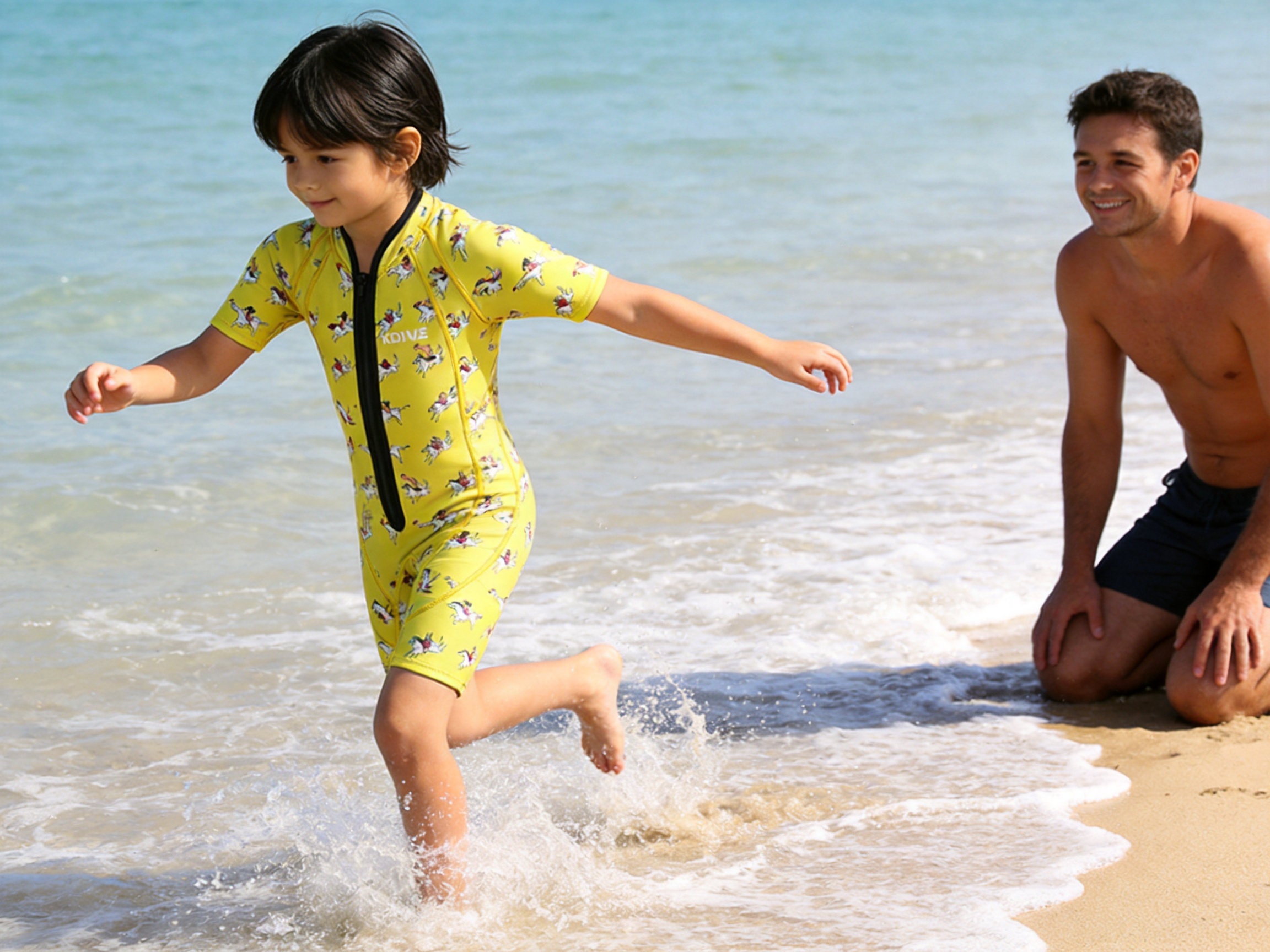
Choosing a wetsuit for children involves more than selecting an attractive color or a convenient size. A suitable kids’ wetsuit must balance warmth, flexibility, comfort, durability, safety, and ease of use. Children move constantly in the water, and they may swim, snorkel, paddle, play, or participate in lessons for extended periods. Their wetsuit therefore needs to support natural movement while helping reduce the discomfort caused by cool water, wind, and prolonged exposure.
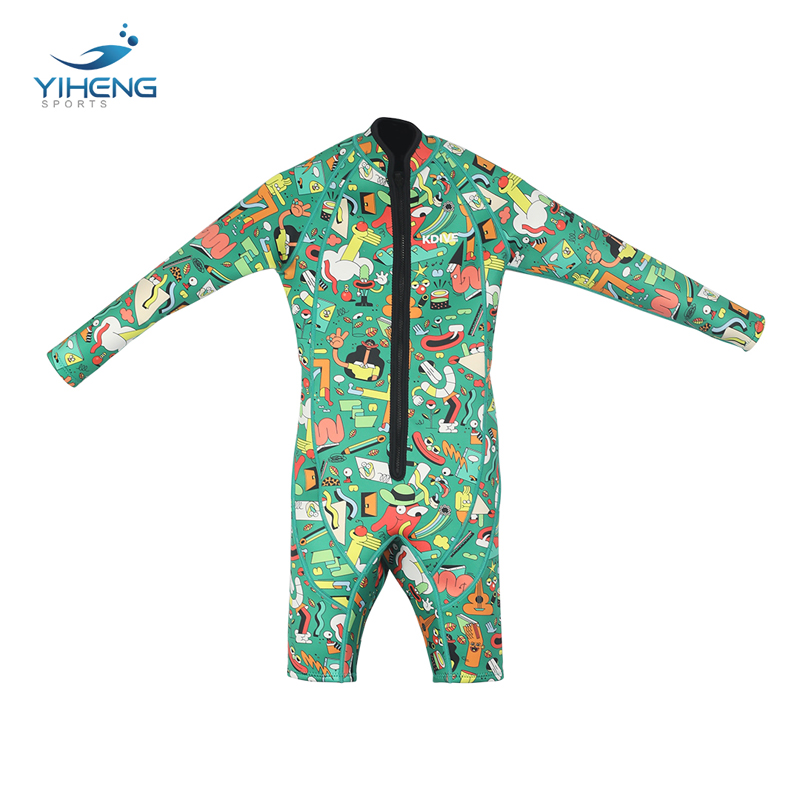
The 2mm Yellow Print Kids Shorty Neoprene Wetsuit is designed around these requirements. Its one-piece shorty construction covers the torso, upper arms, and upper legs while leaving the lower arms and lower legs free for unrestricted movement. Made with 2mm CR neoprene and double-sided super-stretch fabric, the suit offers lightweight insulation without the bulk associated with thicker cold-water suits. The bright yellow print gives it a distinctive appearance, while the flexible construction makes it suitable for swimming lessons, beach holidays, snorkeling, recreational watersports, and other activities around the water.
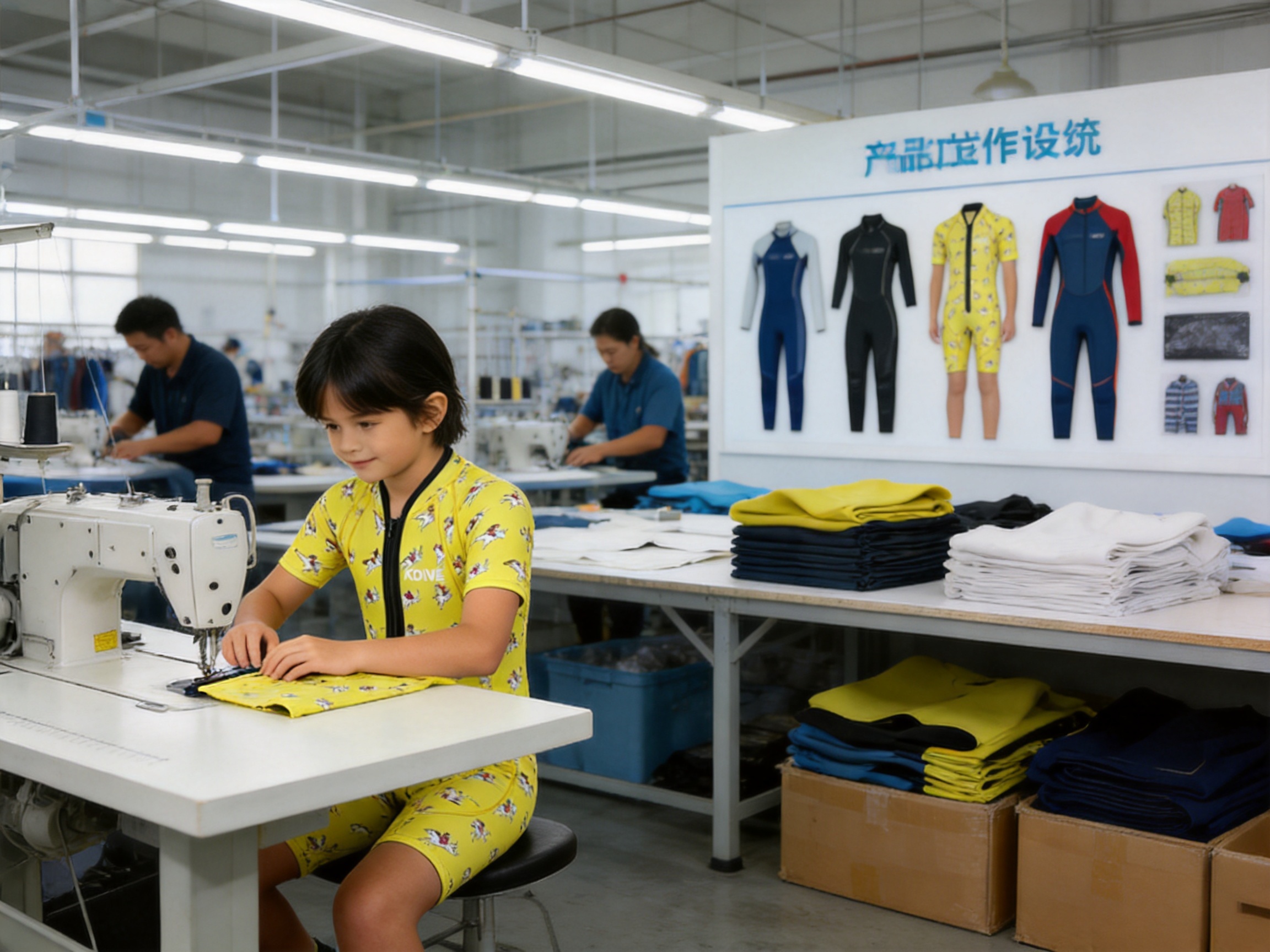
Beyond the finished product, the wetsuit reflects a manufacturing system built around neoprene materials, technical sewing, product development, and long-term supply support. The manufacturer operates a production facility covering more than 15,000 square meters and employs over 120 professional workers. With more than 18 years of industry experience in neoprene fabrics and finished products, the company is positioned to support private-label, OEM, and ODM programs for distributors, retailers, water-sports brands, and specialty suppliers.
Product Overview
The wetsuit uses a practical shorty silhouette that provides coverage where children need it most while preserving freedom in the shoulders, elbows, knees, and lower legs. Shorty wetsuits are often preferred for warm-water activities because they provide a lighter alternative to full-length suits. They can also be easier for children to wear during changing periods at swimming pools, resorts, camps, and beaches.
The 2mm thickness is intended to provide a balance between insulation and flexibility. Compared with a thicker full wetsuit, a 2mm shorty design is lighter and less restrictive. Compared with a swimsuit alone, it gives the torso and upper limbs an additional protective layer against cool water and wind. This makes it a versatile option for transitional conditions and active water use where maximum cold-water protection is not required.
The principal product specifications are summarized below.
| Specification | Product Detail |
|---|---|
| Product type | Kids’ one-piece shorty wetsuit |
| Material | CR neoprene with double-sided super-stretch fabric |
| Thickness | 2mm |
| Seam construction | Four-needle, six-thread flatlock stitching |
| Entry system | Front chest zipper |
| Zipper brand | YKK chest zipper |
| Comfort feature | Inner zip guard |
| Color | Yellow print |
| Available sizes | XS, S, M, L, XL, and XXL |
| Abrasion resistance | No damage after 4,000 friction cycles under pressure of at least 9kPa |
| Hydrostatic resistance | At least 80kPa with no water seepage under the stated test conditions |
| Tensile strength | No breakage after 10 seconds under tension of at least 150N in lengthwise and crosswise directions |
These specifications show that the product is designed as a functional children’s wetsuit rather than a purely decorative seasonal garment. Its material selection, seam configuration, closure system, and performance testing are directed toward repeated use in demanding recreational environments.
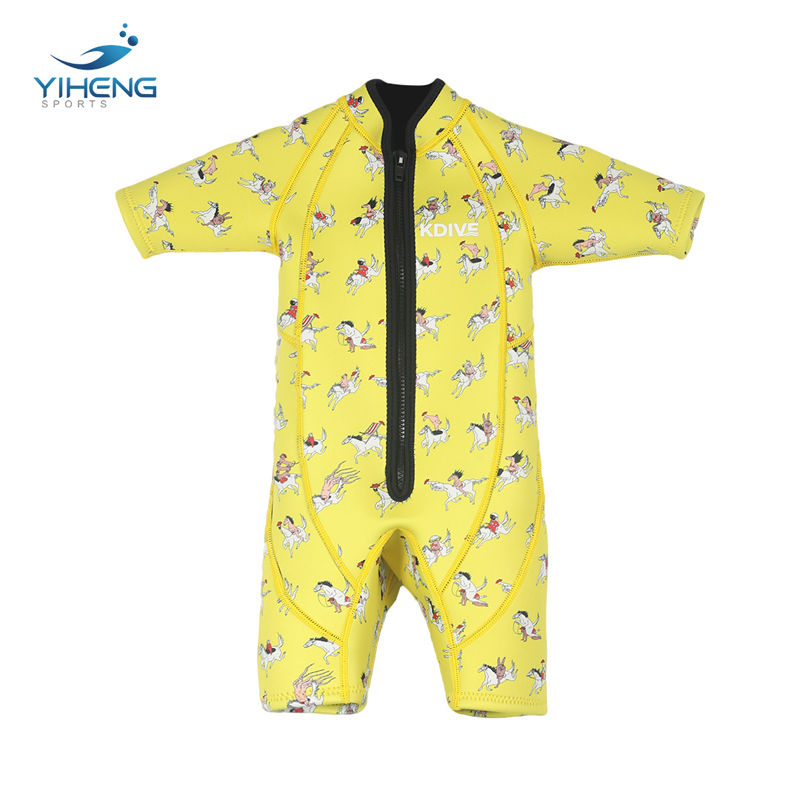
2mm Yellow Print Kids Shorty Neoprene Wetsuit
Why a 2mm Shorty Design Works Well for Children
Children generally benefit from equipment that is easy to use and does not interfere with movement. A bulky wetsuit can make dressing difficult, restrict shoulder rotation, and cause fatigue during swimming or play. A thin shorty wetsuit addresses these concerns by reducing the amount of material around the arms and legs while maintaining coverage across the torso.
The 2mm neoprene layer provides lightweight thermal support. Neoprene works by creating a layer of insulation between the body and the surrounding water. Although the level of warmth depends on water temperature, activity level, fit, and exposure time, the material can help reduce the rapid cooling that may occur when children spend time in water. The shorty profile also helps prevent overheating in warmer conditions compared with a thicker full-length wetsuit.
Flexibility is equally important. Children may need to reach forward, paddle, kick, climb out of a pool, sit on a board, or move between water and shore. Double-sided super-stretch fabric allows the suit to follow these movements more naturally. The fabric is designed to stretch with the body instead of forcing the child to fight against a rigid outer layer.
The shorty format also supports practical use by families and organizations. It is easier to pack than a full-length suit, dries more quickly in many conditions, and can be suitable for a variety of warm-water activities. Parents may use it for holidays, swimming classes, water parks, and beach play, while schools and activity providers may select it for beginner programs or equipment rental collections.
Balanced Thermal Coverage
The torso is one of the most important areas to protect against cool water and wind. This wetsuit covers the body core while the short sleeves and short legs preserve a lighter feel. The result is a middle-ground garment between a standard swimsuit and a full-length wetsuit.
This balance is particularly useful for recreational users who do not need an expedition-grade suit. A child learning to swim in a heated or temperate pool may value flexibility more than maximum insulation. A young snorkeler in a warm destination may need protection from mild cooling, sun exposure, and minor contact with equipment or surfaces. The 2mm shorty construction addresses these everyday requirements without adding unnecessary weight.
Freedom of Movement
Super-stretch neoprene is beneficial for children because it accommodates changing body positions. The flexible fabric can support arm strokes, kicking, climbing, and play. The shorty cut further reduces resistance around the knees and lower legs, allowing children to move comfortably when walking in shallow water or transitioning onto a boat, paddleboard, or pool deck.
For parents, flexibility can also simplify dressing. A material that stretches more easily may be less difficult to pull over the shoulders and torso. Correct fitting remains essential, but a flexible fabric can make the process more manageable for both adults and children.
Front Chest Zipper for Easier Dressing
The wetsuit is equipped with a front chest zipper, creating a front-entry design that differs from traditional back-zip styles. The front opening can make it easier for children and caregivers to put on and remove the suit. A parent can see and access the closure directly, reducing the need to reach behind the child or manipulate a zipper in an awkward position.
This feature is particularly valuable before swimming lessons, school activities, and group excursions, when several children may need to change within a limited time. A front chest zipper can shorten the dressing process and help reduce frustration. For older children learning to manage their own equipment, the visible front closure may also support greater independence.
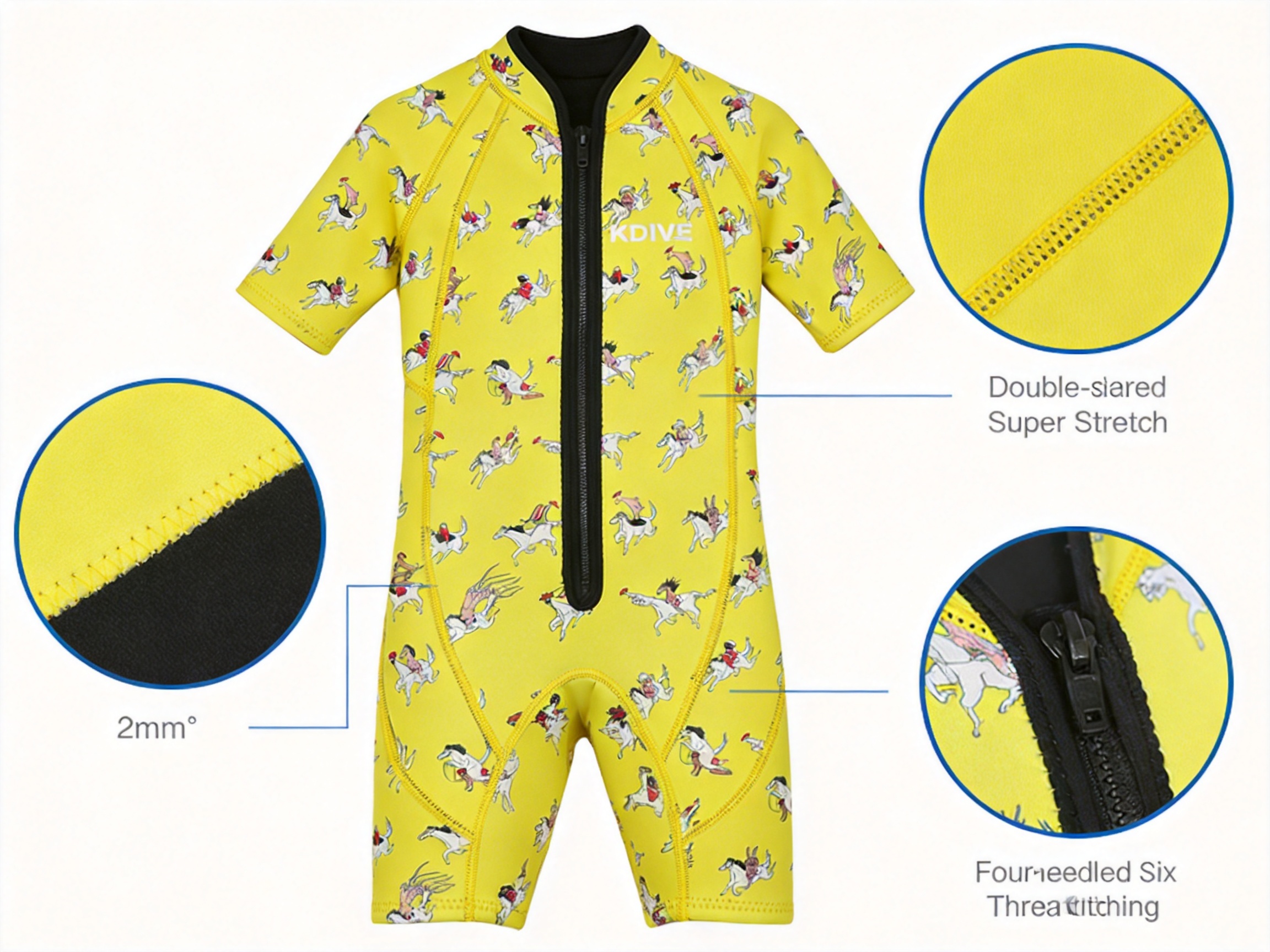
The use of a YKK chest zipper adds a recognized component to an area that experiences frequent movement and repeated opening and closing. The zipper is supported by an inner zip guard, which helps create a protective layer between the zipper and the wearer’s skin.
Inner Zip Guard and Skin Comfort
Children’s skin can be sensitive, and repeated rubbing around the chest or neck area may reduce their willingness to wear a wetsuit. The inner zip guard is designed to help prevent direct contact between the zipper and the skin. It also helps create a smoother transition inside the garment, particularly when the child is swimming, stretching, or leaning forward.
The zip guard is a small construction detail, but it can have a meaningful effect on the overall wearing experience. Comfortable closure protection encourages longer use and helps parents avoid complaints associated with scratching, pinching, or irritation. It also demonstrates how product performance depends on details beyond the main neoprene panels.
Four-Needle, Six-Thread Flatlock Seam Construction
The wetsuit uses four-needle, six-thread flatlock stitching. This construction is intended to create strong, flexible seams that remain comfortable against the skin. Flatlock seams are commonly used in performance garments because the joined fabric edges can form a flatter profile than bulky traditional seams.
For an active children’s garment, seam construction must satisfy several requirements at the same time. The seams need to hold the neoprene panels together under stretching and repeated movement. They must remain flexible enough to follow the body. They should also avoid creating unnecessary ridges that may cause discomfort during prolonged wear.
The four-needle, six-thread structure provides a stable and consistent joining method across the garment. Multiple threads distribute the stress created when the fabric is stretched. This helps the suit maintain its shape during routine use and supports durability in high-movement areas such as the shoulders, underarms, torso, and leg openings.
Comfort During Repeated Activity
Flatlock seams are well suited to swimming lessons and recreational use because they are designed to sit relatively close to the fabric surface. When a child moves repeatedly, seam comfort becomes increasingly important. A rough or raised seam may be tolerated for a short period but become distracting during a longer session.
The flat profile also supports layering and equipment compatibility. Children may wear the wetsuit beneath a life vest, buoyancy aid, or other water-sports equipment, depending on the activity and safety requirements. A flatter seam can help reduce pressure points where equipment contacts the body.
Strength and Shape Retention
A wetsuit can lose its usefulness if its seams stretch permanently, open, or distort after repeated wear. The selected seam construction is intended to provide both strength and elasticity. Together with the double-sided super-stretch fabric, it helps the product retain its original fit across multiple sessions.
The manufacturer’s stated tensile testing further supports this design approach. The material and finished construction show no breakage after 10 seconds under tension of at least 150N in both lengthwise and crosswise directions under the specified test conditions. Such testing provides a structured method for evaluating resistance to pulling forces during dressing and use.
Material Advantages of CR Neoprene
CR neoprene is widely used in wetsuits because it combines insulation, resilience, and flexibility. For children’s waterwear, these properties are especially valuable. The material can form a close-fitting protective layer while allowing the wearer to bend, reach, and kick.
The double-sided super-stretch fabric used in this wetsuit improves the handling characteristics of the neoprene. Stretch on both sides can help make the garment easier to pull on and more adaptable to body movement. It also supports a comfortable fit across the available size range, provided that the selected size corresponds appropriately to the child’s body measurements.
Material quality has a direct effect on user satisfaction. Neoprene that feels excessively stiff may discourage active movement. Material that is too thin or poorly supported may lose shape more quickly. The design of this wetsuit seeks to maintain a balance between light insulation, stretch performance, and everyday durability.
Lightweight Insulation
At 2mm, the neoprene is light enough for active use in relatively warm conditions. It can provide additional warmth without the heavy feeling associated with thicker cold-water garments. Children can move through the water with less resistance, which may be helpful during lessons and beginner activities.
The material may also help reduce the effect of wind on wet skin after a child leaves the water. Since children often move between swimming, resting, playing, and changing, a shorty wetsuit can provide practical coverage during these transitions.
Stretch and Fit
A wetsuit should sit close to the body without creating excessive pressure. Super-stretch fabric helps the garment conform to the torso and limbs while maintaining mobility. A close fit is important because loose areas may allow more water exchange, while an overly tight suit can restrict movement and make dressing uncomfortable.
Parents and retailers should treat the listed sizes as a starting point rather than a substitute for measurement. Children’s body proportions vary, and age alone does not always determine the correct size. The torso length, chest measurement, waist, hip, and overall height should be considered when selecting from XS through XXL.
Durability for Active Kids
Children’s waterwear is often exposed to demanding conditions. It may be pulled during dressing, rubbed against pool edges, contacted by sand, placed on boat decks, or used repeatedly during school and holiday programs. A practical kids’ wetsuit must therefore withstand more than occasional gentle use.
The product information specifies abrasion resistance with no damage after 4,000 friction cycles under pressure of at least 9kPa. This test result indicates attention to the surface durability of the material under repeated friction. While laboratory testing cannot reproduce every real-world situation, it offers a measurable benchmark for comparing material performance.
The tensile performance is also relevant to active use. No breakage after 10 seconds under tension of at least 150N in both lengthwise and crosswise directions indicates that the material system is evaluated against pulling forces from multiple directions. This is important because children do not always put on a wetsuit carefully; the garment may be stretched unevenly during dressing or movement.
Maintaining Performance in Everyday Use
Durability is influenced by both product construction and user care. Children’s wetsuits should be rinsed with fresh water after use, particularly after exposure to salt water or chlorinated pools. They should be dried away from excessive heat and direct high-intensity sunlight when possible. Folding or hanging practices should avoid placing unnecessary stress on the same seam or closure area.
The wetsuit’s robust construction gives retailers a stronger foundation for offering a repeat-use product. It can be positioned for families who want more than a single-season novelty garment, as well as for activity providers who need practical products for frequent lessons and organized water programs.
Visual Appeal and Functional Visibility
The yellow print gives the wetsuit a bright, energetic appearance that suits children’s products. Color is important in children’s apparel because it can influence acceptance and make the garment more appealing to wear. A child who likes the appearance of a wetsuit may be more willing to put it on and use it consistently.
A bright color can also help parents identify their child more easily in busy environments such as swimming pools, beaches, water parks, and group activities. The color should not be treated as a replacement for supervision or approved safety equipment, but it can contribute to visual recognition when several children are present.
The print design also creates opportunities for private-label and retail presentation. Distributors can position the garment as a colorful seasonal product, a beginner-friendly waterwear item, or part of a coordinated children’s watersports collection. Custom packaging, labeling, size presentation, and selected print adaptations may be discussed within an OEM or ODM program, subject to production requirements.
Advantages Compared with Basic Children’s Wetsuits
Many entry-level children’s wetsuits focus on a low purchase price and a simple appearance. While affordable products can be useful, they may lack the combination of construction details needed for comfortable repeated use. The 2mm Yellow Print Kids Shorty Neoprene Wetsuit offers several advantages over basic alternatives.
More Convenient Than Traditional Back-Zip Styles
The front chest zipper provides a practical alternative to back-entry designs. Children and caregivers can access the zipper from the front, which can make dressing faster and simpler. The inner zip guard adds comfort by helping keep the zipper away from the skin.
More Flexible Than Heavy Full-Length Designs
The shorty format and 2mm thickness reduce bulk. This makes the product appropriate for warm-water environments and active movement. Children can swim, play, and participate in recreational activities without the full coverage and weight of a thicker full-length wetsuit.
More Comfortable Than Rigid or Poorly Finished Garments
Double-sided super-stretch fabric and flatlock seams support flexibility and comfort. Some low-quality products may feel stiff or have rough internal seams. The construction used here is designed to reduce those problems and provide a smoother wearing experience.
More Suitable for Repeated Use
The stated abrasion and tensile performance, combined with multi-thread flatlock stitching, supports a durability-focused product position. This is relevant for families, swim schools, holiday programs, and retailers seeking a product that can be used across multiple sessions rather than treated as disposable seasonal apparel.
More Adaptable for Private-Label Programs
A manufacturer with direct experience in neoprene fabrics and finished products can provide more than a catalog item. The product can serve as a starting point for discussions about color, print, packaging, labels, size grading, and collection development. This adaptability is an advantage for brands that want a consistent children’s waterwear range rather than a single isolated product.
Manufacturing Capabilities and Production Strengths
The manufacturer’s business began in 2008 with raw materials and semi-finished products. Over time, it developed from an entrepreneurial operation into a professional manufacturer focused on neoprene materials and finished products. This long-term development has created experience across both upstream material production and downstream consumer products.
The factory covers more than 15,000 square meters and employs over 120 professional workers. This scale supports organized production, specialized labor, quality management, and coordination across different product categories. The company has more than 18 years of experience in neoprene fabrics and finished goods, as well as eight years of direct retail-market practice.
Experience in the retail market is particularly useful for product development. A manufacturer that understands end-market operations is better positioned to consider fit, appearance, packaging, customer expectations, seasonal demand, and product positioning. This perspective can help bridge the gap between technical production and commercial success.
Integrated Knowledge of Materials and Finished Products
The company’s product range includes wetsuits, drysuits, fishing waders, rash guards, water-sports equipment, and neoprene fabrics. This breadth gives the manufacturer a wider understanding of how neoprene behaves across different applications. Material knowledge can inform decisions about thickness, stretch, seam placement, reinforcement, and surface treatment.
For buyers, this integrated capability can reduce the complexity of supplier management. Instead of coordinating separate material and finished-product providers, a brand may be able to discuss a broader product program with one experienced manufacturing partner. This is especially beneficial when a product line includes several categories that share neoprene components or technical requirements.
OEM Manufacturing Support
OEM manufacturing allows buyers to develop products according to their own commercial requirements while relying on the manufacturer’s production resources. For this kids’ shorty wetsuit, an OEM program may involve private labels, custom packaging, product tags, carton specifications, and market-specific documentation.
OEM buyers can also evaluate details such as size assortment, color direction, print placement, closure preferences, and shipment quantities. A clear technical brief is important because children’s apparel requires accurate grading and consistent production across sizes.
ODM Development Support
ODM development is useful when a buyer has a market concept but needs help converting it into a manufacturable product. The manufacturer can contribute knowledge about neoprene thickness, fabric stretch, stitching, zipper placement, seam comfort, and practical production methods.
For example, a retailer may want a warm-water children’s suit with an easy front entry, bright visual identity, and a lightweight fit. A manufacturer with experience across materials and finished garments can help evaluate whether the requested features work together technically. This collaborative approach can shorten development cycles and reduce the risk of designing features that are difficult to manufacture consistently.
Quality-Oriented Production Process
A reliable wetsuit is the result of multiple controlled steps rather than one single operation. Material selection establishes the foundation, but the finished product also depends on cutting accuracy, panel matching, sewing consistency, zipper installation, print quality, inspection, and packing.
Material Preparation
The process begins with suitable neoprene and stretch fabric. Thickness, elasticity, surface condition, and visual consistency should be reviewed before production. Material preparation helps ensure that panels respond consistently during sewing and wearing.
Pattern Cutting
Accurate cutting is essential for maintaining the intended fit across XS through XXL. Panel dimensions influence shoulder mobility, torso coverage, arm openings, leg openings, and overall comfort. Consistent cutting also supports efficient material use and reduces variation between garments.
Panel Assembly
Once the panels are prepared, they are assembled according to the product pattern. The four-needle, six-thread flatlock stitching must be applied consistently to create strong and comfortable seams. Particular attention is required in high-stress areas such as the chest, shoulders, underarms, and leg openings.
Zipper Installation
The front chest zipper requires accurate alignment and secure attachment. The zipper must operate smoothly while remaining integrated with the stretch characteristics of the surrounding neoprene. The inner zip guard must also be positioned correctly so that it protects the skin without creating unnecessary bulk.
Inspection and Testing
Finished products can be reviewed for dimensions, seam appearance, zipper operation, fabric defects, print consistency, and overall workmanship. The stated abrasion, hydrostatic, and tensile performance figures provide additional technical reference points for product evaluation.
Hydrostatic resistance of at least 80kPa with no water seepage under the specified test conditions demonstrates attention to resistance against water pressure. A wetsuit is not intended to function as a completely waterproof dry garment, but construction quality can influence how well it limits unwanted water exchange and maintains comfortable performance.
Applications for Different Customer Groups
Families and Individual Consumers
For families, the wetsuit is a practical option for holidays, beach trips, swimming lessons, snorkeling, and general water play. Its bright appearance may appeal to children, while the front zipper and flexible fabric can simplify use for parents.
Swimming Schools and Activity Centers
Swimming schools may use shorty wetsuits for beginner sessions, outdoor classes, or programs in cooler pools. The front entry can make group changing more efficient, and the range from XS to XXL allows a broader selection for different children.
Resorts and Tourism Operators
Resorts and water-activity providers can consider the wetsuit for warm-water rental or instructional programs. Durability is particularly important in these settings because garments may be used by many customers. Proper cleaning, inspection, and maintenance procedures should accompany any rental program.
Retailers and Private-Label Brands
Retailers can position the product within children’s swimwear, watersports, travel, or outdoor categories. The bright color, practical construction, and multiple sizes create a straightforward product story. Private-label buyers can discuss branding and packaging requirements with the manufacturer to create a more distinct market offering.
Fit, Use, and Care Recommendations
The wetsuit should fit close to the body without causing pain, restricted breathing, or excessive pressure. A small amount of resistance during dressing is normal because neoprene is designed to fit closely, but the child should still be able to move the arms and shoulders naturally.
Parents should check that the zipper is fully closed and that the inner zip guard remains flat. The seams and openings should not twist or bunch. If the suit is loose around the torso, water exchange may increase and the insulation benefit may be reduced. If it is excessively tight, movement and comfort may be compromised.
After use, rinse the wetsuit with clean fresh water to remove salt, chlorine, sand, and other residues. Allow it to dry naturally in a ventilated area. Avoid high heat, sharp surfaces, and aggressive detergents that may weaken the neoprene or affect the print. Store it in a cool, dry location without placing heavy objects on top of it.
Children should always be supervised in or near water. This wetsuit is a thermal and protective garment, not a flotation device. It should not replace a properly fitted life jacket or other approved safety equipment when such equipment is required.
Private-Label and Customization Potential
The product is suitable for brands seeking a ready-developed base garment that can be integrated into a larger children’s watersports collection. The manufacturer’s capabilities in neoprene fabrics and finished products support discussions about private labels and market-specific product programs.
Potential customization areas may include branded neck labels, care labels, hangtags, packaging, carton marks, selected colorways, print concepts, and size assortments. Buyers may also discuss whether a collection should include matching rash guards, accessories, or other neoprene products.
Customization should be evaluated according to order volume, material availability, development timelines, testing requirements, and production capacity. Early communication is important for seasonal products because children’s swimwear demand often increases before summer, school holidays, and travel periods.
Why Manufacturing Experience Matters to Buyers
Choosing a wetsuit supplier is not only a decision about the appearance of one garment. It is also a decision about consistency, communication, product development, and future supply. A manufacturer with more than 18 years of industry experience can provide historical knowledge that helps identify common production risks and practical solutions.
Experience across neoprene fabrics and finished products is valuable when a buyer needs to adjust thickness, stretch, color, print, or seam construction. The company’s experience in the retail market adds insight into how products are presented and used after leaving the factory.
The company’s stated commitment to OEM manufacturing, ODM development, and long-term supply support provides a foundation for cooperation beyond a single order. Buyers can consider the manufacturer for initial sampling, product refinement, bulk production, and the development of related water-sports categories.
Frequently Asked Questions
What water conditions is this 2mm shorty wetsuit designed for?
The suit is intended for relatively warm or temperate water and recreational activities where lightweight insulation is appropriate. The ideal use temperature depends on the child’s activity level, body size, exposure time, wind conditions, and personal tolerance. It is not a substitute for a thicker cold-water wetsuit when stronger insulation is necessary.
What does “shorty” mean?
A shorty wetsuit is a one-piece design with shorter sleeves and shorter legs than a full-length wetsuit. It provides torso coverage and lightweight insulation while leaving the lower arms and lower legs more open for movement.
Is the front zipper easier for children to use?
The front chest zipper is designed to simplify entry and removal compared with many traditional back-zip designs. Younger children may still need assistance, but the front position allows caregivers to see and reach the closure more easily.
Does the zipper touch the child’s skin?
The product includes an inner zip guard behind the zipper. This layer is designed to help reduce direct rubbing between the zipper and the skin and to improve comfort around the chest area.
What is the advantage of flatlock stitching?
Four-needle, six-thread flatlock stitching is designed to create seams that are strong, flexible, and relatively flat against the skin. This can improve comfort during repeated movement and support durability in an active garment.
How should the correct size be selected?
Buyers should compare the child’s body measurements with the supplier’s size chart rather than relying only on age. Height, chest, waist, hip, torso length, and the intended fit should all be considered. The available sizes are XS, S, M, L, XL, and XXL.
Can the wetsuit be used for swimming lessons?
Yes. Its lightweight 2mm construction, flexible fabric, and shorty shape are suitable for many swimming lessons and recreational training environments, especially where a child needs mild additional warmth and freedom of movement.
Can it be used for snorkeling?
It can be used for recreational snorkeling in suitable warm-water conditions. Children must still receive appropriate instruction and supervision, and any required flotation or safety equipment should be used separately.
Is it a flotation device?
No. A wetsuit provides thermal coverage and limited protective characteristics, but it is not a certified flotation device. Children should always be supervised, and approved buoyancy equipment should be used when required.
How durable is the material?
The product information states no damage after 4,000 friction cycles under pressure of at least 9kPa, no water seepage under hydrostatic pressure of at least 80kPa under the specified conditions, and no breakage after 10 seconds under tension of at least 150N in both directions. Actual service life depends on use, care, fit, and exposure to chlorine, salt, sand, and rough surfaces.
Can this product be private labeled?
The manufacturer provides private-label, OEM, and ODM services. Buyers can discuss branding, packaging, labels, colors, prints, size assortments, and other project requirements according to order specifications and production feasibility.
What other products can the manufacturer supply?
The company’s product range includes wetsuits, drysuits, fishing waders, rash guards, water-sports equipment, and neoprene fabrics. This allows buyers to explore broader product programs with an experienced neoprene-focused supplier.
Conclusion
The 2mm Yellow Print Kids Shorty Neoprene Wetsuit combines lightweight warmth, flexible movement, convenient front entry, skin-friendly zipper protection, and durable flatlock seam construction. Its bright yellow print gives it strong visual appeal, while the technical details make it suitable for repeated use in swimming lessons, beach activities, snorkeling, travel, and recreational watersports.
Compared with basic children’s wetsuits, it offers a more considered combination of comfort and function. The 2mm CR neoprene and double-sided super-stretch fabric reduce bulk and support natural movement. The YKK chest zipper simplifies dressing, the inner zip guard helps prevent rubbing, and the four-needle, six-thread flatlock seams contribute to a comfortable and durable finish. Stated abrasion, hydrostatic, and tensile performance further support its position as a practical product for active children.
For distributors, retailers, and private-label brands, the product also benefits from the manufacturer’s broader capabilities. A factory exceeding 15,000 square meters, a workforce of more than 120 professional employees, over 18 years of industry experience, and expertise in both neoprene fabrics and finished products provide a strong foundation for OEM and ODM cooperation.
As a result, the wetsuit can serve both as a ready-to-market children’s waterwear product and as a foundation for a wider branded collection. Its combination of child-friendly design, technical construction, manufacturing experience, and customization potential makes it a competitive option for businesses seeking reliable neoprene products and long-term supply support.
References
1. Product specification sheet for the 2mm Yellow Print Kids Shorty Neoprene Wetsuit, including material, thickness, seam construction, zipper, sizes, and performance data.
2. Manufacturer-provided company profile describing production history, factory area, employee base, product categories, OEM services, and ODM capabilities.
3. General technical literature on neoprene wetsuit construction, thermal insulation, stretch fabrics, flatlock seams, and garment durability testing.
4. General guidance on children’s water-sports equipment, wetsuit fitting, garment care, and supervision around swimming environments.
5. General apparel manufacturing references concerning textile inspection, pattern cutting, zipper installation, seam quality, product sampling, and private-label production.
Product: 2mm Yellow Print Kids Shorty Neoprene Wetsuit

LET’S DEVELOP YOUR NEXT NEOPRENE PRODUCT LINE
Quick Links
Product Categories
Contact Us
-
 Email: postmaster@yihengsport.com
-
 Mobile: +86-13564100539
-
 No. 480 Jiangping Road, Madian, Binjiang Town, Taixing City, Taizhou City, Jiangsu Province, China.
Copyright © Jiangsu Yiheng Sports Products Co., Ltd. All Rights Reserved
China Wetsuit Manufacturer Neoprene Fabric Manufacturer
